Reynand Wu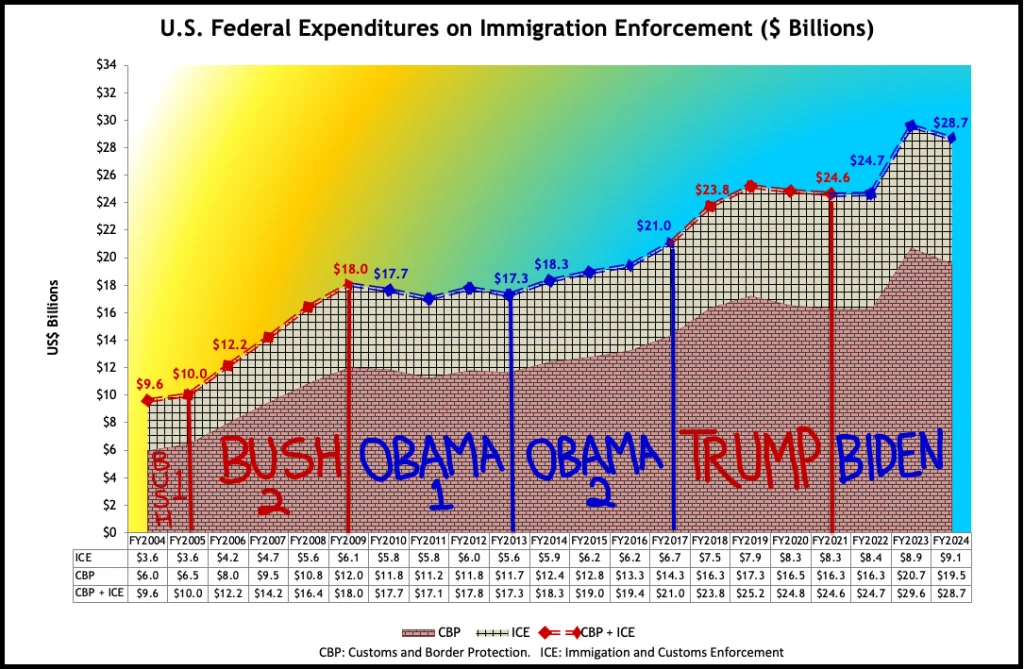
State borders, often perceived as immutable lines on a map, are in fact dynamic constructs, products of intricate political conflicts, fervent nationalist narratives, and deeply embedded unequal economic systems. Critically, as this analysis reveals, their creation and maintenance demand significant public financial investment, a reality often obscured by public policy and political rhetoric that tends to naturalize their origins, despite their frequently arbitrary and violent genesis. Beyond merely marking territory following wars or disputes, these borders perform crucial social functions, from preserving distinct political systems to rigidly differentiating between "insiders" and "outsiders." Economically, they actively construct disparities, upholding unequal trade relations, national currencies, and disparate value regimes across states and regional zones. The United States offers a compelling case study in this global phenomenon, demonstrating how immense public funds are dedicated to the construction and ongoing upholding of its borders, particularly the U.S.-Mexico frontier.
Historical Roots and the Evolution of Border Enforcement
The concept of a definitive state border, while ancient in some forms, gained modern significance with the rise of nation-states. These lines, far from being organic, are often the result of geopolitical negotiation, conflict, and colonial legacies. For the U.S., its southern border with Mexico, for instance, was largely defined by the Mexican-American War (1846-1848) and subsequent treaties like the Treaty of Guadalupe Hidalgo, which ceded vast territories to the U.S. What began as a sparsely patrolled line evolved over centuries, but it was the events of September 11, 2001, that dramatically reshaped the American approach to its borders, particularly the southern frontier.
In the immediate aftermath of 9/11, state officials skillfully interwoven the urgent discourse of anti-terrorism with existing narratives of border regulation. This strategic juxtaposition catalyzed an unprecedented securitization of the U.S.-Mexico border, transforming it from a zone of relatively fluid movement into a highly militarized and surveilled expanse. This shift was formalized under President George W. Bush’s administration with the passage of the Homeland Security Act of 2002, a landmark piece of legislation that established the Department of Homeland Security (DHS). The creation of DHS consolidated numerous federal agencies, including the former Immigration and Naturalization Service (INS), into a massive new department tasked with safeguarding the nation.
Under the DHS umbrella, two key agencies emerged as central to border enforcement: Customs and Border Protection (CBP) and Immigration and Customs Enforcement (ICE). CBP, which boasts of being "one of the world’s largest law enforcement organizations," explicitly states its primary mission as "to detect and prevent the illegal entry of individuals into the United States" and to "maintain borders that work." Similarly, ICE articulates its mission as protecting "America from the cross-border crime and illegal immigration that threaten national security and public safety." These mission statements underscore a significant shift towards a security-first paradigm, where immigration is increasingly framed as a national security threat rather than primarily a socio-economic or humanitarian issue.
The Soaring Costs: A Deep Dive into Funding
The rhetoric of national security has been consistently backed by an extraordinary commitment of public funds. A comprehensive analysis of federal spending on immigration enforcement and border security reveals a staggering financial outlay, graphically illustrated by data depicting annual budgets as a "fenced border wall." This visualization delineates the annual budget of CBP as the "brick wall" and the annual budget of ICE as the "fence above the brick wall," with red and blue barbed wire representing the combined budgets approved by Republican and Democratic presidents, respectively.
Since the establishment of DHS in 2002, a period spanning 21 fiscal years, U.S. federal governments, under both Republican and Democratic leadership, have collectively spent an astonishing total of $409.4 billion on immigration enforcement. This monumental sum underscores the deep institutionalization and continuous expansion of border securitization. To put this into perspective, this figure surpasses the Gross Domestic Product of several small nations and represents a significant allocation of taxpayer money towards a singular policy objective.
Breaking down these expenditures reveals distinct patterns:
- Republican Administrations: Under Republican presidents, a total of $178.9 billion was spent on immigration enforcement, averaging approximately $17.9 billion annually.
- Democratic Administrations: Democratic presidents oversaw expenditures totaling $230.5 billion, with an average annual spending of $21.0 billion.
The data further shows that $275 billion has been allocated to CBP, the agency responsible for patrolling and securing the physical border, while $134.4 billion has gone to ICE, which handles internal immigration enforcement, detention, and deportations.
Overall, federal expenditures on immigration enforcement have nearly tripled in unadjusted dollars, soaring from $9.6 billion in Fiscal Year 2004 to an estimated $28.7 billion in Fiscal Year 2024. Even when adjusted for inflation to 2024 dollars, this represents a substantial increase from approximately $17.5 billion to $28.7 billion, confirming a consistent and dramatic upward trend in funding regardless of the economic climate or prevailing political party. This persistent growth in spending highlights that border enforcement has become a significant and ever-expanding component of the federal budget.
Political Rhetoric vs. Fiscal Reality: A Bipartisan Consensus
One of the most striking revelations from this budgetary analysis is the stark contrast between partisan rhetoric on immigration policy and the bipartisan consensus in funding its enforcement. Democratic presidents have historically articulated a more pro-immigrant stance, often emphasizing pathways to citizenship, humane treatment, and addressing root causes of migration. Republican counterparts, conversely, have typically adopted a tougher "law and order" approach, prioritizing border security, deterrence, and stricter enforcement.
However, the financial data "gives the lie to the political performativity of partisan differences on immigration policy." In practice, Democratic administrations appear no less enthusiastic than their Republican counterparts in dedicating substantial funds to border policing. The higher average annual spending under Democratic presidents ($21.0 billion) compared to Republican presidents ($17.9 billion) challenges the conventional narrative of a clear partisan divide on this issue. While it is important to note that these figures are not adjusted for inflation, and the duration of presidencies varies, the overarching trend indicates a shared commitment to a securitized border.
This apparent contradiction – where Republicans "put their money where their mouth is" by funding enforcement consistent with their rhetoric, while Democrats, despite their more progressive rhetoric, also significantly increase funding – can be attributed to several factors. In a system often described as a "bourgeois liberal democracy," the interests represented by elected officials may not always align with the "will of the working people" but rather with powerful economic, political, and racial elites. This suggests that the underlying structural forces driving border securitization transcend simple partisan divides. The political pressure to appear tough on borders, coupled with the established bureaucratic momentum of large agencies like DHS, often overshadows rhetorical commitments to reform.
Infrastructure of Control: What the Billions Build
These billions of dollars translate directly into a tangible infrastructure of control along and within U.S. borders. The funding supports:
- Personnel: A massive expansion of personnel for both CBP and ICE. This includes thousands of Border Patrol agents, customs officers, immigration officers, and support staff. The increased human presence facilitates apprehension, detention, and deportation operations.
- Physical Barriers: The construction and maintenance of physical barriers, including miles of border walls and fences. While Donald Trump made border wall construction a signature policy, the practice predates his administration and has continued under subsequent ones. For example, in October 2023, President Joe Biden’s administration waived no fewer than 26 federal regulations – including environmental protections, clean air and water acts, and Native American graves protection – to expedite the construction of a border wall between the U.S. and Mexico in Texas. This move, echoing the actions of his Republican predecessor, underscored the perceived political necessity of demonstrating border enforcement, particularly in advance of the 2024 presidential election.
- Advanced Surveillance Technology: A significant investment in high-tech surveillance systems, including drones, ground sensors, remote video surveillance towers, facial recognition technology, and biometric data collection. These technologies aim to create a "smart border" that can detect and track individuals across vast and often remote terrains.
- Detention and Deportation Infrastructure: The expansion of a vast network of immigration detention centers, both government-run and privately operated. These facilities house tens of thousands of immigrants awaiting deportation or asylum hearings. The funding also covers the logistical costs of deportation flights and ground transport.
- Interdiction and Law Enforcement: Resources for interdicting illicit drugs, weapons, and contraband, which are often cited as justifications for robust border security measures.
This comprehensive infrastructure represents a formidable apparatus designed to control movement, enforce national sovereignty, and, in effect, create a highly fortified barrier against perceived threats and unauthorized entry.
Social and Economic Ramifications
The immense financial investment in border securitization carries profound social and economic ramifications that extend far beyond the budgetary ledger.
- Humanitarian Concerns: The increased militarization of the border often pushes migrants into more dangerous routes, leading to higher rates of injury, death, and exploitation. The policies of detention and deportation can lead to family separation, trauma, and significant human rights abuses, raising ethical questions about the costs of enforcement.
- Economic Impact: While proponents argue that border security protects national jobs and resources, critics point to the economic costs of a restrictive border. It can limit the flow of essential labor, particularly in sectors reliant on migrant workers, and create inefficiencies in cross-border trade. Furthermore, the economic difference constructed by borders, maintaining unequal trade relations and disparate value regimes, can exacerbate inequalities rather than resolve them.
- Impact on Border Communities: Communities along the U.S.-Mexico border often experience increased militarization, surveillance, and a chilling effect on civil liberties. Residents, including U.S. citizens, frequently face increased scrutiny and feel the constant presence of law enforcement, transforming their daily lives.
- Erosion of Progressive Agenda: The bipartisan consensus on robust border funding, despite rhetorical differences, highlights a broader challenge for progressive movements. The "gaping void left by the abandonment of any commitment to a progressive ideological agenda in the Democratic Party" on immigration, as some critics argue, allows anti-immigrant narratives and policies to fill the vacuum, often leading to more punitive approaches.
The Path Forward: Challenges and Debates
The ongoing debate surrounding U.S. border policy is complex, multifaceted, and deeply entrenched. While the data unequivocally demonstrates a massive and sustained financial commitment to enforcement, the effectiveness and ethical implications of this approach remain subjects of intense scrutiny. Critics argue that pouring billions into physical barriers and surveillance technology fails to address the root causes of migration, such as economic instability, political persecution, and climate change in sending countries. They advocate for comprehensive immigration reform that includes humane processing, pathways to legal status, and international cooperation to manage migration flows.
However, in the current political climate, substantive progress towards "de-carcerating the United States" and "de-securitizing the US-Mexico border" faces significant obstacles. The political expediency of appearing tough on immigration, especially during election cycles, often overrides calls for more nuanced or compassionate approaches. The institutional inertia of powerful agencies like DHS, coupled with the vast economic interests tied to the border security industry, further complicates efforts for fundamental change.
The fiscal reality is clear: U.S. borders are not merely geographical lines but heavily funded, politically charged, and socially impactful constructs. Understanding the immense public financial investment in their creation and maintenance is crucial for a comprehensive understanding of contemporary U.S. immigration policy and its far-reaching consequences. The question remains whether future policies will continue this trajectory of ever-increasing securitization, or if a different path, one that addresses both security and humanity with equal weight, can emerge from the current political landscape.