Ronny Sianturi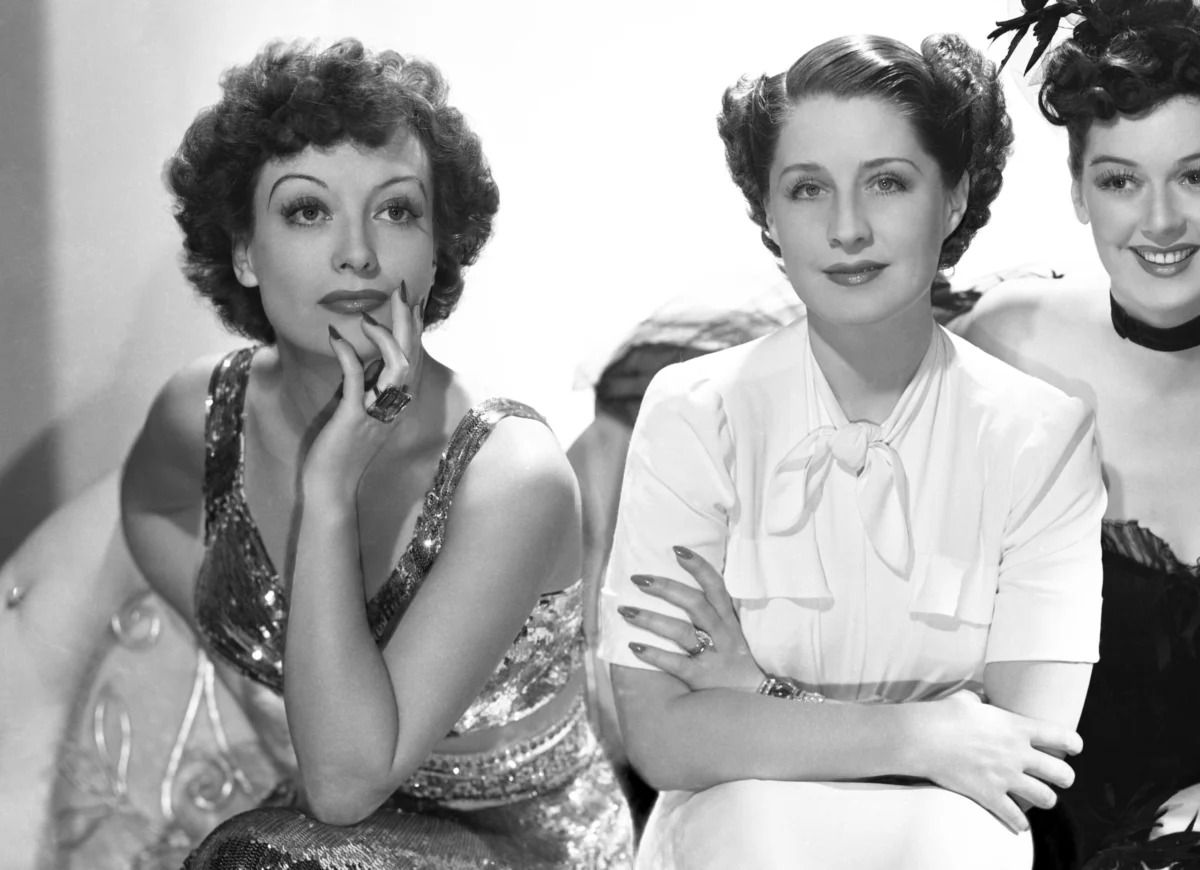
The release of Jungle Red! The Making of MGM’s The Women, published by Lyons Press, invites contemporary audiences to reexamine one of classical Hollywood’s most enduring cultural artifacts: the 1939 satirical comedy The Women. Directed by George Cukor and featuring an entirely female ensemble cast of 135 speaking roles—including Joan Crawford, Norma Shearer, Rosalind Russell, Paulette Goddard, and Joan Fontaine—the production functioned as a watershed moment for female-driven cinematic storytelling. Beyond its technical achievements and foundational influence on modern serialized media, the film remains inextricably linked to the intense, highly publicized off-screen friction between its two principal stars: Norma Shearer and Joan Crawford.
While motion picture history frequently highlights iconic studio-era rivalries, such as those between Bette Davis and Joan Crawford or Olivia de Havilland and Joan Fontaine, author Illeana Douglas posits that the animosity between Crawford and Shearer represented the pinnacle of studio-era psychological warfare. Rather than mere tabloid fodder, this friction was rooted in divergent socioeconomic backgrounds, conflicting studio hierarchies, and a high-stakes competition for premier material during the twilight of Metro-Goldwyn-Mayer’s golden age.
Chronology and Context of the Production
The genesis of The Women dates back to Clare Boothe Luce’s successful 1936 Broadway play, which provided a cynical, biting critique of Manhattan high society, marriage, and infidelity. Recognizing the property’s commercial potential, MGM producer Hunt Stromberg acquired the rights, initially conceptualizing it as a definitive vehicle for Norma Shearer. At the time, Shearer held a position of unmatched prestige within the studio. As the widow of MGM’s architectural genius, Irving Thalberg—who had died prematurely in 1936—Shearer occupied a unique royal tier often referred to as the "First Lady of MGM." Her career was carefully managed to project elegance, high-minded artistic dedication, and moral rectitude, culminating in six Academy Award nominations and a Best Actress win for The Divorcee (1930).
By contrast, Joan Crawford had ascended through the studio ranks via a completely different trajectory. Emerging as a symbol of the Jazz Age in 1928’s Our Dancing Daughters, Crawford cultivated a persona of unbridled ambition, working-class grit, and modern independence. Despite her immense box-office clout, Crawford frequently found herself passed over for prestige literary adaptations in favor of Shearer. Crawford privately and publicly attributed this disparity to Shearer’s marital alliance with Thalberg, fueling a decades-long resentment that reached a boiling point when production on The Women commenced in the spring of 1939.
The timeline of the film’s pre-production illustrates a calculated balancing act by studio executives attempting to leverage the real-life animosity for publicity without letting the set disintegrate into chaos:
- February 1939: George Cukor is officially signed to direct, with Norma Shearer attached to play the tragic, wronged protagonist, Mary Haines.
- March 1939: Studio publicity director Howard Strickling approves a Look magazine cover featuring Shearer and Crawford in a direct glare, deliberately telegraphing off-screen hostility to the public. Meanwhile, Crawford aggressively lobbies for the role of Crystal Allen, the predatory perfume-counter girl who steals Mary’s husband.
- April 25, 1939: Principal photography officially begins under production number 1091, accompanied by elaborate protocol to keep the principal actresses physically separated when not required for shared scenes.
- Summer 1939: Production wraps amidst reports of dueling portable dressing rooms, contract disputes over top billing, and targeted press leaks regarding health incidents and temperament.
- September 1939: The Women premieres to critical acclaim and strong box-office returns, cementing its status as a commercial triumph while cementing the public narrative of an unbridgeable chasm between its leading ladies.
Supporting Data and Studio Politics
The economic and structural realities of 1930s Hollywood dictated that star personas were carefully engineered commodities. MGM, under the autocratic leadership of Louis B. Mayer, functioned efficiently as a star-factory where interpersonal tensions were frequently co-opted for promotional campaigns.

Statistical metrics from the era underscore the unequal distribution of institutional favor that fueled Crawford’s grievances. Prior to The Women, Shearer had secured multiple Academy Award nominations for prestigious historical dramas such as The Barretts of Wimpole Street (1934) and Marie Antoinette (1938), backed entirely by the studio’s internal promotional machinery and voting bloc influence. Crawford, despite starring in financial hits like Grand Hotel (1932) and Sadie McKee (1934), had yet to receive a single Academy Award nomination, a slight that wounded her professional pride.
Furthermore, the casting battle for The Women highlights the fierce competition for diminishing high-profile female roles in an industry overwhelmingly dominated by male executives. When Crawford campaigned for the role of Crystal—competing against younger contract players such as an 18-year-old Lana Turner—she did so with the acute awareness that playing a dynamic, uninhibited antagonist was her best opportunity to revitalize a career that had recently suffered from critical misfires. Crawford reportedly argued to Mayer that the actress tasked with destroying Norma Shearer’s marital happiness could not be played by an inexperienced newcomer; it required an established box-office titan willing to fully embrace a villainous persona.
Official Responses and Public Relations Strategies
The public statements issued by both actresses and their associates reveal a sophisticated understanding of image management. Screenwriter Anita Loos observed that Shearer and Crawford operated from fundamentally incompatible worldviews—Shearer viewing Crawford as unrefined and aggressive, and Crawford viewing Shearer as elitist and overprotected. Yet, both recognized the commercial utility of their perceived feud.
Following the completion of filming, Shearer engaged in careful public relations positioning. In an open letter to trade publications, she downplayed her executive influence and suggested she had resisted taking on The Women, framing her participation as a selfless act intended to serve the greater good of the studio—a rhetorical strategy designed to reinforce her legacy as a team player rather than a studio autocrat.
Crawford countered with sharp, pragmatic assessments of her co-star’s limitations and strengths. In interviews, Crawford acknowledged that while she "resented the hell out of Shearer," the specific dynamic of playing opposite her traditional, sympathetic persona allowed Crawford to weaponize her own on-screen edge effectively.
Broader Impact and Industry Implications
The legacy of The Women extends far beyond the confines of its 1939 production schedule, offering a vital case study in the commodification of female labor and interpersonal conflict within the studio system. By transforming real-world professional rivalries into marquee entertainment, MGM established a template for promotional strategies that continue to influence contemporary entertainment journalism and reality television programming.
Illeana Douglas’s retrospective analysis demonstrates that the Crawford-Shearer dynamic was neither a simple catfight nor a manufactured studio myth, but rather a complex negotiation of power, survival, and artistic identity within a patriarchal institution. As subsequent generations analyze the cultural footprint of The Women, the film endures not only as a masterclass in sharp, witty screenplay adaptation by Anita Loos and Jane Murfin, but as a historical artifact capturing two titans of golden-age cinema at the absolute height of their professional powers, locked in a timeless struggle for cinematic supremacy.