Ronny Sianturi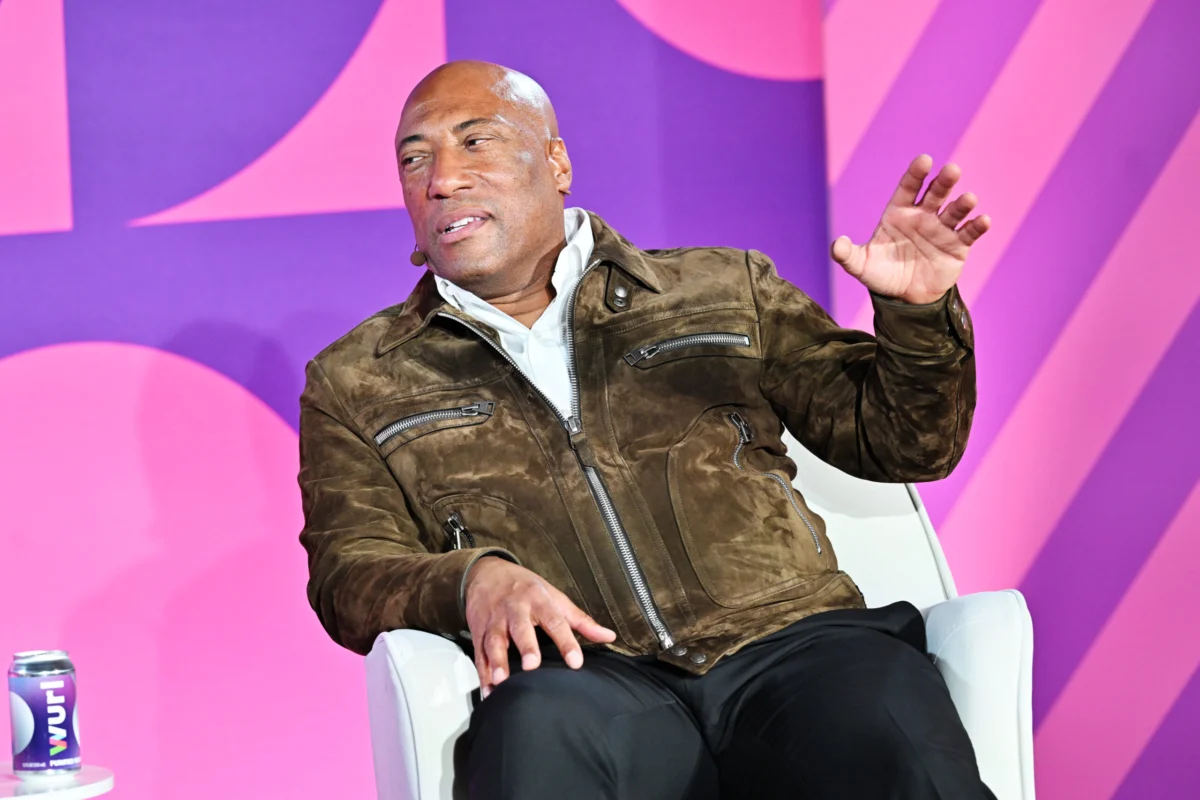
CBS is now projecting a substantial $15 million profit from its late-night programming block, a dramatic turnaround attributed to a strategic "time buy" agreement with media mogul Byron Allen. This financial shift marks a significant departure from the network’s previous operational model, which had rendered the late-night hours "cost prohibitive" to maintain independently. The new arrangement effectively transforms a former financial drain into a profitable venture for the broadcasting giant, coinciding with the recent conclusion of Stephen Colbert’s tenure as host of The Late Show.
The network’s spokesperson detailed the financial implications of this strategic pivot, stating that the decision to cease independent programming of late-night slots was a direct response to escalating costs. "We’re proud to partner with Byron Allen on a new business and programming model for late night that proactively addresses a network daypart that was cost prohibitive to continue," the spokesperson commented late Thursday. "With this ‘time buy’ model, we have shifted an hour that was losing roughly $40 million annually to $15 million in profit – a $55 million swing." This assertion underscores the magnitude of the financial restructuring undertaken by CBS to navigate the challenging economics of live, personality-driven late-night television.
The new programming, featuring Byron Allen’s Comics Unleashed, debuted to an audience of approximately 1.1 million viewers. While this figure represents a notable decrease from the 2.7 million average viewership of Stephen Colbert’s Late Show during its final season, the economic model employed by CBS renders this audience size financially viable. Under the time buy agreement, Allen’s company, Entertainment Studios, assumes all production costs and pays CBS for the rights to air its programming in the coveted 11:30 p.m. to 12:30 a.m. Eastern Time slot. This arrangement ensures that CBS receives a guaranteed revenue stream, turning an operational loss into a clear profit, with Allen’s company responsible for selling advertising within the purchased time period to recoup its investment and generate its own revenue.
Byron Allen had previously articulated his vision for this partnership, highlighting the potential for significant cost savings for CBS. In discussions with The Hollywood Reporter, Allen explained, "I have a show called Comics Unleashed, it’s been in syndication on the air for 20 years. We’re celebrating our 20th anniversary. I said, ‘Let me put that show there and let me buy the time period. I can save you $30 million-$40 million.’ They said, ‘Brilliant idea, let’s do it.’” This direct quote illustrates the proactive approach Allen took in proposing a solution that addressed CBS’s financial concerns while leveraging his established programming.
The conclusion of Stephen Colbert’s Late Show marked the end of an era for CBS’s late-night programming. Just a week after his final broadcast, the iconic set was dismantled, with staff sharing poignant images of the studio’s transformation on social media, signaling the definitive end of his nearly decade-long run as host. Colbert’s departure, coupled with the network’s strategic shift, underscores the evolving landscape of television broadcasting and the pressures faced by traditional networks to adapt to new economic realities.
Background and Chronology of CBS Late-Night Programming Changes
The decision by CBS to pivot from self-produced late-night programming to a time buy model is the culmination of several years of shifting industry trends and economic pressures. For decades, late-night television was a cornerstone of broadcast networks, generating significant revenue and cultural influence. However, the rise of streaming services, cord-cutting, and fragmentation of the audience have made it increasingly challenging for traditional linear television to maintain profitability in this competitive space.
The initial discussions and eventual agreement with Byron Allen represent a significant strategic maneuver by CBS. While specific dates for the commencement of negotiations are not publicly available, the announcement of The Late Show‘s conclusion and the subsequent reveal of the time buy deal suggest a timeline that likely spanned several months.
- Pre-2024: CBS, like other broadcast networks, faced declining viewership and rising production costs for its flagship late-night programs, including The Late Show with Stephen Colbert. The economic model for producing and airing these shows began to strain under new market conditions.
- Early 2024 (Inferred): CBS executives likely began exploring alternative strategies to address the financial unviability of its independently produced late-night block. This may have included internal cost-cutting measures or discussions with potential partners for different programming models.
- Mid-2024 (Inferred): Byron Allen, through Entertainment Studios, engaged in discussions with CBS regarding a potential time buy for a portion of its schedule. Allen’s proposal centered on leveraging his existing syndicated programming, Comics Unleashed, and his company’s expertise in advertising sales.
- Late 2024 (Specifics of announcement): CBS officially announced the conclusion of The Late Show with Stephen Colbert and simultaneously revealed the agreement with Byron Allen for a time buy. The network spokesperson provided financial projections and rationale for the decision.
- Post-Colbert Era: Following Stephen Colbert’s final broadcast, Byron Allen’s Comics Unleashed began airing in the former Late Show timeslot, marking the operational commencement of the new financial model.
This chronology highlights a decisive and rapid shift for CBS in its late-night strategy, driven by a clear imperative to improve its financial performance.
Supporting Data and Financial Implications
The financial figures provided by CBS paint a stark picture of the operational challenges and the transformative impact of the new agreement. The network reported that the late-night hour was previously incurring an annual loss of approximately $40 million. By transitioning to a time buy model where Allen’s company shoulders production costs and pays for the airtime, CBS has effectively reversed this deficit.
The projected $15 million profit represents a $55 million swing in the network’s favor. This dramatic improvement is achieved through a fundamental change in revenue generation. Instead of bearing the costs of production and relying solely on advertising revenue from a live show with potentially fluctuating viewership, CBS now receives a guaranteed payment from Entertainment Studios. This payment is calculated based on the value of the time slot and the advertising potential that Allen’s company aims to capitalize on.
The debut viewership of Comics Unleashed at 1.1 million viewers, while lower than The Late Show‘s average, is significant within the context of the time buy model. For CBS, the specific number of viewers is less critical than the guaranteed revenue stream and the elimination of production expenses. Allen’s company, in turn, is betting on its ability to attract advertisers and generate sufficient revenue from the 1.1 million viewers (and potentially more, as the show establishes itself) to cover its costs and achieve its own profitability targets. This model shifts the performance risk from the network to the third-party programmer.
Official Responses and Industry Context
The statements from CBS and Byron Allen provide crucial insight into the motivations and expectations surrounding this strategic alliance. The CBS spokesperson’s emphasis on the "cost prohibitive" nature of continuing independent late-night programming underscores the economic realities facing broadcast television. The willingness to embrace a time buy model, even with a lower viewership compared to its previous flagship program, demonstrates a prioritization of financial stability and profitability over traditional audience metrics for this specific daypart.
Byron Allen’s perspective highlights his long-standing ambition to expand his media empire and his confidence in his company’s ability to monetize programming. His quote, "Let me put that show there and let me buy the time period. I can save you $30 million-$40 million," reveals a business proposition that was too attractive for CBS to ignore. Allen has consistently pursued aggressive growth strategies, and this acquisition of a prime network time slot aligns with that trajectory.
The broader industry context includes a general trend of consolidation and strategic realignment. Networks are increasingly looking for ways to streamline operations and maximize revenue from their existing assets. The time buy model is not entirely new to television, but its application to a historically prestigious and expensive programming block like late-night is a notable development. It signals a potential blueprint for other networks facing similar financial pressures.
Broader Impact and Future Implications
The implications of CBS’s move extend beyond its late-night schedule. This financial restructuring allows the network to reallocate resources and potentially invest in other areas of programming or technology. The $55 million swing in profitability can contribute to the company’s overall financial health and its ability to compete in a rapidly evolving media landscape.
For Byron Allen and Entertainment Studios, this partnership represents a significant expansion of their broadcast television footprint. Acquiring a primetime slot on a major network provides unparalleled reach for Comics Unleashed and further bolsters Allen’s influence in the media industry. His recent acquisition of BuzzFeed, for instance, signals a broader strategy to diversify and integrate content across multiple platforms, with a stated vision of building "free-streaming video, audio and user-generated content" services, aiming to rival platforms like YouTube. This ambitious expansion, fueled by strategic financial maneuvers like the CBS time buy, positions Allen as a formidable player in the media ecosystem.
The success of this time buy model will likely be closely watched by other media executives. If CBS demonstrates sustained profitability from this arrangement, it could encourage similar deals across the industry, leading to a potential reshaping of how broadcast networks program and monetize their schedules. It raises questions about the future of traditional late-night shows hosted by established personalities and whether cost-effectiveness will increasingly supersede long-standing broadcast conventions.
Furthermore, the shift impacts the talent and production crews previously associated with The Late Show. While CBS aims for financial prudence, the human element of such significant programming changes is always a consideration. The network has indicated its commitment to its broader programming slate, but the closure of one of its most recognizable franchises signifies a clear strategic departure.
In conclusion, the $15 million profit projection for CBS late-night programming, facilitated by Byron Allen’s time buy, represents a bold and financially astute move. It addresses significant cost challenges and transforms a financial liability into a revenue-generating opportunity, underscoring the adaptability required for traditional broadcasters to thrive in the modern media environment. The long-term success of this partnership will be a key indicator of future trends in broadcast television programming and financial strategy.