Reynand Wu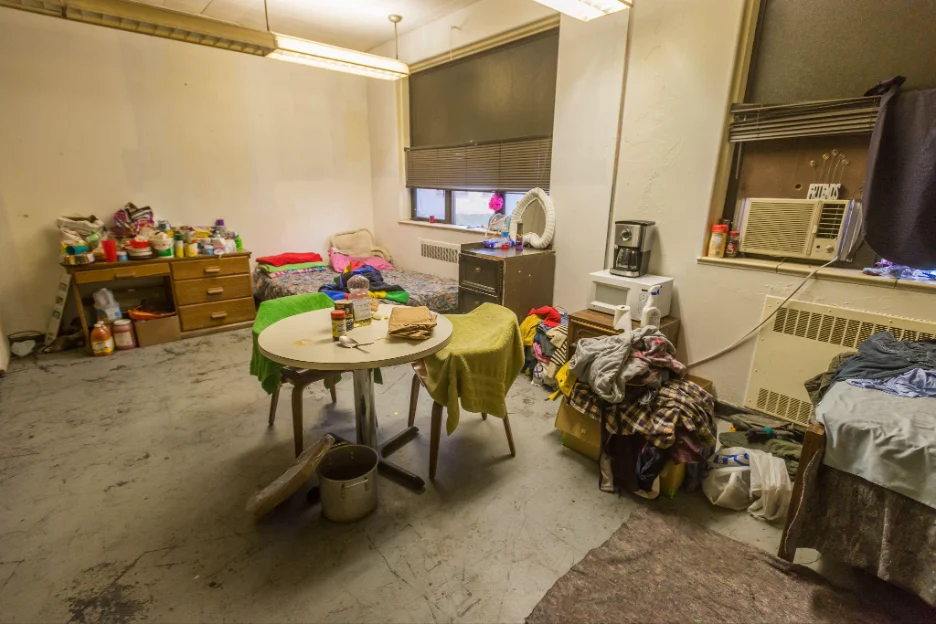
Migrant labor is the foundational pillar sustaining U.S. agriculture, a constant and essential force that underpins the nation’s food supply. Yet, the individuals who perform this indispensable work remain largely hidden from public view, their lives characterized by a profound social and spatial invisibility. This concealment is not accidental; it is often a deliberate consequence of how their housing is integrated into the agricultural landscape. Employers frequently site worker dormitories behind dense groves, far from public roads, or on private land secured by locked gates, rendering these communities difficult to access and, crucially, difficult for residents to leave. This isolation is a critical component of a system that controls and often exploits a vulnerable workforce.
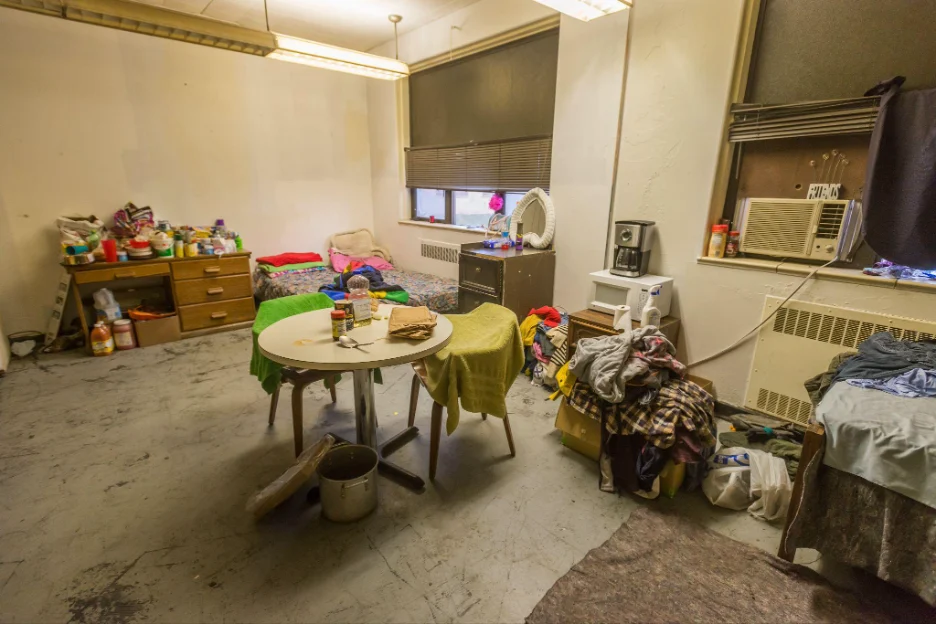
The stark realities of this hidden world are brought into sharp relief through firsthand accounts and sociological analysis. A paralegal working for an immigration law firm in Metro Detroit described meeting numerous migrant workers whose narratives consistently painted a picture of arduous labor coupled with profoundly inadequate living conditions. These individuals often toiled long days in fields or orchards, typically six or seven days a week, enduring extreme heat and physically demanding tasks. Their return was not to a home offering respite and dignity, but to dormitories frequently situated far from any town center, devoid of privacy, comfort, or basic amenities. Shared beds, cramped quarters, communal bathrooms, and often bare kitchens were recurring themes in their descriptions, underscoring a systemic disregard for their well-being.
The Historical Roots of Agricultural Labor and Housing
The current state of migrant farmworker housing is not an anomaly but a continuation of historical patterns within U.S. agriculture. The demand for seasonal, flexible labor has long shaped the conditions for farmworkers. From the sharecropping system in the post-Civil War South to the waves of Mexican and Central American laborers recruited through programs like the Bracero Program (1942-1964), the industry has relied on a transient workforce. These historical programs, while providing legal pathways for some, also established precedents for employer-provided housing that was often tied directly to employment, creating a power imbalance.
Post-Bracero, the reliance shifted to undocumented workers and, increasingly, to workers brought in under the H-2A temporary agricultural worker visa program. The H-2A program, while requiring employers to provide housing that meets federal and state standards, still places workers in a precarious position. Their legal status and continued employment are often contingent on remaining in the provided housing, making complaints about conditions a high-stakes gamble. This legacy has fostered an environment where the provision of housing is less about worker welfare and more about labor control and operational efficiency for agricultural businesses.
Documenting the Invisible: Photographic Evidence and Eyewitness Testimony
Visual documentation plays a crucial role in bringing these hidden realities to light. Photographs from agricultural regions across the United States, including North Carolina and California, repeatedly depict rows of identical, austere cabins. Inside, narrow beds, small windows, and severely limited space characterize living arrangements. These images serve as more than mere documentation; they are compelling evidence of a deliberately constructed system designed to marginalize and diminish the humanity of those who feed the nation.
One iconic photograph, captured by Dorothea Lange in Nipomo, California, in 1936, during the Great Depression, shows a 32-year-old mother with three of her seven children outside a temporary shelter. This image, while decades old, resonates powerfully with contemporary accounts, illustrating the enduring nature of precarious housing for agricultural families. It underscores a continuity of experience where temporary, often inadequate, shelter has been the norm for generations of farmworkers, highlighting a persistent structural problem rather than isolated incidents.
The paralegal’s experience reinforces this visual evidence with poignant personal narratives. Workers described bunks so close they could hear every breath of the person above, and married couples forced to live separately due to strict rules on visitors, meals, and noise. The pervasive feeling of being monitored and the fear of speaking out are direct consequences of a system where housing is a tool of control, not a fundamental right. These "homes" are explicitly not the workers’ own, a fact underscored by the constant threat of eviction tied to employment.
The Socio-Structural Framework: Power, Space, and Control
Sociology offers a critical framework for understanding that this situation is far more than just "bad housing structure"; it is a deeply embedded structural problem. At its core, the issue is illuminated by conflict theory, which posits that societal development and change are driven by struggles over power and resources. In the context of migrant labor, this struggle is overtly manifest in the very organization and control of housing.
Building on this, the work of Henri Lefebvre, particularly his concept of "the production of space," is highly relevant. Lefebvre argued that space is not merely an empty container but is socially produced—shaped by those with the authority and power to determine how people live within it. This production is rarely driven by considerations of comfort, fairness, or optimal function for the inhabitants. Instead, the arrangement and social production of space reflect the interests of those who wield control. The layout of a dormitory, the distance between housing units and towns, and the design of individual rooms are not arbitrary; they are meticulously crafted to reflect and reinforce existing power relationships. For migrant workers, this means space is often designed to facilitate surveillance, limit autonomy, and enforce discipline, rather than to foster community or individual well-being.
Similarly, Michel Foucault’s seminal work, Discipline and Punish, demonstrates how institutions utilize architecture as a means to enforce discipline and control. In migrant housing, the physical space itself signals control without the overt presence of bars or guards. While these dorms might meet minimum legal standards for shelter, these standards are often alarmingly close to, or in some cases barely exceed, those deemed acceptable for prison cells. This minimalist architecture subtly but powerfully dehumanizes, and in doing so, it serves as a potent instrument of control. The fewer choices a person has—regarding where they live, who they live with, and how they live—the easier it becomes to control their behavior and suppress dissent.
Regulatory Frameworks and Enforcement Challenges
Federal regulations, primarily under the Migrant and Seasonal Agricultural Worker Protection Act (MSPA) and the Occupational Safety and Health Administration (OSHA), set standards for farmworker housing. For H-2A visa workers, specific housing requirements are outlined by the Department of Labor. These regulations cover aspects like space per person, sanitation facilities, cooking and eating areas, and structural integrity. However, enforcement remains a significant challenge.
The sheer number of agricultural sites, often remote, makes consistent inspections difficult. Many farmworkers, particularly those who are undocumented or reliant on their employer for H-2A sponsorship, are hesitant to report violations due to fear of retaliation, job loss, or deportation. Advocacy groups frequently highlight that even when standards exist, the lack of robust enforcement mechanisms and the power imbalance between employers and workers create an environment where violations persist. State-level regulations vary widely, creating a patchwork of protections that can be inconsistent and confusing. This regulatory landscape, while attempting to provide a baseline, often falls short in practice, leaving workers vulnerable.
Health and Human Rights Implications
The substandard housing and living conditions experienced by migrant farmworkers have severe implications for their health and human rights. Overcrowding, poor sanitation, and lack of adequate ventilation contribute to the rapid spread of infectious diseases, including respiratory illnesses, tuberculosis, and gastrointestinal infections. The absence of privacy and comfort takes a significant toll on mental health, leading to increased rates of stress, anxiety, depression, and even post-traumatic stress disorder, exacerbated by the isolation and fear of reprisal.
Workers frequently lack access to nutritious food, safe drinking water, and proper hygiene facilities, compounding their vulnerability to illness and injury, particularly given their exposure to pesticides and extreme weather during work. The constant threat of displacement and the instability of their living situation also create chronic stress, undermining their overall well-being and long-term health outcomes. Access to healthcare is often limited due to geographic isolation, language barriers, lack of insurance, and fear of engaging with official systems. These conditions represent a profound violation of fundamental human rights, including the right to adequate housing, health, and dignity.
Economic Impact and the Broader Food System
The exploitation embedded in migrant farmworker housing also has broader economic implications for the U.S. food system. The ability to provide minimal housing, often below market rates for comparable living spaces, allows growers to minimize labor costs. This cost saving is often passed on to consumers in the form of cheaper produce, creating an implicit subsidy for the agricultural industry at the expense of farmworker well-being.
However, this short-term economic benefit comes with long-term societal costs. The poor health outcomes of farmworkers often translate into increased demands on emergency healthcare services, which are publicly funded. High turnover rates due to poor conditions can lead to inefficiencies in the labor supply. Moreover, a system reliant on the exploitation of a vulnerable workforce is inherently unsustainable and raises ethical questions about the true cost of our food. Recognizing and addressing the systemic issues in farmworker housing is not just a moral imperative but also a step towards building a more resilient, equitable, and sustainable agricultural sector.
Advocacy, Legal Challenges, and Calls for Reform
Numerous advocacy organizations, such as the United Farm Workers (UFW), Farmworker Justice, and state-specific legal aid groups, have been at the forefront of efforts to improve conditions for migrant farmworkers. These groups engage in litigation, policy advocacy, community organizing, and direct service provision to address housing, wage, and working condition violations. They often conduct their own investigations, gather testimonies, and publish reports that shed light on the realities faced by farmworkers, pushing for greater transparency and accountability.
Legal challenges often target employers for violations of MSPA, OSHA, and H-2A housing regulations, seeking compensation for workers and mandating improvements. Policy reforms proposed by these groups include stronger enforcement mechanisms, increased funding for inspections, improved access to legal aid for workers, and the decoupling of housing from employment to reduce employer control. There are also calls for comprehensive immigration reform that would provide a clearer path to legal status for farmworkers, empowering them to advocate for their rights without fear of deportation.
A Call for Visibility and Systemic Change
The sociological lens allows us to accurately name what is happening: this is not merely a housing crisis; it is a deliberate and enduring labor strategy. The isolated, often substandard living conditions provided to migrant farmworkers are not temporary accidents or unfortunate oversights. Instead, they represent long-term solutions to a problem that many in power have historically chosen not to fix, or even acknowledge. By creating an invisible, vulnerable workforce, the system ensures a cheap and readily available labor pool, largely shielded from public scrutiny.
As scholars, journalists, and citizens, it is our collective responsibility to bring these deliberately obscured designs to light. We cannot effectively change what remains unseen or unspoken. Through detailed reporting, robust data collection, and a commitment to human rights, we must dismantle the walls of invisibility that surround these essential workers. Only by confronting the structural nature of this problem—by recognizing the intricate links between labor, housing, power, and space—can we begin to forge pathways toward a future where those who feed us are afforded the dignity, respect, and humane living conditions they unequivocally deserve. The very foundation of our food system depends on it.