Kang Muslim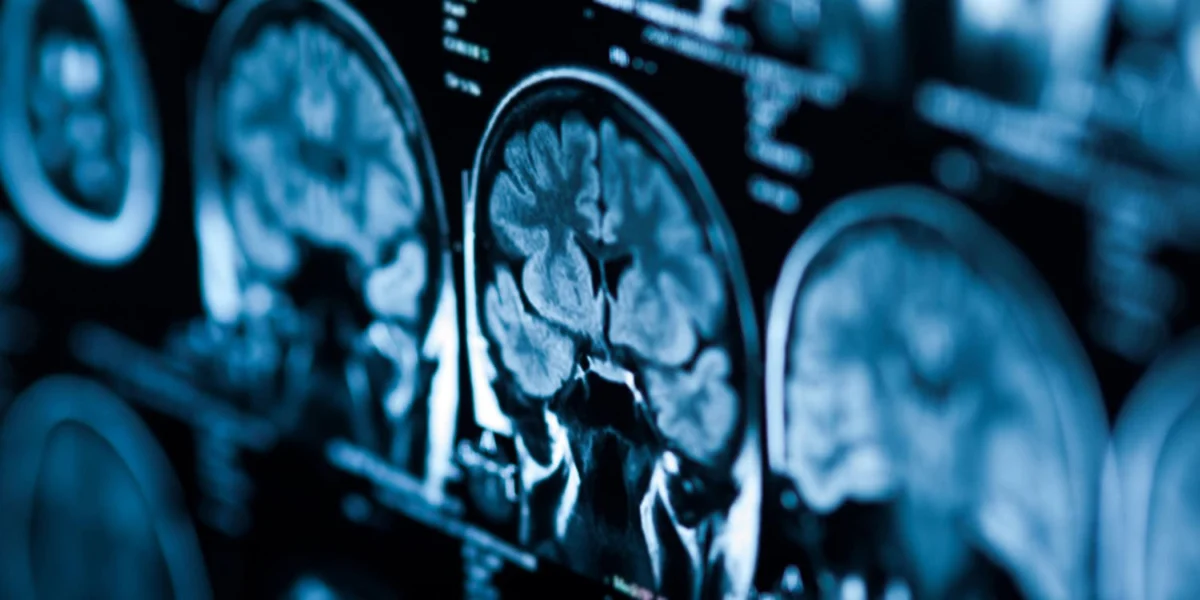
The Silent Presence: Radon in the American Household
Radon is a colorless, odorless, and tasteless radioactive gas produced by the natural decay of uranium, thorium, and radium in rocks and soil. It typically moves up through the ground to the air above and into homes through cracks in foundations, construction joints, and gaps around service pipes. According to the United States Environmental Protection Agency (EPA), radon is the second leading cause of lung cancer in the general population and the leading cause among non-smokers. However, its impact on the central nervous system has remained largely under-researched until recently.
The prevalence of radon is staggering. EPA estimates indicate that approximately one in fifteen homes in the United States has elevated radon levels—defined as 4.0 picocuries per liter (pCi/L) or higher. Despite these statistics, public engagement with radon testing remains remarkably low. Unlike other environmental hazards such as lead paint or asbestos, radon is invisible and provides no immediate symptoms of exposure, leading many families to live in high-risk environments for decades without awareness. For children, whose brains are in a state of rapid flux and maturation, this chronic background radiation may pose a unique physiological challenge.
Investigative Framework and Methodology
Led by Haley R. Pulliam of Boys Town National Research Hospital, the research team sought to bridge the gap between environmental toxicology and pediatric neuroscience. The study focused on "cognitive control," a suite of executive functions that include the ability to inhibit impulsive responses, filter out environmental distractions, and resolve conflicting information to achieve a goal. These skills are the bedrock of academic success, emotional regulation, and social integration.
The study cohort consisted of nearly sixty participants between the ages of six and fourteen. To establish an exposure profile for each child, researchers utilized a multi-faceted approach. Parents were provided with short-term radon testing kits to be placed in the lowest livable level of their homes for several days. This data was then cross-referenced with the duration of the child’s residency in that specific home to create a "chronic exposure index."
To observe the brain in action, the team employed magnetoencephalography (MEG). Unlike traditional MRI, which provides high-resolution structural images, MEG captures the magnetic fields produced by the brain’s electrical activity with millisecond precision. This allowed the researchers to monitor the rapid-fire communication between neurons as the children engaged in a cognitively demanding task.
The Simon Task: Measuring Conflict Resolution
While inside the MEG scanner, participants performed the "Simon task," a classic psychological test used to measure interference and cognitive control. In this specific iteration, children were shown a series of numbers on a screen. The objective was to identify a "target" number that differed from its surrounding distractors. The difficulty arises when the target is placed in a position that conflicts with the required physical response—for example, a target number appearing on the left side of the screen that requires a right-hand button press.
This spatial conflict forces the brain to suppress an automatic reaction (responding to the location) and instead prioritize a deliberate one (responding to the number’s identity). Successfully navigating the Simon task requires the seamless integration of the visual system, the motor system, and the prefrontal cortex—the brain’s "executive suite."
Neurological Findings: Altered Rhythms and Compensatory Mechanics
The results of the MEG scans revealed that children with higher chronic radon exposure exhibited distinct irregularities in their neural oscillations. Specifically, alterations were observed across three primary frequency bands: alpha, theta, and gamma. These rhythms are the "language" of the brain, allowing different regions to synchronize and share information.
In children with higher exposure indices, the researchers noted significant deviations in the occipital lobe, which processes visual information, and the motor cortex, which executes physical movement. This suggests that radon may interfere with the fundamental "circuitry" used to translate visual cues into physical actions.
More concerning were the findings within the prefrontal cortex. The study found that highly exposed youths showed a "flattened" neural response. During the most difficult portions of the Simon task, their brain wave activity was weaker than that of their low-exposure peers. Conversely, during the easiest baseline tasks, these same children showed abnormally high levels of brain activity.
The researchers characterized this as a "biological compensation mechanism." This phenomenon is frequently observed in aging populations or individuals in the early stages of neurodegenerative disease. Essentially, the brains of children exposed to higher radon levels must work significantly harder just to maintain a baseline level of performance. When the task becomes genuinely challenging, these children have already exhausted their neural "reserve," leading to a drop-off in efficiency and accuracy.
Disruption of the Developmental Trajectory
One of the most significant aspects of the study was its analysis of how radon exposure affects the natural maturation of the brain. Under normal circumstances, as a child grows into adolescence, the brain’s attention networks become more refined, specialized, and efficient. This maturation is typically visible in MEG scans as increasingly robust and "clean" electrical signals during cognitive tasks.
However, in the high-exposure group, this developmental curve was either stalled or, in some regions, reversed. Brain areas that should have shown increased engagement and efficiency with age failed to do so. This implies that chronic exposure to low-level radiation may be "aging" the brain or preventing it from reaching its full developmental potential, effectively narrowing the window of opportunity for the maturation of executive functions.
Behavioral Consequences and Real-World Impact
The neurological changes identified by Pulliam and her colleagues were not merely theoretical; they translated into measurable behavioral differences. The study found that the altered electrical patterns served as a direct mediator between radon exposure and reaction times. Younger children with high exposure demonstrated significantly slower and less accurate responses during the Simon task.
In a real-world setting, these deficits in cognitive control can manifest in various ways. A child may struggle to follow multi-step instructions in a classroom, find it difficult to ignore the noise of a hallway while taking a test, or exhibit higher levels of frustration when faced with complex problems. Over time, these minor hurdles can accumulate, leading to academic underachievement and behavioral diagnoses.
Public Health Implications and Policy Context
The findings add a new layer of urgency to radon mitigation efforts. Current EPA guidelines suggest that homeowners take action if radon levels exceed 4.0 pCi/L, yet the agency also notes that there is no "safe" level of radon. The study from Boys Town National Research Hospital suggests that even "background" levels of radiation—those often deemed acceptable by current standards—may be associated with subtle but significant neural alterations.
Environmental health advocates have long pushed for mandatory radon testing during real estate transactions and in school buildings. While some states have adopted these measures, they are far from universal. The potential link between radon and neurodevelopmental delays could provide the necessary impetus for more rigorous federal and state legislation regarding indoor air quality.
Limitations and the Path Forward
The authors were careful to note the limitations of their work. The use of short-term testing kits provides only a "snapshot" of radon levels, which can fluctuate based on seasonal changes, ventilation, and even soil moisture. Furthermore, the study did not account for radon exposure in other environments, such as schools or daycare centers, where children spend a significant portion of their day.
Future research will require longitudinal designs—tracking the same group of children over a decade or more—to determine if these neural changes persist into adulthood or if they predispose individuals to conditions like Attention-Deficit/Hyperactivity Disorder (ADHD) or early-onset cognitive decline. There is also a need to investigate whether radon mitigation systems, which can reduce indoor gas levels by up to 99%, can halt or even reverse these neurological trends if installed early in a child’s life.
Conclusion: A New Frontier in Environmental Neurotoxicology
The study titled "Chronic radon exposure is associated with developmental alterations to neural and behavioral indices of cognitive control" serves as a critical wake-up call. It suggests that the "invisible killer" in our basements may be doing more than attacking our lungs; it may be quietly reshaping the minds of the next generation.
As the scientific community continues to unravel the complex relationship between our environment and our biology, the importance of proactive testing and mitigation cannot be overstated. For parents and policymakers alike, the message is clear: protecting a child’s cognitive future may begin with ensuring the air they breathe at home is safe from the silent seepage of the earth’s natural radiation. By expanding our understanding of radon’s reach, we can better safeguard the developmental health and potential of children nationwide.