Ferry Irwandi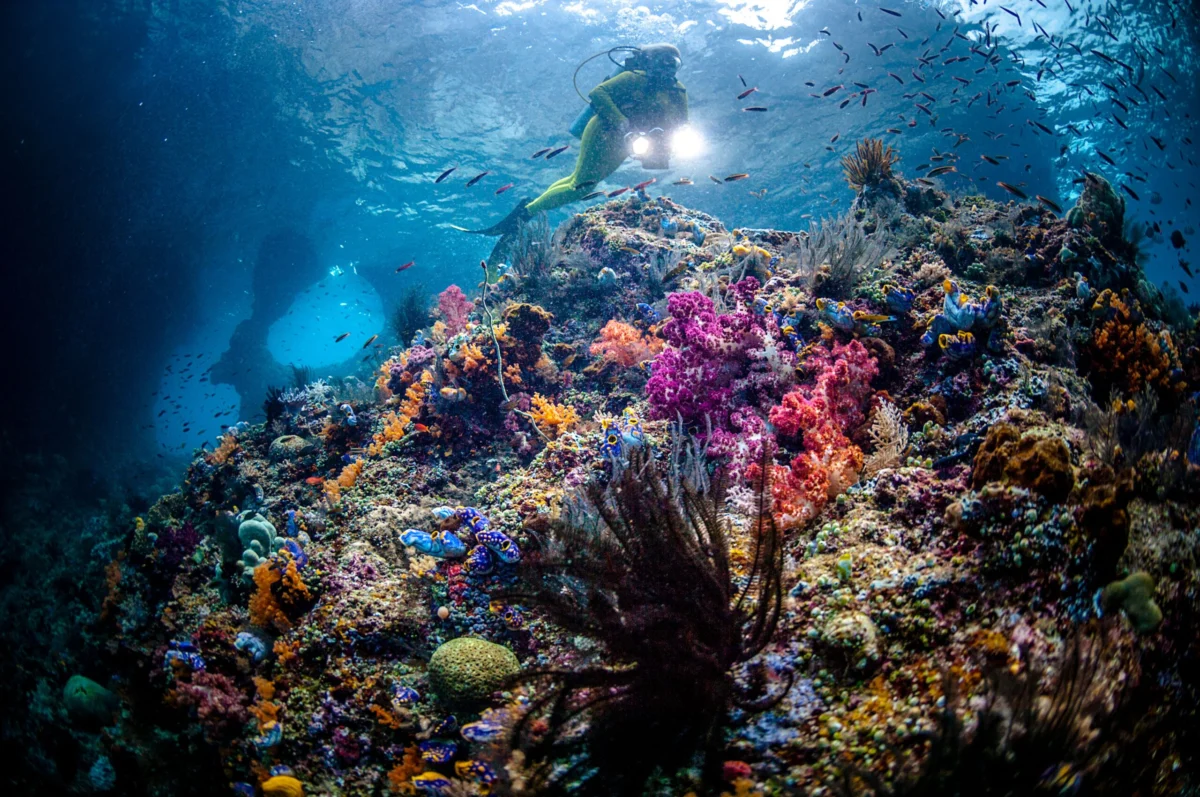
The global marine tourism industry has witnessed a significant transformation over the last decade, evolving from a niche recreational activity into a primary driver of international travel. Snorkeling, once viewed as a secondary excursion for beachgoers, has become a central focus for travelers seeking "blue space" immersion—a concept supported by environmental psychology which suggests that proximity to water significantly enhances mental well-being and reduces cortisol levels. From the volcanic vents of the Atlantic to the coral-dense lagoons of the South Pacific, the world’s premier snorkeling destinations offer a window into biological diversity that is increasingly rare in terrestrial ecosystems.

The Economic and Ecological Value of Marine Tourism
Recent data from the World Travel & Tourism Council (WTTC) indicates that coastal and marine tourism represents approximately 50% of all global tourism. In regions like the Caribbean and Southeast Asia, this figure can rise to over 80%. The economic reliance on healthy reef systems has spurred a global movement toward sustainable "blue economies," where the protection of marine biodiversity is inextricably linked to local financial stability. Coral reefs, while covering less than 0.1% of the ocean floor, support at least 25% of all marine species, making the preservation of the world’s top snorkeling sites a matter of international ecological importance.

Prime Destinations for Underwater Exploration
1. Silfra Fissure, Iceland
The Silfra Fissure, located within Þingvellir National Park, offers a unique geological experience where snorkelers can float between the North American and Eurasian tectonic plates. The water, filtered through underground lava rock for decades, maintains a constant temperature of 2–4°C (36–39°F) and boasts visibility exceeding 100 meters. This site is the only place in the world where a rift between two continents is visible and accessible to swimmers.

2. Ningaloo Reef, Western Australia
A UNESCO World Heritage site, Ningaloo Reef is one of the world’s largest fringing reefs. Unlike the Great Barrier Reef, which requires a lengthy boat ride to reach, Ningaloo is accessible directly from the shore. It is globally renowned for the seasonal migration of whale sharks (Rhincodon typus) between March and August. Recent tracking data shows that the reef supports a population of over 500 individual whale sharks annually, alongside manta rays and humpback whales.

3. The Blue Edge and Tugboat Wreck, Curaçao
Curaçao’s underwater topography is defined by a "blue edge"—a sharp drop-off where the shallow reef terrace meets the deep ocean. The Tugboat wreck, submerged for over 30 years, has become a vertical garden for brain corals and sea fans. Local marine biologists note that the wreck serves as a vital nursery for juvenile reef fish, including parrotfish and yellowtail snappers.

4. Bora Bora, French Polynesia
French Polynesia’s lagoons are characterized by their crystalline clarity and high density of blacktip reef sharks and pink whiprays. The region has implemented strict "Rahui" zones—traditional management systems that restrict fishing and human activity to allow marine populations to regenerate. These zones have seen a 30% increase in fish biomass over the last five years, according to regional environmental reports.

5. Raja Ampat, Indonesia
Often cited as the "Amazon of the Seas," Raja Ampat holds the world record for the highest recorded marine biodiversity. Located at the heart of the Coral Triangle, it contains over 1,400 species of fish and 75% of all known coral species. The Indonesian government’s 2010 declaration of the entire 4-million-hectare area as a shark and ray sanctuary has led to a measurable recovery of apex predator populations.

A Chronology of Snorkeling and Marine Protection
The history of snorkeling dates back to ancient Greece, where sponge divers used hollow reeds to breathe while submerged. However, the modern era of snorkeling began in the 1930s with the invention of the rubber mask and fins by Guy Gilpatric and Maxime Forjot.

- 1938: The first modern snorkel with a valve was patented.
- 1975: The establishment of the Great Barrier Reef Marine Park marked the first large-scale effort to manage snorkeling and diving impact.
- 2008: The first International Year of the Reef highlighted the threat of coral bleaching, leading to the development of "reef-safe" sunscreens.
- 2021-2024: A surge in "Citizen Science" snorkeling programs allows tourists to upload photos of sea turtles and manta rays to global databases for population tracking.
Supporting Data on Coral Health and Conservation
The health of these 20 destinations is under constant scrutiny by the Global Coral Reef Monitoring Network (GCRMN). A 2023 report indicated that while global coral cover has declined by 14% since 2009 due to rising sea temperatures, "hope spots"—areas with high resilience—are emerging in places like the Red Sea and parts of the Caribbean.

Snorkeling destinations are increasingly adopting "Blue Flag" certifications, which require rigorous water quality testing and environmental education programs. In Australia and Belize, the implementation of mandatory "reef tax" fees for snorkelers has generated millions of dollars specifically earmarked for coral restoration and the installation of permanent mooring buoys to prevent anchor damage.

Broader Impact and Implications for Travel
The rise of high-quality snorkeling tourism has forced a shift in how coastal developments are managed. Governments are beginning to recognize that a live coral reef is worth significantly more in long-term tourism revenue than the short-term gains of coastal reclamation or industrial fishing.

Official Reactions and Expert Perspectives:
Marine biologists from the National Oceanic and Atmospheric Administration (NOAA) have emphasized that snorkeling provides a "low-barrier entry point" for environmental advocacy. "When people see the complexity of a reef system firsthand, they are 70% more likely to support marine conservation policies," states a recent NOAA educational impact study.

However, the industry faces challenges. The 2023-2024 El Niño event caused widespread thermal stress on reefs. In response, operators in the Maldives and the Great Barrier Reef have expanded coral snorkeling trails that include "nurseries" where guests can observe coral fragments being grown on frames for later transplantation.

Additional Top-Tier Snorkeling Locations
6. The Galápagos Islands, Ecuador
This archipelago is unique for its "confluence of currents," where warm and cold waters meet. Snorkelers here encounter species found nowhere else, such as the marine iguana and the Galápagos penguin. The Ecuadorian government’s strict limit on visitor numbers ensures that the underwater environment remains largely pristine.

7. Ambergris Caye, Belize
Home to the Hol Chan Marine Reserve, this site features a natural break in the reef that allows for a high exchange of nutrients, attracting large schools of nurse sharks and southern stingrays. It is a primary example of how small-scale protected areas can yield high-density wildlife encounters.

8. The Red Sea, Egypt (Marsa Alam)
The Red Sea is known for its high salinity and extreme water clarity. Marsa Alam is particularly noted for its populations of dugongs and green sea turtles. Because the Red Sea corals have evolved to withstand higher temperatures, they are currently being studied as "super corals" that may hold the key to reef survival in a warming climate.

9. Komodo National Park, Indonesia
Beyond its famous dragons, Komodo’s underwater world is shaped by powerful currents that bring nutrient-rich waters from the deep. This results in vibrant "soft coral" gardens and frequent sightings of manta rays at sites like Manta Point.

10. Hanauma Bay, Hawaii, USA
As a volcanic crater partially open to the ocean, Hanauma Bay serves as a natural amphitheater for marine life. It was one of the first sites in the U.S. to implement a mandatory orientation video for all visitors, emphasizing the importance of not touching the reef—a model now used globally.

Conclusion: The Future of the Underwater Frontier
As global temperatures continue to fluctuate, the "best" snorkeling spots will increasingly be defined by their resilience and the management strategies employed by their host nations. The transition toward regenerative tourism—where the act of visiting actually contributes to the health of the ecosystem—is becoming the new standard.

Snorkeling is no longer merely a leisure activity; it is a vital bridge between humanity and the mysteries of the ocean. The continued viability of these 20 destinations depends on a delicate balance of international climate policy, local conservation efforts, and the responsible behavior of the millions of individuals who don a mask and snorkel each year to explore the world beneath the waves. The data suggests that while the risks to these ecosystems are unprecedented, so too is the global commitment to their preservation. Through technological innovation in coral spawning and the expansion of Marine Protected Areas (MPAs), the world’s premier snorkeling sites remain beacons of biodiversity in a changing world.