Johny Marice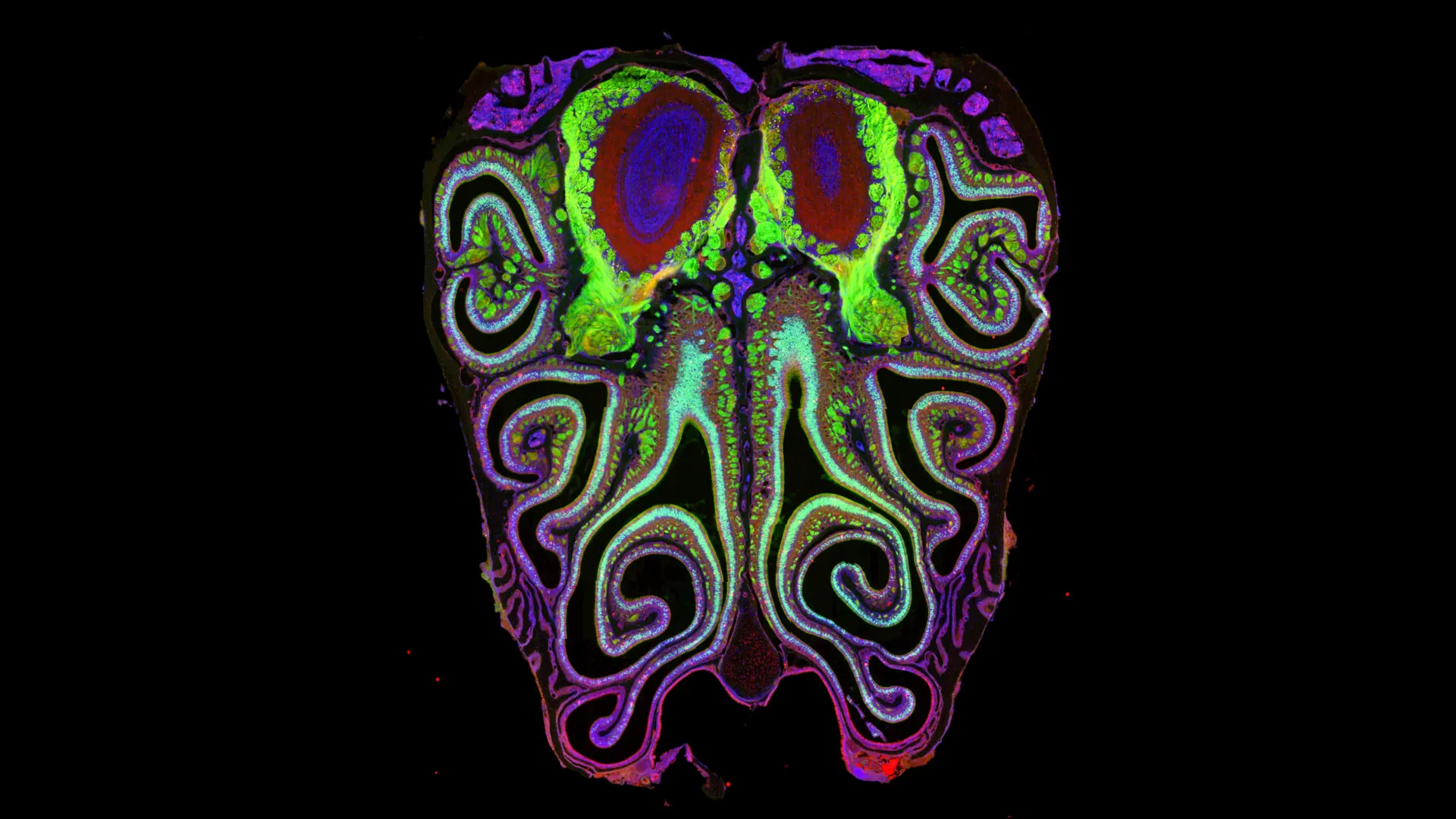
The intricate and often mysterious sense of smell, a fundamental pillar of our daily experience, has long eluded complete scientific understanding. While crucial for detecting dangers, enhancing the appreciation of food, and forging deep emotional and memory connections, the biological underpinnings of olfaction have remained comparatively obscure when juxtaposed with senses like vision, hearing, and touch. This knowledge gap has now been significantly narrowed by a groundbreaking study from Harvard Medical School, which has produced the first detailed map of how over a thousand types of smell receptors are organized within the mammalian nose, revealing an astonishing level of order where randomness was previously presumed.
Unraveling the Mysteries of Olfaction: A Paradigm Shift in Understanding
"Olfaction is super-mysterious," stated Sandeep (Robert) Datta, a professor of neurobiology at Harvard Medical School and senior author of the study published on April 28th in the prestigious journal Cell. For decades, scientists have grappled with the sheer complexity of the olfactory system. Unlike the relatively straightforward sensory arrays of the eyes, ears, and skin, which have yielded their organizational principles to scientific inquiry, the nose has presented a persistent enigma. This olfactory map, a key to deciphering how scent information is processed, has been the missing piece of the puzzle for the longest time.
The challenge lies in the extraordinary scale and diversity of olfactory receptors. Mice, the model organism for this study, possess approximately 20 million olfactory neurons, each uniquely equipped with one of over a thousand distinct types of smell receptors. In stark contrast, human color vision, a highly sophisticated system, relies on just three primary receptor types. Each individual smell receptor is tuned to detect a specific spectrum of odor molecules, creating a combinatorial code that allows for the perception of an almost limitless array of scents. This intricate architecture has made mapping the olfactory system a formidable undertaking.
The Long and Winding Road to an Olfactory Map
The journey to understanding smell receptor organization began in earnest in 1991 with the initial identification of these receptors. Over the subsequent decades, researchers diligently sought patterns in their distribution within the nasal cavity. Early investigations, limited by the available technologies, suggested a rather diffuse and somewhat random arrangement, with receptors appearing in only a few broad zones. This led to a prevailing notion that the placement of these crucial sensory elements lacked precise organization.
However, as advancements in genetic tools and single-cell analysis techniques emerged, Professor Datta and his team were empowered to revisit this long-standing question with unprecedented precision and scale. Their ambition was to move beyond broad assumptions and create a high-resolution blueprint of the olfactory landscape.
A Million-Neuron Revelation: The Discovery of Ordered Stripes
The Harvard team embarked on an ambitious endeavor, analyzing an astonishing 5.5 million neurons derived from over 300 individual mice. This massive dataset was meticulously processed using a combination of cutting-edge techniques. Single-cell sequencing allowed researchers to identify precisely which receptor type each individual neuron expressed. Simultaneously, spatial transcriptomics provided the crucial ability to pinpoint the exact three-dimensional location of these neurons within the nasal cavity.
"This is now arguably the most sequenced neural tissue ever, but we needed that scale of data in order to understand the system," Professor Datta explained, highlighting the sheer magnitude of the computational and experimental effort involved.
The results of this extensive analysis were nothing short of revelatory. Far from being randomly scattered, the neurons expressing specific smell receptors were found to be meticulously organized into distinct, overlapping horizontal bands, or "stripes," that ran consistently from the top to the bottom of the nose. This highly ordered arrangement, grouped by receptor type, was remarkably uniform across all the mice studied, defying previous assumptions of randomness.
"Our results bring order to a system that was previously thought to lack order, which changes conceptually how we think this works," Professor Datta emphasized. This discovery fundamentally alters our conceptual framework for understanding how the sense of smell operates.
Bridging the Gap: From Nose to Brain
Crucially, the researchers did not stop at mapping the nose. Their study also demonstrated a profound alignment between the organizational map found within the nasal cavity and the corresponding maps in the olfactory bulb of the brain. The olfactory bulb is the first processing center for scent information in the brain, and its intricate neural circuits are responsible for interpreting the signals received from the nose.
This direct correspondence between the nasal map and the olfactory bulb’s neural architecture offers invaluable new insights into the neural pathways through which scent information is transmitted. It suggests a highly organized and efficient system for relaying specific odor signals from their initial detection point to higher brain centers for interpretation. This parallel organization hints at a sophisticated encoding mechanism that translates the complex world of smells into a coherent neural representation.
The Developmental Blueprint: How the Map is Formed
Understanding that the map exists is a monumental achievement, but the Harvard team also delved into the question of how this precise structure is established during development. Their investigations pointed to a critical role for retinoic acid, a naturally occurring molecule known for its influence on gene activity and developmental processes.
The study revealed a gradient of retinoic acid within the developing nose. This chemical gradient appears to act as a guiding cue for olfactory neurons. As neurons migrate and mature, their position within this gradient dictates which specific smell receptor they will ultimately express. This mechanism ensures that each neuron is correctly placed and equipped to detect a particular set of odorants, contributing to the formation of the characteristic striped pattern.
To confirm this hypothesis, the researchers experimentally altered the levels of retinoic acid. The results were striking: changes in retinoic acid levels directly led to shifts in the entire receptor map, either moving it upward or downward within the nasal cavity. This manipulation provided compelling evidence for retinoic acid’s role as a master architect of the olfactory map.
"We show that development can achieve this feat of organizing a thousand different smell receptors into an incredibly precise map that’s consistent across animals," Professor Datta stated, underscoring the remarkable precision of biological development.
The findings of Datta’s lab were further corroborated by a separate study, led by Catherine Dulac, a professor at Harvard University, which was published in the same issue of Cell. This parallel research, focusing on a slightly different aspect of olfactory coding, provided consistent evidence for a highly organized olfactory system, reinforcing the significance of these discoveries.
Implications for Restoring a Vital Sense: The Promise of Therapeutic Innovation
Beyond its fundamental scientific importance, this breakthrough in understanding the olfactory map carries significant practical implications, particularly for individuals suffering from smell loss. Anosmia, the complete or partial loss of the sense of smell, can have profound and often underestimated impacts on an individual’s quality of life. It can compromise safety by hindering the detection of dangerous fumes or spoiled food, affect nutritional intake and enjoyment due to diminished flavor perception, and contribute to psychological distress, including depression and social isolation.
Currently, effective treatments for smell loss are limited. The current study offers a glimmer of hope by providing a deeper understanding of the fundamental biological mechanisms at play. "We cannot fix smell without understanding how it works on a basic level," Professor Datta asserted, emphasizing the prerequisite of foundational knowledge for therapeutic development.
The research team is now focused on unraveling further complexities. They are investigating the specific molecular cues that dictate the precise order of the receptor stripes and, critically, whether a similar organizational principle exists in the human olfactory system. This ongoing research could pave the way for novel therapeutic strategies. Potential avenues include the development of stem cell therapies designed to regenerate damaged olfactory neurons and the exploration of brain-computer interfaces that could bypass damaged olfactory pathways to restore scent perception.
"Smell has a really profound and pervasive effect on human health, so restoring it is not just for pleasure and safety but also for psychological well-being," Professor Datta underscored. "Without understanding this map, we’re doomed to fail in developing new treatments." The prospect of restoring this vital sense offers not only the promise of enhanced safety and enjoyment but also a significant boost to overall mental and emotional well-being.
Future Directions and Unanswered Questions
The publication of this seminal study marks a significant milestone, but it also opens up new avenues for exploration. The precise evolutionary pressures that led to this highly ordered stripe formation remain a subject of ongoing investigation. Furthermore, understanding the intricate communication networks between these organized receptor populations and the downstream neural circuits in the brain is the next frontier.
The potential for interspecies comparison of olfactory maps also presents exciting research opportunities. While mice serve as an excellent model, variations in olfactory receptor repertoires and nasal anatomy across species, including humans, could lead to nuanced differences in how smells are perceived and processed.
In conclusion, the creation of the first detailed map of mammalian smell receptors represents a paradigm shift in our understanding of olfaction. By revealing an unexpected and elegant organizational principle within the nose, this research not only deepens our appreciation for the complexity of this vital sense but also lays the critical groundwork for future innovations aimed at restoring the ability to smell, thereby improving the health and well-being of millions worldwide.
Authorship, Funding, and Disclosures
The research was a collaborative effort involving numerous scientists. Additional authors on the Cell paper include David Brann, Tatsuya Tsukahara, Cyrus Tau, Dennis Kalloor, Rylin Lubash, Lakshanyaa Kannan, Nell Klimpert, Mihaly Kollo, Martin Escamilla-Del-Arenal, Bogdan Bintu, Andreas Schaefer, Alexander Fleischmann, and Thomas Bozza.
Funding for this extensive research was generously provided by several prominent institutions, including the National Institutes of Health (grants R01DC021669, R01DC021422, R01DC021965, and F31DC019017), the Yang Tan Collective at Harvard, and a National Science Foundation Graduate Research Fellowship. These grants underscore the national importance and recognized scientific merit of this groundbreaking work. The researchers have declared no competing interests.