
 Reynand Wu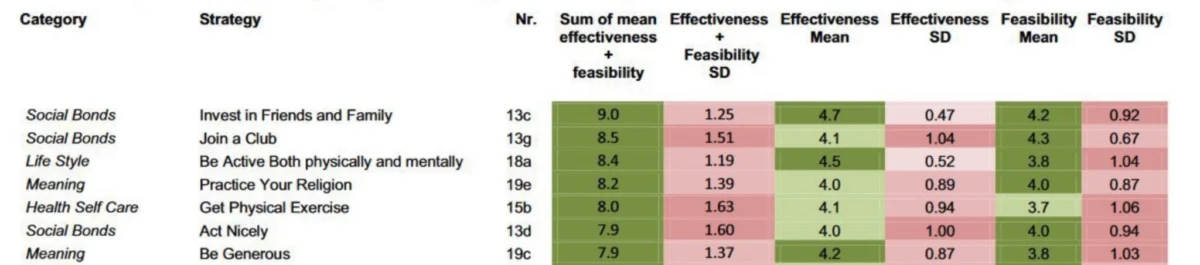
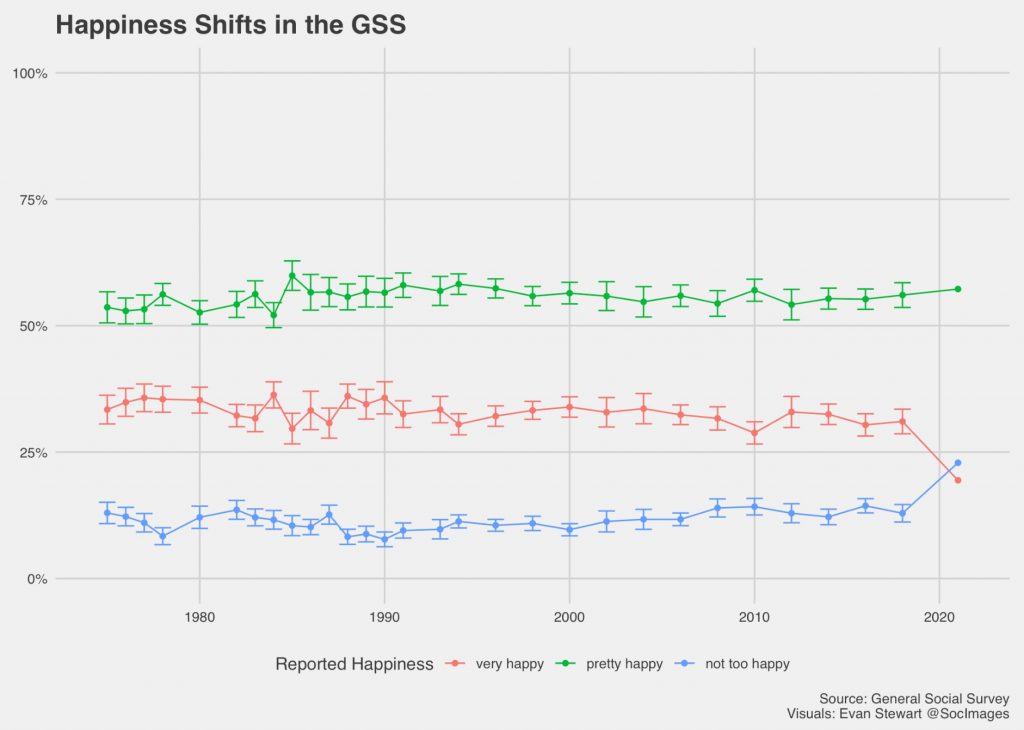
As the new year unfurled, bringing with it a renewed surge in COVID-19 cases across the nation, a pervasive sense of despondency settled over communities, exacerbating an already concerning trend in national well-being data. This latest wave of the pandemic, characterized by the rapid spread of new variants and persistent public health challenges, has cast a long shadow over collective spirits, further impacting the self-reported happiness levels of Americans. Data from the venerable General Social Survey (GSS), a cornerstone of sociological research, indicates a continued and significant decline in perceived happiness, mirroring trends observed earlier in the pandemic and underscoring a deepening crisis in mental and emotional well-being.
The General Social Survey, administered by NORC at the University of Chicago since 1972, provides a critical long-term perspective on social trends, attitudes, and behaviors in the United States. Its recent data release confirms that the drop in self-reported happiness, first noted as a significant concern in the initial stages of the pandemic, has not abated but rather entrenched itself. Specifically, the proportion of Americans reporting themselves as "very happy" has diminished, while those identifying as "not too happy" have seen a corresponding increase. This shift, while potentially influenced in part by the survey’s adaptation to new online administration methods, aligns consistently with findings from NORC’s previous pandemic tracking surveys, suggesting a robust and troubling pattern reflecting genuine societal distress.
The Pandemic’s Persistent Toll on National Psyche
The onset of the COVID-19 pandemic in early 2020 triggered an unprecedented global health crisis, fundamentally altering daily life and introducing a cascade of stressors that have profoundly affected mental health. Initial lockdowns, widespread economic uncertainty, the tragic loss of life, and the pervasive fear of illness created an environment ripe for psychological strain. Public health measures, while necessary to curb the spread of the virus, often entailed significant social isolation, disrupting the very fabric of community and personal connection that underpins human well-being.
Throughout 2020 and 2021, as the pandemic evolved through various waves and new variants emerged, the cumulative psychological burden intensified. Data from the Centers for Disease Control and Prevention (CDC) and various mental health organizations consistently reported spikes in symptoms of anxiety, depression, and stress. For instance, a CDC report in June 2020 revealed that 40% of U.S. adults reported struggling with mental health or substance use, a stark increase from pre-pandemic levels. Children and adolescents also experienced significant declines in mental health, with emergency room visits for mental health crises increasing among these age groups. The GSS data provides a macro-level confirmation of these individual-level struggles, translating them into a broad societal trend of diminishing happiness.
Sociology’s Lens: Understanding Collective Well-being
The implications of this sustained decline in national happiness extend far beyond individual experience, posing significant questions for public health, economic policy, and sociological inquiry. Academic institutions, such as the University of Massachusetts Boston where Assistant Professor Evan Stewart teaches Introduction to Sociology, are increasingly grappling with how to address these complex challenges. The field of sociology, with its focus on social structures, relationships, and collective phenomena, offers a unique and vital perspective on understanding and potentially mitigating these trends. It compels us to consider how societal factors, rather than merely individual resilience, shape our capacity for happiness and well-being.
This urgent need for societal-level solutions has brought particular attention to a compelling study that recently circulated within academic and public discourse. This research, an expert consensus study published in Journal of Happiness Studies, sought to identify the most effective strategies for improving life satisfaction based on the collective wisdom of leading happiness researchers. The authors conducted in-depth interviews and surveys with experts in the field, asking them to rank potential interventions—both personal and policy-oriented—according to their likely impact on life satisfaction, informed by the existing body of research literature. The findings of this study offer crucial insights into pathways forward during these challenging times.
Expert Consensus: The Primacy of Social Relationships
Two critical points emerged from the expert consensus study, challenging conventional wisdom and reinforcing sociological perspectives on happiness. Firstly, the researchers deliberately included both personal solutions and policy solutions in their assessment. This distinction is profoundly important because societal discourse around happiness often leans heavily into individual effort and self-help strategies, frequently amplified by a multi-billion-dollar self-help industry. While individual agency is undeniably a factor, focusing on policy solutions reminds us that personal well-being is inextricably linked to collective well-being and the broader social environment. Systemic issues, structural inequalities, and public policy decisions play a monumental role in shaping individual experiences of happiness and life satisfaction.
Secondly, and perhaps most strikingly, a significant number of the experts’ top-ranked solutions were explicitly centered on the concept of social relationships. For personal solutions, two of the highest-ranked suggestions were "investing in friends and family" and "joining a club or social group." These recommendations underscore the profound human need for connection, belonging, and meaningful interaction. On the policy front, the experts identified initiatives such as "promoting voluntary work or civil service" and "reducing loneliness" as highly effective strategies for enhancing life satisfaction across populations.
The consensus among experts on the critical role of social bonds was not merely reflected in high average ratings but also in remarkably low standard deviations for these items, indicating a strong degree of agreement across the diverse panel of researchers. This widespread expert accord highlights that the value of robust social connections is not merely a "self-help fad" but a fundamental pillar of human flourishing, supported by rigorous scientific inquiry.
The Broader Implications for Policy and Society
The findings from this expert consensus study carry profound implications for public policy and societal priorities, especially in an era marked by widespread loneliness and diminishing social capital. If cultivating strong social relationships is indeed a cornerstone of happiness, then policymakers have a clear mandate to create environments that foster such connections. This could translate into a range of initiatives:
- Investment in Community Infrastructure: Funding and supporting local community centers, parks, libraries, and public spaces that facilitate interaction and collective activities.
- Promoting Civic Engagement: Developing programs that encourage volunteering, community service, and participation in local governance, thereby strengthening social ties and a sense of collective purpose.
- Addressing Loneliness as a Public Health Crisis: Implementing targeted programs and campaigns to combat social isolation, particularly among vulnerable populations such as the elderly, single parents, or those with disabilities.
- Workplace Policies: Encouraging workplace environments that prioritize social connection, work-life balance, and employee well-being, recognizing that professional relationships contribute to overall life satisfaction.
- Urban Planning: Designing cities and neighborhoods that are walkable, feature communal spaces, and encourage serendipitous social interactions, moving away from car-centric, isolated suburban models.
Moreover, the emphasis on both personal and policy solutions suggests a dual approach is necessary. While individuals are encouraged to actively nurture their social networks, governments and institutions must create the enabling conditions for these connections to thrive. This requires a paradigm shift from viewing happiness purely as an individual pursuit to recognizing it as a collective responsibility, deeply intertwined with the health of our social fabric.
The Role of Sociology in a Post-Pandemic World
The challenges of declining happiness and increased social isolation present a critical moment for the field of sociology. As Professor Stewart implies, students entering the discipline have a right to ask how their field can contribute to solving real-world problems. The expert consensus study offers a powerful answer: sociology, by systematically studying social relationships, institutions, and collective behavior, provides the intellectual framework necessary to understand the roots of unhappiness and to design effective interventions.
It underscores that happiness is not merely a subjective state but a profoundly social phenomenon, shaped by the quality of our relationships, the strength of our communities, and the equity of our social structures. Developing a better understanding of these relationships, and investing in their cultivation at both individual and societal levels, transcends the realm of personal improvement; it becomes a social policy imperative.
In a world still reeling from the profound disruptions of a global pandemic, and facing ongoing challenges such as climate change, economic instability, and political polarization, the findings of this study offer a beacon of hope. They remind us that despite the complexity of modern crises, some of the most powerful solutions lie in the fundamental human need for connection. By prioritizing social bonds and collective well-being, societies can navigate tough times not just individually, but together, fostering resilience and rebuilding a foundation for widespread happiness. The insights gleaned from robust sociological research, therefore, are not just academic curiosities; they are essential guides for building a more connected, contented, and resilient future.








