Ana Megawati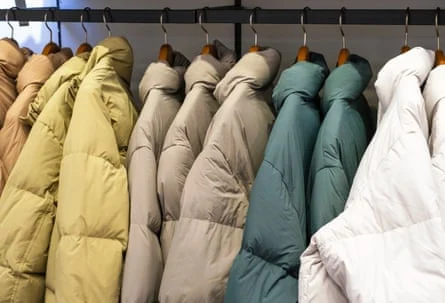
Whether colloquially termed a parka, puffer, or even the affectionate "Tassie tuxedo," the insulated jacket has firmly established itself as an indispensable item in modern cold-weather wardrobes. Its ubiquitous presence, however, belies a significant and often overlooked environmental footprint, spanning from its complex material composition to its end-of-life disposal. A comprehensive life cycle assessment reveals that the production of these materials alone accounts for a staggering 83% of a jacket’s total carbon and water footprint, positioning this cold-weather necessity at the heart of the broader sustainability debate within the fashion industry.
A Century of Insulation: From Expeditions to Everyday Wear
The concept of insulated outerwear is not new. Early iterations were born out of necessity for extreme conditions. Australian mountaineer George Finch is credited with pioneering a 1920s version, ingeniously crafted from repurposed hot air balloon fabric filled with eiderdown, designed for high-altitude expeditions. This early example showcased ingenuity in utilizing available materials for maximum warmth.
Over the decades, the design and materials evolved significantly. Post-World War II, advancements in synthetic fibres and manufacturing techniques propelled the puffer jacket into wider commercial appeal. By the latter half of the 20th century, what was once specialist gear for adventurers began its gradual transition into mainstream fashion, driven by a combination of practicality, comfort, and increasingly, style. Today, most modern insulated jackets are a complex amalgam of petroleum-based synthetics, such as nylon and polyester, alongside natural animal and plant fibres, each carrying distinct environmental and ethical implications. This shift from simple, often natural, constructions to complex multi-material designs has inadvertently amplified the environmental challenge.
The Material Conundrum: A Deep Dive into Fabric Footprints
The core of the puffer jacket’s environmental impact lies in its constituent materials. Julie Boulton, a sustainable fashion consultant, explains that a typical puffer comprises an inner and outer shell, a filler material that provides the characteristic "puff," and various notions like zippers, snaps, buttons, and thread. Each component contributes to the overall ecological burden.
Petroleum-Based Synthetics: The Dominant Shell
The outer and inner shells are predominantly made from fossil fuel-derived materials such as nylon or polyester. These synthetics are prized for their durability, water resistance, and lightweight properties. However, their production is inherently resource-intensive. The manufacturing process for polyester, for instance, involves significant greenhouse gas emissions, primarily from the energy required to synthesize the polymer from crude oil and natural gas. This energy-intensive process, coupled with spinning, weaving, fabric dyeing, and finishing, collectively contributes substantially to the jacket’s carbon footprint.
Furthermore, polyester and nylon present a critical environmental issue during their use phase: microplastic shedding. Every wash cycle can release thousands of microscopic plastic fibres into wastewater, which eventually find their way into rivers, oceans, and even our food chain. These persistent pollutants accumulate in ecosystems, posing threats to marine life and potentially human health.
The industry has responded with "100% recycled" synthetic options, typically made from post-consumer plastic waste like water bottles or discarded textiles. While these efforts are commendable for diverting waste from landfills and reducing the demand for virgin petroleum, the recycling process itself still requires energy, and the quality of recycled fibres can degrade over multiple cycles. True circularity, where textile waste is consistently recycled back into high-quality textiles, remains a significant challenge due to complex material blends and current technological limitations.
Natural Fillers: Ethical and Environmental Complexities
The insulating "puff" inside the jacket traditionally comes from natural sources like duck or goose feathers, known as down, or wool.
-
Down: Renowned for its superior warmth-to-weight ratio, down is a byproduct of the meat industry. While biodegradable, its production is fraught with animal welfare concerns. The RSPCA notes that while the vast majority of down is collected post-slaughter, a small percentage (estimated 1-2%) is still believed to originate from live-plucking – a practice widely condemned as a major welfare concern due to the pain and distress inflicted on the birds. To address these issues, the Responsible Down Standard (RDS) was introduced as a voluntary certification. It aims to ensure that down and feathers come from animals that have not been subjected to unnecessary harm, prohibiting practices like live-plucking and force-feeding, and requiring traceability throughout the supply chain. However, critics argue that such certifications, while a step forward, can be difficult to enforce across vast global supply chains, and consumers must still actively seek out and trust these labels.
-
Wool: Another natural insulator, wool also carries ethical considerations. Dr. Natalie Roadknight, a senior scientific officer at the RSPCA, highlights mulesing as the primary welfare concern in sheep wool production. This procedure involves cutting an area of skin near the tail of a lamb to prevent flystrike, a painful parasitic infection. Dr. Roadknight emphasizes that lambs are fully conscious during the procedure, experiencing significant pain. Australia remains one of the few countries where mulesing is still legal, having been banned in New Zealand and other nations. Consumers seeking to avoid wool from mulesed sheep can inquire directly with brands or look for certifications such as ZQ Merino or the Responsible Wool Standard (RWS), which ensure higher animal welfare standards.
Emerging Alternatives: A Glimmer of Green?

In response to the environmental and ethical issues surrounding traditional materials, some innovative brands are exploring plant-based alternatives for insulation. Pangaia, for example, has pioneered fills made from wildflowers, biopolymers, and aerogel. These developments offer a promising pathway towards reducing reliance on fossil fuels and animal products, though their scalability and overall life cycle impact are still being rigorously assessed. The transition to such novel materials represents a critical frontier in sustainable fashion innovation.
The Production Pipeline: A Global Footprint
The environmental burden of puffer jackets is not confined to material sourcing. The entire production pipeline, from raw material processing to final garment assembly, consumes vast amounts of water and energy. Dyeing and finishing processes, in particular, are notorious for their high water usage and potential for chemical pollution if wastewater is not properly treated.
The sheer scale of production amplifies these impacts. The market for puffer jackets is not only large but rapidly expanding, with China alone producing over 100 million jackets annually. This mass production model, often driven by cost efficiencies, creates complex global supply chains that are challenging to monitor for environmental and ethical compliance. The expansion of demand into novel categories, such as the soaring popularity of "puppy puffers," further underscores the pervasive nature of this consumption trend.
The Consumption Crisis: More Than We Need
Dr. Carolina Quintero Rodriguez, a senior lecturer at RMIT University’s school of fashion and textiles, points to advertising and social media as powerful drivers behind excessive purchasing. "That is incentivising or creating a need in the population for not only one jacket, but you need three jackets," she observes. This cultural pressure to acquire multiple items, often driven by fleeting trends, exacerbates the environmental toll.
Supporting this observation, a recent Adelaide University study examined the clothing habits of nearly 600 people, revealing that 89% of garments are bought new. Padded jackets, despite being among the most expensive items owned, are frequently underutilized. This paradox – high cost, low wear – contributes to a ready supply of secondhand puffers in excellent condition, yet consumers continue to opt for new purchases. This trend is not unique to Australia; globally, studies indicate that consumers are buying more clothes than ever before, wearing them fewer times, and discarding them faster, accelerating the fashion cycle and its environmental consequences. The average number of wears for a garment has decreased significantly over the past two decades, directly correlating with the rise of fast fashion.
The Pillars of Circularity: Re-wear, Repair, and Responsible Care
Given the extensive environmental footprint, experts universally advocate for a shift towards circularity, emphasizing responsible consumption and extended garment life.
- Prioritise Quality and Responsibility: The first step, according to Julie Boulton, is to choose a good quality garment from a responsible brand. Investing in durable items from companies committed to ethical sourcing and sustainable production practices is paramount.
- Embrace Secondhand: Before purchasing new, Boulton strongly advises exploring secondhand options or borrowing from friends. The abundance of well-maintained puffers in the resale market offers a tangible way to reduce demand for new production.
- Maximise Utility: Once acquired, the objective is to keep the jacket in service for as long as possible. "While you’ve got it, use it, and wear it, wash it responsibly and take care of it and repair it," Boulton stresses. Extending the active lifespan of a garment by even a few years can drastically reduce its overall environmental impact. For instance, wearing an item for twice as long can reduce its environmental footprint by 44%.
- Responsible Care: Dr. Quintero Rodriguez advises against over-washing garments, noting that airing them out is often sufficient. When washing is necessary, cold water is recommended, as heat can damage synthetic fabrics like nylon and elastane, contributing to microplastic release and shortening the garment’s life. Gentle washing also helps preserve water-resistant or repellent finishes, which can often be reactivated or reapplied, further extending functionality.
- The Power of Repair: The Adelaide University study found that only about one in ten items are repaired, despite mending extending a garment’s useful life by an average of 2.5 years. This highlights a lost opportunity. Many outdoor brands are now stepping up, offering repair services or providing kits to help consumers patch and mend their winter coats. Empowering consumers with repair skills and access to services is crucial for fostering a culture of longevity.
The Recycling Conundrum: A Complex End-of-Life
Despite efforts to extend garment life, all clothing eventually reaches its end-of-life. Nationally, about half of unwanted clothes in Australia (53%) end up in landfill, with 38% reused locally or exported, and a mere 9% recycled. This stark reality underscores the systemic challenges in textile waste management.
Textile recycling, particularly for complex items like puffer jackets, is a labour-intensive and technologically demanding process. The primary obstacles include:
- Material Blends: Puffer jackets, with their multiple layers of different materials (synthetic shells, natural or synthetic fills, metal zippers, plastic buttons, polyester threads), are incredibly difficult to deconstruct and sort for recycling. Contamination from different fibre types significantly complicates the recycling process.
- Lack of Infrastructure: There is a severe global deficit in advanced textile recycling infrastructure capable of efficiently processing mixed-fibre garments at scale. Most current recycling focuses on downcycling into lower-value products like insulation or rags, rather than fibre-to-fibre recycling.
- Economic Viability: Boulton laments, "It’s cheaper just to make a whole new [jacket] than it is to recover and repurpose, or deconstruct, recycle and put back into the system again, which is such a shame." The low cost of virgin polyester often makes it more economically attractive for manufacturers to use new materials rather than investing in costly and complex recycling processes.
Despite these challenges, some outdoor brands are partnering with specialized textile recyclers, such as Upparel in Australia, to offer take-back schemes. These initiatives represent crucial steps towards establishing circular systems, but they are often limited in scope and capacity.
Towards a Sustainable Future for Outerwear
Addressing the environmental impact of puffer jackets requires a multi-faceted approach involving policy, industry innovation, and consumer behaviour change.
- Policy and Regulation: Governments could play a pivotal role by implementing Extended Producer Responsibility (EPR) schemes, which mandate that brands take responsibility for the entire life cycle of their products, including collection and recycling. Regulations promoting design for disassembly, requiring minimum recycled content, and transparent labelling could also drive change.
- Industry Innovation: Continued investment in research and development for sustainable materials (e.g., bio-based synthetics, closed-loop chemical recycling for polyester) and advanced recycling technologies is essential. Developing garments that are inherently easier to repair and recycle at their end-of-life (design for circularity) is also a critical area of focus.
- Consumer Empowerment: Ultimately, individual choices hold significant power. Dr. Quintero Rodriguez’s main message resonates: "My main message will be to extend the life of the item as much as possible. Care for the item as per the care instructions. And to make sure that you purchase [only] what you need."
The puffer jacket, a symbol of warmth and comfort, presents a microcosm of the larger sustainability crisis facing the global fashion industry. By understanding its true environmental cost and embracing principles of thoughtful consumption, extended use, and responsible disposal, we can collectively work towards a future where our cold-weather staples are as kind to the planet as they are to us.