Layla Zulfa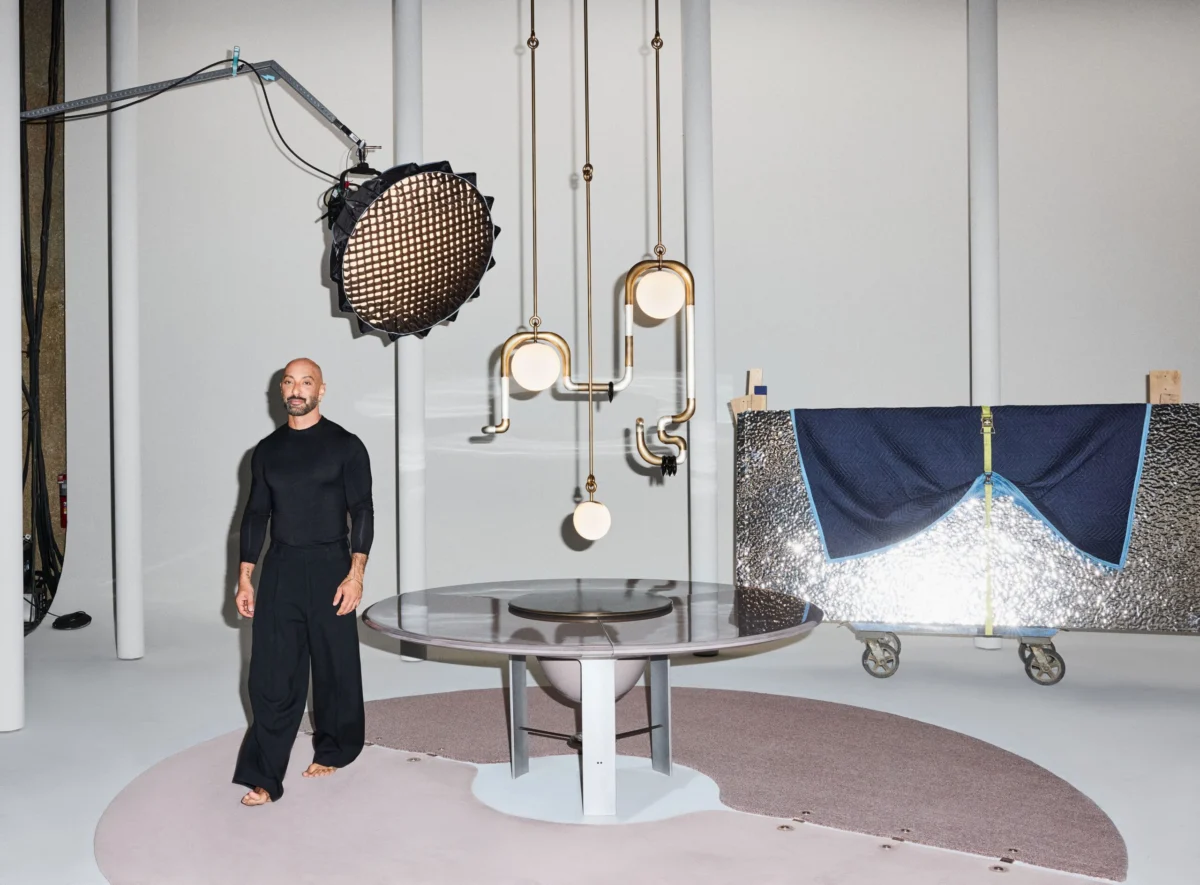
The intersection of personal heritage and industrial design has long been a hallmark of the New York City-based design studio Apparatus, but its latest venture, Act V: Afsaneh, represents a profound departure into the autobiographical. For Gabriel Hendifar, the artistic director and CEO of the firm, this collection is not merely an exercise in furniture production; it is a complex, four-year investigation into the aesthetic and emotional vernacular of his Iranian American upbringing. The collection, which takes its name from the Persian word for "fable" and pays homage to Hendifar’s mother, Afsaneh, marks a pivotal evolution for the 14-year-old studio, moving beyond its signature industrial severity toward a more organic, narrative-driven form of craftsmanship.
The Genesis of an Aesthetic Pivot
The conceptual seeds for Afsaneh were sown in an unlikely setting: a Persian New Year gathering hosted by Hendifar and acclaimed chef Andy Baraghani. During the event, a spontaneous musical performance—featuring Hendifar on piano, his mother on vocals, and his sister, Nic, on the tombak—served as a catalyst for a creative epiphany. This auditory recreation of his childhood home in Los Angeles triggered a realization in Hendifar: his design language, previously characterized by a certain disciplined detachment, was missing a vital, inherited thread.
"That night shifted everything for me," Hendifar noted, describing the moment as the settling of a cornerstone in his personal and professional foundation. This internal realignment prompted a four-year development cycle, during which Hendifar sought to translate the ephemeral sensations of his cultural heritage into the physical permanence of design objects.

A Chronology of Design Evolution
The development of Act V did not occur in a vacuum. It spanned nearly half a decade, during which Hendifar was simultaneously engaged in the renovation of his own SoHo loft. This dual-track process allowed for a unique cross-pollination of ideas. While his professional team at Apparatus worked on the technical feasibility of the new forms, Hendifar was curating a personal domestic space that reflected his evolving understanding of "home."
The timeline of the project reflects a deliberate, meditative pace:
- Year 1-2 (Conceptualization): Hendifar began assembling mood boards that drew on historical periods defined by intense cultural flowering interrupted by political or social shifts—specifically, 1970s Iran, Weimar Germany, pre-revolutionary Cuba, and New York City prior to the 1980s AIDS crisis.
- Year 3 (Material Experimentation): The transition from traditional metalwork to new mediums like fiberglass and specialized speckled lacquer occurred during this phase. This allowed for the creation of larger, more diaphanous forms that were previously unattainable with the studio’s standard material palette.
- Year 4 (Refinement and Launch): Finalization of the collection’s core pillars—Esfand, Gol, Rahvi, and Jahaan—and the integration of intricate details, such as the use of semiprecious stone amulets on lighting fixtures.
Decoding the Afsaneh Collection: Four Pillars of Form
The collection is categorized into four distinct typologies, each serving as a narrative device to explore the transmission of knowledge and the reverence for the "divine feminine" that Hendifar associates with the women in his family.
Esfand: The Seed
The Esfand series, encompassing ovoid lamps and incense holders, draws inspiration from the wild rue seeds often used in Persian rituals to ward off misfortune. By elevating these functional objects into high-design pieces, Hendifar honors the domestic rituals of protection and hospitality that defined his early years.

Gol: The Blooming Flower
Representing the botanical elements of the Persian garden, the Gol pendants utilize fiberglass shades to encase glowing orbs of cast glass. The shift toward fiberglass marks a technical milestone for Apparatus, allowing for a 40-inch-wide fixture that maintains a sense of lightness and transparency, contrasting with the heavier materials of the studio’s previous acts.
Rahvi: The Serpent
Perhaps the most sculptural of the collection, the Rahvi lighting fixtures are segmented, slithering structures inspired by the curve of a tightly banded ponytail. These fixtures are adorned with jewelry-like amulets made of semiprecious stones, suggesting a narrative of a collector of knowledge, a motif that Hendifar weaves throughout the collection to symbolize the passing down of wisdom across generations.
Jahaan: The World
The Jahaan tables, available in both dining and cocktail iterations, are modeled after the shape of the tombak, the traditional Persian drum. Featuring shimmering cast-glass tops that mimic the cosmos, these pieces anchor the collection, grounding the ethereal lighting and sculptural elements in a tactile, functional reality.
Material Innovation and Industrial Implications
The integration of new materials is not merely aesthetic; it reflects a broader shift in the luxury furniture market toward a "softened" modernism. By incorporating wool bouclé for rugs and custom speckled-lacquer finishes—in shades like pomegranate, honey, and dusk—Hendifar is moving Apparatus toward a more sensory, "earthly" experience.

From an industry standpoint, the use of custom lacquer and semiprecious stone inlay represents a significant investment in bespoke manufacturing. This trend indicates that high-end design houses are increasingly favoring "collectible design"—objects that function as art pieces—over mass-producible, minimalist furniture. Market analysts note that the demand for provenance-heavy, narrative-driven design has grown by approximately 15% in the luxury sector over the last three years, as consumers seek pieces that offer a sense of continuity in a rapidly changing global landscape.
Socio-Cultural Impact and the Cycle of Eras
Hendifar’s fascination with historical periods cut short—such as the artistic explosion of Weimar Germany or the modernization of 1970s Iran—offers a lens through which to view his work. Rather than interpreting these eras through a lens of elegy or mourning, he views them as potentiality. "It’s less about a tragic turn and more about the cycle," he explains.
This perspective has profound implications for how his work is perceived by collectors and critics. By framing Afsaneh as a continuation of these "flowering" periods, Hendifar is positioning Apparatus not as a brand that replicates the past, but as one that imagines the trajectory of those cultures had they been allowed to mature. This is a sophisticated reinterpretation of heritage, one that avoids the pitfalls of nostalgia by focusing on the active, ongoing nature of cultural transmission.
Reactions from the Design Community
While formal reviews are still emerging, initial reception from the architectural and interior design community has focused on the technical prowess required to execute such complex forms. Peer designers have highlighted the "unexpected lightness" of the Gol pendants as a significant achievement for a studio previously known for its heavy, atmospheric metalwork.

"The transition into these more fluid, organic shapes suggests that Hendifar is not just designing objects, but creating a theater of domesticity," says one interior design consultant familiar with the collection. "It’s a bold move to pivot a brand that has such a distinct, established signature, but it seems to have been executed with a level of rigor that validates the risk."
Future Implications for Apparatus
The launch of Act V: Afsaneh serves as a blueprint for the future direction of Apparatus. By proving that the brand can successfully integrate deeply personal, cultural narratives without sacrificing the technical precision of its manufacturing, Hendifar has widened the studio’s scope. The success of this collection may encourage other design houses to move away from the "anonymous modernism" that has dominated the industry for the past decade, favoring instead a return to storytelling, materiality, and the exploration of the designer’s own cultural identity.
As Hendifar settles into his SoHo loft, he continues to view the process of curation and design as an essential, almost addictive, pursuit. For a brand that has spent over a decade establishing its presence in the global market, Act V: Afsaneh is a definitive statement that the most effective way to reach a universal audience is to delve into the specific, the personal, and the familial. In this, Hendifar has not only updated the studio’s aesthetic—he has, in his own words, allowed a fundamental piece of his own history to slip back into place.