Ronny Sianturi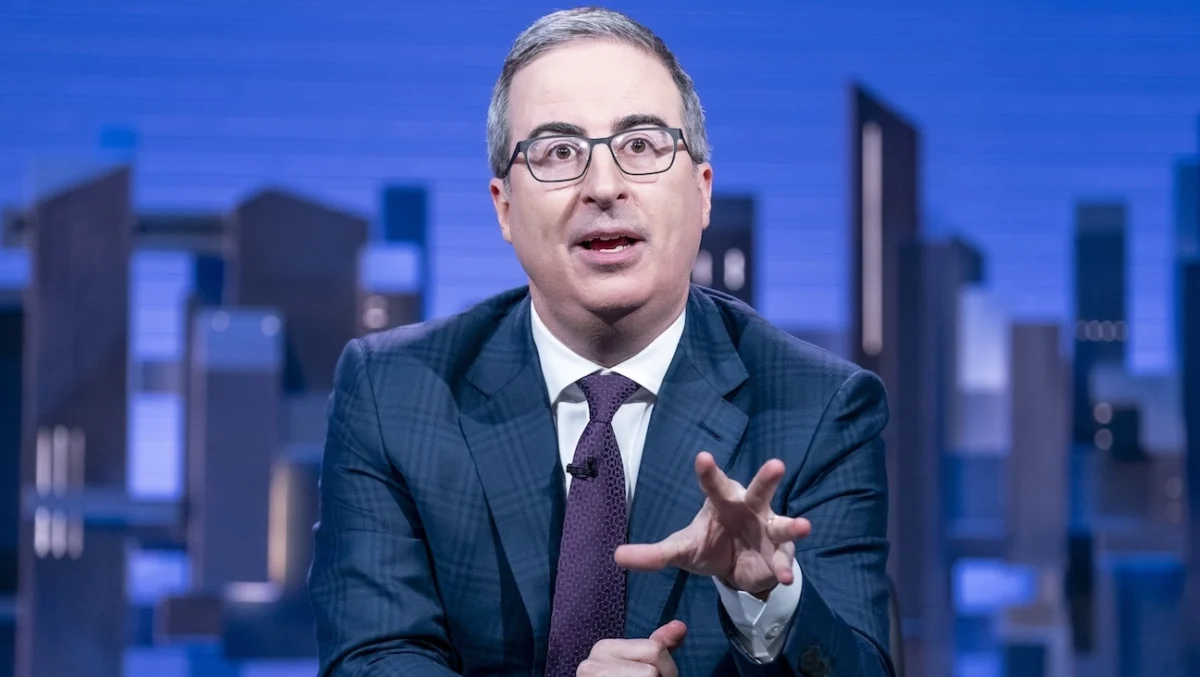
During the Sunday broadcast of Last Week Tonight on HBO, host John Oliver delivered a biting critique targeting both the systemic failures of the American healthcare insurance industry and the corporate hierarchy of his own network’s prospective parent company. Focusing heavily on UnitedHealth Group’s contentious record regarding claims denials, Oliver used the segment to scrutinize the healthcare landscape before pivoting to a pointed joke directed at David Ellison, the media executive attempting to steer the ongoing merger between Paramount Global and Skydance Media, which also seeks regulatory approval involving Warner Bros. Discovery.
The episode opened with a deep dive into the business practices of UnitedHealthCare (UHC), the nation’s largest health insurer. Oliver examined the widespread public frustration surrounding the company’s historical handling of prior authorization requests and medical claim denials. To contextualize the public anger, the comedian touched upon the tragic high-profile killing of UnitedHealthCare CEO Brian Thompson, noting the complex societal reactions and the subsequent legal proceedings involving Luigi Mangione, who faced sentencing in December. While acknowledging the gravity of the crime, Oliver utilized the momentum of the national discourse to pivot toward everyday policyholder experiences, highlighting how administrative roadblocks consistently obstruct patients from receiving critical medical interventions.
Case Studies in Healthcare Denials and Financial Strain
To illustrate the human cost of insurance claim denials, Oliver shared several documented case studies involving patients who faced severe hurdles when attempting to secure coverage for essential treatments. Among the most striking examples was the ordeal of a young cancer patient whose family was forced to absorb an astonishing $95,000 out-of-pocket expense after UnitedHealthCare repeatedly refused to authorize coverage for necessary medical procedures.
Oliver noted that while the treatment ultimately proved successful—providing a rare piece of positive news in an otherwise grim narrative—the financial burden placed on the family underscored a deep structural flaw in the healthcare ecosystem. The host criticized a system that effectively requires individuals to possess significant personal wealth or wealthy benefactors to access life-saving medical care. This poignant observation served as the thematic bridge connecting his critique of corporate healthcare bureaucracy to the upper echelons of the entertainment industry.
The Corporate Landscape: David Ellison, Larry Ellison, and Paramount
Transitioning seamlessly from the failures of private health insurance to the realities of corporate media consolidation, Oliver displayed a photograph of David Ellison, CEO of Skydance Media and the driving force behind Paramount’s corporate restructuring initiatives. Skydance’s ongoing endeavors include positioning itself within the complex regulatory landscape to acquire or merge with legacy media assets, drawing intense scrutiny from antitrust regulators and media analysts alike.
"Now in the end her parents paid $95,000 out of pocket to cover the treatment, which in happy news did actually work, but having access to wealthy parents just cannot be the system to get badly needed healthcare, even if it is apparently the system that lets you be in charge of HBO," Oliver remarked to the studio audience.
The joke carried a dual meaning, referencing both the socio-economic barriers defining American healthcare and the dynastic wealth funding Ellison’s media ambitions. As the television screen zoomed out to reveal a broader image of David Ellison alongside his father, billionaire Oracle founder Larry Ellison, Oliver delivered his punchline: "Yeah, my soon-to-be business daddy has a literal business daddy."
The reference pointed directly to Larry Ellison’s financial backing of his son’s corporate ventures. Larry Ellison has formally agreed to personally backstop $40.4 billion in equity financing connected to major structural transactions involving Paramount and related media assets, including potential intersections with Warner Bros. Discovery, the current corporate parent of HBO. This immense infusion of private family wealth places the younger Ellison at the center of one of the largest media consolidation efforts of the decade.
Concluding the bit with characteristic deadpan humor, Oliver added, "And to be very clear, I deeply respect that and I would never make fun of you for it, unlike that pesky Stephen Colbert."
Broader Implications of Media Consolidation and Healthcare Scrutiny
The intersection of healthcare critique and corporate satire on a major premium cable network highlights the unique editorial latitude granted to satirical news programs like Last Week Tonight. However, the dual targets of Oliver’s monologue—the opaque and restrictive practices of major health insurers and the accelerating wave of media consolidation—carry significant economic and social implications.
In the healthcare sector, regulatory bodies and lawmakers have faced mounting pressure to increase transparency and accountability regarding prior authorization denials. Consumer advocacy groups have long argued that profit-driven denial algorithms and aggressive cost-containment strategies compromise patient outcomes. Cases involving tens of thousands of dollars in unexpected out-of-pocket debt remain a central grievance in ongoing debates over healthcare reform, driving legislative proposals aimed at curbing insurance abuses.
Simultaneously, the corporate maneuvers involving David and Larry Ellison reflect a broader trend of generational wealth and private equity influencing traditional Hollywood structures. As legacy media companies navigate declining linear television revenues, cord-cutting, and the high cost of streaming profitability, reliance on deep-pocketed tech billionaires has emerged as a viable, albeit controversial, rescue mechanism. The involvement of Larry Ellison’s Oracle-backed fortune in media transactions guarantees that regulatory scrutiny from the Federal Trade Commission (FTC) and the Department of Justice (DOJ) will remain high.
As the regulatory review process for these multi-billion-dollar media alignments continues, and as public debates surrounding healthcare affordability persist, moments of cultural commentary like Oliver’s serve to keep both corporate governance and systemic socio-economic disparities at the forefront of public consciousness. Whether the regulatory authorities view the Paramount-Skydance-WBD ecosystem with the same critical eye as late-night comedians remains to be seen, but the spotlight on executive lineages and institutional practices is unlikely to fade anytime soon.