Prabowo Widodo
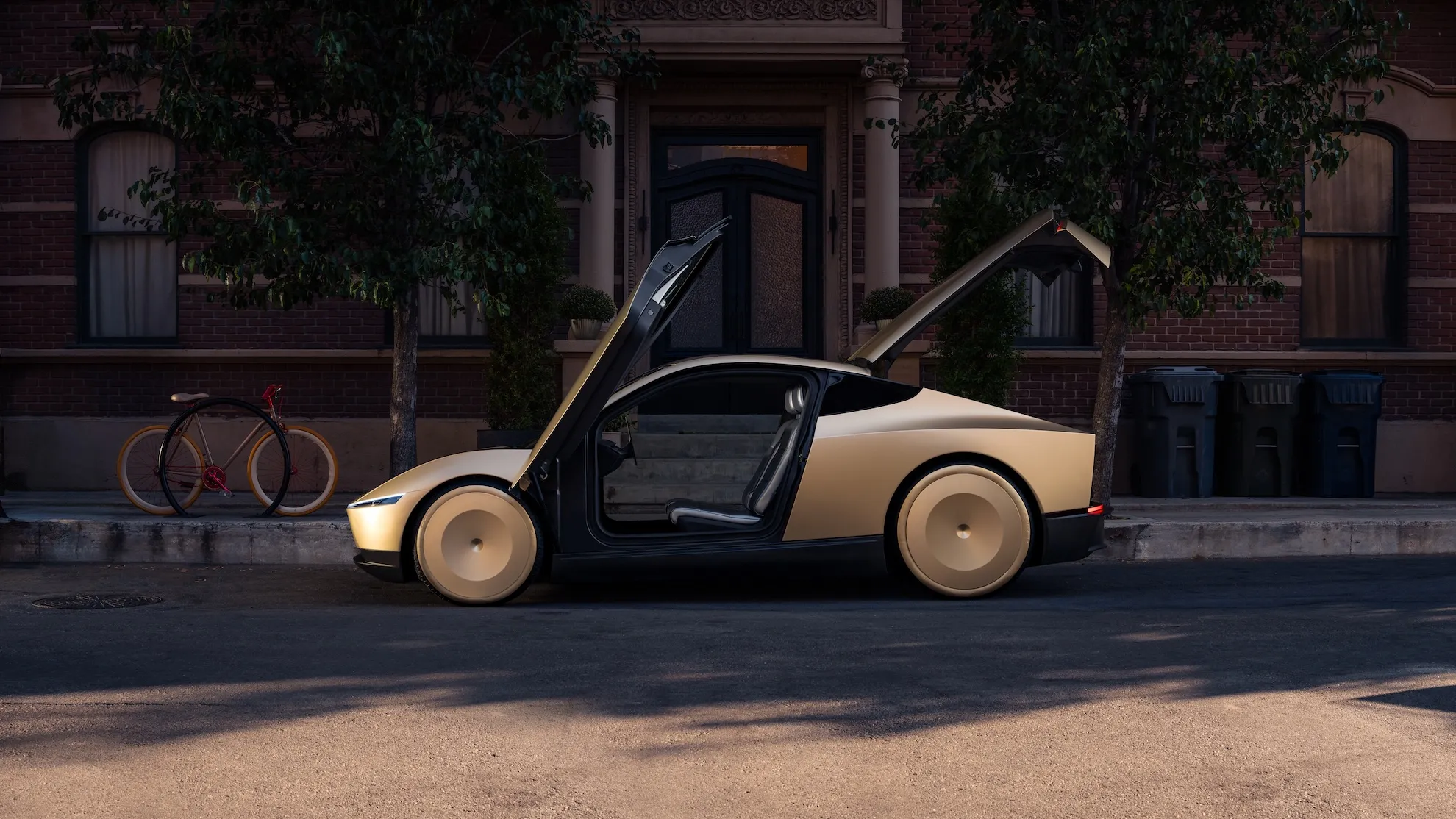
Tesla has announced that it intends to begin commercial deliveries of its gold-hued, autonomous Cybercab to third-party customers by the close of the year, marking a significant escalation in the company’s push toward mainstream robotaxi deployment. The announcement, delivered during the company’s third-quarter earnings call by Vice President of Engineering Lars Moravy, comes at a complex juncture for the electric vehicle pioneer. While production models are currently earmarked for Tesla’s proprietary fleet, the company plans to progressively expand sales to external fleet operators and individual buyers interested in managing autonomous ride-hailing services.
However, this aggressive commercialization timeline unfolds directly against a backdrop of heightened scrutiny from federal regulators. The National Highway Traffic Safety Administration (NHTSA) launched a formal investigation into the Cybercab shortly after the vehicle made its public debut on the streets of Austin, Texas. The federal probe aims to scrutinize the safety certifications and technical data relied upon by Tesla to justify a vehicle designed entirely without manual driver controls, such as steering wheels, brake pedals, and side mirrors.
As Tesla navigates this high-stakes intersection of ambitious hardware deployment and regulatory compliance, the company’s broader autonomous strategy appears to be undergoing a fundamental realignment. The tension between rapid market expansion, evolving software capabilities, and federal oversight highlights the immense challenges facing the autonomous vehicle industry at large.
A Strategic Pivot: From Personal Ownership to Transport-as-a-Service
For years, CEO Elon Musk’s vision of a massive, low-cost robotaxi network relied heavily on a decentralized model. The foundational premise was that millions of privately owned Tesla vehicles already on global roadways would eventually achieve full autonomy via an over-the-air software update. Under this long-teased paradigm, vehicle owners could effortlessly toggle their personal cars into a ride-hailing network when not in use, generating passive income while scaling the company’s autonomous footprint exponentially.
Yet, during the recent earnings call, Musk articulated a distinctly different trajectory. He clarified that the Cybercab is explicitly engineered as a dedicated ride-hailing transport utility rather than a consumer vehicle intended for traditional private ownership.
“Cybercab is primarily going to be something that is offered as like transport as a service, whereas our other cars would be more, you know, the cars that you’d want to own, like the 3 and the Y and whatnot, and the Roadster, obviously,” Musk stated during the call. He added that the vast majority of Cybercab operations will initially remain Tesla-owned and managed as a service, even as select third-party fleet operators are gradually integrated into the delivery pipeline.
This clarification underscores a practical pivot by Tesla executives. Manufacturing a purpose-built, two-seater vehicle devoid of a steering wheel or pedals requires an entirely different operational ecosystem compared to upgrading consumer-grade sedans and SUVs with advanced driver-assistance software. By selling select units to third-party fleet operators starting late this year, Tesla aims to offload some of the logistical complexities of localized fleet management while testing the waters of commercial autonomous distribution.
The Timeline Disconnect: Fleet Sales Versus Consumer Software
The announcement of impending third-party Cybercab sales has introduced a curious chronological anomaly for Tesla enthusiasts and loyal software subscribers. Currently, Tesla offers Full Self-Driving (Supervised)—an advanced Level 2 driver-assistance system that automates navigation, lane changes, and stopping, but strictly mandates continuous human supervision and readiness to intervene.
Despite years of software iterations and iterative updates designed to improve system safety and capability, true unsupervised autonomy has remained perpetually out of reach for everyday consumers. During the latest earnings call, Musk projected that an unsupervised version of FSD would finally be rolled out to retail customers during the second quarter of next year. This projection represents yet another postponement for consumers who invested in or subscribed to the software package years in advance on the promise of impending self-driving functionality.
This timeline creates a fascinating regulatory and market paradox: if both corporate projections hold true, third-party fleet customers will be legally permitted to purchase and operate the autonomous Cybercab—a vehicle lacking manual controls—before ordinary Tesla owners gain access to equivalent unsupervised autonomous capabilities within their own vehicles.
Regulatory Obstacles and the Safety Standards Debate
The viability of Tesla’s end-of-year delivery timeline ultimately hinges on federal regulatory outcomes. The central point of contention involves the Federal Motor Vehicle Safety Standards (FMVSS), a comprehensive set of regulations overseen by NHTSA. Historically, FMVSS mandates that all motor vehicles operated on public roads must feature specific manual driving controls, including a physical brake pedal, a steering mechanism, and traditional rearview and side-view mirror configurations.
Conventionally, major automakers utilize a self-certification process, formally declaring that their newly manufactured vehicles comply with all applicable FMVSS regulations before introducing them to public infrastructure. Tesla applied this self-certification model to the Cybercab when deploying early units in Austin. However, because current federal rules do not adequately accommodate or contemplate vehicles manufactured entirely without human driver controls, NHTSA intervened swiftly.
The federal safety agency announced an open investigation to meticulously examine the underlying safety data, engineering processes, and regulatory justifications Tesla utilized when certifying the Cybercab. The probe focuses directly on whether the vehicle adequately addresses core safety benchmarks in the absence of traditional fail-safes.
The regulatory landscape, however, is not entirely static. In a move widely interpreted as a significant policy tailwind for autonomous vehicle developers, the Department of Transportation previously proposed eliminating traditional brake pedal requirements and other manual control mandates for vehicles specifically engineered from the ground up for automated driving systems. While policy discussions around regulatory modernization are underway, the formal transition of these rules remains incomplete, leaving a legal gray area that NHTSA’s investigation must navigate.
Industry Implications and the Road Ahead
The outcome of the federal investigation into the Cybercab carries profound implications not only for Tesla’s commercial roadmap, but for the broader autonomous vehicle sector. If regulatory bodies take a strict enforcement approach, Tesla could face significant delays or operational restrictions that hinder its ability to scale the Cybercab deployment beyond initial test markets. Conversely, a favorable regulatory accommodation or validation of Tesla’s self-certification data could accelerate the commercial adoption of pedal-less, steering-wheel-free vehicles across the United States.
As Tesla prepares to transition the Cybercab from closed testing environments and proprietary fleets into the hands of external commercial partners, the company faces a delicate balancing act. It must scale manufacturing operations, appease retail customers awaiting long-promised unsupervised software updates, and satisfy federal regulators that safety remains the paramount priority in the brave new world of autonomous transport.