Prabowo Widodo
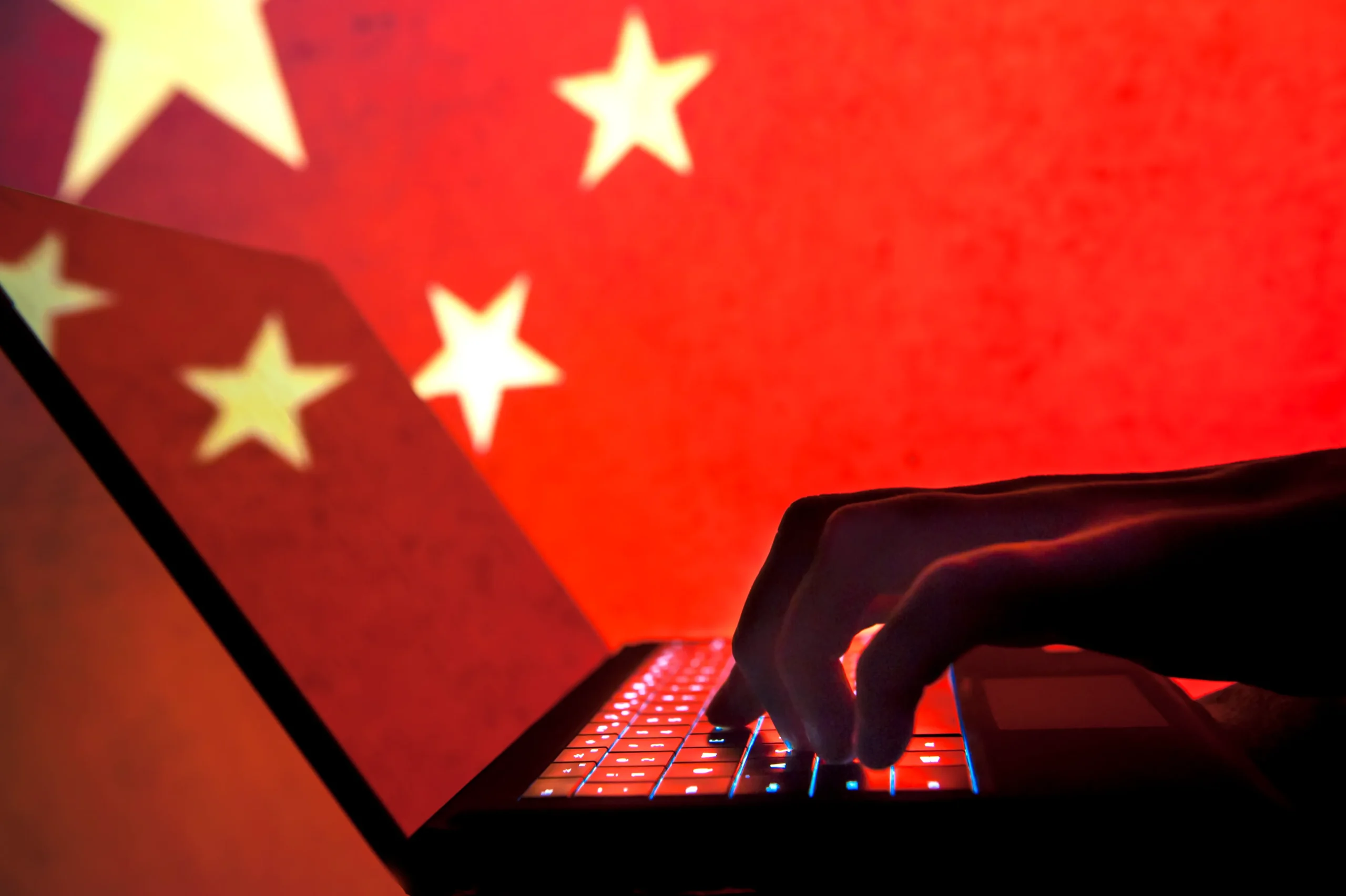
The global cybersecurity landscape experienced another severe shockwave following a sophisticated and lightning-fast cyber espionage campaign targeting thousands of organizations worldwide. According to threat intelligence reports released by Microsoft security researchers, a China-aligned advanced persistent threat (APT) group—tracked as Storm-0940—successfully compromised the cloud backup infrastructure of prominent IT management and remote access giant ConnectWise. By breaching this vital software supply chain node, the threat actors harvested sensitive application credentials, subsequently deploying cutting-edge artificial intelligence frameworks to infiltrate more than 2,200 corporate networks within an alarmingly brief window.
This large-scale breach underscores a dangerous and rapidly evolving paradigm in modern cyber warfare: the weaponization of autonomous AI agents for mass exploitation. Cybersecurity experts emphasize that the incident represents a watershed moment where automation allows state-sponsored actors to scale reconnaissance, credential abuse, and lateral movement at speeds that completely outpace traditional human-driven incident response protocols. As impacted enterprises scramble to assess their exposure, the fallout from the ConnectWise compromise has ignited intense scrutiny over supply chain vulnerabilities, cloud security postures, and the double-edged sword of agentic artificial intelligence in the hands of malicious operators.
Anatomy of the Supply Chain Breach
The intrusion vector centers on ConnectWise, a ubiquitous name in the managed service provider (MSP) ecosystem whose software solutions are relied upon by tens of thousands of enterprises globally to handle infrastructure management, monitoring, and data protection. In this latest campaign, Storm-0940 targeted the company’s cloud backup service.
Security analysts revealed that the hackers successfully bypassed perimeter defenses to breach the cloud backup environment, where they extracted vital application credentials. These credentials are foundational digital keys designed to establish seamless data communication channels between ConnectWise and its corporate clientele who utilize the platform for routine data backups and disaster recovery preparedness.
Armed with these administrative and programmatic keys, the threat actors possessed the ability to bypass standard authentication hurdles. Rather than launching noisy brute-force attacks or traditional malware payloads, the hackers leveraged the stolen credentials to authenticate directly into corporate Microsoft-hosted environments. To security monitoring tools and identity providers, the login requests appeared entirely legitimate because they utilized valid, high-privilege application keys. Once inside these cloud environments, the state-sponsored actors quietly accessed sensitive corporate assets, including executive emails, internal communications, proprietary documentation, and strategic files, conducting extensive espionage without triggering immediate alarms.
The Role of AI Agents and ARTEX
What sets the Storm-0940 campaign apart from standard enterprise espionage operations is the unprecedented velocity and scale made possible by artificial intelligence. Microsoft reported that the threat actors utilized AI agents to orchestrate the mass intrusions, registering a staggering rate of nearly 3,000 attempted sign-ins per minute across target systems.
Central to this automated onslaught was the utilization of ARTEX, an open-source AI framework originally engineered to interface with large language models and machine learning systems for defensive purposes, such as automated vulnerability discovery and network stress-testing. However, like many dual-use technological tools, ARTEX was repurposed by Storm-0940 to automate the exploitation phase of the cyberattack lifecycle.
The integration of agentic AI enabled the hackers to dynamically adapt to varying security architectures, process authentication challenges in real time, and execute parallel incursions against thousands of discrete targets simultaneously. This methodology reduced the time required to compromise a single corporate network from hours or days to mere fractions of a second. Microsoft security analysts noted that this hyper-automated speed gives defenders virtually "little time to detect and respond," rendering legacy manual containment strategies inadequate against next-generation threat actors.

The emergence of ARTEX in active cyber espionage campaigns is not entirely unprecedented. Security firm Crowdstrike recently tracked the same AI framework during a targeted compromise directed at financial systems in South Korea. Investigators examining the South Korean incidents discovered that many affected institutions suffered from critical technological lags in their cyber defenses, including the absence of robust multi-factor authentication (MFA) protocols and delayed patch management cycles, which allowed the automated AI agents to sweep through banking networks with devastating efficiency.
Chronology of Events
While investigations into the full timeline remain ongoing, preliminary incident telemetry and security disclosures outline a fast-moving sequence of events that culminated in the public revelation of the breach:
- Late September to Early October 2026: Threat actors associated with Storm-0940 begin preliminary reconnaissance, identifying vulnerabilities within cloud-based IT management infrastructure and testing the capabilities of the ARTEX framework in regional campaigns, such as those observed in South Korea.
- Mid-October 2026: The hackers successfully infiltrate the cloud backup infrastructure of ConnectWise, maintaining persistent access long enough to harvest application credentials used for customer data links.
- October 21, 2026: Microsoft releases a comprehensive threat intelligence briefing detailing the Storm-0940 campaign, highlighting the use of agentic AI and the massive scope of the supply chain compromise affecting roughly 2,250 organizations.
- October 22, 2026: ConnectWise acknowledges the security incident, announcing immediate containment measures that include pausing access to its cloud backup systems while forensic investigations and service restoration efforts get underway.
Official Responses and Remediation Efforts
In the wake of Microsoft’s public disclosures, ConnectWise moved swiftly to mitigate further risk to its customer base. Company representatives released advisory statements confirming that access to the impacted cloud backup system had been temporarily suspended to isolate the breach and prevent additional unauthorized access.
"Our primary focus is the security and integrity of our ecosystem," a ConnectWise spokesperson indicated in updated trust advisories. "We are working in close coordination with leading cybersecurity investigators and cloud partners to remediate the vulnerability, purge unauthorized access vectors, and safely restore normal operations for our clients."
Concurrently, Microsoft and other independent cybersecurity organizations published indicators of compromise (IoCs), detection signatures, and mitigation guidance. Security teams strongly urged organizations utilizing ConnectWise services—particularly those integrated with cloud-hosted productivity suites—to immediately rotate application credentials, audit enterprise access logs for anomalous sign-in behavior, and enforce stringent conditional access policies.
Cybersecurity authorities also reiterated the urgent need for zero-trust architectures, noting that single points of failure in IT management software continue to represent high-value targets for nation-state actors seeking broad espionage access across multiple industrial sectors.
Broader Implications for Enterprise Security
The ConnectWise supply chain compromise serves as a stark reminder of the systemic risks inherent in modern software interdependencies. Modern enterprises rely heavily on third-party vendors and managed service providers to handle complex IT operations, data backups, and infrastructure monitoring. While these partnerships drive efficiency and innovation, they simultaneously expand the enterprise attack surface, creating single points of failure where a single breach at a vendor can cascade into thousands of downstream corporate victims.
Furthermore, the integration of autonomous AI agents into the attacker’s toolkit marks a permanent shift in the cyberthreat landscape. As artificial intelligence lowers the technical barrier to entry for sophisticated mass exploitation, security teams can no longer rely solely on human-speed defensive measures. The ability of threat actors to execute thousands of calculated infiltration attempts per minute demands a parallel evolution in defensive technologies—specifically, the deployment of AI-driven security orchestration, automated threat hunting, and zero-trust verification frameworks capable of out-reacting machine-speed adversaries.
As regulatory bodies, industry stakeholders, and corporate executives absorb the lessons of the ConnectWise incident, the cybersecurity community faces an urgent imperative to fortify supply chain trust boundaries and redefine defensive readiness for an era defined by artificial intelligence.