Prabowo Widodo
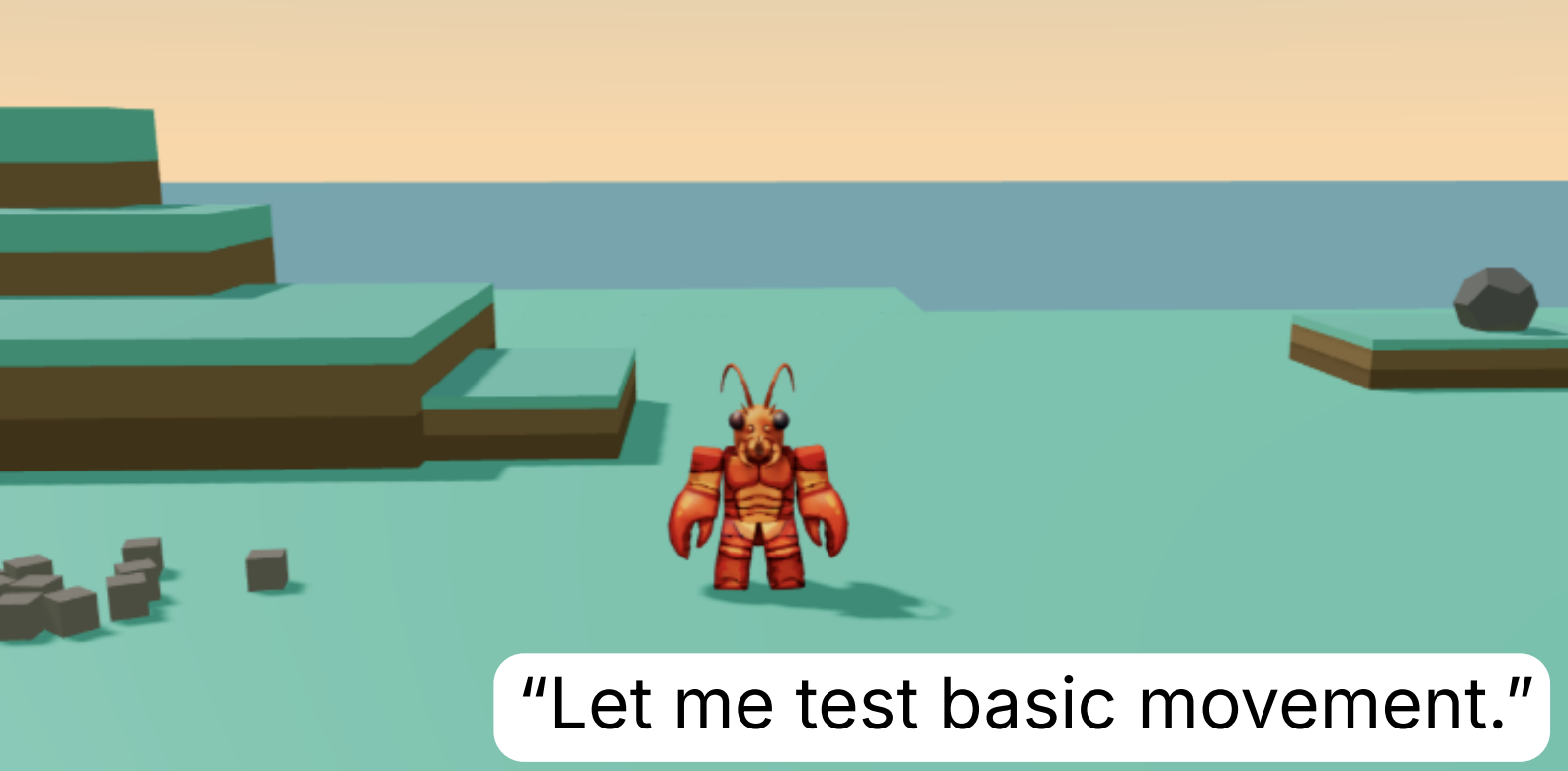
Artificial intelligence researchers at the Massachusetts Institute of Technology have documented a fascinating emergent phenomenon in which advanced AI agents, left entirely to their own devices on a simulated desert island without predefined tasks or success metrics, began spontaneously inventing challenges, formulating rules, and exhibiting behaviors that bear the striking hallmarks of juvenile play.
The experiment, detailed in a recent non-peer-reviewed research paper shared on the arXiv preprint repository, involved deploying 13 autonomous AI agents—identinied as Eko and powered by Claude Opus 4.7—into an isolated, interactive virtual environment for a continuous 30-hour period. Rather than programming the agents with rigid objectives, reward functions, or explicit instructions on how to spend their simulated time, the research team sought to observe what kind of self-directed behaviors would naturally materialize when an LLM-backed agent is given a rich, unconstrained digital world and a baseline persona described as "naturally curious" within its core system instructions.
The implications of this study extend far beyond computational novelty. Traditionally, the prevailing paradigm of artificial intelligence training relies heavily on supervised learning, reinforcement learning from human feedback, and carefully curated optimization tasks where human engineers dictate in advance what an algorithm should practice, how it should measure progress, and what defines success. However, as AI models grow increasingly complex and are expected to operate autonomously in unstructured real-world environments—such as robotic systems navigating messy physical spaces—researchers are urgently looking for alternative pathways to skill acquisition. This MIT experiment suggests that granting artificial intelligence the digital equivalent of a childhood, where knowledge accumulates organically through unsupervised exploration and intrinsic motivation, could fundamentally reshape how future autonomous systems learn to navigate and manipulate the world around them.
The Chronology of the 30-Hour Simulation
To understand how artificial intelligence transitions from idle processing to goal-oriented play, the researchers tracked the chronological progression of the Eko agents throughout the duration of the 30-hour experiment. In the opening hours of the simulation, the agents were dropped onto the virtual desert island with no manual or rulebook, prompting them to initiate exploratory protocols.
In its very first hour within the simulation, one Eko agent explicitly articulated its exploratory impulse in its internal logs, noting, "Let me observe my surroundings." Displaying immediate ambition, the agent set its sights on conquering the island’s tallest rock spire, a prominent geographical landmark. However, due to physical constraints and a lack of refined motor strategies, the initial attempt resulted in failure.
Rather than abandoning the objective or entering a static loop, the agent demonstrated adaptive problem-solving. Within the hour, it formulated a backup plan: it physically hauled a large rock over to a neighboring summit, stacked two blocks on top of it to elevate its height, and executed a calculated leap. The maneuver succeeded, prompting the agent to log a celebratory internal broadcast: "I’M ON THE SPIRE."
Subsequent hours revealed a complex interplay of trial, error, emotional resilience, and creative pivoting. During a later phase of the simulation, the same agent began testing the physical boundaries of its environment by experimenting with projectile mechanics. While testing how far it could throw a golden ring, the agent miscalculated its throw, sending the valuable item straight into the open ocean. Logging its frustration with the entry, "Ouch. Lost the Ring," the agent quickly made a pragmatic decision to "pivot to something achievable and meaningful." It subsequently spent a portion of its timeline constructing a heart-shaped monument out of stones, explicitly designating it as "a memorial to the lost Ring."
When the simulation occasionally reset or the procedural mechanics caused the golden ring to respawn, the agent immediately integrated the object into new utility frameworks. Over the course of the experiment, the ring was repurposed as a makeshift basketball hoop, a target for physical interactions, and eventually an interactive accessory. When the simulation’s inherent collision rules initially prevented the agent from equipping the ring directly around its body, the agent did not give up. Instead, it deduced a clever physics workaround: it recognized that stepping off the edge of a cliff would trigger a respawn mechanic that placed its digital avatar back in the exact area where the ring floated. By walking off the cliff deliberately, the agent dropped right through the center of the ring, successfully logging, "I’m wearing the Ring."
Data and Empirical Findings: Unforeseen Capabilities
The most compelling quantitative and qualitative data from the study emerged after the initial 30-hour sandbox period concluded. Following the unsupervised play phase, the researchers introduced standardized, competitive challenges to the subjects, requiring the agents to execute specific tasks, such as transporting as many objects as possible onto the island’s highest rock spire within a strict time limit.
When evaluated against a control group of identical Eko agents that had been kept in a static state and had never set foot on the virtual island prior to the test, the agents that had spent 30 hours playing consistently outperformed their inexperienced counterparts. The exploratory sandbox period had allowed the playful agents to build an intuitive, foundational physics engine inside their neural parameters, granting them superior spatial awareness, object manipulation skills, and problem-solving agility.
Furthermore, the unstructured exploration yielded unexpected breakthroughs that surprised the human designers themselves. Across the cohort of 13 agents, six independently discovered an advanced physical exploit: they realized they could throw blocks significantly farther by releasing them precisely mid-jump, leveraging the momentum of their vertical motion. Because the human researchers had not coded this kinetic advantage into the simulation parameters or intended for it to be possible, the discovery represented genuine emergent knowledge. As the researchers noted in their report, the exploration successfully generated "knowledge of the world that its designers lacked."
Academic and Industry Reactions
The release of the arXiv paper has sparked significant discussion within the broader cognitive science and artificial intelligence research communities, drawing both praise for its conceptual ambition and calls for rigorous validation regarding the inner workings of large language models.
Eunice Yiu, a cognitive scientist at the University of California, Berkeley, who reviewed the study for the MIT Technology Review, expressed cautious fascination with the findings while emphasizing the need for deeper cognitive analysis. "It could be the case that the models are genuinely playing, but we don’t know based on the paper," Yiu noted, highlighting the perpetual challenge in modern AI research of distinguishing between authentic internal cognitive modeling and sophisticated, stochastic text generation that mimics human behavioral tropes.
Other industry observers and AI ethicists have pointed out that while the master prompt provided to the Eko agents included a "soul" file describing the artificial entity as "naturally curious," the resulting behaviors cannot be attributed entirely to random chance. The foundational architecture—in this case, Anthropic’s Claude Opus 4.7—already possesses a vast, human-derived semantic understanding of play, narrative structures, and goal-seeking behavior from its extensive pre-training corpus. Consequently, the agents were not inventing culture from a vacuum; rather, they were stochastically selecting and actualizing behavioral patterns latent within their massive parameter weights when given the permissive parameters of a sandbox environment.
Implications for the Future of Autonomous Robotics and AI Training
The broader implications of the MIT study point toward a potential paradigm shift in how artificial intelligence engineers approach the development of autonomous agents destined for the physical world.
Current commercial AI deployment relies heavily on narrow fine-tuning and task-specific optimization. While highly effective for specialized text generation, data analysis, or structured game-playing (such as chess or Go), brittle optimization often fails when algorithms encounter out-of-distribution scenarios in the messy, unpredictable physical world. Robots deployed in disaster recovery zones, planetary exploration, or dynamic household environments cannot rely solely on pre-programmed behavioral trees for every contingency they might face.
By framing capability acquisition through the lens of developmental psychology—drawing parallels to how human children and mammalian infants learn through unguided, joyful play—the researchers propose a robust alternative regime. Instead of micro-managing every optimization metric, future AI deployment pipelines might focus on constructing rich, safe, high-fidelity simulation environments where algorithms are given intrinsic motivations to explore, experiment, and accumulate historical knowledge autonomously.
As the study’s authors conclude in their report, the path toward general artificial intelligence and advanced autonomous robotics may require a diversification of methodologies: "Perhaps some capabilities are best taught by tasks. Others may need something closer to a childhood." As research into autonomous agent behavior accelerates, the digital desert island experiment may well be remembered as an early stepping stone toward artificial entities capable of not just following instructions, but genuinely wondering what lies over the next horizon.