Jono Maryono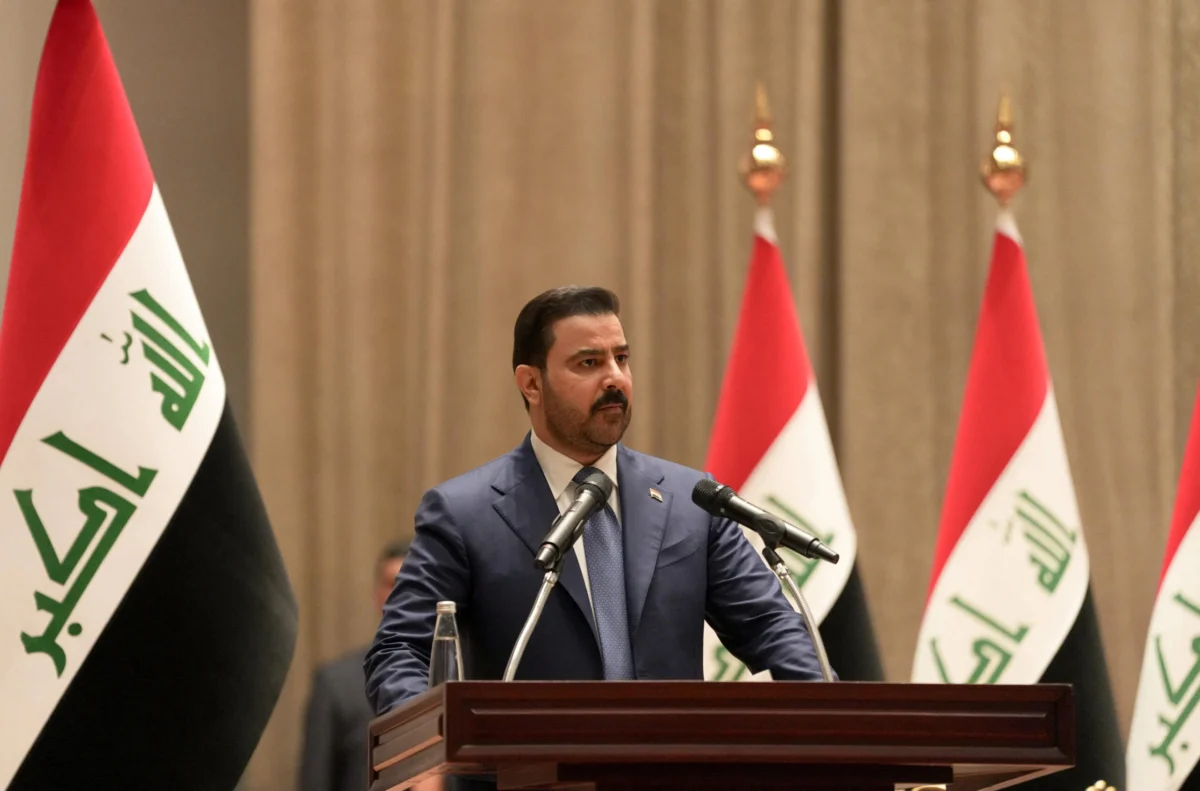
BAGHDAD — Iraq’s parliament has officially finalized the composition of Prime Minister Ali al-Zaidi’s government following a legislative session in which lawmakers approved a crucial slate of remaining cabinet portfolios and three deputy prime ministers. The milestone comes during a period of acute geopolitical strain and severe domestic economic turbulence, underscored by the contentious confirmation of a high-ranking deputy premier currently under United States sanctions.
During Thursday’s legislative session, Iraqi lawmakers voted to approve 11 vacant cabinet posts. Among the key appointments were Nayef al-Shammari as defence minister and Yasir al-Maliki as interior minister. Parliament also filled the roles of planning minister, culture minister, and minister of higher education and scientific research. However, parliamentary consensus stalled over the nominee for the migration and displacement portfolio, leaving that single post vacant pending further cross-party negotiations.
The vote also secured the confirmation of three deputy prime ministers. Notably, the list included Laith al-Khazali, a prominent senior leader of the Iran-backed Asaib Ahl al-Haq movement and the brother of the group’s leader, Qais al-Khazali. The inclusion of Laith al-Khazali in the upper echelons of the executive branch is expected to draw sharp international scrutiny, particularly from Washington, given the militia’s history and its formal designation by the US government.
Chronology of Government Formation and Escalating Crises
The culmination of Prime Minister al-Zaidi’s cabinet formation follows months of political realignment and legislative maneuvering in Baghdad. Al-Zaidi, a former banker who assumed the premiership in May, inherited a state apparatus grappling with monumental fiscal and structural challenges. His administration took power in the shadow of accumulating public debt and structural deficits left behind by the government of former Prime Minister Mohammed Shia al-Sudani.
The political timeline accelerated dramatically earlier this year following the onset of the US-Israel war on Iran, which commenced on February 28. The regional conflict immediately reverberated across Iraq, disrupting critical trade and energy corridors and plunging the nation’s export-dependent economy into a state of emergency.
Throughout the spring and summer, al-Zaidi’s nascent administration worked to consolidate political support within a fractured parliament, balancing the competing interests of domestic political blocs, traditional Shiite political parties, and armed factions. The protracted negotiations over cabinet vacancies reflected deep-seated divisions over security policy, economic reform, and foreign alignment. The finalization of the cabinet on Thursday represents an effort by al-Zaidi to project institutional stability and consolidate executive authority as the country navigates external shocks.
Geopolitical Friction: The Asaib Ahl al-Haq Controversy
The appointment of Laith al-Khazali as deputy prime minister highlights the complex and often precarious balancing act defining Iraqi domestic politics and its relations with Western powers. Asaib Ahl al-Haq was designated as a foreign terrorist organization by the United States Department of State in 2020. At the same time, Washington named both Laith al-Khazali and his brother, Qais al-Khazali, as specially designated global terrorists.
The US designations stem from historical allegations and attributed attacks, including a deadly 2007 assault that resulted in the deaths of five US soldiers. Furthermore, the US Treasury Department previously imposed sanctions on the brothers in 2019 in response to the lethal suppression of anti-government protesters across Iraq.
The entry of a US-sanctioned individual into the Iraqi cabinet’s inner circle poses immediate diplomatic challenges for Baghdad’s foreign policy, particularly regarding its strategic security and economic partnership with Washington. While Iraqi officials have historically defended the inclusion of various political and armed factions within the constitutional framework as necessary for national representation and domestic stability, such appointments risk intensifying diplomatic friction with Western capitals that provide financial and military cooperation.
Economic Vulnerabilities and Liquidity Pressures

Beyond the diplomatic complications of cabinet appointments, Prime Minister al-Zaidi’s administration faces an unprecedented economic crisis driven primarily by the ongoing regional war. Prior to the outbreak of hostilities on February 28, Iraq exported approximately 3.5 million barrels of oil per day, primarily traversing maritime routes through the Strait of Hormuz. These petroleum exports historically accounted for roughly 90 percent of total government revenue, fueling the state’s massive public sector and funding essential imports.
The conflict has severely disrupted these export flows, triggering acute liquidity shortages within the Iraqi financial system. In a public statement following the parliamentary vote, al-Zaidi characterized the economic pressures as extraordinary, noting that the war "has imposed, and continues to impose, extraordinary economic challenges on Iraq."
When al-Zaidi’s administration took office in May, it inherited a staggering public debt burden exceeding 208 trillion Iraqi dinars, equivalent to approximately $139 billion under prevailing exchange rates. Government economists estimate that the state requires a baseline of roughly 10 trillion dinars—approximately $6.7 billion—each month solely to meet public sector payrolls and cover critical government expenditures.
To address the rapidly depleting foreign reserves and cushion the severe cash crunch, al-Zaidi utilized his background in banking to execute a controversial monetary adjustment. The government devalued the Iraqi dinar by nearly 15 percent against the US dollar. While the devaluation aimed to shore up state revenues derived from oil sales denominated in dollars, it instantly reverberated through local markets, leaving merchants, traders, and everyday citizens grappling with rising import costs and diminished purchasing power.
Official Responses and Strategic Priorities
Addressing parliament and the public immediately after the cabinet vote, Prime Minister al-Zaidi expressed gratitude to lawmakers for completing the executive team. He issued a direct call to action to his newly confirmed ministers and deputy prime ministers, urging them to "fulfil their responsibilities with the highest levels of commitment, competence and integrity."
Al-Zaidi emphasized that the government must now transition into a phase of accelerated, diligent labor aimed at neutralizing exceptional economic and security vulnerabilities. He outlined three core pillars for his administration’s remaining tenure:
- Combating systemic corruption across state institutions.
- Disarming and reining in non-state armed groups to establish a strict state monopoly on the use of force.
- Strengthening national sovereignty, which includes actively pursuing the complete withdrawal of remaining US military forces from Iraqi territory.
The prime minister’s stated commitment to asserting state control over armed factions places him on a delicate political tightrope, given that key components of his parliamentary support base stem from the very political-paramilitary networks he has vowed to regulate or disarm.
Broader Impact and Regional Implications
The finalization of Prime Minister al-Zaidi’s government occurs against a backdrop of deep regional volatility. As the broader Middle East continues to absorb the shockwaves of the ongoing conflict involving the US, Israel, and Iran, Iraq finds itself once again positioned as a central geopolitical theater.
The simultaneous management of economic austerity, currency devaluation, public debt restructuring, and foreign policy balancing will test the institutional resilience of the Iraqi state. Analysts note that while completing the cabinet removes a layer of domestic political uncertainty, the underlying structural crises remain formidable.
Domestically, the success of al-Zaidi’s administration will likely be judged by its ability to disburse public sector salaries on time, stabilize the national currency, and curb inflation. Regionally and internationally, Baghdad’s navigation of sanctions compliance, particularly regarding high-ranking officials linked to designated armed groups, will determine the trajectory of its bilateral relations with Western donors and international financial institutions.
As Iraq enters this critical phase of governance, the administration’s policy decisions in the coming months will profoundly shape the country’s economic survival, internal security, and standing within the international community.