Ana Megawati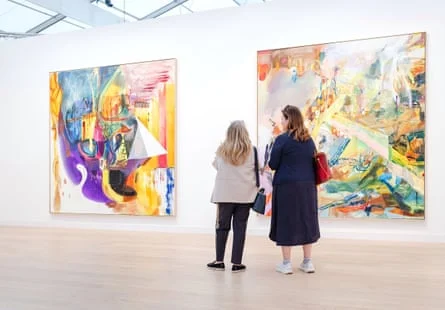
The annual convergence of the international art market in London’s Regent’s Park returned with its dual-format spectacle, pitting the contemporary offerings of Frieze London against the historical artifacts and antiquities of Frieze Masters. Established in 2003 by co-founders Matthew Slotover and Amanda Sharp, the Frieze art fairs have grown from a local contemporary showcase into a cornerstone of the global cultural calendar, drawing tens of thousands of visitors, collectors, and celebrities over a tightly managed multi-day run. However, the 2026 editions have renewed intense debate regarding the intersection of high finance, speculative collecting, and the commodification of both cutting-edge contemporary works and irreplaceable historical heritage.
The Contemporary Panorama: Frieze London
Frieze London occupies a sprawling, temporary white marquee designed to house dozens of international gallery booths arranged in rigid corridors. Critics and attendees frequently note the clinical, retail-oriented layout, which mimics a high-end department store rather than a contemplative museum environment.

The fair’s stated mission is to highlight emerging talents and capture the contemporary artistic zeitgeist. Yet, walk-through observations reveal a heavy reliance on commercially reliable wall-hung paintings and photography, often yielding a high volume of derivative or unchallenging pieces. Prominent galleries such as Sprüth Magers and Gagosian showcase established blue-chip names—including Tracey Emin, Wolfgang Tillmans, and Do Ho Suh—alongside more uneven contemporary output.
While standout historical pieces occasionally anchor the contemporary floor—such as Wolfgang Tillmans’ 1994 inkjet print Paul, nude, golf ball—the broader selection has faced scrutiny for catering primarily to the aesthetic preferences of ultra-high-net-worth individuals, tech entrepreneurs, and hedge-fund managers. Gallery booths present works by artists like Wanda Koop and Andy Woll alongside multimedia installations by figures such as Lonnie Holley, yet industry analysts estimate that only a fraction of the contemporary inventory genuinely pushes formal or conceptual boundaries.
Historical Depth and the Antiquities Market: Frieze Masters
Across Regent’s Park, Frieze Masters offers a starkly different visual and historical landscape, featuring art, artifacts, and antiquities spanning millennia. The section is celebrated for providing the ultimate test of artistic endurance: the validation of time. Visitors encounter items ranging from 16th-century paintings by followers of Hieronymus Bosch and Cy Twombly’s visual poems to 19th-century European nudes, rare manuscripts, and ancient Egyptian funerary masks.

Despite its aesthetic appeal and historical curiosity, Frieze Masters has become the focal point of ethical controversies concerning the trade in ancient antiquities and natural history specimens. Most notably, the 2026 fair featured a remarkably well-preserved, triple-horned fossilized Triceratops skull, valued in the millions.
The Scientific and Institutional Backlash
The commercialization of paleontological specimens and high-value antiquities has drawn sharp criticism from the scientific and museum communities. Leading up to the exhibition, organizations and researchers voiced alarm over the trend of private collectors acquiring museum-grade dinosaur fossils.
According to paleontological experts and recent reports by scientific bodies, the surging financial valuation of prehistoric fossils effectively prices public institutions out of the market. When rare specimens—such as complete dinosaur skulls or significant archaeological artifacts—are funneled into private collections, they are frequently removed from active academic study and public accessibility. Similar ethical concerns shadow the display of antiquities at the fair, where items such as stone heads from Palmyra and fragments of ancient manuscripts are isolated from their cultural and historical contexts to serve as luxury home decor for private buyers.
Economic Impact and Market Implications
The concentration of wealth on the fair’s VIP opening days underscores the dominant role of neoliberal economics in shaping the modern art market. With works ranging from Anselm Kiefer pieces priced near the million-pound mark to multi-million-dollar fossils, Frieze operates as a high-stakes marketplace driven by global capital flows.
Cultural economists and critics point out that the structural design of both tents—where religious artifacts, indigenous carvings, and contemporary soft-pornography paintings are reduced to uniform commodities under luxury spotlights—reflects a broader systemic commodification. Galleries such as Colnaghi, which juxtaposed ancient African religious carvings against 1920s kitsch nudes, unintentionally highlight how the art market flattens cultural artifacts into decorative assets for the global elite.
As the contemporary art market navigates post-pandemic economic shifts, inflationary pressures, and changing buyer demographics, events like Frieze continue to serve as a vital barometer for commercial success. However, the growing tension between private wealth accumulation and public cultural stewardship suggests that future iterations of the fair will face persistent scrutiny regarding their societal value, ethical sourcing, and impact on global heritage.