Ana Megawati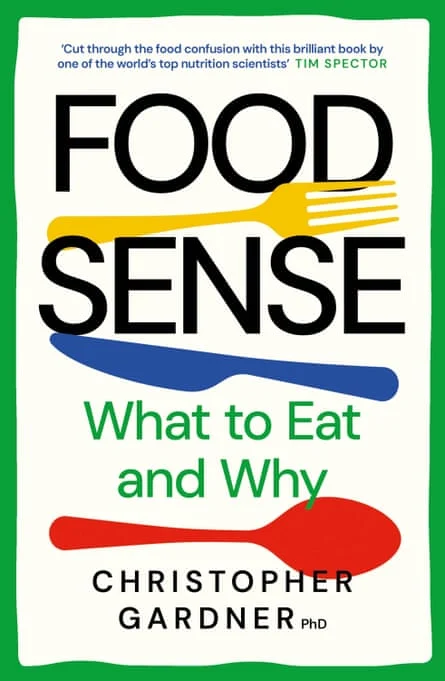
Navigating the modern nutritional landscape has become an increasingly daunting task for the average consumer. In an era dominated by social media wellness influencers, conflicting headlines, and aggressive food industry marketing, the fundamental question of what constitutes a healthy diet is frequently obscured. However, according to Dr. Christopher Gardner, director of nutrition studies and professor of medicine at Stanford University, the underlying science is far more cohesive and straightforward than public perception suggests. With over three decades of dedicated nutrition research, Gardner has spent his career investigating everything from fermented foods to dietary lipids, striving to separate rigorous scientific consensus from commercial noise. His latest book, Food Sense, seeks to distill decades of empirical evidence into accessible, practical guidance, cutting through the polarizing debates that characterize contemporary dietary advice.
The Evolution of Nutritional Science and Public Confusion
The perceived contradiction in dietary guidance is largely a byproduct of how scientific research is conducted, communicated, and monetized. Nutritional science relies heavily on targeted intervention trials, epidemiological studies, and biochemical analyses. Consequently, researchers rarely investigate broad, generalized queries such as whether a specific food item is universally good or bad. Instead, studies are meticulously designed to evaluate narrow parameters—such as a specific dosage, a defined demographic, a controlled duration, and a measurable physiological outcome, like the impact of real garlic versus garlic supplements on low-density lipoprotein cholesterol.
When professional committees, such as those convened by the American Heart Association or the American Diabetes Association, review the cumulative body of literature, they routinely find substantial consensus among domain experts. Despite gaps in microscopic data, the broader trajectory of evidence consistently points toward established dietary patterns. Yet, this nuanced reality struggles to compete with sensationalized media headlines. The media cycle thrives on dramatic, cyclical reversals—such as shifting declarations regarding the health implications of eggs or coffee—which distort the progressive nature of science. As researchers uncover deeper layers of complexity, initial hypotheses are refined rather than entirely upended, but extreme declarations drive higher engagement and web traffic. Consequently, consumers experience profound information overload, frequently abandoning health goals in favor of convenience and affordability while multinational food corporations shift the burden of responsibility entirely onto individual consumers.
The 2025 Dietary Guidelines Advisory Committee Controversy

This tension between empirical science and political or commercial interests came to the forefront during the recent drafting of the United States government dietary guidelines. In 2023, Gardner was appointed to the prestigious Dietary Guidelines Advisory Committee, a body tasked with reviewing official national recommendations for healthy eating and issuing evidence-based updates. Along with 19 other expert volunteers, Gardner committed approximately 10 hours a week over a two-year period to the rigorous task. In December 2024, the committee culminated its exhaustive investigation by submitting a comprehensive 400-page primary report alongside a 1,000-page supplementary analysis.
The timeline of the committee’s findings and subsequent dismissal highlights a turbulent shift in public health governance. Just as the report was finalized, the presidential administration transitioned, and Robert F. Kennedy Jr. assumed leadership as the Secretary of Health and Human Services. Shortly after taking office, Kennedy and his transition team summarily dismissed the committee’s exhaustive findings, declaring that none of the recommendations would be utilized. The abrupt rejection stunned the scientific community, as it marked an unprecedented departure from decades of governmental precedent where advisory reports, while occasionally modified, were rarely discarded in their entirety.
Accusations and Conflicts of Interest
Following the rejection, public discourse intensified over the rationale behind discarding the committee’s work. The incoming health administration publicly discredited the report by citing alleged conflicts of interest among the advisory panel. Critics pointed to historical funding links—such as Gardner’s participation in a study partially funded by plant-based meat alternatives—as evidence of bias. However, scientific bodies noted that these minor ties had been transparently disclosed and publicly reported prior to the commencement of the committee’s work, adhering to standard ethical protocols.
Furthermore, controversy erupted over the composition of the replacement committee appointed by the new administration. Critics highlighted that several members of the subsequent advisory panel maintained direct institutional ties to the traditional meat and dairy industries, raising questions regarding impartiality. In addition to financial scrutiny, the administration explicitly rejected the previous committee’s utilization of a health equity framework. Government officials argued that incorporating socioeconomic and racial disparities into nutritional guidelines fell outside the scope of hard science. Conversely, Gardner and his colleagues defended the equity lens as an essential component of public health administration, noting that national dietary guidelines must account for distinct physiological and cultural variations across diverse populations, such as differing dairy metabolism rates among non-white demographics.
Implications of the Revised Guidelines

The ultimate guidelines produced by the replacement committee retained several foundational principles rooted in established science, such as moderating overall caloric intake, prioritizing fruits, vegetables, and whole grains, and limiting added sugars. However, a significant divergence emerged regarding protein sources. The original Gardner-led committee had consistently recommended substituting red and processed meats with plant-based alternatives like beans, peas, and lentils, citing substantial environmental and cardiovascular benefits. In contrast, the revised guidelines prioritized protein consumption at every meal, explicitly endorsing red meat and integrating it into the visual layout of the national food guide.
This policy shift underscored the persistent influence of agricultural lobbying and political polarization on public health messaging. Nutrition experts have long cautioned that framing diets through binary lenses—such as strict veganism versus heavy carnivore diets—alienates the general public. Instead, researchers advocate for pragmatic approaches, such as the Culinary Institute of America’s concept of the "protein flip," which positions vegetables, grains, and legumes at the center of the plate while treating meat as a complementary component. Epidemiological data indicates that encouraging omnivores to moderately reduce meat consumption yields a significantly broader global health and environmental impact than attempting to double the population of strict vegans.
Institutional Settings and the Future of Public Health Nutrition
Recognizing the structural barriers that prevent widespread scratch-cooking and healthy eating in a fast-paced society, researchers are increasingly shifting their focus toward institutional food environments. Transforming the default nutritional standards in schools, universities, hospitals, senior living facilities, correctional institutions, and military bases represents a high-impact strategy for improving population health.
As regulatory bodies begin implementing stricter rules regarding ultra-processed foods—particularly within educational institutions—policymakers face a complex economic balancing act. Institutional kitchens frequently operate on constrained budgets, arguing that wholesome, minimally processed ingredients are cost-prohibitive without increased government subsidies. Addressing these challenges will require a coordinated effort between lawmakers, food manufacturers, and public health advocates to ensure that nutritious options are both financially viable and accessible. Despite these systemic hurdles, public health professionals remain cautiously optimistic that grassroots counter-movements and evidence-based advocacy will continue to foster meaningful, long-term improvements in global dietary habits.