Ana Megawati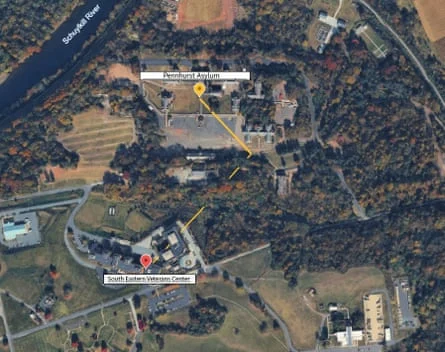
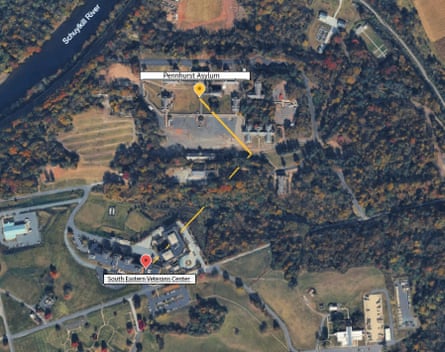
The tranquil banks of the Schuylkill River in East Vincent, Pennsylvania, are once again at the heart of a profound public debate, this time pitting the promise of the artificial intelligence (AI) era against deep-seated community fears and the haunting legacy of a notorious institution. What was once the Pennhurst State School and Hospital, a site synonymous with systemic neglect and human rights abuses, and more recently a macabre Halloween attraction, now faces a proposed transformation into a sprawling data center complex – a development that has ignited fierce local opposition and exposed a burgeoning statewide and national struggle over the rapid expansion of AI infrastructure.
A Shadowed Past, A Digital Future
The history of the Pennhurst site casts a long, somber shadow over its present controversies. Established in 1908 as the Eastern Pennsylvania State Institution for the Feeble-Minded and Epileptic, it later became known as the Pennhurst State School and Hospital. For decades, it operated as a residential facility for individuals with intellectual and developmental disabilities. However, its history is deeply stained by widespread allegations of abuse, neglect, and inhumane living conditions.
A pivotal moment arrived in 1968 when a local news station, then WCAU-TV, broadcast a harrowing documentary titled "Suffer the Little Children." The investigative report meticulously documented appalling conditions within the institution’s red brick buildings, revealing residents found naked, emaciated, and living in squalor. This expose galvanized public awareness and sparked a national outcry against similar institutions. The subsequent landmark class-action lawsuit, Halderman v. Pennhurst, filed in 1974, ultimately led to a federal court order mandating the deinstitutionalization of residents and significant reforms. After years of legal battles and efforts to transfer residents to community-based settings, Pennhurst State School and Hospital permanently closed its doors in 1987, a closure that marked a critical turning point in disability rights advocacy nationwide.
For over two decades, the sprawling campus lay dormant, its decaying structures serving as a stark reminder of its dark past. Then, in 2010, a portion of the site was repurposed, ironically, into a controversial Halloween attraction: "Pennhurst Asylum Haunted House." Its early owners reportedly used original surgical lights and medical cabinets as props, a move that drew criticism for seemingly trivializing the suffering that had occurred there. This commercial venture tapped into the public’s fascination with the macabre, drawing tens of thousands of visitors annually, but also reignited discussions about the ethics of capitalizing on such a tragic history.

Now, in 2026, the specter of a different kind of transformation looms over Pennhurst. The site’s current owners, Pennhurst Holdings, have submitted a proposal to local East Vincent officials for a massive data center complex. The plan envisions three buildings, spanning nearly two million square feet, powered primarily by methane gas. This modern infrastructure, designed to fuel the burgeoning demands of artificial intelligence, represents a stark contrast to the human-centric issues that defined Pennhurst’s past, yet it raises equally pressing concerns for the community.
Community Mobilization and Health Concerns
The proposed data center facility has immediately triggered a powerful backlash from residents of East Vincent Township, especially given its proximity – less than 600 feet – to the Southeastern Veterans’ Center. The concerns articulated by local citizens and veterans are multifaceted, encompassing environmental degradation, public health risks, and quality of life issues.
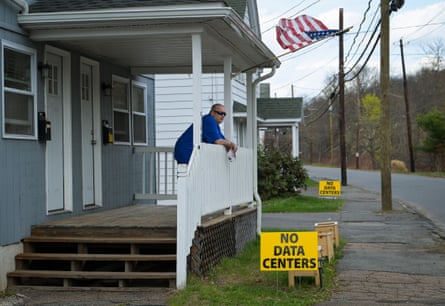
Donald Hyman, a 62-year-old resident and veteran, is particularly worried about the potential health impacts. Suffering from congestive heart failure, Hyman fears that air pollution emanating from an on-site power plant and a battery of backup generators would severely disrupt his recovery. Data centers, especially those of the "hyperscale" variety planned for Pennhurst, require immense and uninterrupted power. While the proposal aims to alleviate strain on the local grid by "bringing their own power" with gas-fueled generators, this solution introduces significant emissions. These generators, often running on natural gas (methane), produce nitrogen oxides (NOx), particulate matter (PM2.5), and other volatile organic compounds, all known respiratory irritants and contributors to cardiovascular disease. The cumulative effect of these pollutants in close proximity to a vulnerable population like elderly veterans is a primary concern.
Beyond air quality, Hyman and four other veterans residing at the Southeastern Veterans’ Center have voiced anxieties about noise pollution. Data centers operate 24/7, requiring constant cooling systems that generate a persistent hum, often described as a low-frequency drone. For individuals with post-traumatic stress disorder (PTSD), chronic noise can be a significant trigger, exacerbating anxiety and disrupting sleep. "You’re trying to force something on us we don’t want," Hyman stated emphatically. "We don’t want it, period."
Furthermore, residents are deeply concerned that the construction process itself could expose them to harmful contaminants in the soil and water. Given Pennhurst’s long history as a large institutional facility, questions about historical waste disposal, buried materials, and potential environmental hazards associated with disturbing the ground are paramount. While Pennhurst Holdings asserts that an environmental investigation of the entire site has been conducted and that the site and its underground tunnels have been remediated for industrial use, some veterans dispute claims from local officials that the site has been "cleaned up" to a sufficient degree, demanding greater transparency and independent verification.
Pennsylvania’s Political Battleground
The Pennhurst data center proposal has rapidly escalated into a microcosm of a much larger, complex political struggle gripping Pennsylvania. The state is experiencing a surge in data center projects, embroiling lawmakers in a contentious debate over economic development, environmental protection, and local autonomy.
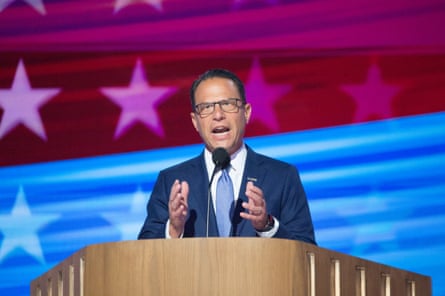
At the center of this political maelstrom is Governor Josh Shapiro, a Democratic presidential hopeful who has positioned Pennsylvania as a leader in the nation’s push for AI supremacy. Shapiro’s administration actively courts major out-of-state investment, viewing data centers as crucial components of the state’s economic future and its technological competitiveness. In 2024, he issued an executive order to "fast-track" state permits for key economic development and infrastructure projects, including certain data centers, demonstrating a clear commitment to accelerating such growth. His 2026-27 budget address further outlined a framework to offer "greater speed and certainty in permitting, and access to state tax incentives" for data centers that meet specific environmental, affordability, and transparency standards.
However, this pro-growth stance has put Shapiro at odds with a growing coalition of residents and some state lawmakers. Katie Muth, a Democratic state senator whose district includes East Vincent, introduced a bipartisan moratorium bill on May 29, 2026, specifically targeting new construction of large "hyperscale" data centers (those using at least 20 megawatts) and significant expansions to existing ones. Her bill, which proposes a three-year pause, reflects a broader sentiment among communities feeling overwhelmed by the rapid pace of development and a desire for more time to study environmental and public health impacts. Beth Livensperger, a resident fighting a proposed data center in Lehigh Valley, echoed this sentiment, stating, "I’m 100% for it: it would give time for the politics to settle out a little more."
Adding another layer of complexity is Stacy Garrity, the state treasurer and Shapiro’s Republican opponent in the upcoming gubernatorial race. Garrity has staked out a more aggressive position on regulating AI infrastructure, initially calling for a "total data center pause" last month. While she later clarified that she doesn’t advocate for a full, time-bound moratorium, but rather a "loosely defined pause" for local stakeholders to consider the impact, her stance aligns her more closely with the concerns of many residents and Senator Muth’s proposal. This unexpected alignment has scrambled traditional political lines, with a liberal governor pushing for growth (similar to former President Donald Trump’s federal advocacy for AI growth) and his conservative challenger advocating for restrictions, reminiscent of some Democratic state senators’ positions. Garrity’s office has characterized Shapiro’s voluntary guidelines as "damage control," a claim Shapiro’s office dismissed as "desperate" given Garrity’s "long record of supporting completely unregulated data center development."
Acknowledging the intense community pushback, Governor Shapiro did unveil new voluntary guidelines on May 27, 2026, aimed at incentivizing developers to build responsibly and address accountability concerns. These guidelines ask developers to provide a community outreach plan, commit to creating a certain number of jobs, and minimize air pollution, notably by using zero-emission energy storage for backup systems. However, a public records request revealed that Amazon Web Services, a major player in data center development and a significant investor in Pennsylvania, was given a "first look" at these guidelines before their public release. Rick Siger, Secretary of Pennsylvania’s Department of Community and Economic Development, stated in an email to Amazon that the principles were "intended to be voluntary, and the governor is not proposing to ban or even discourage data centers," raising questions about the independence and efficacy of these "voluntary" standards.

Indeed, last summer, Governor Shapiro announced Amazon’s plans for a "largest private sector investment" in the state’s history: $20 billion for two data center complexes in Luzerne and Bucks counties. Shortly thereafter, Senator Dave McCormick, flanked by Donald Trump, highlighted over $90 billion in investments in "data centers, energy and power infrastructure, and workforce and AI training projects" announced in Pennsylvania. Despite his general pro-growth stance, Shapiro did remove a proposed data center complex in Archbald from the fast-track program in May 2026, citing a lack of transparency and responsiveness from the developers, demonstrating a willingness to act when community engagement is severely lacking.
National Implications: The AI Boom’s Footprint
The contentious situation in East Vincent is not an isolated incident but an emblem of a burgeoning national debate surrounding data centers. The rapid spread of multibillion-dollar data centers, driven by the insatiable demands of the AI boom, has sparked fierce pushback in cities and a growing number of state governments across the US. The United States currently hosts approximately 4,200 data centers, according to Data Center Map, accounting for roughly 40% of the global total. This dominance is set to expand dramatically, with thousands more planned or under construction. Silicon Valley giants alone are projected to spend around $700 billion on AI infrastructure this year, underscoring the unprecedented scale of this development.
The environmental footprint of these facilities is immense. Data centers are notorious energy guzzlers, consuming vast amounts of electricity for processing and cooling. Globally, data centers already account for an estimated 1-3% of total electricity demand, a figure projected to rise significantly with AI integration. In Pennsylvania, residents have already felt the economic impact, with federal data showing power prices rising about 20% between November 2024 and 2025, one of the highest rates nationwide. This surge is partly attributed to increased demand from industrial consumers, including nascent data center developments.
Beyond energy, data centers are also significant water consumers. While the Pennhurst proposal mentions methane gas for power, many data centers rely on evaporative cooling systems, which can draw millions of gallons of water annually from local municipal supplies or natural sources. A recent Gallup poll published in May revealed that seven in ten Americans oppose the construction of AI data centers in their local areas, driven by concerns about utility price increases, environmental harm, and the impact on local resources. An Emerson College poll in December indicated that 42% of Pennsylvanians don’t want to live next to data centers, though 34% express support.
The federal government, under both the Biden and Trump administrations, has largely advocated for uninhibited growth in AI and its supporting infrastructure. In December, Donald Trump issued an executive order explicitly aimed at preventing states from enacting laws that would restrict AI development in almost any form, signaling a top-down push for technological advancement that often clashes with local environmental and quality-of-life concerns. This creates a complex jurisdictional tug-of-war, as local communities and state lawmakers seek to implement safeguards against a federally encouraged industrial expansion.
Julie McNamara, associate policy director at the Union of Concerned Scientists’ Climate & Energy program, highlights the unprecedented nature of this rapid expansion. "They are not playing in a regulatory framework that had them in mind," she notes. "So it is absolutely a moment of gaps and loopholes. Regulators are scrambling to keep up: there hasn’t been anything in place – really, truly – for these types of facilities yet." This regulatory vacuum leaves communities feeling vulnerable and ill-equipped to handle proposals for industrial facilities of such scale and impact.
Local Victories, Lingering Uncertainty
Despite the significant political and economic forces at play, local communities across Pennsylvania have demonstrated their power to resist. In Montour County, for instance, over 200 residents packed a fire station for a town hall to protest power company Talen’s attempt to rezone hundreds of acres of agricultural land for industrial use. The county commissioners ultimately denied Talen’s request, a hard-won victory for local farmers and environmental advocates. However, the company indicated in February that it plans to incorporate feedback and continue pursuing a data center complex, highlighting the persistent nature of developer ambitions. Sam Burleigh, a resident who fought against the rezoning, reported hearing from local farmers who have been approached by developers offering "an ungodly amount of money" for their land, illustrating the intense pressure on rural communities.
Archbald, a town in Lackawanna County, has become another flashpoint, facing proposals for six data centers that could collectively cover almost 15% of the borough. Residents are incensed by the proposed proximity to schools and homes. The pressure has been so intense that three of the seven-member local planning board resigned, with two citing safety concerns, according to the Washington Post. Mayor Shirley Barrett expressed the profound toll on her community: "This debate has destroyed this community. We want answers, but we have no clue what is going on because this is all happening so quickly." Governor Shapiro himself visited Archbald in May to address residents’ concerns and discuss his new accountability standards, underscoring the widespread impact of these disputes.
The Way Forward for Pennhurst
In East Vincent, the immediate future of the Pennhurst site saw a significant, albeit potentially temporary, resolution. On May 21, 2026, the East Vincent Township Supervisors unanimously voted to reject Pennhurst Holdings’ data center proposal. Residents like Larry Schenk, a systems engineer living less than half a mile from the proposed complex, expressed skepticism before the vote, noting that "The community has lost their faith in the process… There’s a feeling we’re being intentionally kept in the dark, or prevented from having our opinions heard." The palpable tension at an April 20 hearing, where residents booed local officials, underscored the depth of public frustration.
Despite the denial, the battle is far from over. An attorney for Pennhurst Holdings indicated that the company was not surprised by the rejection and plans to appeal the decision in court, questioning whether "East Vincent Township has met their obligation to allow a data center in their township or not."
Pennhurst Holdings has not disclosed which tech company would ultimately utilize the data center but highlighted the project’s economic benefits, projecting 1,000 construction jobs and 200 permanent positions. The developers acknowledged the complex’s proximity to the veterans’ center and other homes (2,500 feet from residential areas), asserting that it would meet "all environmental, sound and emission standards" set by the township and state. They also reiterated that their plan to include on-site gas-fueled generators and a power plant was a direct response to residents’ concerns about rising utility prices, aligning with Governor Shapiro’s call for developers to "bring their own power" or pay entirely for their data centers’ energy. This approach, they argue, would prevent local residents from footing higher electricity bills.
However, Senator Katie Muth swiftly countered this claim, emphasizing that relying on gas-fueled generators, even if privately funded, does little to mitigate emissions and poor air quality, thereby failing to address the core environmental and health concerns.
The conflict at Pennhurst, mirroring similar struggles across the nation, highlights a critical juncture where technological advancement, economic ambition, and community well-being converge. The site’s dark past serves as a powerful reminder of the human cost of unchecked institutional power, adding an ethical layer to the present debate. As Senator Muth concluded, "The battle is likely not over." The fight for the future of Pennhurst and countless other communities across Pennsylvania and the US will continue to test the balance between digital progress and environmental and public health responsibility.