Jono Maryono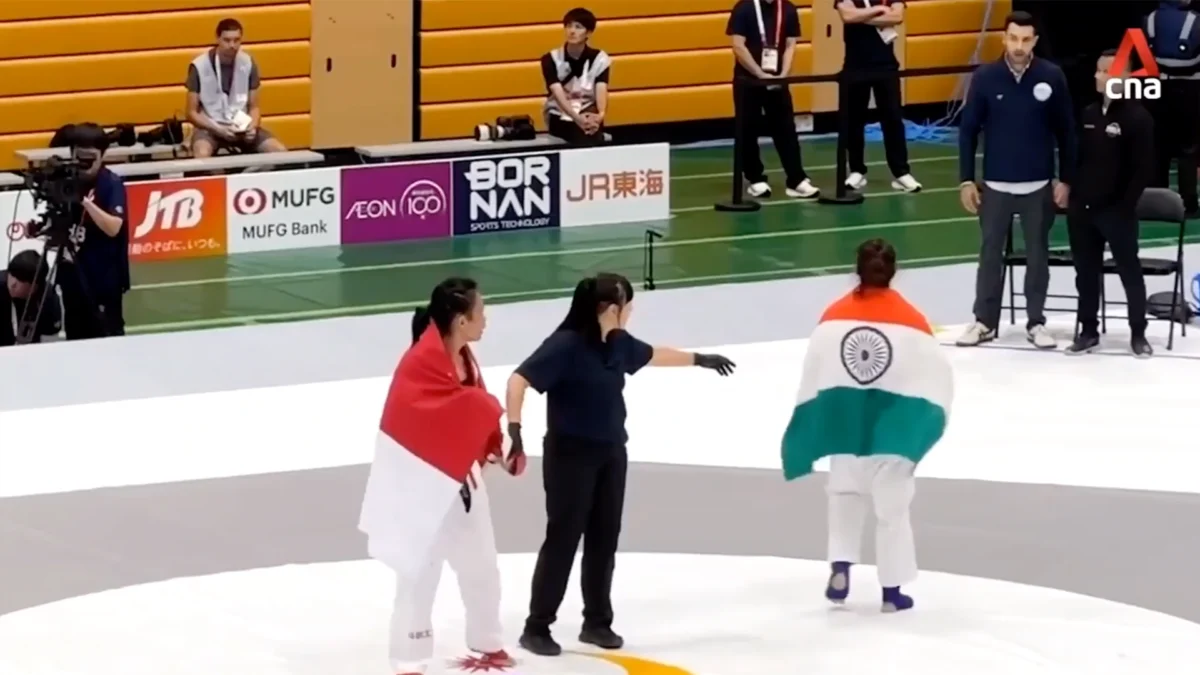
The historic milestone of securing India’s first-ever Mixed Martial Arts medal at the Asian Games was dramatically overshadowed on September 22, 2026, by a fierce judging controversy and a subsequent protocol breach in the semi-final round. Suchika Tariyal, competing under the Indian flag in the high-stakes tournament, made headlines not merely for her podium finish, but for her visible refusal to shake hands with her Singaporean opponent following a contentious decision rendered by the officiating panel. The incident, which quickly escalated into a wider debate regarding refereeing standards, neutral judging panels, and institutional bias within the sport’s continental governing body, has cast a spotlight on the rapidly expanding landscape of Mixed Martial Arts within multi-sport continental competitions.
The bout, held amid an electric atmosphere at the continental multi-sport games, pitted Tariyal against her heavily conditioned Singaporean adversary in the penultimate stage of the tournament. Throughout the three-round contest, both athletes displayed elite-level grappling and striking exchanges, keeping the spectators and coaching staffs on edge. However, when the final bell sounded, the judges’ scorecards delivered a split decision in favor of the Singaporean competitor, halting Tariyal’s path to the gold medal match and relegating her to a bronze-medal standing.
Immediately following the announcement of the official decision, tensions flared inside the arena. While standard combat sports etiquette dictates a post-fight display of sportsmanship—typically manifested through a handshake, bow, or embrace—Tariyal visibly pulled back her hand, refusing physical engagement with her opponent. Standing visibly disgruntled in the center of the cage, the Indian athlete voiced her immediate dissatisfaction to the officiating crew. In post-bout media interactions, Tariyal went a step further, openly accusing the Asian MMA Association (AMMA) of demonstrating systemic bias and deliberate favoritism toward Singaporean athletics, claiming that her performance across the three rounds warranted a decisive victory rather than a controversial defeat.
Chronology of Events Leading to the Controversy
The unfolding of events on September 22 was the culmination of months of intensive preparation, stringent weight-cutting protocols, and high-stakes qualification phases for the Indian contingent. Mixed Martial Arts has been steadily integrating into mainstream continental events, transitioning from an unregulated underground spectacle to a heavily sanctioned Olympic-style sport governed by international federations.
In the weeks preceding the Asian Games, the Indian Mixed Martial Arts delegation arrived at the host city with high expectations. Tariyal, a seasoned competitor with a robust background in grappling and striking disciplines, had cruised through the preliminary rounds with dominant performances, showcasing a well-rounded skill set that positioned her as a top contender for the gold medal.
The morning of the semi-final bout saw both athletes clear the official weigh-ins without incident. As the afternoon session commenced, anticipation reached a fever pitch. Round one featured a tactical striking battle, with both fighters trading heavy jabs and low kicks. Round two shifted to the canvas, where Tariyal utilized her wrestling pedigree to secure dominant top control, attempting multiple submission holds that nearly forced a referee stoppage. The third and final round was a grueling war of attrition, with both competitors exchanging heavy volume until the final buzzer.
When the judges’ decision was read out, the arena registered audible murmurs of surprise from independent analysts and neutral observers ringside who had scored the bout in favor of the Indian fighter. The refusal of the handshake occurred mere seconds later, capturing the attention of international broadcast cameras and setting off a chain reaction across social media platforms and sports news outlets globally.
Background Context of MMA at the Asian Games
To fully understand the gravity of the September 2026 controversy, one must examine the institutional evolution of Mixed Martial Arts within the Asian Olympic ecosystem. For decades, combat sports such as wrestling, boxing, taekwondo, and judo dominated the combat sports roster at the Asian Games. However, the exponential growth of MMA, driven by global promotions and a massive youth demographic across Asia, forced continental sports authorities to recognize the discipline as a legitimate, highly marketable medal event.
The inclusion of MMA into the Asian Games framework required the establishment of standardized unified rules, rigorous anti-doping protocols supervised by the World Anti-Doping Agency (WADA), and the formation of the Asian MMA Association to oversee technical operations, referee training, and judge certification. Despite these professionalization efforts, the transition from commercial cage-fighting promotions to amateur, tournament-style continental games has introduced distinct governance challenges.
Unlike professional organizations that rely on independent athletic commissions, continental sports federations often operate under centralized administrative structures where officiating panels are appointed directly by the governing body. This structural reality has historically left international tournaments vulnerable to accusations of partiality, political lobbying, and inconsistent judging criteria, particularly in subjective sports where bouts go to the judges’ scorecards.
Supporting Data and Technical Analysis
An objective review of the semi-final bout statistics reveals the razor-thin margins that typically lead to controversial split decisions in elite combat sports. According to unofficial ringside punch-and-grapple tracking data from the event:
- Significant Strikes Landed: Tariyal’s opponent held a slight edge in standing volume during the first round, landing 28 significant strikes to Tariyal’s 22.
- Grappling Control Time: Tariyal dominated the grappling exchanges, accumulating a total control time of 3 minutes and 42 seconds across the second and third rounds, successfully executing two takedown attempts.
- Submission Attempts: Tariyal secured one deep rear-naked choke attempt in the closing minute of the second round, which prompted a verbal warning from the referee regarding the defending fighter’s active defense, though the submission was ultimately escaped.
- Damage Assessment: Both athletes displayed visible facial bruising by the end of the third round, reflecting the high intensity and competitive parity of the matchup.
Combat sports analysts specializing in amateur tournament scoring have pointed out that the divergence in the judges’ final tally often stems from differing interpretations of the Unified Rules of Mixed Martial Arts—specifically, how judges weigh effective grappling control versus effective striking volume. While international promotions often prioritize damage and aggressive forward movement, amateur continental bodies frequently place heavy emphasis on clean technique, point accumulation, and positional dominance. The lack of transparent, real-time public scorecards during the broadcast left fans and athletes in the dark regarding which specific rounds the judges awarded to each competitor.
Official Responses and Stakeholder Reactions
In the wake of the altercation and Tariyal’s public statements, representatives from the Asian MMA Association, the Indian Olympic Association (IOA), and the coaching staff of the Singaporean delegation offered contrasting perspectives on the events of September 22.
An anonymous official speaking on behalf of the Asian MMA Association defended the integrity of the judging panel, emphasizing that all appointed judges undergo rigorous international certification and are evaluated based on neutrality and accuracy. The official stated that the decision was reached through a standard three-judge evaluation panel representing three distinct nationalities to ensure geographic and political impartiality. Furthermore, the AMMA hinted that disciplinary reviews could be initiated regarding sportsmanship violations, noting that while emotional disappointment is understandable in the heat of competition, public accusations of corruption without formal evidentiary filings undermine the foundational values of the Games.
Conversely, members of the Indian coaching staff rallied behind Tariyal, asserting that the athlete’s frustration was a natural reaction to what they perceived as a systemic oversight. Speaking to domestic media outlets, an Indian delegation spokesperson highlighted the historical significance of the moment—marking the country’s inaugural podium finish in the sport—while simultaneously calling for an independent audit of the scoring sheets. The IOA announced plans to formally request a technical breakdown of the round-by-round scoring from the organizing committee to ensure transparency and protect the interests of its athletes in future international tournaments.
The Singaporean camp, maintaining a diplomatic stance, congratulated Tariyal on securing a historic medal for India while expressing confidence in the official decision rendered by the cage-side panel. The Singaporean head coach noted that the bout was exceptionally close and praised his athlete’s composure under immense pressure during the grappling exchanges in the second round.
Broader Impact and Implications for the Sport
The controversy surrounding Suchika Tariyal’s semi-final defeat at the 2026 Asian Games carries profound implications for the future governance, regulation, and cultural perception of Mixed Martial Arts on the international stage. As the sport continues its aggressive push toward broader multi-sport recognition—with persistent discussions surrounding eventual Olympic inclusion—incidents of this nature expose critical vulnerabilities that must be addressed by international governing bodies.
First, the event underscores an urgent need for absolute transparency in judging criteria and real-time score dissemination. Unlike traditional combat sports that have decades of institutional experience in multi-sport formats, MMA remains a relatively young discipline within the Olympic and Asian Games framework. Implementing transparent scoring systems, similar to those utilized in amateur boxing or taekwondo, where scorecards or round-by-round indicators are made visible to coaches and spectators, could significantly mitigate post-bout controversies and reduce the likelihood of athletes publicly criticizing officials.
Second, the incident highlights the fine line athletes walk between fierce competitive drive and adherence to sporting etiquette. While unscripted emotional reactions often humanize elite competitors and drive fan engagement, public accusations of bias against continental federations risk drawing punitive administrative sanctions, potentially sidelining athletes during their prime competitive years. National federations now face the delicate task of channeling their athletes’ competitive fire into productive diplomatic channels, filing formal grievances through established legal frameworks rather than resorting to on-camera protests.
Finally, the milestone achieved by Tariyal—despite the bitter circumstances of the semi-final—marks a watershed moment for Indian Mixed Martial Arts. As the sport gains unprecedented momentum across South Asia, backed by grassroots gym expansions, professional domestic promotions, and surging television ratings, the presence of Indian athletes on continental podiums signals a shifting geopolitical balance in combat sports. How the Asian MMA Association and national Olympic committees handle the fallout from the September 22 controversy will establish a vital precedent for future continental championships, ensuring that athletic excellence, rather than administrative friction, remains the defining narrative of the sport’s ascent.