Layla Zulfa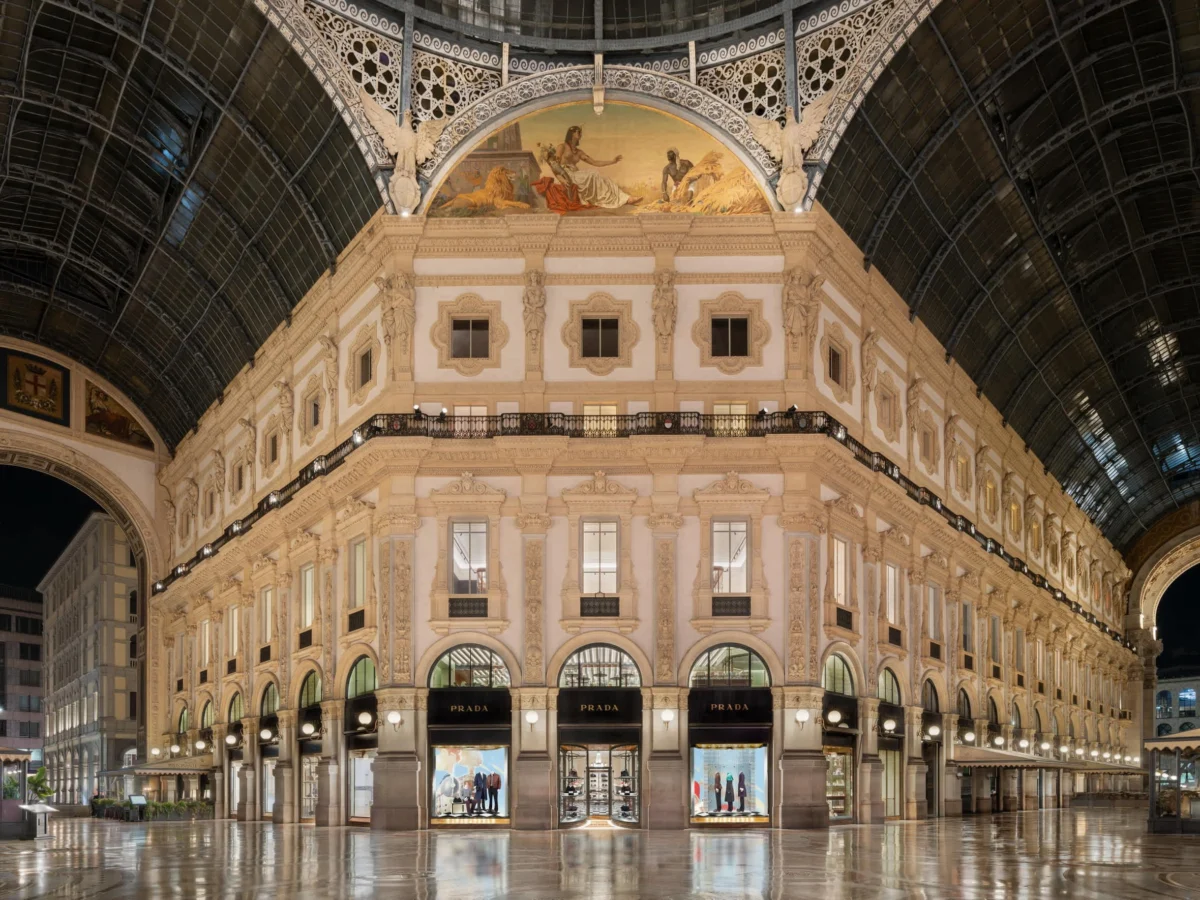
The landscape of global luxury retail has been fundamentally transformed with the unveiling of the Prada Galleria, an ambitious, eight-story architectural marvel situated within the historic Galleria Vittorio Emanuele II in Milan. Located mere steps from the iconic Duomo di Milano, this sprawling complex represents more than a mere retail expansion; it is a profound synthesis of the brand’s 1913 origins and its trajectory as a modern cultural titan. By integrating commercial operations with deep archival immersion, Prada has established a new blueprint for the flagship experience, effectively blurring the lines between a high-end boutique and a dedicated museum of fashion history.
The Historical Genesis: A Return to Origins
The significance of the Prada Galleria location cannot be overstated. When Mario and Martino Prada established the brand in 1913, their inaugural shop—then known as Fratelli Prada—opened its doors within the very same Galleria Vittorio Emanuele II. This 19th-century shopping arcade, often referred to as "il salotto di Milano" (Milan’s drawing room), served as the cradle for the brand’s initial success in fine leather goods.
The return to this site, over a century later, acts as a bridge across time. Under the guidance of Miuccia Prada, who assumed control of the family business in the 1970s and transitioned it into a global powerhouse, the new project serves as a physical manifestation of the label’s evolution. Miuccia Prada, whose creative direction has long defined the brand’s intellectual and minimalist aesthetic, oversaw the curation of the eight-floor space to ensure that the visitor experience reflects the multifaceted nature of the house. The complex is now segmented into two primary retail anchors: Prada Donna, the womenswear boutique, and Prada Uomo, the menswear section, which are linked by an ingenious underground passage known as the Passaggio Segreto.

Architectural and Curatorial Design
The expansion of the Prada Donna section is particularly notable, as it now occupies roughly double the floor space of its predecessor. This area serves as a comprehensive hub for the brand’s modern identity, housing not only ready-to-wear collections but also dedicated zones for home products, high-end beauty, and an expanded travel accessories division. The layout is designed to facilitate a seamless transition between the "now" of contemporary consumer desire and the "then" of the brand’s storied past.
The Passaggio Segreto is perhaps the most significant architectural feature of the new site. It functions as a subterranean gallery that provides a chronological narrative of the company, highlighting pivotal moments that have shaped its trajectory. This is not merely a utilitarian corridor; it is a curated exhibition space that forces a slowing of pace, encouraging visitors to engage with the brand’s heritage before surfacing back into the retail environment.
The Pradasphere and Cultural Engagement
Perhaps the most ambitious component of the new complex is the permanent exhibition space known as the Pradasphere. Located above the legendary Marchesi 1824 pastry shop—a quintessential Milanese institution—this exhibition space offers an unprecedented look at the brand’s archives. The Pradasphere features artifacts and ephemera sourced from the company’s long-standing collaborations across art, architecture, cinema, and sports.
Many of these items have never before been seen by the public. From the intricate leatherwork of the early 20th century to the technical innovations utilized in the creation of lunar spacesuits for NASA—a project that highlights the brand’s engineering capabilities—the exhibition illustrates the breadth of the Prada influence. Access to this exhibition is strictly controlled, requiring advance registration, which underscores the brand’s desire to maintain an intimate and exclusive atmosphere, even within a high-traffic tourist landmark.

In addition to the permanent collection, the Galleria features an invitation-only space titled "Appartamento." This space represents the intersection of fine art and interior design, featuring a rotating selection of contemporary works—such as those by German photographer Andreas Gursky—displayed within a setting designed to replicate the aesthetic sensibilities of 18th-century Italian interiors. By juxtaposing modern, often provocative photography with classical furniture, the brand continues its long-standing tradition of intellectual provocation.
Economic and Cultural Implications
The launch of the Prada Galleria is a strategic maneuver that reinforces Milan’s position as the undisputed capital of luxury. In the current economic climate, where luxury brands are increasingly focused on "experiential retail," Prada is positioning itself as a destination rather than just a storefront. Industry analysts suggest that this move is a response to the shifting demographics of luxury consumers, who are increasingly valuing the narrative and historical authenticity of a brand over simple product acquisition.
The decision to host the Vogue World event at the Galleria just days after its opening served as a calculated statement of intent. It established the venue as a central node in the global cultural circuit, effectively bridging the gap between commerce and the high-fashion editorial sphere.
Data and Chronological Evolution
To understand the scale of this expansion, one must look at the brand’s growth over the past five decades. Since Miuccia Prada took the reins in the 1970s, the company has transitioned from a local leather goods merchant to a multi-billion-dollar enterprise.

- 1913: Fratelli Prada opens in Galleria Vittorio Emanuele II.
- 1970s: Miuccia Prada begins her tenure, shifting the focus to ready-to-wear and the signature nylon collection.
- 1993: Launch of the sister brand, Miu Miu, further diversifying the company’s demographic reach.
- 2023–2024: Completion and opening of the expanded eight-floor Prada Galleria complex.
The expansion reflects a wider trend in the luxury sector: the "museum-ification" of flagship stores. Brands such as Louis Vuitton, Gucci, and Dior have all invested heavily in cultural centers and exhibition spaces. However, the Prada model remains unique in its integration of the "secret" passage and its reliance on the juxtaposition of the avant-garde with the deeply traditional.
Official Stance and Future Trajectory
While the brand has remained characteristically understated regarding the specific financial projections for the new Galleria, internal communications suggest that the space is intended to serve as a "living laboratory." By keeping the archive, the retail space, and the cultural exhibits in constant proximity, the company aims to foster a more profound relationship with its clientele.
The move is also a significant contribution to the preservation of Milanese architectural history. By renovating and occupying such a prominent space within the Galleria Vittorio Emanuele II, Prada has effectively guaranteed the maintenance and cultural relevance of one of Italy’s most important landmarks. This creates a symbiotic relationship: the brand gains prestige from its historic address, and the city benefits from the ongoing investment in, and stewardship of, its most prized public spaces.
Conclusion: Beyond the Shopping Bag
Ultimately, the Prada Galleria is a testament to the brand’s ability to remain relevant in a rapidly changing world. It acknowledges that the future of luxury is not merely about the transaction, but about the story told during the acquisition. Whether a visitor is seeking the latest seasonal leather goods or attempting to understand the brand’s influence on modern design and engineering, the space offers an expansive, multi-layered experience.

As the retail industry continues to grapple with the digital shift, the Prada Galleria stands as a counter-argument to the decline of physical brick-and-mortar locations. By offering an experience that cannot be replicated through a screen—the tactile exploration of history, the intimacy of a private apartment, and the architectural grandeur of a 19th-century masterpiece—Prada has ensured that the "Prada universe" remains a compelling and essential destination for the global elite and the culturally curious alike. The Galleria does not just sell products; it sells the legacy of a house that has defined, and continues to redefine, the aesthetic landscape of the 21st century.