Kang Muslim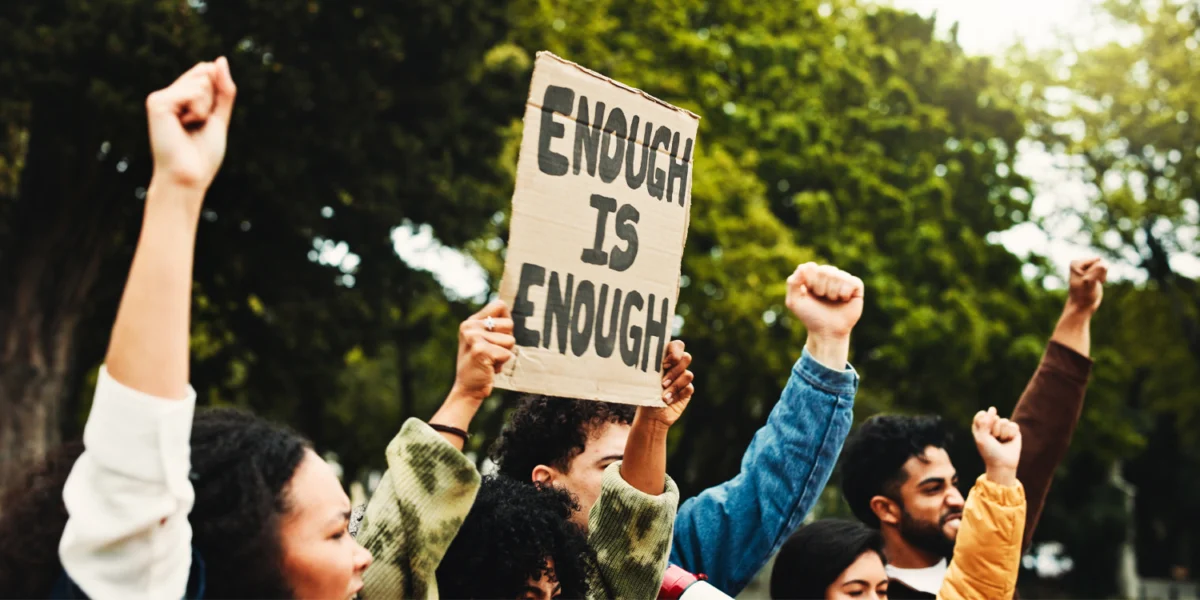
For generations, public demonstrations, marches, and street-level activism have served as the ultimate visual barometer of societal discontent. When thousands of citizens flood urban avenues carrying placards and chanting slogans, the immediate assumption by media outlets, political figures, and law enforcement is that a wave of acute anger, economic desperation, or institutional betrayal has boiled over. However, a landmark meta-analysis spanning six decades of social science research challenges these foundational assumptions, revealing that personal grievances, financial hardship, and generalized government mistrust are surprisingly poor predictors of who actually takes to the streets. Instead, the vast synthesis of empirical data indicates that physical mobilization is driven primarily by pre-existing political engagement, digital connectivity, and robust social networks.
Published in the journal Science Advances, the comprehensive study titled Most people who agree with you won’t protest predictors of marches and demonstrations from six decades of research was conducted by Shelley Boulianne, a full professor and the R. Klein Research Chair in Communication Studies at Mount Royal University alongside a visiting professorship at Lund University, and Jennifer Earl, chair and professor in the Department of Sociology and Criminal Justice at the University of Delaware. By analyzing 181 survey-based studies published between 1965 and 2023, the researchers evaluated more than 1,800 distinct statistical estimates. Their findings reshape our understanding of micromobilization—the complex psychological and sociological process by which an individual transitions from passive agreement with a cause to active physical participation in collective action.
Unpacking the Micromobilization Puzzle: The Grievance Gap
To understand why millions of people can hold identical political beliefs or share profound dissatisfaction with a policy yet only a tiny fraction will ever attend a physical march, sociologists have long studied the concept of micromobilization. Historically, political science literature assumed a straightforward trajectory: a person experiences a grievance—such as job loss, civil rights violations, or economic inequality—feels angry, and subsequently joins a protest to voice their dissent.
Yet, the empirical reality captured by Boulianne and Earl demonstrates a massive divergence between feeling wronged and taking action. Countless non-protesters harbor the exact same grievances, financial anxieties, or ideological viewpoints as those standing on the front lines of a demonstration. As Earl noted, while citizens consistently point to their grievances when asked why they participated in a march, comparative analyses of participants versus non-participants reveal that grievance levels do not reliably separate the two groups.
This disconnect has long frustrated researchers attempting to map out predictive models of social movement participation. While emotional catalysts, such as partisan animosity or sudden political shocks, can temporarily galvanize populations, they consistently play a secondary role to structural and relational variables. The data proves that anger alone is rarely a sufficient engine for sustained public activism.
Methodology and Historical Scope: Six Decades of Data
The rigorous analytical scope of the research required narrowing the definition of activism to ensure methodological consistency. Boulianne and Earl focused exclusively on physical marches and demonstrations, deliberately separating high-effort, in-person public events from lower-effort digital actions, such as signing online petitions, sharing hashtags, or writing letters to elected officials.
The historical timeline of the analyzed data spans from 1965 to 2023, capturing sweeping generational shifts in political participation. This timeframe covers the anti-Vietnam War movements and civil rights marches of the late 1960s, the feminist and environmental mobilizations of the 1970s and 1980s, the anti-globalization protests of the late 1990s, and the modern waves of digital-era activism, including the Occupy movement, the Women’s March, the March for Science, and contemporary partisan rallies.
By gathering survey data encompassing hundreds of thousands of respondents primarily across Western democracies, the researchers synthesized qualitative interviews and quantitative datasets to isolate the specific variables that consistently predict protest attendance. The findings revealed a striking symmetry across diverse sociopolitical eras and geographic regions, establishing a clear profile of the modern demonstrator.
Core Drivers of Protest Participation: Political Interest and Social Ties
When the researchers filtered out the noise of individual grievances, two dominant predictors emerged as the primary engines of physical protest participation: high levels of general political interest and deeply entrenched social connections.
Individuals who routinely consume political news, follow legislative developments, and participate in civic life are exponentially more likely to transition from passive observers to active demonstrators. Furthermore, ideological leanings—specifically individuals identifying with positions to the left of the political center—showed consistently higher rates of participation across the broad historical dataset, though recent studies have highlighted rising engagement among politically extreme factions on both the far-left and far-right.
Equally critical are organizational memberships and interpersonal networks. Belonging to voluntary associations, labor unions, advocacy groups, or community organizations dramatically increases an individual’s propensity to march. These institutional settings serve dual functions: they supply logistical infrastructure and ideological reinforcement, and they act as direct conduits for mobilization. Within these networks, the simple act of receiving a personal, direct invitation to attend an event from a trusted peer or organizational leader functions as one of the most potent catalysts in all of activism research.
The Digital Age and Logistical Availability
The research also sheds light on the evolving role of modern communications technology in shaping protest dynamics. While traditional media consumption—such as reading print newspapers or watching evening television broadcasts—showed no consistent statistical relationship with protest behavior, regular use of digital and social media platforms emerged as a powerful positive predictor.
Social media platforms function differently than legacy media because they merge logistical coordination with interpersonal connection. Rather than merely broadcasting information about an upcoming demonstration, digital networks sustain the social ties necessary to encourage group participation. They lower the psychological and informational barriers to entry, making it easier for interested citizens to find companions, transportation, and schedule details.
Beyond digital connectivity, demographic and structural variables heavily influence who marches. The data confirms that younger individuals, those with higher levels of education, and urban residents are disproportionately represented at demonstrations. The authors attribute these trends to two foundational sociological concepts: biographical availability and geographic supply and demand.
Younger adults frequently possess greater biographical availability—defined as a relative lack of restrictive life obligations, such as mortgage payments, dependent eldercare, or rigid professional schedules—affording them the free time required for time-consuming activism. Meanwhile, urban environments offer a high supply of protest events and dense organizational infrastructures that easily meet the demand of city residents, while simultaneously minimizing the physical travel costs and logistical hurdles that rural citizens face when attempting to join a march.
Implications for Governance, Media, and Law Enforcement
The empirical findings compiled by Boulianne and Earl carry profound implications for how institutional authorities, journalists, and public safety officials interpret public demonstrations. For decades, prevailing cultural narratives have framed protesters as reactionary outsiders, disgruntled malcontents, or social deviants bypassing formal democratic channels out of sheer frustration.
By reframing protesters not as isolated, angry agitators, but as highly engaged citizens with robust social capital and deep political interest, the study invites a fundamental reassessment of public demonstration management:
- Law Enforcement: Police forces and municipal planners can view demonstrators less as potential security disruptions and more as active community stakeholders exercising their fundamental democratic rights. Understanding that participants are often deeply embedded in civic networks can help de-escalate crowd management strategies.
- Political Leaders: Elected officials can recognize that those marching in the streets are frequently the same highly committed citizens who consistently show up at ballot boxes on election day, regardless of the personal time and effort required. Consequently, dismissing protesters as fringe extremists ignores a deeply engaged segment of the active electorate.
- Media Outlets: Journalistic coverage can move away from sensationalized depictions of anger and chaos, instead contextualizing marchers as well-connected members of society whose participation reflects broader, organized civic engagement rather than spontaneous emotional outbursts.
Limitations and Future Research Directions
Despite the exhaustive scope of the meta-analysis, the authors outline several important methodological caveats. The vast majority of the reviewed literature draws heavily from Western industrialized democracies, primarily the United States and European nations. The micromobilization dynamics observed in these open societies may not translate directly to authoritarian regimes or politically repressed regions, where participating in a public demonstration carries severe, life-altering legal and physical risks.
Additionally, because the underlying surveys were largely observational and cross-sectional, establishing definitive causal direction remains challenging. For instance, while digital media use correlates strongly with protest participation, researchers cannot definitively prove whether social media usage actively triggers a decision to march, or if individuals who are already intensely politically active simply utilize digital communication tools at higher frequencies.
Looking ahead, Boulianne and Earl hope that their synthesis will revolutionize how future academic surveys are designed. They advocate for researchers to move away from over-surveying generalized grievances and instead incorporate targeted inquiries regarding direct peer invitations, organizational memberships, and sudden shared catalysts. Boulianne is already expanding upon this framework through an upcoming global book project comparing her meta-analysis findings against massive datasets from the World Values Survey across 66 countries, alongside newly gathered four-country survey data.
Ultimately, the six decades of empirical evidence distilled by Boulianne and Earl serve as a pragmatic blueprint for modern organizers and political scientists alike. Transforming shared ideological agreement into physical presence on the streets requires far more than passive discontent; it requires the deliberate cultivation of political education, the strengthening of community organizations, and the power of a direct, personal invitation.