Jono Maryono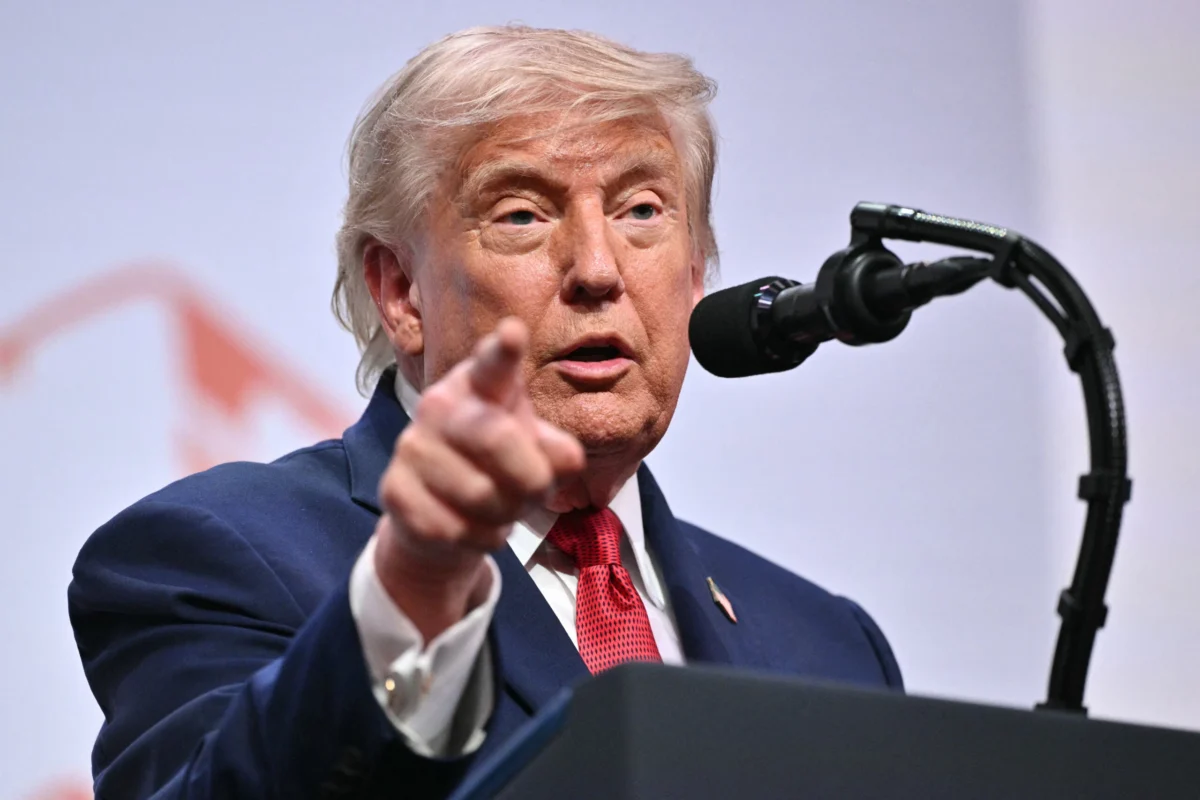
United States President Donald Trump injected a note of uncertainty into the impending signing of a memorandum of understanding intended to de-escalate tensions and initiate the process of ending the protracted US-Israeli conflict with Iran. Speaking to reporters on the sidelines of the Group of Seven (G7) Summit in Evian, France, on Wednesday, President Trump offered a characteristically non-committal assessment of his confidence in the planned Friday signing. Throughout the day, his statements oscillated, at times suggesting renewed military action if Iran did not "behave," and at others, hinting at an accelerated timeline for the agreement.
"Deals are amazing. I’ve done them all my life," President Trump remarked during a joint news conference with Indian Prime Minister Narendra Modi, a sentiment that underscored his transactional approach to international relations. "I’ve gone into deals that were 100 percent and they don’t happen. I’ve gone into deals that there was no chance of getting them done, and it happens, and they happen easily." This preamble set a tone of unpredictability, leaving observers to ponder the true solidity of the agreement. "So, you never know with deals, do you? But you’re going to find out pretty soon," he added, before offering a cautiously optimistic, "I think it will be done."
The shifting timelines were further highlighted when, shortly after, President Trump suggested in a separate address that the signing could potentially occur as early as Thursday or Friday. This ambiguity has characterized the lead-up to the memorandum, with both the United States and Iran signaling that the document, once signed, would serve to halt hostilities across all fronts, lift the US naval blockade, and ensure the unimpeded passage through the Strait of Hormuz.
The MOU, as described by officials from both nations, is intended to be a foundational agreement, paving the way for sixty days of intensive negotiations. These subsequent talks are slated to address more complex and deeply entrenched issues, including the future trajectory of Iran’s nuclear program, its alleged support for regional proxy groups, and the long-term administration and security of the vital Strait of Hormuz waterway.
A Deal in Progress: Unpacking the Memorandum’s Key Provisions
While the official text of the memorandum remains undisclosed to the public and, to a degree, to lawmakers, senior US officials have provided insights into its core components. These officials have asserted that the MOU was electronically signed on Sunday, implying that its fundamental terms are largely settled. However, they also reiterated that either party retains the prerogative to withdraw from the agreement until the formal signing ceremony scheduled for Friday.
According to a senior US official who briefed reporters on condition of anonymity, the MOU mandates several immediate actions. Beyond the reopening of the Strait of Hormuz and the cessation of the US naval blockade on Iranian ports, the United States is reportedly prepared to issue immediate sanctions waivers for Iran’s crucial fossil fuel industry. This concession is a significant economic incentive for Iran, aimed at providing immediate relief from crippling sanctions.
Regarding Iran’s nuclear program, the MOU reportedly contains limited commitments. It is said to restate Iran’s long-standing assertion that it will not pursue nuclear weapons. Both countries are expected to maintain their current "status quo" concerning nuclear activities during the initial 60-day negotiation period. The more detailed discussions concerning Iran’s stockpile of enriched uranium and the future of its nuclear infrastructure are explicitly deferred to this subsequent negotiation phase.
A particularly noteworthy element of the proposed memorandum is the commitment from the United States and its regional partners to develop a "mutually agreed plan" that includes at least USD 300 billion allocated for the reconstruction and economic development of Iran. This substantial financial commitment signals a potential shift towards a more constructive economic relationship, contingent on the successful implementation of the broader agreement. The full lifting of Iranian sanctions and the unfreezing of billions of dollars in Iranian assets are slated to occur on an unspecified timeline following the formal signing.
President Trump’s public comments on the $300 billion reconstruction fund have been guarded. On Friday, he stated that this provision would only be enacted "if they’re [Iran] doing things right." He also carefully distinguished between returning frozen Iranian assets and providing direct financial aid. "We have taken a lot of their money, and we have their money… It’s not our money, it’s their money, and we froze it at a certain point in time," he explained. "I guess we’re going to have to give it back, you know. If we didn’t give it back, nobody would ever invest in the dollar again," he added, emphasizing the importance of financial credibility on the global stage.
Secrecy Breeds Scrutiny: Political Ramifications of the Undisclosed Deal
The relative secrecy surrounding the memorandum’s contents has drawn criticism from across the American political spectrum. Senator Mark Kelly, a Democrat, voiced his concerns on the social media platform X, stating, "A month of negotiations with Iran produced a page and half deal that nobody’s allowed to look at." He further emphasized the need for transparency, declaring, "As a member of the Armed Services and Intelligence Committees, I need to see the actual text to believe we have a deal, not just a tweet."
Republican leadership has also expressed a desire for greater clarity. Senate Majority Leader John Thune indicated that members of President Trump’s own party were urging the White House to make the official text public. "We’re trying to get it," Thune told reporters on Tuesday, underscoring the bipartisan pressure for disclosure.
Negar Mortazavi, a senior fellow at the Center for International Policy, identified "significant political considerations surrounding release of the text." She noted the divergent public emphasis placed on different aspects of the agreement by Washington and Tehran, coupled with critical scrutiny from various factions. "Releasing the document before a formal signing and before key details are finalised could intensify political opposition and complicate the implementation process," Mortazavi explained to Al Jazeera.
US Vice President JD Vance, speaking to CBS News, offered a different perspective on the delay in public release. He suggested that Iran and regional mediators, rather than Washington, were the parties favoring a gradual rollout of information. "Yeah, so there are some, frankly, diplomatic protocols that I don’t fully understand," Vance stated when questioned about the confidentiality. "We’re actually trying to push them to get it out today, because we want to tell the American people what’s in this deal," he added, portraying the administration as eager for transparency.
A Strategic Breakthrough or a Risky Gambit? Analysis and Context
The purported MOU emerges from a period of heightened geopolitical tension. For years, the US and Iran have been locked in a cycle of confrontation, marked by sanctions, proxy conflicts, and near-direct military engagements. The "US-Israeli war with Iran," as described in the initial report, likely refers to the complex and often indirect conflict that has involved the United States and Israel on one side, and Iran and its allied groups on the other, primarily in regions like Syria, Iraq, and Lebanon. The naval blockade mentioned is likely a reference to US maritime interdiction efforts in the Persian Gulf and surrounding waters.
President Trump, during a speech at the G7 summit, lauded the MOU as a "strategic breakthrough," drawing a direct parallel to the 2015 Joint Comprehensive Plan of Action (JCPOA) – the nuclear deal negotiated under the Obama administration from which Trump withdrew in 2015. The JCPOA aimed to curb Iran’s nuclear program in exchange for sanctions relief. Trump’s rhetoric suggests an ambition to broker an agreement that surpasses the JCPOA, particularly in its scope and effectiveness.
Furthermore, President Trump controversially claimed that the US-Israeli conflict had indeed resulted in "regime change" in Iran. This assertion stands in contrast to the consensus among many foreign policy experts and analysts, who maintain that Iran’s governing structure has remained intact, with some elements adopting even more hardline stances. Trump described the current Iranian leadership as "very smart" and "far less radicalized," suggesting a belief that his administration’s policies have fostered a more pragmatic approach within Tehran.
In a related development, President Trump reiterated his criticisms of Israeli Prime Minister Benjamin Netanyahu’s military strategy in Lebanon. These operations, he implied, carry the risk of jeopardizing the nascent US-Iran agreement. Despite these critiques, he affirmed the enduring partnership between the United States and Israel, noting that a copy of the MOU had been shared with Jerusalem, underscoring Israel’s significant involvement and stake in the regional security landscape.
The implications of this MOU, if successfully ratified and implemented, are far-reaching. Economically, the lifting of sanctions and the potential for substantial reconstruction aid could significantly alter Iran’s economic trajectory and its integration into the global market. Geopolitically, the de-escalation of tensions and the reopening of critical trade routes like the Strait of Hormuz could foster greater stability in a volatile region. However, the success of these endeavors hinges on the commitment of both parties to the negotiation process and the ability to bridge fundamental differences on issues such as Iran’s nuclear ambitions and regional influence. The coming days and weeks will be critical in determining whether President Trump’s cautious optimism translates into a lasting diplomatic achievement or remains another chapter in the complex and often unpredictable saga of US-Iran relations.