Jono Maryono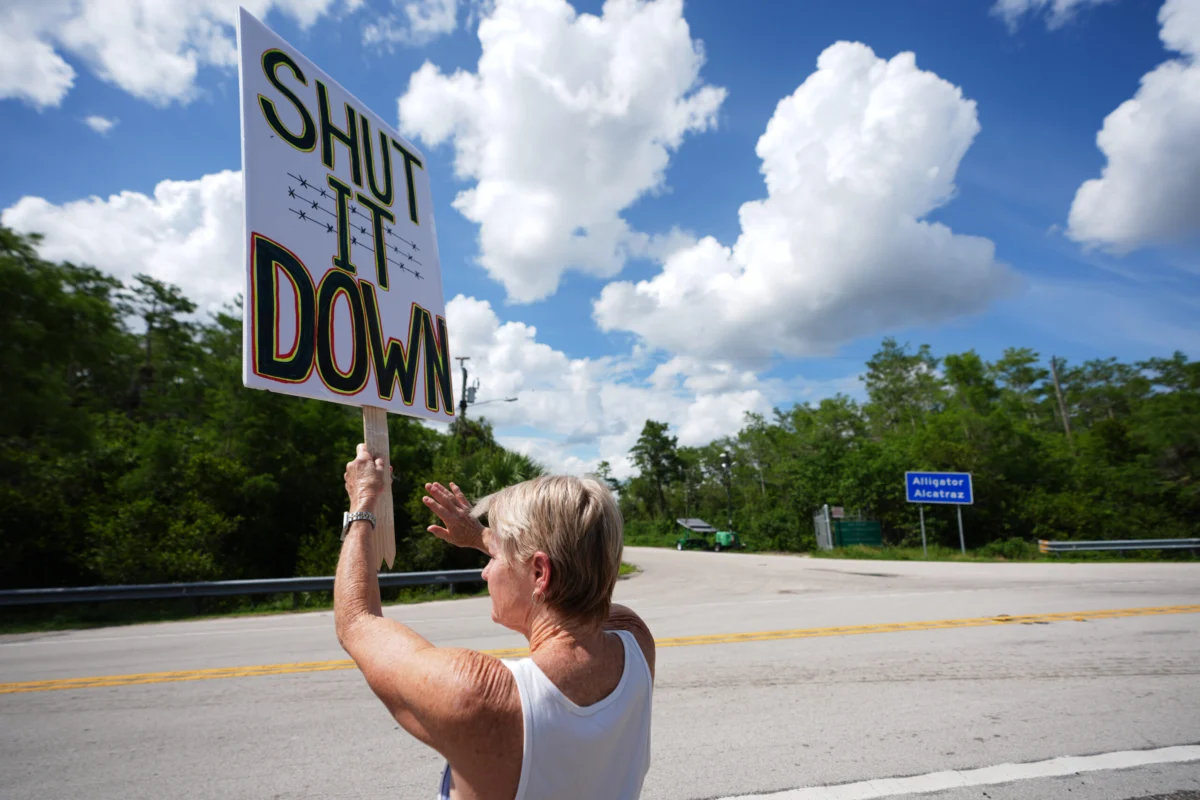
The United States government has announced the complete transfer of all immigrant detainees from a controversial Florida facility, colloquially known as "Alligator Alcatraz," effectively ceasing operations at the site. The Department of Homeland Security (DHS) confirmed on Wednesday that every individual held at the state-run detention center near the ecologically sensitive Everglade wetlands has been relocated to other facilities. This move comes as the Atlantic hurricane season officially commenced, prompting concerns for the safety of detainees in a location inherently vulnerable to severe weather events.
The facility, established less than two years ago, quickly became a focal point for criticism regarding its conditions, operational transparency, and alignment with human rights standards. The decision to transfer detainees and, by implication, close the facility, marks a significant development following persistent scrutiny from rights organizations, legal advocates, and even Indigenous communities whose ancestral lands are in proximity to the site.
Genesis and Design: A Deterrent in the Wetlands
"Alligator Alcatraz" was conceived and implemented during the Trump administration’s heightened focus on immigration enforcement and detention. Unveiled on June 19, 2025, the facility was presented as a temporary, yet formidable, detention center. Its remote location within Florida’s Big Cypress Natural Preserve was intentionally chosen. Officials, including then-Florida Attorney General James Uthmeier, explicitly stated that the surrounding wetlands, teeming with native wildlife such as alligators and pythons, were intended as a natural deterrent against escape. "If people get out, there’s not much waiting for them other than alligators and pythons. Nowhere to go. Nowhere to hide," Uthmeier had remarked, underscoring the facility’s unique and starkly isolated positioning.
The facility was designed to accommodate up to 3,000 individuals. Its construction featured an "aluminium-frame structure," which officials claimed possessed the resilience to withstand wind speeds equivalent to a Category 2 hurricane. This structural design was presented as a measure to ensure the safety of both detainees and staff during extreme weather. The initial opening saw a high-profile visit from then-President Donald Trump, accompanied by Florida Governor Ron DeSantis, signaling the administration’s commitment to the facility’s role in its immigration policies. Trump’s broader agenda during his second term has included advocating for the mass deportation of immigrants, with DeSantis, a former presidential rival, actively supporting the deployment of state resources to facilitate such efforts.
A Trail of Controversy: Human Rights and Environmental Concerns
Despite official assurances regarding its structural integrity and its intended purpose, "Alligator Alcatraz" faced substantial opposition and criticism almost from its inception. The very notion of a detention facility designed to leverage a hostile natural environment as a deterrent raised immediate ethical and human rights red flags.
Environmental and Indigenous Opposition: Indigenous leaders from the Miccosukee and Seminole nations voiced strong objections to the facility’s construction. They argued that the site’s development was detrimental to their ancestral lands, sacred ceremonial sites, and the delicate ecological balance of the Everglades. The proximity to these culturally and environmentally significant areas amplified concerns about the long-term impact of such a facility.
Legal and Rights Group Scrutiny: Human rights organizations and legal advocacy groups, such as the American Civil Liberties Union (ACLU), immediately questioned the adequacy of the facility’s temporary structures to provide safe and humane shelter. Their primary concerns centered on the capacity of these units to protect detainees from the extreme heat, torrential rains, and frequent hurricanes characteristic of South Florida’s climate, particularly during the hurricane season which spans from June through November.
Allegations of Abuse and Neglect: Over its approximately one year of operation, "Alligator Alcatraz" became the subject of numerous lawsuits and human rights complaints. Detainees and their legal representatives reported a pattern of severe issues, including allegations of denied access to legal counsel, inadequate medical care, and substandard living conditions, with specific claims of food being infested with worms. These reports painted a grim picture of life within the facility, starkly contrasting with the government’s portrayal of a secure and functional detention center.
A Chronology of Closure and Continued Scrutiny
The path to the facility’s closure has been marked by escalating pressure and governmental responses.
- June 19, 2025: "Alligator Alcatraz" is announced and subsequently opens, touted as a temporary detention solution leveraging its remote, wetland environment.
- July 2025: Then-President Trump and Florida Governor DeSantis tour the facility, underscoring its significance within their immigration enforcement strategies.
- August 2025 – April 2026: Numerous reports emerge detailing human rights concerns, including allegations of medical neglect, restricted access to legal services, and poor living conditions. Lawsuits are filed by detainees and advocacy groups.
- May 2026: Reports surface from anonymous officials cited by The New York Times, suggesting that the facility’s significant operational costs were becoming unsustainable, contributing to discussions about its impending closure. Concurrently, the government announces its intention to transfer detainees out of the facility, citing safety concerns.
- June 2026: As the Atlantic hurricane season begins with the formation of Tropical Storm Arthur, the Department of Homeland Security officially confirms the complete transfer of all detainees from "Alligator Alcatraz." The facility is effectively shuttered.
Official Statements and Legal Reactions
Department spokesperson Lauren Bis stated that the transfers were conducted "for the safety of the illegal alien detainees" in anticipation of the hurricane season. While this statement provided a rationale for the immediate action, it did not offer specifics regarding the number of individuals transferred or their new locations. Crucially, the statement did not definitively confirm the permanent closure of the facility, though months of intensified reports had already signaled its likely demise.
Amy Godshall, an attorney with the ACLU who was instrumental in a lawsuit challenging the facility’s lack of access to legal services, welcomed the transfer of detainees. "Transferring people out of this cruel facility is an important step, but it does not erase the harm that has already been done," Godshall remarked. She elaborated on the lawsuit’s premise, which posited that the facility’s remote location was a deliberate strategy to isolate detainees and impede their ability to secure legal representation. "The state and federal government must permanently close this facility and commit to never detaining people there again," she urged, reflecting the broader call from rights advocates for a definitive end to the use of such sites.
Broader Implications and Future Considerations
The closure of "Alligator Alcatraz" is significant not only for the individuals who were detained there but also as a potential indicator of shifting governmental approaches to immigration detention. The facility’s existence and subsequent closure highlight several critical issues:
Cost-Effectiveness vs. Human Rights: Reports suggesting the facility was "too costly to maintain" raise questions about the economic viability and ethical justification of such specialized, isolated detention centers. The substantial resources potentially required for their upkeep, coupled with the documented human rights concerns, present a complex challenge for policymakers.
Precedent for Future Facilities: The controversy surrounding "Alligator Alcatraz" could set a precedent for the development and operation of future detention facilities. The strong opposition from Indigenous communities, legal experts, and human rights organizations suggests a growing public and institutional demand for greater accountability, transparency, and adherence to international human rights standards in immigration detention.
Impact on Immigration Policy Discourse: The shuttering of this facility may fuel further debate on the efficacy and ethics of mass detention as a component of immigration policy. Critics argue that facilities like "Alligator Alcatraz" represent a punitive approach that fails to address the root causes of migration and can lead to systemic abuses. Conversely, proponents of strict border enforcement may view its closure as a setback.
Environmental and Indigenous Rights: The case underscores the critical need to consider environmental and Indigenous rights in the planning and execution of government projects, particularly those located in sensitive ecological zones or on historically significant lands. The opposition voiced by the Miccosukee and Seminole nations serves as a potent reminder of the interconnectedness of human rights, environmental stewardship, and cultural preservation.
As the Atlantic hurricane season unfolds, the focus shifts from the immediate safety of detainees at "Alligator Alcatraz" to the broader implications of its closure. The administration’s decision, driven by immediate safety concerns and potentially by escalating operational costs and persistent criticism, represents a turning point for a facility that became a symbol of controversial immigration enforcement tactics. The call for permanent closure and a commitment to never detaining individuals in such conditions again echoes the ongoing struggle for humane and rights-respecting immigration policies in the United States. The long-term impact of this chapter in immigration detention history will likely continue to be analyzed and debated for years to come.