Johny Marice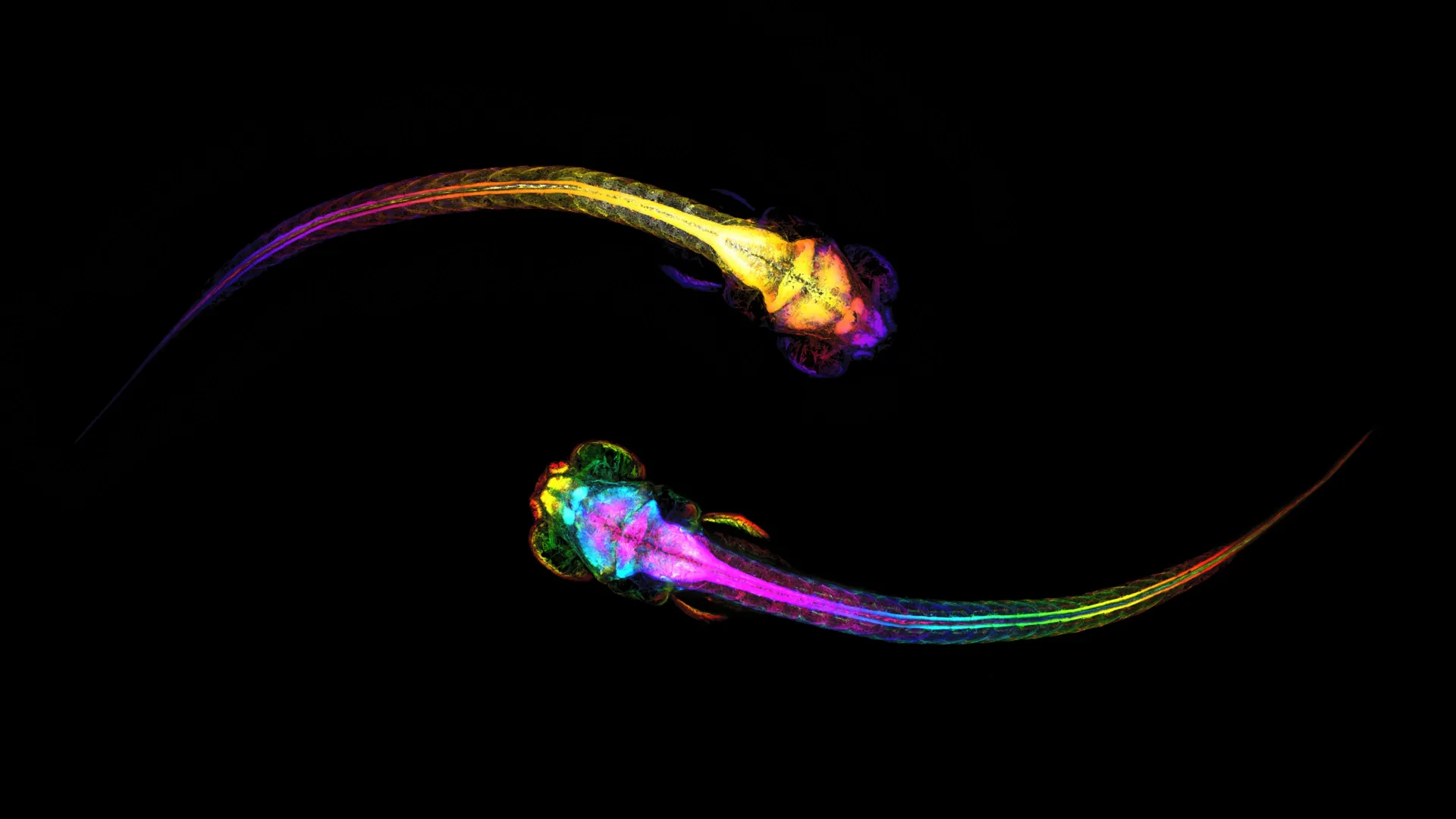
New research from the Hebrew University of Jerusalem is shedding light on the intricate neural processes that underpin our decision to approach others, revealing that the brain begins orchestrating social interaction several seconds before any physical movement occurs. This groundbreaking study, published in the esteemed journal Nature Neuroscience, has identified a distinct, brain-wide pattern of neural activity that not only precedes social behavior but also correlates with an individual’s inherent social motivation. The implications of these findings extend beyond understanding typical social interactions, offering potential insights into conditions where social behavior is atypical or impaired.
Unveiling the Pre-Social Neural State
For decades, scientists have grappled with the fundamental question of what drives us to seek out and engage with other individuals. While the observable actions of approaching someone are readily apparent, the internal neurological precursors to these decisions have remained largely elusive. This new research, spearheaded by Dr. Lilah Avitan and her dedicated team at the Edmond and Lily Safra Center for Brain Sciences (ELSC) at the Hebrew University, utilized an innovative experimental setup with zebrafish to meticulously track neural activity in real-time. Zebrafish were chosen for their suitability as a model organism, allowing for high-resolution monitoring of brain function at the cellular level.
The experimental paradigm involved a carefully orchestrated encounter between two zebrafish. One fish, designated as the observer, was placed in a controlled environment where it could witness another fish swimming nearby. Simultaneously, researchers employed advanced neuroimaging techniques to record the complete neural activity of the observer fish’s brain. This real-time monitoring allowed the scientists to capture the precise moments leading up to a social decision and observe the subsequent unfolding of neural events.
A Symphony of Neural Signals Precedes Action
The study’s most significant revelation is the discovery of a widespread neural signal that emerges in the observer fish’s brain several seconds before it initiates movement towards its conspecific. This signal is not localized to a single, dedicated social processing center. Instead, it represents a coordinated shift in activity across multiple brain regions. Specifically, researchers observed an increase in neural activity within the pallium, a brain area analogous to the cerebral cortex in mammals and known for its role in complex cognitive functions and behaviors. Concurrently, activity decreased in other, less understood brain areas.
This synchronized ebb and flow of neural activity, dubbed a "neural pre-decision state" by the researchers, acts as a crucial preparatory phase. It effectively signals the imminent intention to engage in social behavior. Crucially, the strength and pattern of this brain-wide signature were found to be predictive of the upcoming action. In essence, the brain appears to be "warming up" for social engagement, laying the groundwork for approach behavior well before the physical act of moving begins. This predictive capability is a significant advancement in understanding the neurobiological underpinnings of social decision-making.
The Social Drive: A Measure of Neural Intensity
Beyond identifying the presence of this pre-social neural state, the research further established a compelling link between the intensity of this neural pattern and an individual’s inherent social drive. The study observed variations in the strength of this brain-wide signature among different zebrafish. Fish that exhibited a more robust and pronounced neural pre-decision state were also found to be more socially inclined in their general behavior. This suggests that the observed neural activity is not merely a generic response to the presence of another individual, but rather a reflection of an individual’s underlying motivation to engage socially.
The findings underscore the pivotal role of the pallium in this process. The increased activity in this region during the pre-decision state strongly suggests its central involvement in generating the impetus to approach and interact with others. Dr. Avitan elaborated on these findings, stating, "This study identifies a brain-wide neural signature of social approach that emerges before movement begins. This signature predicts not only whether an upcoming action will be social, but also how strongly socially driven the individual is." This direct correlation between neural signature strength and social drive provides a quantifiable measure of an individual’s propensity for social engagement.
Background and Context of the Research
The Hebrew University of Jerusalem has long been a hub for pioneering neuroscience research. The Edmond and Lily Safra Center for Brain Sciences (ELSC) is renowned for its interdisciplinary approach, bringing together experts from various fields to tackle complex questions about brain function. Dr. Lilah Avitan’s lab, in particular, has focused on the neural basis of social behavior, employing cutting-edge technologies and model organisms to unravel intricate biological mechanisms.
The choice of zebrafish as a model organism is strategically significant. Their transparent embryos and larvae, coupled with a relatively simple yet conserved brain structure, make them ideal for studying neural circuits. Furthermore, zebrafish exhibit a range of social behaviors, from schooling to courtship, making them a relevant species for investigating social decision-making. The development of a novel experimental system that allows for the simultaneous observation of behavior and detailed monitoring of brain activity represents a significant methodological advancement by Lifshitz and the Avitan lab, enabling a deeper exploration of the temporal dynamics of neural processes.
The research builds upon existing knowledge of brain regions involved in social processing, such as the amygdala and prefrontal cortex in mammals. However, by using a simpler brain structure like that of zebrafish, the researchers can isolate and identify fundamental neural principles that may be conserved across species, including humans. The study’s timeline of discovery involved years of meticulous experimental design, data collection, and rigorous analysis. The initial conceptualization of the research questions likely emerged from earlier observations of social behavior in zebrafish and the growing understanding of the role of widespread neural networks in complex behaviors. The publication in Nature Neuroscience signifies a rigorous peer-review process, validating the study’s scientific merit and significance.
Supporting Data and Methodological Innovations
The study’s robust findings are supported by several key pieces of data. The researchers quantified the temporal lag between the emergence of the neural signature and the onset of physical movement, consistently finding it to be several seconds. This temporal precision is critical in establishing causality and understanding the preparatory nature of the neural activity. Furthermore, the statistical correlation between the strength of the brain-wide neural pattern and behavioral measures of sociality in individual zebrafish provides strong evidence for the link between neural activity and social drive.
The development of the novel experimental system was crucial. It allowed for the precise manipulation of social stimuli (the swimming conspecific) and the simultaneous, comprehensive recording of neural activity. Traditional methods might have focused on single brain regions or lacked the temporal resolution to capture events occurring seconds before behavior. The use of advanced microscopy and genetic tools to label and track neuronal activity in individual cells within the entire brain was instrumental in revealing the widespread nature of the pre-decision state. This innovative approach has paved the way for future investigations into the precise mechanisms by which different brain regions communicate and coordinate during social decision-making.
Broader Implications and Potential Future Directions
The implications of this research are far-reaching. On a fundamental level, it deepens our understanding of the neurobiological basis of sociality, a trait central to human experience and survival. By identifying the neural precursors to social approach, scientists are gaining valuable insights into the intricate mechanisms that drive social connection. This knowledge could be instrumental in addressing conditions characterized by altered social behavior, such as autism spectrum disorder, social anxiety, and schizophrenia. Understanding the typical neural pathways involved in social engagement may help researchers identify deviations in these pathways in individuals with these conditions, potentially leading to more targeted diagnostic tools and therapeutic interventions.
Moreover, the study’s findings suggest that individual differences in social drive are rooted in distinct patterns of neural activity. This opens up avenues for investigating the genetic and environmental factors that contribute to these differences. Future research could explore how early life experiences, social learning, and genetic predispositions influence the development and strength of these neural signatures.
Dr. Avitan’s statement highlights the predictive power of this neural signature. This predictive capacity is not only scientifically significant but also holds potential for applications in fields such as human-computer interaction and artificial intelligence, where understanding and predicting social cues are paramount.
The research team is likely to pursue further investigations to dissect the specific neural circuits involved in generating and processing this pre-decision state. Exploring the role of neurotransmitters and neuromodulators in this process, and examining how these patterns differ across various social contexts (e.g., approach to a familiar versus unfamiliar conspecific), are logical next steps. Furthermore, efforts to translate these findings from zebrafish to more complex mammalian models, and ultimately to human studies, will be crucial in solidifying the universality of these principles. The journey to fully comprehend the brain’s intricate dance of social connection is ongoing, and this study represents a significant leap forward in illuminating its earliest neural choreography.