Reynand Wu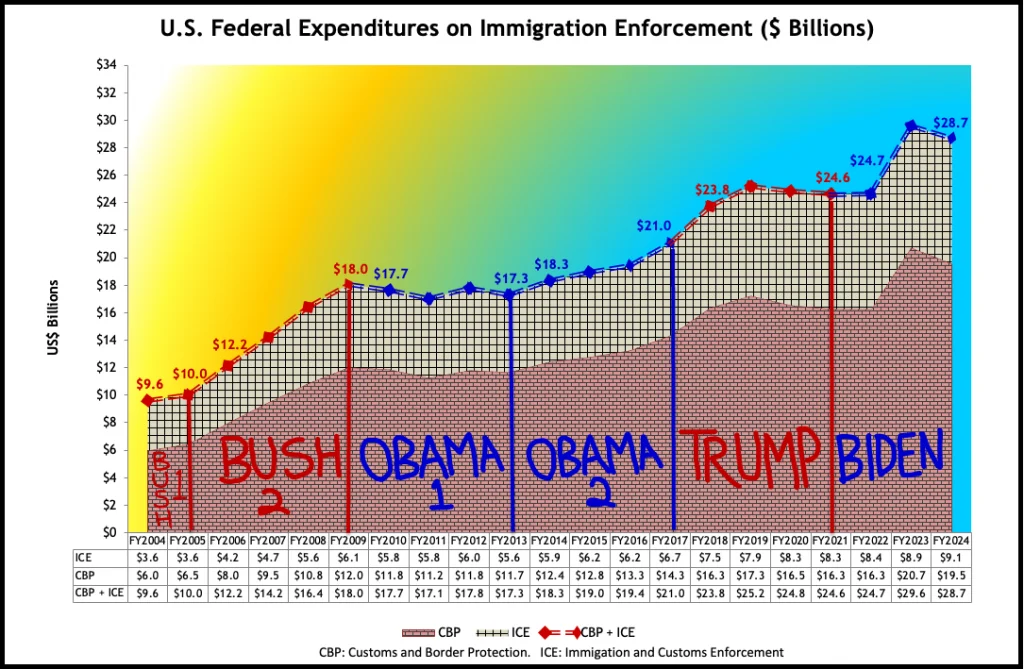
State borders, often perceived as immutable geographic realities, are in fact dynamic constructs, deeply shaped by political conflict, nationalist narratives, and disparate economic systems. Crucially, as detailed analysis reveals, their creation and maintenance represent a colossal and sustained investment of public financial resources. Public policy and the dominant political narratives frequently serve to naturalize these boundaries, obscuring their often arbitrary and violent origins. Beyond simply delineating territory following wars or disputes, state borders perform vital social functions, including the preservation of distinct political systems, the differentiation between ‘insiders’ and ‘outsiders,’ and the active construction of economic disparities through the enforcement of unequal trade relations, national currencies, and divergent value regimes across sovereign territories.
The Post-9/11 Securitization Paradigm
The modern architecture of border enforcement in the United States underwent a profound transformation in the aftermath of the September 11, 2001, terrorist attacks. This pivotal event catalyzed a dramatic shift in national security priorities, leading to an unprecedented fusion of anti-terrorism discourse with border regulation. The administration of President George W. Bush spearheaded this overhaul, establishing the Department of Homeland Security (DHS) through the Homeland Security Act of 2002. This monumental legislative act consolidated numerous federal agencies under a single umbrella, fundamentally reshaping the nation’s approach to internal and external security threats.
Among the key agencies established under DHS, Customs and Border Protection (CBP) and Immigration and Customs Enforcement (ICE) emerged as linchpins of the new border security apparatus. CBP, describing itself as "one of the world’s largest law enforcement organizations," explicitly states its primary mission as detecting and preventing the illegal entry of individuals into the United States and maintaining "borders that work." Its responsibilities span land, air, and sea ports of entry, encompassing border patrol, customs duties, and agricultural inspections. ICE, meanwhile, articulates its mission as protecting America from "cross-border crime and illegal immigration that threaten national security and public safety," with a focus on apprehending, detaining, and deporting individuals found to be in violation of immigration laws within the nation’s interior. These agencies, armed with expanded mandates and significant resources, quickly became the operational arms of a newly securitized border policy.
A Chronicle of Escalating Expenditure: The Financial Cost of Enforcement
The financial commitment to this expanded border security framework has been staggering and relentless, transcending presidential administrations and partisan divides. Over a 21-year period, from the inception of DHS in 2002 through fiscal year 2024, the United States government has allocated an extraordinary total of $409.4 billion in public funds towards immigration enforcement and border security. This figure, unadjusted for inflation in the original data, represents a foundational investment in the physical and operational infrastructure of border control.
Detailed analysis of federal budgetary allocations reveals distinct trends within this overall expenditure. Approximately $275 billion has been directed towards CBP, funding its extensive operations, personnel, technology, and infrastructure development along the nation’s borders. Concurrently, ICE has received an estimated $134.4 billion, supporting its interior enforcement activities, detention facilities, and deportation efforts.
The annual federal expenditure on immigration enforcement has witnessed a nearly threefold increase in unadjusted dollars, soaring from approximately $9.6 billion in Fiscal Year 2004 to an estimated $28.7 billion by Fiscal Year 2024. Even when adjusted for inflation to 2024 dollars, the growth remains substantial, indicating an increase from roughly $17.5 billion to $28.7 billion. This sustained budgetary expansion underscores a deep, institutional commitment to the robust policing of national borders, making border security one of the fastest-growing areas of federal spending in recent decades.
The Bipartisan Illusion: Rhetoric Versus Reality in Border Policy
One of the most striking revelations from an examination of border spending is the significant divergence between political rhetoric and actual policy implementation, particularly between the two major parties. While Democratic presidents and politicians frequently articulate a more pro-immigrant stance, often emphasizing pathways to citizenship, humane treatment, and addressing root causes of migration, their budgetary actions on border enforcement tell a different story.
During periods of Republican presidential leadership, an estimated $178.9 billion was spent on immigration enforcement, averaging approximately $17.9 billion annually. In contrast, under Democratic presidential administrations, the total expenditure climbed to an estimated $230.5 billion, with an annual average of roughly $21.0 billion. These figures starkly illustrate that, despite rhetorical differences, Democratic administrations have not only maintained but often increased the funding levels for border policing agencies at a higher average annual rate than their Republican counterparts.
This bipartisan consensus on increasing border security funding challenges the notion of significant partisan divergence on immigration policy at the operational level. While public discourse may highlight ideological divides, the practical allocation of resources suggests a shared, entrenched commitment to a highly securitized border. This continuity in funding, regardless of the party in power, suggests that the border security apparatus has become deeply institutionalized, driven by a complex interplay of perceived national security threats, political expediency, and established bureaucratic interests.
Operationalizing the Billions: What the Money Buys
The vast sums invested in border security translate into a formidable operational presence across the United States. These billions fund a multi-faceted strategy that includes:
- Personnel: A significant portion of the budget is allocated to staffing. CBP employs tens of thousands of Border Patrol agents, customs officers, and support personnel. ICE also maintains a large force of agents responsible for interior enforcement, investigations, and detention operations. This includes salaries, benefits, training, and equipment for these extensive workforces.
- Infrastructure: The construction and maintenance of physical barriers, such as border walls and fences, represent a substantial investment. This also includes roads, lighting, surveillance towers, and forward operating bases along the border. The Biden administration’s decision in October 2023 to waive 26 federal regulations to construct a border wall in Texas, echoing policies of its Republican predecessor, Donald Trump, serves as a stark reminder of the ongoing commitment to physical barriers.
- Technology: Advanced surveillance technologies are crucial components of modern border security. This includes drones (both aerial and ground-based), ground sensors, remote video surveillance systems, thermal imaging cameras, facial recognition technology, and sophisticated data analytics platforms used to track and identify individuals.
- Vehicles and Equipment: Fleets of patrol vehicles, boats, helicopters, and fixed-wing aircraft are essential for covering vast and often rugged border terrain. Agents are also equipped with advanced communication systems, protective gear, and weaponry.
- Detention and Deportation: A significant portion of ICE’s budget is dedicated to the operation of immigration detention centers, which house tens of thousands of individuals annually. This also covers the immense logistical costs associated with the apprehension, processing, and deportation of undocumented immigrants, including transportation and international coordination.
Historical Context and Policy Evolution
The current state of US border policy is not merely a product of post-9/11 reactions but also a culmination of historical trends. Prior to the formation of DHS, agencies like the Immigration and Naturalization Service (INS) and the Customs Service handled immigration and border control. However, their mandates and funding paled in comparison to the post-9/11 entities.
The 1980s and 1990s saw incremental increases in border enforcement, driven by concerns over drug trafficking and undocumented immigration, particularly following legislative acts like the Immigration Reform and Control Act of 1986. Yet, the creation of DHS marked a paradigm shift, embedding border security firmly within the national security framework. This re-framing effectively depoliticized the debate over whether to secure the border and instead shifted it to how to secure it, often bypassing broader discussions about immigration policy reform or the socio-economic drivers of migration.
Implications and Broader Societal Ramifications
The sustained, multi-billion-dollar investment in border enforcement carries significant implications that extend far beyond simply deterring illegal crossings.
- Economic Impact: The direct costs represent a substantial drain on public coffers, funds that could potentially be allocated to other public services such as education, healthcare, infrastructure repair, or economic development programs. There are also indirect economic costs, such as the impact on border communities, disruptions to cross-border trade, and the opportunity costs of a highly militarized border.
- Humanitarian Concerns: The emphasis on enforcement has profound humanitarian consequences. Increased apprehensions, prolonged detentions, and expedited deportations often separate families, contribute to trauma, and strain humanitarian resources. Advocacy groups consistently raise concerns about due process, conditions in detention facilities, and the treatment of asylum seekers at the border.
- Erosion of Rights: Critics argue that the expansion of border enforcement powers, particularly those related to surveillance and data collection, can erode civil liberties and privacy rights, not just for migrants but for all individuals living in border regions or interacting with these agencies.
- Political Gridlock: The bipartisan commitment to funding the existing border apparatus, despite rhetorical differences, contributes to political gridlock on comprehensive immigration reform. The focus remains on enforcement, often overshadowing discussions about legal pathways, labor needs, and integration policies.
- International Relations: The US approach to border security inevitably impacts its relationships with neighboring countries, particularly Mexico. Joint efforts, sometimes contentious, are undertaken to manage migration flows, combat drug trafficking, and address security concerns.
- The "Carceral State" Expansion: As some analysts suggest, the robust funding for border enforcement agencies like CBP and ICE contributes to the broader expansion of the "carceral state," extending practices of surveillance, detention, and control to a wider segment of the population and geographic area. This continuous investment, irrespective of which party holds power, entrenches a system that prioritizes enforcement over other potential solutions.
The Path Forward: Challenges to Reform
The current political landscape presents formidable challenges to any substantive shift away from the highly securitized border paradigm. While progressive voices within the Democratic Party advocate for de-carcerating the United States and de-securitizing the US-Mexico border, their ability to influence budgetary decisions and legislative action remains constrained. The powerful institutional inertia of DHS, coupled with persistent national security narratives and the political potency of border control as an issue, makes fundamental reform difficult.
The 2024 presidential election cycle, as evidenced by President Biden’s actions on the border wall, highlights the perceived political necessity for even rhetorically progressive administrations to adopt tough-on-border stances. In a political environment where a perceived lack of border control can be weaponized in electoral campaigns, the space for a progressive ideological agenda on immigration often diminishes, leaving a void that, some argue, is filled by the continued expansion of anti-immigrant enforcement mechanisms.
Ultimately, the nation’s borders are not merely lines on a map but massive, publicly funded projects. Their construction, maintenance, and policing represent an enormous and ongoing financial commitment that has grown consistently for over two decades, shaping national policy, impacting millions of lives, and reflecting a deeply embedded, bipartisan consensus on the imperative of a heavily enforced national boundary. The implications of this sustained investment continue to reverberate across economic, social, and political spheres, demanding ongoing scrutiny and informed public debate.