Ana Megawati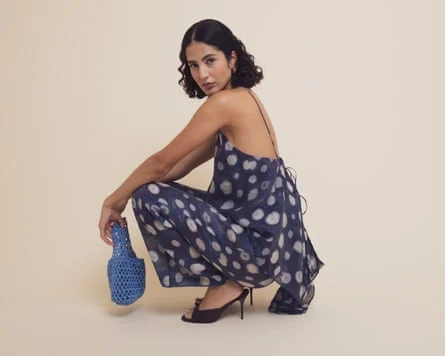
For decades, the humble stripe held an undisputed reign as the emblem of discerning style, embodying a certain intellectual gravitas and reliable sophistication. It was the sartorial equivalent of meticulous planning, exuding the bracing crispness of sea air and the understated elegance of French intellectualism. In a striped ensemble, one could effortlessly project the competence of a ship’s captain or the casual chic of a connoisseur feasting on oysters. However, a significant shift has occurred within the fashion landscape, with the once-dismissed spots and dots now asserting their dominance, reflecting a broader cultural yearning for spontaneity, vivacity, and uninhibited expression. This paradigm shift signals more than just a fleeting trend; it represents a profound re-evaluation of aesthetic values and societal priorities, moving away from rigid formality towards a celebration of individuality and playful charm.
The Enduring Legacy of Stripes: Authority, Order, and the Establishment
The journey of the stripe from a mark of shame to a symbol of authority is a compelling narrative in fashion history. In medieval Europe, striped patterns were often associated with outcasts, prisoners, executioners, and those on the fringes of society. Their stark, segmented appearance served as a visual warning, designating individuals who were deemed untrustworthy or diseased. This stigma persisted for centuries, with stripes largely avoided by the respectable populace.
The redemption of the stripe began in the 19th century, largely propelled by its adoption in naval uniforms. The blue and white horizontal stripe, famously known as the Breton stripe, became the official uniform of French navy sailors in 1858. This practical yet distinctive pattern was associated with maritime heroism, adventure, and national pride, shedding its negative connotations and acquiring a heroic mystique. Its transformation was solidified in the early 20th century when Coco Chanel, captivated by the practicality and chic simplicity of sailors’ uniforms, introduced the Breton stripe into her collections in 1917. Chanel’s embrace of the stripe as a symbol of liberated, modern femininity launched it into mainstream fashion, cementing its status as a timeless classic.
Beyond its nautical allure, stripes found a powerful niche in formal and business attire. Pinstripes, originating in the late 19th century in London’s banking district, became synonymous with corporate power, professionalism, and masculine vigor. They conveyed a sense of seriousness, precision, and unwavering reliability, becoming the backbone of the working wardrobe for generations of businessmen. From school ties to business shirts, the stripe evolved into a pillar of the establishment, reassuringly conventional and embodying a structured, rational approach to life and work. Its prevalence in minimalist aesthetics and "quiet luxury" movements of recent years underscored its association with understated sophistication and timeless elegance. The stripe declared, with quiet confidence, "I have a spreadsheet," embodying a world governed by order and logical progression.
The Cultural Ascent of Spots: From Stigma to Spontaneity
In stark contrast to the stripe’s ordered linearity, spots and dots endured an even more troubled beginning. In medieval times, any fabric exhibiting mottled or speckled patterns evoked grim associations with disease, contagion, and affliction. The visual chaos of irregular spots mirrored the discomforting reality of plague, pox, and other skin ailments, rendering them deeply undesirable and even dangerous. To be covered in spots was not a fashion statement but a medical emergency, a visual cue of misfortune.
However, fashion, in its cyclical nature, has always delighted in redemption arcs. The rehabilitation of spots began to take hold much later than that of stripes, emerging significantly in the 18th century as printing techniques advanced, allowing for more uniform and deliberate dot patterns. The term "polka dot" itself gained popularity in the mid-19th century, directly linked to the widespread European dance craze, the polka. The vivacious, energetic dance found its sartorial counterpart in the cheerful, bouncing dots, imbuing them with a sense of fun, movement, and lightheartedness.
The 20th century truly saw the polka dot blossom into a beloved motif, becoming coded as distinctly feminine and playful. If stripes belonged to businessmen and sailors, spots were reserved for starlets, sweethearts, and animated characters. Minnie Mouse, introduced in 1928, cemented the polka dot’s association with adorable charm and youthful exuberance. The 1950s saw a resurgence, with icons like Marilyn Monroe and Elizabeth Taylor embracing polka dots, often in voluminous silhouettes that emphasized their flirtatious appeal. Christian Dior’s iconic New Look, though more known for its silhouettes, often featured polka dots, further elevating their status in high fashion while retaining their joyful essence.
Perhaps one of the most indelible moments for polka dots in popular culture arrived with Julia Roberts’ character, Vivian Ward, in the 1990 film Pretty Woman. Her brown polka dot dress worn to the polo match transcended mere clothing; it became a powerful storytelling device. Amidst the buttoned-up, conservative crowd, Vivian’s dress, with its playful dots, vibrantly proclaimed her vivaciousness, adorableness, and refreshing spontaneity, setting her apart as a character brimming with life. This moment underscored the print’s ability to convey personality and charm, a stark contrast to the staid formality of the striped establishment. Artists from Roy Lichtenstein to Damien Hirst and Yayoi Kusama have also championed the beauty and philosophical depth of spots, with Kusama famously stating, "A polka-dot has the form of the sun, which is a symbol of the energy of the whole world and our living life, and also the form of the moon, which is calm." If a striped shirt implies "I have a spreadsheet," a spotty dress declares, "I have a story."
A Cultural Pendulum Swing: Why Now for Spots?
The fashion pendulum, which for so long swung firmly in favor of stripes, has now landed decisively in dot territory, reflecting a significant shift in contemporary culture. Recent history, particularly the era of minimalism and "quiet luxury," often favored the understated and authoritative stripe—think striped button-downs for work and rugby shirts for weekends. However, as the world emerges from periods of global uncertainty and introspection, there’s a palpable yearning for joy, lightness, and unapologetic self-expression. Frivolity, once considered superficial, is now being actively embraced and prized.
This cultural pivot is evident in the expanded usage of terms like "cute," which has evolved from describing children, pets, and stationery to a catch-all compliment for almost anything—a "cute evening," a "cute recipe idea," or indeed, a "cute outfit." Cuteness, in this context, has become an aspirational aesthetic, signaling a desire for comfort, approachability, and a gentle rejection of overly serious or intimidating personas. Spots, with their inherent playfulness and dynamic energy, perfectly align with this evolving sensibility. They bounce and dance, where stripes are rigid; they are spontaneous and giddy, where stripes are rational.
The post-pandemic landscape has undoubtedly contributed to this shift. After years of lockdowns, restrictions, and a collective sense of heaviness, there’s a widespread desire for escapism, optimism, and a return to joy. Fashion, as a mirror of society, is reflecting this mood. The structured formality and gravitas associated with stripes feel less relevant in a world increasingly valuing authenticity, comfort, and personal expression over rigid adherence to traditional power aesthetics. Spots offer a visual language that communicates approachability, warmth, and a refusal to take oneself too seriously, resonating deeply with a populace eager for lightness.
Designers and Data: Spotting the Trend on Catwalks and Algorithms
The contemporary dominance of spots is not merely anecdotal; it is a verifiable trend manifesting across all echelons of the fashion industry. From high fashion runways to celebrity endorsements, street style, and the pervasive influence of social media algorithms, polka dots are ubiquitous. Leading fashion houses have prominently featured spots in their recent collections, signalling a clear industry-wide endorsement.
For instance, designers like Valentino, Carolina Herrera, and even avant-garde labels such as Comme des Garçons, have showcased diverse interpretations of polka dots, from classic black and white to bold, multi-colored iterations and exaggerated scales. Valentino’s recent collections, often celebrated for their romanticism, have incorporated delicate polka dots that add a touch of whimsical elegance. Carolina Herrera, a brand long associated with sophisticated femininity, frequently revisits the polka dot, cementing its status as a timeless yet currently trending motif. The sheer breadth of its adoption by such varied design sensibilities underscores its versatility and cultural resonance.
On the celebrity front, A-listers and influencers are frequently photographed in spotted attire, whether gracing red carpets, attending high-profile events, or simply navigating daily life. This widespread visibility amplifies the trend, making it aspirational and accessible to a broader audience. Social media platforms, particularly Instagram and TikTok, serve as powerful accelerants for such trends. Hashtags like #polkadotfashion, #spottystyle, and #dotdress are seeing significant engagement, with users sharing their interpretations and styling tips. Fashion analytics firms, while not providing real-time public data, have reportedly observed a substantial increase in searches and online purchases for polka dot garments compared to striped ones over the past 18-24 months. Industry reports from entities like WGSN and Lyst have consistently highlighted polka dots as a key emerging or dominant print trend, forecasting its continued prominence. Retailers, responding to consumer demand and catwalk signals, are adjusting their inventories, allocating more display space and marketing efforts to spotted collections. This data-driven validation confirms that spots are not just a stylistic preference but a measurable market force.
The Versatility of Dots: Beyond Frivolity
One of the strengths of the current spot revival lies in its remarkable versatility, challenging the antiquated notion that it is merely "less serious" than the stripe. Just as the stripe boasts a wide range—from the existential Bretons favored by artists and intellectuals to the cheerfully bright deckchair bands of seaside holidays—the spot too possesses an impressive spectrum of expression.
A tiny, delicate polka print can evoke a refined, almost regal elegance, reminiscent of "Princess of Wales coded" style, conveying understated sophistication. Conversely, a giant, oversized dot can deliver an avant-garde, rebellious statement, a hallmark of designers like Rei Kawakubo for Comme des Garçons, pushing boundaries and challenging conventional beauty standards. This dual capacity demonstrates that spots are not confined to a single aesthetic; they can be classic, playful, witty, rebellious, or undeniably refined.
The old fashion order often presented a rigid dichotomy: stripes represented competence and seriousness, while spots symbolized delight and charm. However, contemporary fashion increasingly rejects such rigid categorizations. The modern wardrobe is less interested in broadcasting unwavering authority and more keen on expressing nuanced individuality. This shift empowers the wearer to embrace prints that resonate with their multifaceted personality. The current ascendance of spots suggests that fashion no longer demands a choice between competence and personality. A spot, it turns out, can effortlessly embody both, allowing individuals to project professionalism while retaining an element of personal flair and approachability. This nuanced understanding of print allows for a richer, more expressive form of self-presentation.
Industry Reactions and Future Implications
The fashion industry’s embrace of polka dots reflects a broader responsiveness to cultural shifts. Fashion critics widely interpret this trend as a move towards more joyful and expressive dressing, a departure from the austerity of previous seasons. Designers are consciously incorporating elements of "fun" and "whimsy" into their collections, recognizing consumer fatigue with overly serious or minimalist aesthetics. Creative directors from various brands, while not always issuing formal statements on print trends, consistently articulate a desire to inject optimism and vibrancy into their designs, a sentiment perfectly captured by the polka dot.
From a retail perspective, the shift towards spots indicates a robust market for accessible yet stylish pieces. Polka dots, being a universally recognizable and generally flattering print, tend to perform well across diverse demographics and price points. Retailers are capitalising on this by offering a wide array of spotted garments, from casual daywear to formal evening attire, in various colors and scales. This broad appeal suggests that the trend is not merely confined to high fashion but has permeated mainstream retail, indicating a deeper cultural resonance.
The broader implication of this print reversal lies in its commentary on contemporary values. The smart money, as the original article suggested, is on not taking oneself too seriously. This sentiment extends beyond fashion into lifestyle choices, work culture, and personal branding. In an era where authenticity and connection are highly valued, a print that exudes warmth, approachability, and a touch of lightheartedness naturally gains traction. While fashion is inherently cyclical, the current reign of the polka dot appears to be more than a fleeting moment. It signifies a collective inclination towards optimism, individuality, and a more joyful approach to self-expression. It suggests a future where personal style is less about conforming to established norms of power and more about celebrating one’s unique narrative, one delightful dot at a time. This cultural embrace of the playful over the prescriptive marks a significant chapter in the ongoing evolution of fashion, promising a more vibrant and spirited sartorial landscape.