Kang Muslim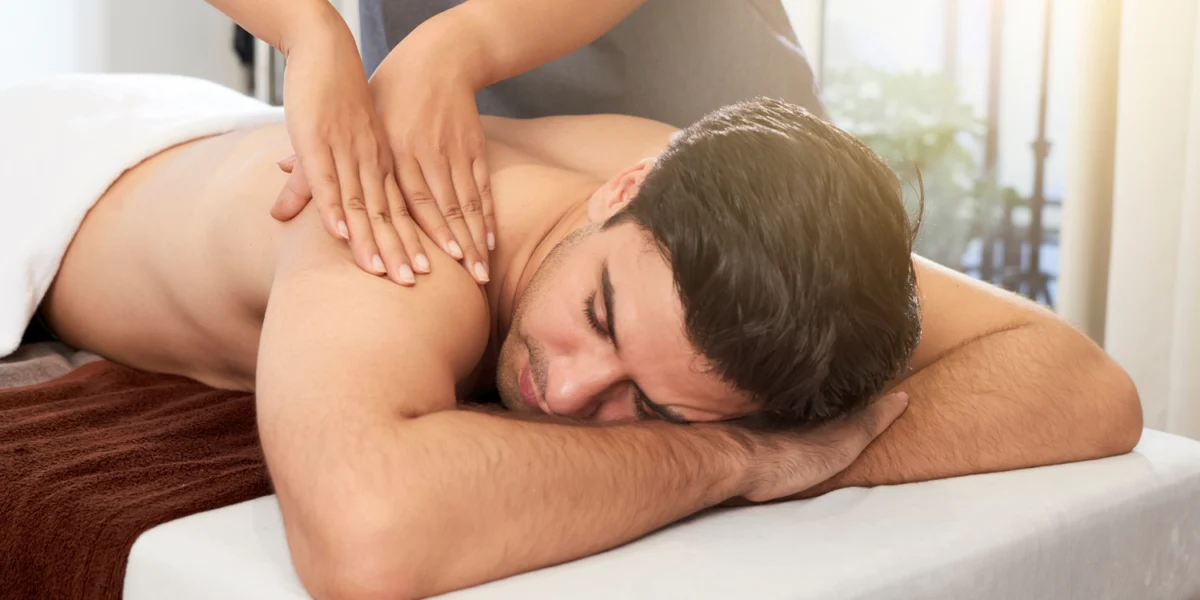
In the fast-paced landscape of modern knowledge work, the human body is frequently subjected to intense cycles of mental strain and brief, often inadequate, recovery periods. While decades of physiological research have meticulously mapped how the cardiovascular and sympathetic nervous systems accelerate under cognitive pressure, the precise physical recovery trajectory following high mental exertion remains comparatively opaque. Seeking to bridge this gap in clinical and physiological literature, a team of researchers in Wrocław, Poland, recently investigated how the human body transitions back to homeostasis after tackling a demanding cognitive challenge.
Published in the peer-reviewed journal Frontiers in Physiology, the exploratory controlled pilot study reveals a nuanced and unexpected physiological reality. According to the findings, receiving a classical back massage immediately following a mentally exhausting task significantly reduces a person’s heart rate while simultaneously keeping their skin sweat gland activity elevated. The research challenges the long-held assumption that physical relaxation and autonomic recovery operate as a singular, uniform switch across all bodily systems, demonstrating instead that distinct physiological signals respond to physical touch in profoundly different ways.
Deconstructing Cognitive Load and Physical Stress
To understand the implications of the Wrocław study, one must first examine the physiological mechanics of cognitive load. In psychology and human factors engineering, cognitive load refers to the total amount of mental effort being used in the working memory. When individuals engage in tasks requiring sustained attention, complex problem-solving, rapid decision-making, and heavy working memory manipulation, their mental capacities are pushed to the brink.
When these mental demands outstrip an individual’s immediate capacity, the body experiences a cascade of stress responses. This physical activation is rarely confined to the brain; it manifests systemically. Researchers typically track this activation using two primary autonomic markers: heart rate and skin conductance. Heart rate, reflecting the cardiovascular system, measures the speed and force with which the heart pumps blood through the body. It fluctuates dynamically in response to physical exertion, emotional fluctuations, and respiratory changes.
In contrast, skin conductance—often measured via electrodermal activity—tracks microscopic fluctuations in sweat gland secretion on the surface of the skin. Directly regulated by the sympathetic nervous system, sweat glands do not merely react to thermal regulation; they are exceptionally sensitive indicators of emotional arousal, acute stress, and tactile stimulation. Because both markers spike during periods of high mental strain, scientists have traditionally grouped them together as parallel indicators of sympathetic nervous system arousal. However, this new research demonstrates that during the recovery phase, these two vital signals can decouple entirely under the influence of manual therapy.
Background Context and Chronological Timeline of the Experiment
Led by Maciej Lachowicz, an assistant professor and Vice-Dean of the Institute of Health Studies at DSW Ideis University in Wrocław, the research team set out to determine whether the physical stimulation of a classical back massage would synchronize heart rate and skin conductance on a unified path back to a resting baseline, or drive them along divergent paths.
The study was conducted under rigorously controlled laboratory conditions utilizing a cohort of 48 healthy young adult volunteers. The participants had an average age of approximately 19.5 years and underwent strict physiological and neurological screening prior to the experiment to eliminate underlying health conditions that might confound nervous system reactivity.
The experimental protocol followed a strict chronological timeline designed to induce standardized mental fatigue followed by a controlled recovery intervention:
- Baseline Establishment: Upon arrival in the laboratory, participants sat quietly in a comfortable chair for a mandatory five-minute baseline period. During this window, researchers recorded resting cardiovascular and electrodermal metrics to establish a baseline for each individual.
- Cognitive Strain Induction: Immediately following the baseline phase, participants completed an intensive eight-minute computerized evaluation known as the Determination Test. This validated neuropsychological instrument required subjects to press designated buttons as quickly and accurately as possible in response to rapidly changing visual and auditory stimuli. Crucially, the software dynamically adapted to each participant’s skill level, ensuring a continuous ceiling of high mental demand and uniform cognitive strain across the cohort. Upon completion, participants evaluated their subjective mental fatigue using standardized psychological questionnaires.
- Randomization and Recovery Intervention: Following the cognitive test, the 48 participants were randomly assigned to one of two equal groups of 24. The experimental cohort moved to a treatment room, lay face-down on a massage table, and received a standardized 15-minute classical back massage administered by a trained provider using a neutral vitamin massage oil. The protocol incorporated classic manual techniques, including effleurage (sweeping strokes), petrissage (tissue kneading), and skin rolling. Meanwhile, the control group members were assigned to a passive resting condition, lying face-down on an identical massage table for 15 minutes without any physical contact, human presence, or manual intervention.
- Continuous Physiological Monitoring: Throughout the 15-minute recovery phase, researchers continuously captured biometric data. Heart rates were monitored via an optical pulse sensor attached to the left earlobe, while skin conductance was measured using specialized sensors affixed to the fingers of each participant’s non-dominant hand. For analytical clarity, the 15-minute recovery window was divided into three sequential five-minute blocks.
Divergent Physiological Responses: Heart Rate vs. Skin Conductance
The empirical data gathered during the trial confirmed that the computer-based Determination Test successfully triggered the intended physiological stress response. During the cognitive load phase, both groups exhibited marked elevations in heart rate and skin conductance, validating the efficacy of the task. Furthermore, statistical analysis revealed no baseline disparities between the two groups regarding task performance or subjective stress ratings.
However, the recovery phase revealed a stark dichotomy between cardiovascular and electrodermal responses. As expected, participants in both groups experienced a gradual decline in heart rate as they lay on the tables. Yet, the magnitude of this reduction was dramatically amplified in the massage group.
Throughout all three five-minute recovery windows, individuals who received the classical back massage maintained a significantly lower heart rate than their passively resting counterparts. By the final five-minute window of the recovery period, the average heart rate of the massage group was roughly 15 to 20 beats per minute lower than that of the control group.
In an interview detailing the findings, Lachowicz highlighted the distinctiveness of this cardiovascular drop, noting that the average heart rate suppression remained consistent across the entire recovery duration. Nevertheless, the research team urged caution against drawing oversimplified conclusions regarding long-term health benefits or sustained cognitive enhancement from this immediate drop alone.
The skin conductance measurements, however, told a completely different story. In the control group, where participants rested passively without touch, skin conductance levels steadily declined, eventually falling below the initial pre-task baseline levels as the body relaxed. In sharp contrast, the massage group maintained elevated skin conductance levels throughout the entire 15-minute recovery phase. During the middle and final five-minute intervals, the mean skin conductance of the massage group remained approximately 3.3 to 3.5 microsiemens higher than that of the control group.
Implications and Fact-Based Analysis
The simultaneous observation of a significantly suppressed heart rate paired with elevated skin conductance provides novel insights into human autonomic functioning. Far from operating as synchronized gears in a single relaxation machine, the cardiovascular and electrodermal systems responded to the tactile intervention through distinct physiological pathways.
The persistence of elevated sweat gland activity in the massage group does not imply that the participants were experiencing emotional stress or anxiety. Instead, researchers attribute this persistent electrodermal activity to the local sensory processing of touch. Skin conductance is exceptionally sensitive to peripheral tactile input, mechanical friction, and pressure. The continuous application of massage oil, sweeping hand strokes, and muscle kneading sustained local autonomic reflex activity in the skin’s sweat glands, even as the central nervous system successfully drove down the cardiovascular workload and lowered the heart rate.
These findings carry significant implications for both clinical research and wellness methodologies. According to the study’s authors, wellness practitioners, clinicians, and researchers should exercise caution when evaluating "relaxation." Monitoring a single physiological metric—such as heart rate or blood pressure—provides an incomplete picture of how the body responds to therapeutic interventions. A slower heart rate does not automatically indicate that every biological system within the organism has shifted into a unified state of rest.
Methodological Limitations and Future Directions
While the study offers valuable foundational data, the research team acknowledged several methodological limitations inherent in investigating the complex intersections of massage therapy and cognitive neuroscience.
First, the experimental design compared a complex tactile intervention (involving a professional therapist, human presence, massage oil, and physical manipulation) against a solitary, passive resting control. Consequently, it remains difficult to disentangle whether the observed physiological shifts were driven specifically by the mechanical techniques of classical massage or by the general psychological and physiological comfort of interpersonal touch.
Furthermore, skin conductance sensors are notoriously reactive to minor physical movements, ambient environmental conditions, and external friction. It is possible that the elevated readings during the recovery phase reflected the skin’s ongoing mechanical interaction with the massage oil rather than a centrally mediated stress recovery process. The study also concluded its observations immediately at the 15-minute mark, leaving the post-recovery trajectory unmeasured.
Finally, the cohort was restricted to a narrow demographic of healthy young adults tested within a single laboratory session. Future research will need to determine whether these physiological response patterns replicate across older populations, individuals with chronic stress disorders, or patients receiving longitudinal courses of massage therapy over several weeks. Incorporating active control groups—such as light, non-therapeutic stroking or simulated massage protocols—will also help isolate the true mechanical efficacy of classical massage.
Looking ahead, Lachowicz and his colleagues hope to explore the inverse relationship of this dynamic. Rather than focusing solely on recovery following mental exertion, future investigations may examine whether classical massage can prime the human body prior to a demanding cognitive task, potentially enhancing focus, resilience, and performance under pressure. By continuing to dissect the multi-systemic responses of the human body, researchers are steadily dismantling outdated assumptions about stress, touch, and recovery.