Johny Marice
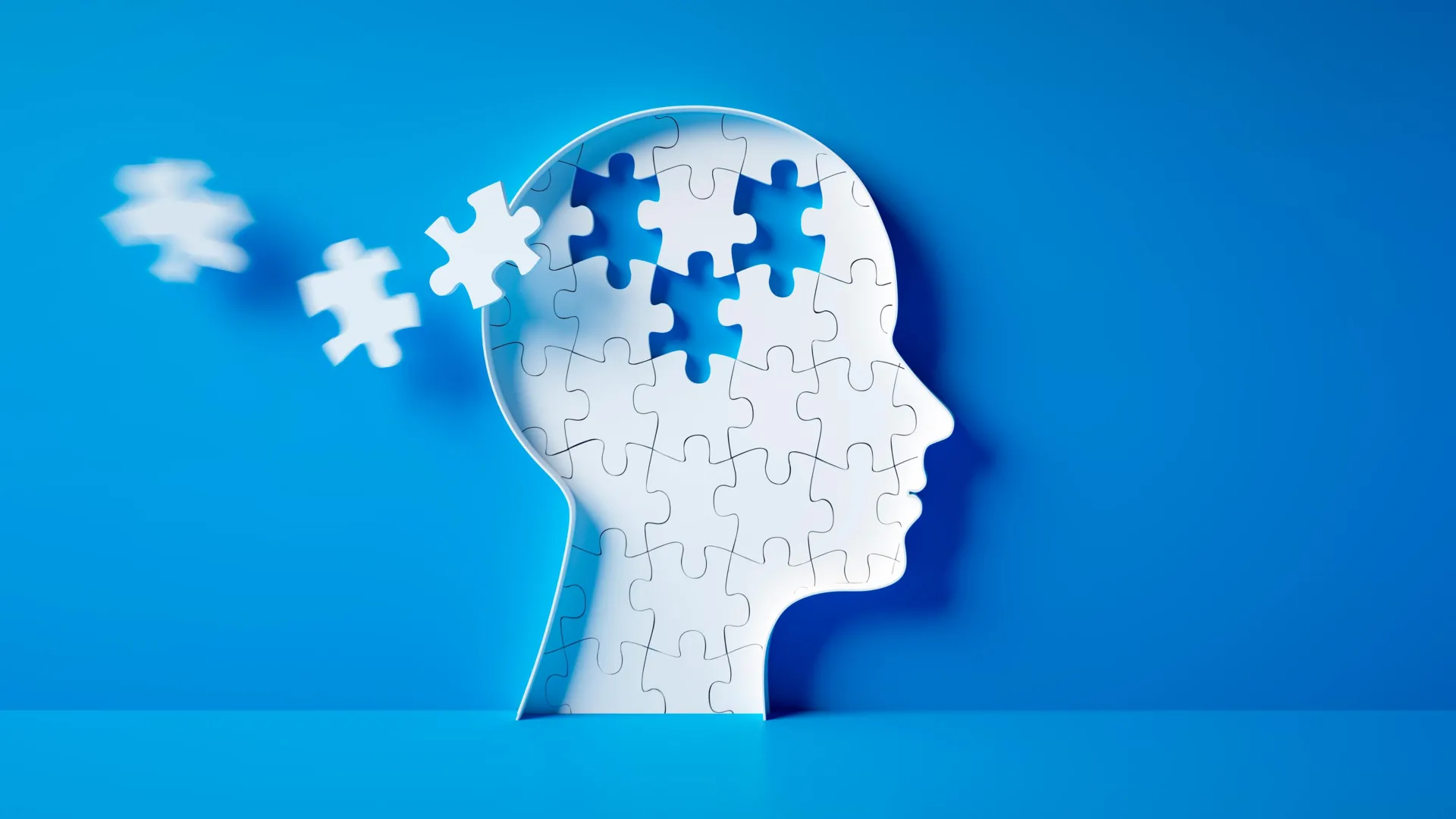
For decades, the prevailing consensus in neuroscience and public health has framed the aging brain as a vessel in a state of inevitable, linear decay. Cognitive aging has traditionally been measured against the performance of younger adults, with memory loss and diminished processing speeds viewed as the primary indicators of a deteriorating system. However, a transformative new theory, the adaptive aging hypothesis, challenges this deficit-based model, suggesting that what we perceive as decline is, in fact, a sophisticated biological transition toward a different set of cognitive priorities.
Researchers at the University of Arizona, led by associate professor Fabian-José Fernandez, have proposed that the human brain undergoes a deliberate shift in its functional architecture as it matures. By moving away from the high-fidelity recording of individual facts and toward the synthesis of "gist" or broader meaning, the aging brain may be optimizing itself for the essential task of knowledge transfer. This paradigm shift, published in the journal Perspectives on Psychological Science, posits that the aging brain is not malfunctioning, but rather evolving to serve the evolutionary necessity of mentorship, social cohesion, and the preservation of communal wisdom.
A Chronology of Cognitive Development
The human brain’s developmental timeline is traditionally divided into stages of acquisition and consolidation. In early life, the hippocampus—a complex brain structure embedded deep into the temporal lobe—functions with high plasticity. During childhood and adolescence, this region is hyper-active, enabling the rapid absorption of declarative information. This period is defined by a "sponge-like" capacity to archive the specifics of the environment: the names of objects, the faces of peers, and the precise sequences of daily events.
As individuals enter their fourth and fifth decades, this biological imperative shifts. The frontal cortex, responsible for executive function, pattern recognition, and conceptual synthesis, begins to take a more dominant role in information processing. This transition is not sudden; it is a gradual, normative process that typically solidifies between the ages of 50 and 70. The adaptive aging hypothesis suggests that this transition is a programmed biological milestone, mirroring the evolutionary needs of the species. Just as the brain is hard-wired to prioritize detail-gathering in youth to ensure survival through learning, it is hard-wired in later life to prioritize meaning-making to ensure the survival of the culture.
The Neurobiology of Meaning
The divergence between youthful acquisition and mature synthesis lies in the functional connectivity between the hippocampus and the frontal cortex. In a young adult, the hippocampus acts as the primary gatekeeper, logging the "what, where, and when" of every new encounter. In the older adult, however, the brain’s neural networks show a reduced reliance on hippocampal-driven episodic recall.
Instead, the aging brain prioritizes the extraction of the "gist"—the underlying message or moral of an experience. This explains why older adults may struggle to recall the exact time of a conversation they had three weeks ago but can provide nuanced, sage advice based on the central themes of that interaction. By deemphasizing the "nitty-gritty" details, the brain frees up metabolic resources to focus on the application of existing knowledge. This is a form of cognitive efficiency; when one has already spent fifty years accumulating a vast internal library of human experience, the marginal utility of a new, precise memory is often lower than the utility of correctly identifying the patterns that govern a new situation.
Data and Evolutionary Perspectives
The adaptive aging hypothesis is supported by parallel findings in animal models, suggesting that this transition is not merely a human social construct but a deeply ingrained evolutionary trait. Across various species, older individuals demonstrate a shift in behavioral priorities that mirror these neural changes. In primates and other social mammals, older group members are often observed acting as repositories of social information, guiding the group during times of environmental stress or resource scarcity.
From an evolutionary standpoint, the survival of a group depends on the transmission of knowledge. If every generation had to relearn the properties of the environment from scratch, the species would remain in a perpetual state of infancy. The biological changes occurring in the aging brain act as a mechanism for this transmission. By protecting the semantic and autobiographical memories that constitute "wisdom," the brain ensures that the accumulated experience of the elder is preserved, organized, and available to be shared with the next generation.
Distinguishing Aging from Pathology
A critical implication of this hypothesis is the clear distinction it draws between healthy cognitive aging and neurodegenerative conditions such as Alzheimer’s disease. For too long, clinical medicine has viewed Alzheimer’s as an accelerated or severe form of normal aging. Fernandez and his colleagues argue that this is a fundamental misconception.
In healthy aging, the shift toward frontal cortex dominance is a regulatory success—an adaptation that helps the individual navigate complex social landscapes. In Alzheimer’s disease, however, this transition is sabotaged by pathological protein accumulation, such as amyloid plaques and tau tangles. Furthermore, whereas healthy aging is marked by a functional downregulation of the hippocampus, Alzheimer’s often presents with hippocampal hyperactivity, indicating a breakdown in the brain’s ability to properly regulate its own memory systems.
This distinction is vital for future research. If clinicians continue to view the normal, adaptive changes of a 70-year-old brain through the lens of pathology, they may misinterpret healthy, specialized cognitive functioning as evidence of cognitive decline. Understanding the "normal" transition allows for more precise diagnostic criteria for those suffering from genuine neurological damage.
The Societal Impact of Re-framing Aging
The implications of this research extend far beyond the laboratory, suggesting a need for a societal shift in how we value older adults. If society continues to assess the cognitive health of an elderly individual by asking them to complete tasks designed for a 20-year-old’s brain—such as memorizing strings of unrelated words—we are essentially judging a fish by its ability to climb a tree.
The "adaptive aging" model calls for an environment that honors the unique strengths of the older brain. In professional settings, this might look like a greater emphasis on mentorship and strategic advising rather than repetitive technical tasks. In social settings, it highlights the importance of intergenerational engagement. When younger and older generations interact, they engage in a symbiotic exchange: the young provide the energy and the need for new information, while the old provide the context, pattern recognition, and long-term wisdom that allows that information to be applied meaningfully.
Conclusion
The narrative that aging is synonymous with loss is becoming increasingly untenable in the face of modern neurological research. The adaptive aging hypothesis offers a more nuanced, hopeful, and biologically grounded perspective. It posits that while the brain does indeed change, it does not simply break down. Instead, it reconfigures itself to become a master of meaning, a guardian of knowledge, and a source of guidance.
As life expectancy continues to rise globally, the contribution of older adults will only become more vital. By recognizing that the aging brain is optimized for the sharing of expertise and the maintenance of social relationships, we can begin to design institutions and communities that leverage these strengths. Ultimately, the transition from being a collector of details to a curator of wisdom is not the end of cognitive development; it is the culmination of it. By shifting our perspective, we move from mourning a lost past to unlocking a reservoir of potential that is essential for the future of our society.