
 Jono Maryono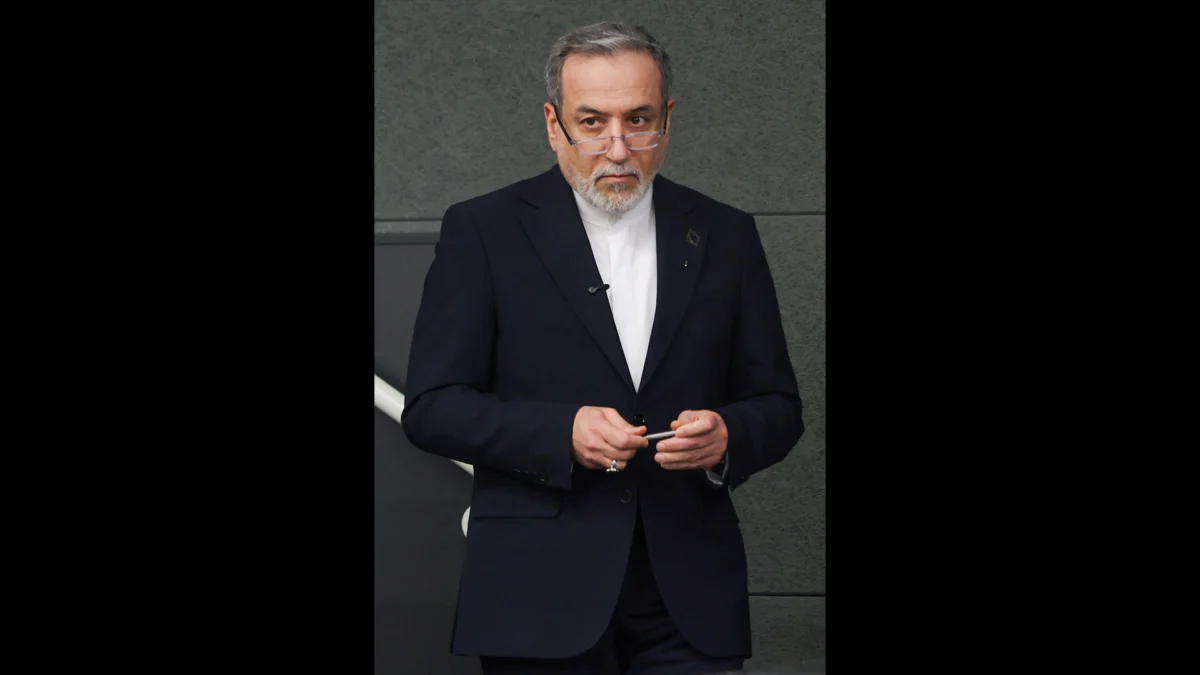
Iranian Foreign Minister Abbas Araghchi stated that Tehran is fully prepared for a large-scale military escalation, warning that the country is ready for a conflict "even if it comes to a doomsday war," while simultaneously maintaining that diplomatic channels remain open. The remarks, delivered amid escalating geopolitical tensions in the Middle East, arrive directly on the heels of a stark diplomatic rejection from Washington. United States President Donald Trump formally dismissed a proposed seven-day Iranian framework aimed at halting hostilities and reopening the vital Strait of Hormuz to international shipping traffic.
The breakdown in communication between Washington and Tehran marks a critical juncture in an already volatile region. The Strait of Hormuz—a crucial maritime chokepoint through which a significant portion of the world’s petroleum passes—remains a central flashpoint in the standoff. As rhetoric hardens on both sides, global markets, international diplomats, and regional stakeholders are closely monitoring developments, fearing that the diplomatic impasse could rapidly devolve into a catastrophic military confrontation with global economic and security ramifications.
Background Context and Geopolitical Flashpoints
The roots of the current crisis extend far beyond the immediate diplomatic friction over maritime transit corridors. For decades, the Strait of Hormuz has been the primary artery for global energy transport, connecting the oil-rich Persian Gulf with the Gulf of Oman and the Arabian Sea. Roughly one-fifth of the world’s petroleum consumption navigates this narrow passage daily, making it one of the most strategic geopolitical bottlenecks on earth.
In recent years, tensions between Iran and the United States have steadily deteriorated, exacerbated by the collapse of the 2015 Joint Comprehensive Plan of Action (JCPOA), commonly known as the Iran nuclear deal, and the subsequent implementation of a maximum pressure campaign by Washington. These economic and political pressures have severely impacted Iran’s domestic stability and international commerce, leading Tehran to periodically threaten the closure of the Strait of Hormuz as a strategic countermeasure against Western sanctions.
The introduction of the recent seven-day proposal by Iranian authorities was viewed by some international observers as a potential opening for de-escalation. The plan purportedly outlined a framework for a cessation of hostilities and the normalization of commercial maritime traffic through the contested strait. However, the rejection of the proposal by President Trump signals that Washington is unwilling to accept terms that do not fully align with its stringent security demands, setting the stage for renewed confrontation.
Chronology of Escalation
The trajectory leading to Foreign Minister Araghchi’s uncompromising statements can be mapped through a series of escalating diplomatic and military milestones over the preceding months:
- Phase One: Economic Squeeze and Maritime Friction. The re-imposition of sweeping international sanctions on Iran’s oil and financial sectors constrained its state revenues, prompting an increase in asymmetric naval maneuvers and inspections of foreign commercial vessels in and around the Strait of Hormuz by the Islamic Revolutionary Guard Corps (IRGC).
- Phase Two: Regional Proxy Clashes. Periodic flare-ups involving allied militias across the Middle East heightened threat perceptions in Washington and among its regional allies, leading to reinforced U.S. military deployments in the Persian Gulf region.
- Phase Three: The Seven-Day Proposal. Facing mounting economic strain and the persistent threat of expanded military action, Iranian diplomatic channels floated a seven-day roadmap designed to pause active hostilities and restore unfettered commercial navigation through the strategic waterway.
- Phase Four: U.S. Rejection. The White House formally rejected the Iranian overture, asserting that the terms were insufficient and failed to address core security concerns regarding regional stability and ballistic missile proliferation.
- Phase Five: Hardline Posture from Tehran. In response to the diplomatic rebuff, Foreign Minister Araghchi issued his public warning, signaling that while diplomacy remains an option, Iran’s military apparatus is conditioned for total war.
Official Responses and International Reactions
The hardening of positions in both Washington and Tehran has triggered urgent consultations among global capitals. European Union diplomats, who have historically acted as intermediaries between the United States and Iran, have expressed deep concern over the breakdown of talks. Representatives from Brussels have called upon both parties to exercise maximum restraint, emphasizing that any military conflict in the Persian Gulf would unleash profound economic shockwaves worldwide.
Regional powers, including Gulf Cooperation Council (GCC) member states such as Saudi Arabia and the United Arab Emirates, find themselves in a precarious diplomatic position. While these nations share concerns regarding Iranian regional policies, they also stand to suffer the most immediate physical and economic devastation in the event of an all-out war that disrupts energy production and maritime transit. Consequently, quiet diplomatic channels are reportedly being utilized by regional intermediaries to urge a return to dialogue.
In Washington, administration officials have defended the rejection of the Iranian proposal, maintaining that unilateral concessions without verifiable structural changes are unacceptable. Proponents of the U.S. stance argue that any agreement must comprehensively address not only maritime security in the Strait of Hormuz, but also Iran’s regional proxy networks and advanced military capabilities.
Conversely, domestic political figures in Iran have rallied behind Foreign Minister Araghchi’s statements, framing the refusal to accept the U.S. dismissal as a defense of national sovereignty. State media outlets have underscored the readiness of the country’s armed forces, broadcasting footage of naval exercises and underground missile installations to reinforce the government’s deterrent posture.
Economic Implications of a Prolonged Standoff
The economic fallout of a protracted military standoff or the physical closure of the Strait of Hormuz cannot be overstated. Global energy markets react instantaneously to threats in the region, and even the rumor of impending conflict reliably triggers sharp spikes in crude oil futures. A genuine military conflict involving the restriction of tanker traffic through the strait would threaten to cut off millions of barrels of oil per day from global markets.
Financial analysts project that a complete blockage of the waterway would cause immediate, severe energy scarcity, driving oil prices to historic highs. Such a spike would inevitably fuel a resurgence of global inflation, elevate transportation costs across all supply chains, and exert immense pressure on central banks worldwide as they navigate delicate economic growth conditions. Furthermore, international shipping and insurance firms would likely classify the entire Persian Gulf as a high-risk war zone, dramatically increasing the cost of maritime commerce even for vessels operating outside the immediate conflict area.
Beyond the energy sector, global trade reliant on the Suez Canal and maritime routes connecting Asia, Europe, and the Middle East would experience severe delays and re-routing. The cascading effects would touch manufacturing, agriculture, and consumer goods markets globally, underscoring the reality that a localized geopolitical crisis in the Middle East carries universal economic consequences.
Strategic Analysis and Future Outlook
Foreign Minister Araghchi’s dual message—signaling readiness for an unprecedented escalation while maintaining that the door to diplomacy is not entirely closed—reflects a classic deterrence strategy under duress. By declaring readiness for a "doomsday war," Tehran aims to raise the perceived costs of military intervention for the United States and its allies, convincing Washington that a negotiated settlement remains the only viable path to stability.
At the same time, the flat rejection by President Trump indicates that Washington believes its current posture of economic pressure and military deterrence provides superior leverage. This divergence in strategic calculation creates a high-stakes game of brinkmanship where miscalculations by either side could easily trigger unintended hostilities.
As the situation unfolds, international observers will watch closely for any secondary diplomatic initiatives or back-channel negotiations that might bridge the gap between Washington’s demands and Tehran’s red lines. Until such a breakthrough occurs, the region remains locked in a tense standoff, where the fragile balance between calculated deterrence and accidental war hangs by a thread above the waters of the Strait of Hormuz.









