Layla Zulfa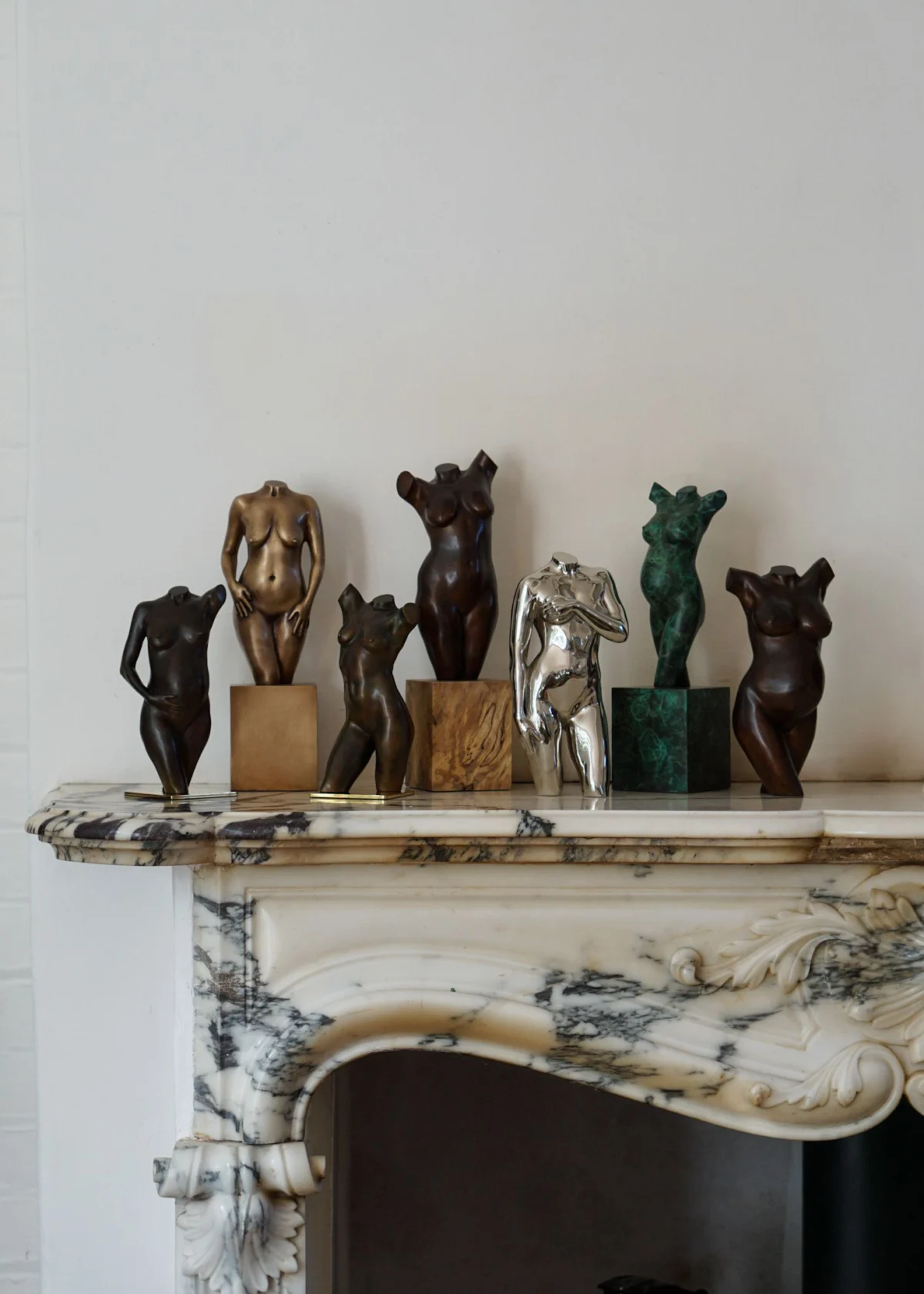
For decades, the standard documentation of the human gestation period has relied heavily on two-dimensional media: the black-and-white grain of an ultrasound, the periodic progress of the "bump selfie," or the professionally staged maternity photo shoot. However, a significant shift in the commemorative landscape is currently underway as expectant parents increasingly turn to high-technology three-dimensional rendering to immortalize the pregnant form. This emerging trend, which synthesizes ancient artistic traditions with cutting-edge photogrammetry and 3D printing, has transformed the traditional pregnancy memento into a sophisticated objet d’art. Companies like Studio Bust and Milestonable are leading this niche luxury market, offering custom statuary that serves as both a personal "time portal" and a high-end interior design element.
The Historical Continuum of Pregnancy in Sculpture
While 3D-printed statuettes may appear to be a byproduct of the digital age, the practice of sculpting the pregnant female body is one of humanity’s oldest artistic endeavors. Anthropologists and art historians point to the "Venus figurines" of the Upper Paleolithic period—most notably the Venus of Willendorf, dating back approximately 25,000 to 30,000 years—as the earliest precursors to this modern trend. These ancient artifacts, often carved from limestone or mammoth ivory, featured exaggerated maternal features and are widely believed to have served as totems for fertility or survival.
As art history progressed, the depiction of pregnancy moved from the ritualistic to the realistic and, eventually, the controversial. In the 19th century, Edgar Degas explored the form in bronze, while the 20th century saw Pablo Picasso’s Pregnant Woman (1950), a plaster and ceramic work that sought to capture the "fullness" of the state. In more recent decades, the subject has entered the realm of provocative contemporary art. Daniel Edwards’s 2006 life-size sculpture of pop star Britney Spears, titled Monument to Pro-Life: The Birth of Sean Preston, sparked global debate over the public consumption of the birthing process. The current trend of personalized 3D statues represents the latest evolution in this timeline, moving the medium away from public provocation and back toward private, intimate commemoration.

The Genesis of the Modern 3D Pregnancy Statue
The commercialization of personalized 3D pregnancy statues can be traced to a gap in the luxury keepsake market. Mads Montagu-Andrews, the founder of Studio Bust, conceived the idea during her own pregnancies. After participating in a public art project that resulted in a line drawing of her body during her first pregnancy, she sought a more dimensional representation for her second. Discovering that traditional bronze casting was prohibitively expensive and labor-intensive for the average consumer, she looked toward technological solutions.
Studio Bust was established to provide a middle ground between the ephemeral nature of a photograph and the exorbitant cost of traditional fine-art commissions. The process utilizes a 360-degree scanning booth equipped with high-resolution cameras that capture the subject’s silhouette in seconds. This digital map is then translated into a physical object via 3D printing. The resulting pieces are often armless and headless, focusing entirely on the torso. This aesthetic choice intentionally mirrors classical antiquities, such as the Aphrodite of Cyrene, elevating the personal memento to the status of a museum-grade sculpture.
Technological Methodology and Materiality
The production of these statues involves a complex intersection of digital engineering and artisanal finishing. There are two primary methods currently dominating the market:
- Direct Photogrammetry: Used by firms like Studio Bust, this requires the client to visit a physical studio for a live scan. The technology captures the exact contours of the body at a specific moment in time, ensuring a 1:1 anatomical replica.
- Photo-to-3D Reconstruction: Companies like Milestonable have developed algorithms that can recreate a 3D model from 2D photographs. This is particularly valuable for mothers who have already given birth or those who live in regions without access to specialized scanning booths. Charlotte Geerse, founder of Milestonable, launched the business following her own multi-year journey with IVF, identifying a need for retrospective commemoration.
The materials used in these statues range from sustainable to traditional. Entry-level models are typically printed using biodegradable plastics or resins, which can then be finished in various textures. Popular finishes include "lyme" (a stone-like appearance reminiscent of limewash), high-gloss lacquer, and metallic coatings. At the highest end of the market, digital models are used to create molds for solid bronze casting. These pieces, which can cost upwards of $5,500, are designed to oxidize and patina over generations, fulfilling the role of a family heirloom.

Market Data and Consumer Demographics
The rise of the 3D pregnancy statue coincides with the broader growth of the global "baby tech" and luxury maternity markets. According to market research, the global 3D printing market is expected to grow at a compound annual growth rate (CAGR) of approximately 20% through 2030, with personalized consumer goods representing a significant portion of that expansion.
The demographic for these statues is primarily composed of affluent millennials and Gen X parents who value "experience-based" consumption. Celebrity endorsements have further accelerated the trend. Model and media personality Sofia Richie Grainge recently collaborated with Studio Bust, describing the resulting statue as a way to "take me back to that exact moment in time." Similarly, British media personality Ashley James utilized Milestonable to capture what she noted might be her final pregnancy, emphasizing the statue as a tool for body positivity and self-acceptance.
Price points for these items vary significantly based on size and material:
- Small Resin/Plastic Statuettes: $800 – $1,200
- Mid-range Finished Busts: $1,500 – $3,000
- Solid Bronze Commissions: $5,000 – $10,000+
Sociocultural Implications and Body Image
Beyond their function as decor, these statues are being framed as tools for psychological empowerment. For many women, the transition of the body during pregnancy can be a source of complex emotions. The "sculptural" approach allows for a degree of abstraction that many find more comfortable than traditional photography.

Isabelle, a client of Studio Bust who requested her last name be withheld for privacy, noted that the statue allowed her to appreciate her body in a way she never could through a lens. "I was reminded of the way sculptures of other women’s bodies in museums have helped me appreciate humanity’s infinite shapes," she stated. By removing the "selfie" element and replacing it with a physical object, the trend encourages a more objective, appreciative view of the maternal form.
However, the trend is not without its critics. Some observers argue that the practice is an extension of "navel-gazing" culture, where every life stage must be commodified and turned into a luxury product. Others point to the inherent privacy risks associated with 3D body scanning data. In response, leading companies in the space have implemented strict data-protection protocols, ensuring that the digital "twins" of their clients are stored securely or destroyed after the physical printing is complete.
The Legacy of the Object
One of the most compelling arguments for the 3D pregnancy statue is its longevity. Unlike digital photos stored in a cloud or printed images that may fade, a bronze or stone-finished bust possesses a physical gravity. Designers and architects have begun incorporating these pieces into home libraries and galleries, treating them as legitimate art rather than mere nursery decor.
In popular culture, the "gravity" of the maternal statue was famously illustrated in the television series Fleabag, where a stolen bronze bust of a woman’s torso—modeled after the protagonist’s late mother—becomes a recurring symbol of grief, connection, and identity. The modern 3D-printed version seeks to establish this same sense of generational weight.

As 3D printing technology becomes more accessible and the cost of materials potentially decreases, industry analysts expect the trend to move from the ultra-luxury segment into the broader middle market. For now, however, the 3D pregnancy statue remains a distinct symbol of the modern "memento mori"—a tangible, sophisticated anchor to a fleeting biological window, bridging the gap between the ancient goddess figurines of the Stone Age and the digital precision of the 21st century.