Ferry Irwandi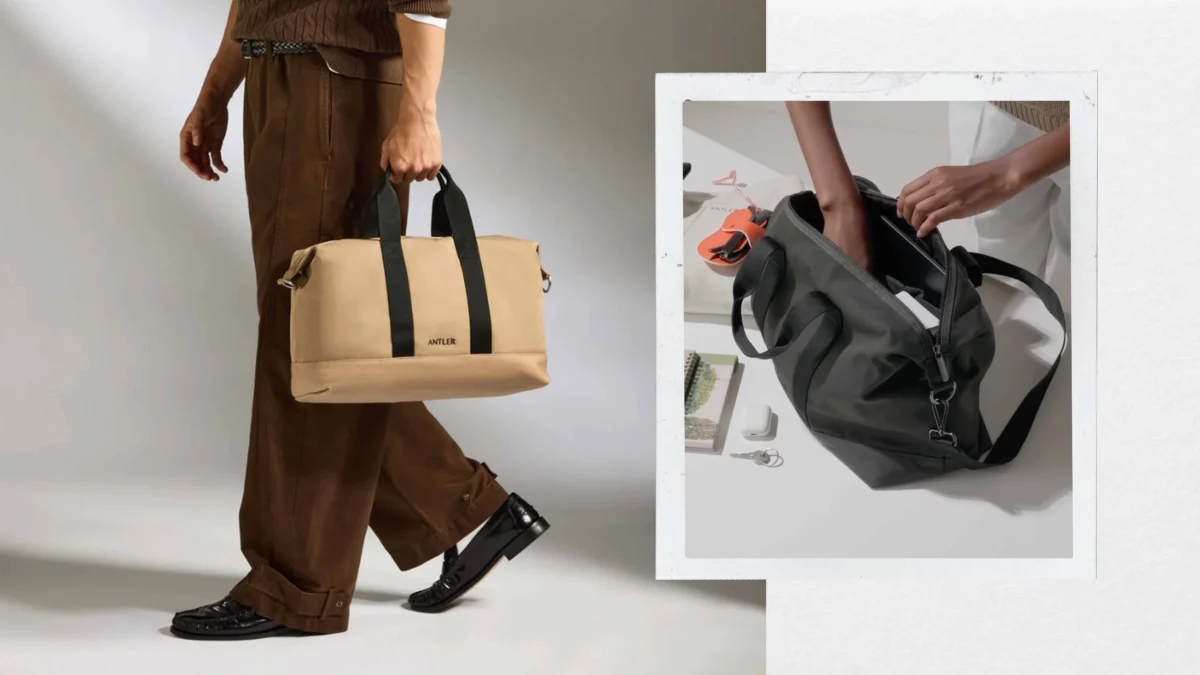
The landscape of commercial aviation has undergone a radical transformation over the last two decades, shifting from a service-inclusive model to a highly unbundled, ancillary-driven economy. Within this shift, a specific category of travel gear—underseat luggage—has emerged as a critical tool for the modern traveler. These compact suitcases and bags are designed to maximize internal capacity while adhering to the stringent dimensional requirements of the space beneath an airplane seat. Once relegated to the status of a secondary "personal item" for laptops or handbags, underseat luggage is now being engineered as a primary travel solution, allowing passengers to bypass the logistical and financial hurdles associated with traditional carry-on and checked baggage.

The Shift in Passenger Strategy: From Overhead Bins to Underseat Storage
For the contemporary traveler, the decision to use underseat luggage is often driven by a combination of economic necessity and a desire for efficiency. As airlines continue to monetize overhead bin space—either through direct fees on budget carriers or through boarding group hierarchies on legacy airlines—the "personal item" has become the last remaining frontier of free luggage for many economy passengers.
Industry analysts note that the "carry-on-only" philosophy, once the hallmark of the elite traveler, has evolved into a "personal-item-only" strategy. This movement is supported by the development of specialized luggage that utilizes every cubic inch of the 18-by-14-by-8-inch space typically found under a standard economy seat. Unlike traditional backpacks, modern underseat luggage often features wheeled systems, telescoping handles, and "clamshell" opening mechanisms similar to full-sized suitcases, allowing for organized packing of multi-day wardrobes within a diminutive frame.

A Chronology of Baggage Policy and the Rise of the Personal Item
The rise of underseat luggage can be traced through a series of pivotal shifts in the airline industry over the past 40 years. Understanding this timeline is essential to grasping why these small bags have become so vital to the travel experience.
- 1978: Airline Deregulation Act: The US government removed federal control over fares and routes, leading to increased competition and the eventual birth of the low-cost carrier (LCC) model.
- 2008: The Great Recession and Fuel Crisis: Faced with skyrocketing jet fuel prices, American Airlines became the first major US carrier to charge for a first checked bag. This triggered a domino effect across the industry, forcing passengers to migrate their belongings into the cabin.
- 2012–2015: The Overhead Bin "War": As more passengers utilized large carry-ons to avoid checked bag fees, overhead bins became chronically overcrowded. Airlines began strictly enforcing size limits and gate-checking bags, leading to increased boarding delays.
- 2016–Present: The Basic Economy Era: Major legacy carriers introduced "Basic Economy" tiers, some of which (notably United Airlines and various European LCCs like Ryanair) prohibited the use of overhead bins entirely for these ticket holders. This solidified the underseat bag as the only guaranteed storage option for the budget-conscious traveler.
Technical Specifications and Airline Dimensional Standards
One of the primary challenges for travelers and luggage manufacturers alike is the lack of a universal standard for underseat dimensions. While the International Air Transport Association (IATA) provides guidelines for carry-on luggage, "personal item" dimensions remain at the discretion of individual carriers.

According to current data, most major domestic airlines in the United States, including Delta, American, and United, generally permit personal items that do not exceed 18 x 14 x 8 inches. However, budget carriers often impose stricter limits. For example, Spirit Airlines specifies 18 x 14 x 8 inches, while Frontier Airlines adheres to similar dimensions. Internationally, the constraints are often tighter; Ryanair, the Irish ultra-low-cost carrier, permits a personal item of only 40 x 20 x 25 cm (approximately 15.7 x 7.8 x 9.8 inches).
The engineering of underseat luggage must account for these variations. High-end manufacturers like Antler and Samsonite have begun producing "global" underseat models that aim for a "lowest common denominator" size, ensuring compatibility across both domestic and international fleets. These bags are often designed with soft-sided materials to allow for slight compression or hard-sided polycarbonate shells for maximum protection of electronics.

Economic Impact: Ancillary Revenue and Consumer Behavior
The financial implications of luggage choices are significant. In 2023, global airlines generated billions of dollars in ancillary revenue from baggage fees alone. For a frequent traveler, the transition to underseat-only luggage can result in savings of $60 to $120 per round-trip flight.
Furthermore, the "gate-check" phenomenon has created an intangible cost in the form of travel anxiety. When overhead bins reach capacity, passengers are forced to surrender their bags at the jet bridge, often resulting in wait times at baggage claim or, in worst-case scenarios, lost luggage. Underseat luggage offers a "safe harbor" strategy; because the bag remains with the passenger at all times, the risk of loss or damage is virtually eliminated.

Official Responses and Industry Perspectives
Airline representatives often frame the emphasis on underseat luggage as a matter of operational efficiency. "Our goal is to ensure a smooth and timely boarding process," stated a spokesperson for a major US carrier during a 2023 industry conference. "When passengers utilize the space under the seat for their primary belongings, it reduces the congestion in the aisles and helps us maintain our departure schedules."
Conversely, consumer advocacy groups argue that the shrinking "free" space in the cabin is a form of "shrinkflation." They point out that while the bags are getting smaller, the price of the "Basic Economy" experience remains relatively high. Despite these criticisms, the market for specialized underseat luggage continues to grow. Market research suggests that the "compact travel gear" segment is one of the fastest-growing niches in the $30 billion global luggage industry.

Design Innovations and Material Science
The modern underseat bag is a marvel of industrial design. To compensate for reduced volume, manufacturers have turned to advanced materials and layout innovations:
- Compression Technology: Many underseat bags now include internal compression straps or vacuum-sealable compartments that allow travelers to pack up to 30% more clothing than a standard backpack of the same exterior dimensions.
- External Access Ports: Recognizing that underseat bags are often used for business, designers include dedicated, easy-access sleeves for laptops and tablets, allowing for quick removal during TSA screenings without unpacking the entire bag.
- Wheeled Versatility: The inclusion of "spinner" wheels (360-degree rotation) or "inline" wheels (recessed into the frame) allows these small bags to be maneuvered through crowded terminals with the ease of a full-sized suitcase.
- Smart Integration: High-tech models now feature integrated USB charging ports and RFID-blocking pockets, catering to the needs of the "digital nomad" who relies on these bags as a mobile office.
Broader Implications for the Future of Travel
The trend toward underseat luggage reflects a broader cultural shift toward minimalism and mobility. As remote work becomes more prevalent, the "bleisure" traveler—who combines business and leisure—requires luggage that is versatile enough for a boardroom but compact enough for a quick weekend getaway.

However, there are potential headwinds. As airplanes are retrofitted with "slimline" seats to increase passenger density, the actual physical space beneath the seat is, in some cases, becoming more obstructed by life vest containers or electronic boxes for the in-flight entertainment system. This "seat-space squeeze" may eventually force another round of redesigns for luggage manufacturers.
In conclusion, underseat luggage is no longer a mere accessory; it is a strategic response to the evolving economics of flight. By mastering the art of the small-but-mighty bag, travelers are reclaiming a sense of autonomy in an increasingly restrictive sky. Whether motivated by the avoidance of fees or the desire for a more streamlined transit experience, the adoption of underseat-optimized gear represents the next logical step in the history of human mobility. As long as airlines continue to prioritize ancillary revenue and operational speed, the demand for luggage that fits "under the seat in front of you" will only continue to accelerate.