Ferry Irwandi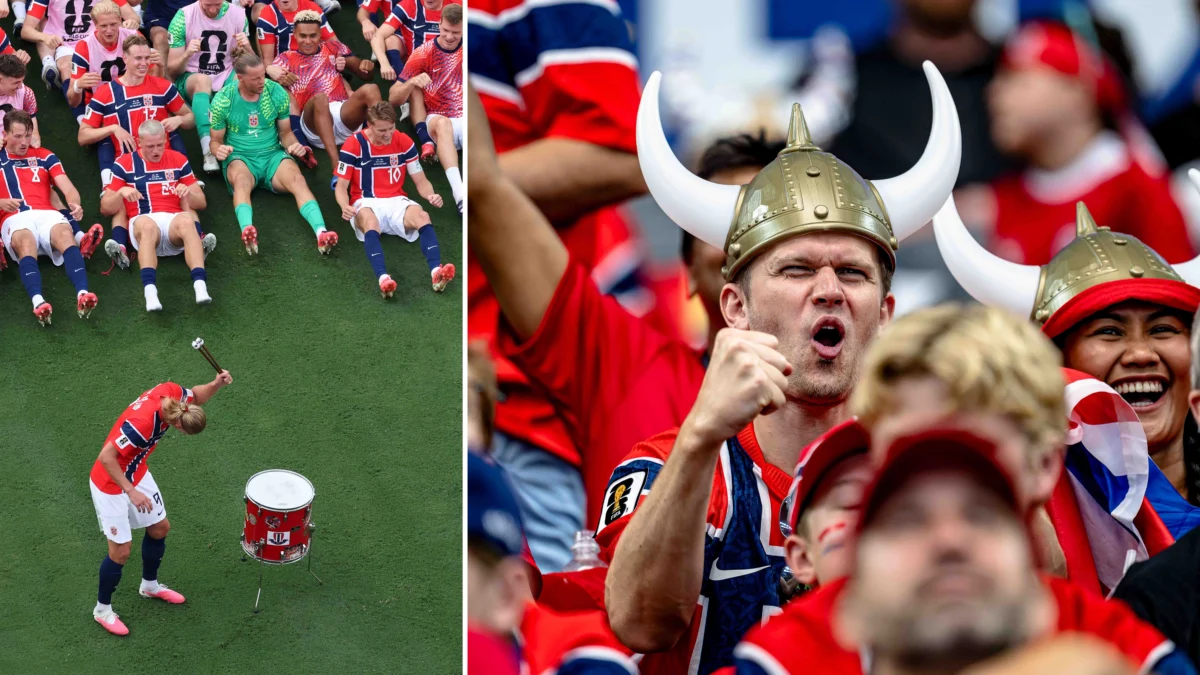
The current FIFA World Cup cycle has produced what many analysts are calling the most significant sporting narrative of the decade: the unprecedented ascension of the Norwegian national team. Norway, a nation of just 5.6 million people more traditionally associated with winter sports dominance than footballing prowess, has secured a place in the World Cup quarterfinals for the first time in its history. This milestone is punctuated by the presence of Erling Braut Haaland, the Manchester City striker whose physical dominance and scoring efficiency have redefined the parameters of the modern forward. Standing six-foot-four and weighing 207 pounds, Haaland’s pursuit of the Golden Boot has become the tournament’s primary focal point, yet the story of Norway’s success extends far beyond individual brilliance to a broader cultural and tactical shift that has captured the global imagination.
A Century of Progress in a Single Summer
To understand the magnitude of Norway’s current success, one must examine the historical context of the nation’s involvement in international football. Since the inception of the FIFA World Cup in 1930, Norway has qualified for the final tournament only four times. Before this year, the Norwegian Football Federation (NFF) had struggled to translate its domestic enthusiasm into global results. In a remarkable statistical anomaly, the team has compiled more victories in this single tournament—four wins in five matches—than it had managed in the cumulative century of its previous sporting history.
Norway’s path to the quarterfinals was not a product of favorable seeding, but rather a series of systematic victories over established footballing powers. The team’s trajectory began with a disciplined victory over Iraq, followed by a high-stakes encounter with Senegal, the reigning Africa Cup of Nations champions. Subsequent victories over the Ivory Coast and a 2-1 triumph against Brazil solidified Norway’s status as a legitimate contender. The victory against the Ivory Coast was particularly notable for its domestic impact; when Norway scored, seismic monitoring stations in the cities of Bergen and Oslo registered actual ground vibrations, a testament to the synchronized celebrations of a nation in the grip of footballing fever.
The Haaland Factor and the Golden Generation
While the collective effort of the squad has been lauded, Erling Haaland remains the undeniable spearhead of the Norwegian campaign. Haaland has netted seven goals in the tournament thus far, placing him in a dead heat for the Golden Boot with France’s Kylian Mbappé and Argentina’s Lionel Messi, both of whom sit at eight goals. Haaland’s performance has spawned a subculture of digital media, with "hunting" and "tracking" memes depicting him as a predatory force on the pitch.

However, sports analysts point out that Haaland is supported by what is being called Norway’s "Golden Generation." This includes Martin Ødegaard, the captain of both the national team and English Premier League side Arsenal. Ødegaard’s tactical vision and playmaking ability have provided the necessary service for Haaland’s finishing, creating a dual-threat system that has overwhelmed traditional defensive structures. This generation of players represents the culmination of a long-term investment by the NFF in youth academies and technical training, aiming to pivot the nation’s athletic focus from the slopes to the pitch.
The Viking Row: A Cultural Export
Perhaps more surprising than the team’s performance on the pitch is the cultural phenomenon occurring in the stands and on the streets of host cities. The "Viking Row" has emerged as the definitive fan celebration of the tournament. In this choreographed display, hundreds—and sometimes thousands—of fans sit in tight formations, moving in a synchronized rowing motion to the beat of a drum, mimicking the crew of a historical longship.
According to Dr. Caroline Malloy, a historian specializing in Norse culture, the celebration resonates because it taps into a foundational element of Norwegian identity. "For centuries, life in Norway was shaped by the sea, where rowing together required absolute teamwork, coordination, and trust," Malloy noted. "Those values are being mirrored by the national team today, which is why the celebration feels both authentic and meaningful."
The origins of the modern "Viking Row" can be traced back to March of this year during a match against Switzerland in Oslo. The movement was popularized by social media personality Ole Frøystad, known online as "Mr. Row Row," and Torstein Hamran of the supporters’ club Oljeberget Supporterklubb. What began as a local tradition has been commercialized and expanded, with the song "Viking Blood" (Vikingblod), released by Warner Music Norway, becoming a chart-topping anthem that provides the soundtrack for these displays.
The Global Bandwagon: From Mexico to New York
The elimination of traditional "underdog" favorites like Cabo Verde, Curaçao, and the DR Congo has left a vacuum that Norway has successfully filled. This "longship bandwagon" has attracted fans from across the globe, most notably from Mexico. Following Mexico’s elimination by England, the Mexican fanbase has adopted Norway as their surrogate team, frequently using the term "Norguey" (a play on "Norway" and the Mexican slang "wey").

In Mexico City and the state of Quintana Roo—the latter of which has become the subject of numerous puns regarding the "Row" celebration—local fans have been seen donning Viking helmets and red-and-blue jerseys. This cross-cultural adoption has extended to the United States as well. In New York City, the Nordic-inspired bar Kabin has become the unofficial headquarters for the movement. Kristine Gutierrez, the manager of Kabin, reported that the establishment has hosted high-ranking diplomats, Norwegian ambassadors, and even global celebrities like DJ Kygo.
"We are carrying the hopes of every underdog," Gutierrez said in a statement regarding the atmosphere at the venue. "The World Cup is a reminder of the power of collective celebration. We are seeing people from all backgrounds—Americans, Japanese, and Ivorians—joining the row."
Comparative Analysis: Winter Prowess vs. Summer Success
Norway’s sudden dominance in football invites a comparison to its historical performance in the Winter Olympics. Since 1924, Norway has secured 446 medals, including the highest number of gold medals of any participating nation. This dominance is often attributed to the country’s geography and the cultural integration of skiing and skating into daily life.
The transition to footballing success suggests a shift in the national sporting infrastructure. By leveraging the same discipline and physiological training that produced world-class skiers, Norway has developed a squad characterized by exceptional stamina and physical strength. Data from the group stages indicates that the Norwegian squad covers more ground per 90 minutes than 75% of the other teams in the tournament, a statistic that correlates with their high-pressing defensive style.
Broader Implications and the Road to the Semi-Finals
The success of the Norwegian team has significant economic and diplomatic implications. Visit Norway, the national tourism board, has seen a surge in engagement, dedicating entire sections of its platform to the "Viking Row" and the hometowns of its star players. The "Haaland Effect" is estimated to have increased international interest in Norwegian travel by a measurable margin, as fans seek to understand the environment that produced such a unique athletic talent.

As Norway prepares for its quarterfinal clash against England, the stakes could not be higher. England, which finished fifth in the Qatar World Cup, represents a significant jump in competition. However, the psychological momentum of the Norwegian squad, coupled with a global fanbase that has turned "the Row" into a viral movement, suggests that the team is no longer viewed as a mere participant, but as a genuine threat to the established order.
The upcoming match will be a test of whether Norway’s "Golden Generation" can maintain its composure under the intense pressure of the knockout rounds. Regardless of the outcome, the 2024 World Cup has already rewritten the narrative of Norwegian sports. The nation has proven that even with a small population and a history rooted in the Arctic, it can produce a world-class footballing product that resonates across borders, languages, and cultures. For now, the world continues to grab an oar and row along.