Ferry Irwandi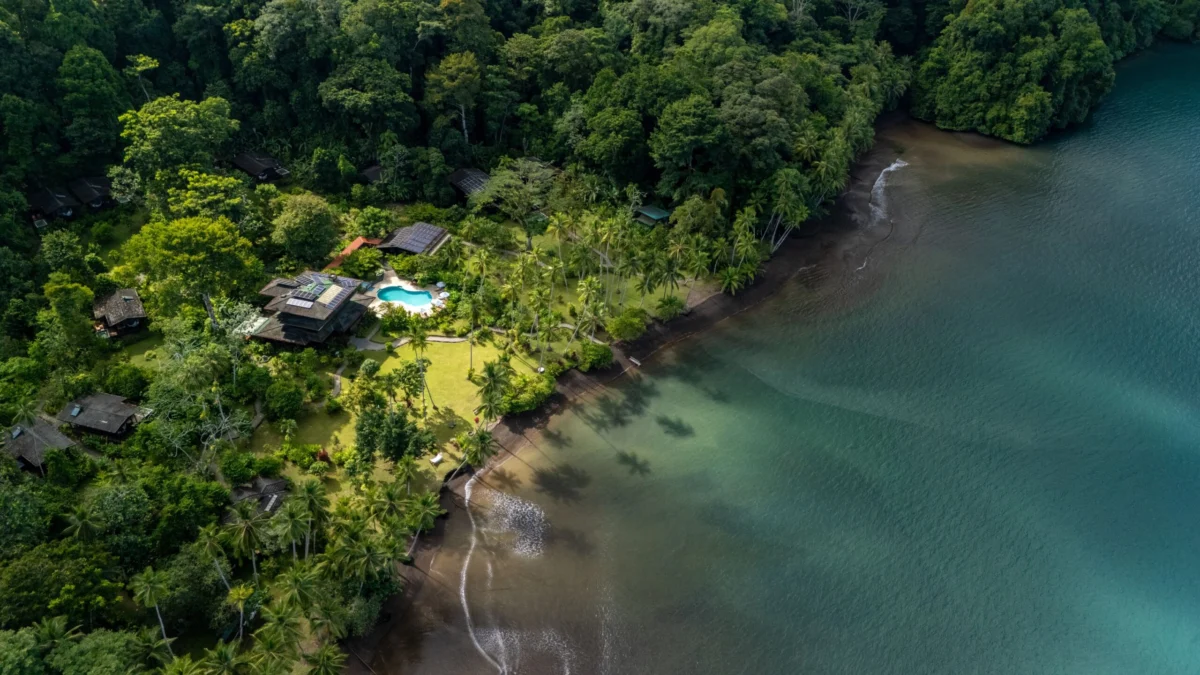
The Osa region of Costa Rica, long celebrated by biologists as one of the most biodiverse places on Earth, is currently navigating a sophisticated transition between rugged wilderness preservation and high-end ecological tourism. At the center of this evolution is Playa Cativo Lodge, a secluded 1,000-acre private nature reserve accessible only by water. Situated on the shores of Golfo Dulce, the property serves as a primary example of how stringent environmental regulations, historical land rights, and modern sustainability practices converge to create a unique hospitality model in Central America’s South Pacific coast.
The Geographical Significance of Golfo Dulce
Golfo Dulce, or the "Sweet Gulf," represents a rare geological and biological phenomenon. It is recognized as one of only four tropical fjords in the world. Unlike the glacial fjords of Scandinavia, which are carved by ice, this tropical counterpart is characterized by its significant depth—reaching over 200 meters—and the massive influx of freshwater from surrounding river systems. This mixture creates a stratified water column that supports a complex marine ecosystem.

The gulf’s unique hydrology has earned it international recognition. In recent years, Golfo Dulce was designated as Latin America’s first Whale Heritage Site, one of only eight such locations globally. This status, awarded by the World Cetacean Alliance, recognizes the area’s critical role in the life cycles of marine mammals. Specifically, the 300-square-mile inlet is one of the few places on the planet where Humpback whale populations from both the Northern and Southern Hemispheres converge to birth and nurse their young. While the peak season for these sightings occurs between July and October, the gulf remains a year-round habitat for resident pods of Pantropical spotted dolphins and Bottlenose dolphins, as well as several species of sea turtles and hammerhead sharks.
Historical Context and Regulatory Framework
The history of human settlement in the Playa Cativo area reflects the broader shifts in Costa Rican environmental policy. In the 1970s, the site was known as "Rainbow Lodge," a destination for expatriates and naturalists seeking total isolation. This era predated the modern infrastructure of the Osa Peninsula and was characterized by informal, low-impact living.
A pivotal shift occurred in the 1990s with the establishment of Piedras Blancas National Park. The Costa Rican government, recognizing the threat of deforestation and unplanned development, implemented a ban on new construction within designated park boundaries. However, properties that existed prior to the park’s formation, such as the site of Playa Cativo, were permitted to remain under private ownership, provided they adhered to strict conservation mandates.

In 2008, the property was acquired by Mark Betts, a Virginia-based hotelier, who began the process of transforming the site into a luxury eco-lodge. This development had to balance the demands of high-end hospitality with the legal constraints of bordering a national park. Today, the lodge acts as a buffer zone, forming part of a protected corridor spanning more than 148,000 hectares of tropical rainforest. This corridor facilitates the movement of megafauna, including pumas and jaguars, between Piedras Blancas and the adjacent Corcovado National Park on the Osa Peninsula.
The Architecture of Immersion and Sustainability
The design philosophy of Playa Cativo Lodge deviates from traditional luxury resorts by prioritizing environmental integration over artificial containment. The main lodge is a three-story wooden structure designed with an open-air concept, eliminating the need for energy-intensive climate control in communal areas. The facility includes 16 "casitas" or guest houses, which are strategically scattered across the property to minimize the footprint on the primary and secondary rainforest.
Sustainability at the lodge is not merely a marketing directive but a functional necessity driven by its remote location. The property operates on a 100% clean energy grid, utilizing a combination of hydropower—sourced from on-site streams—and solar arrays. This off-grid capability allows the resort to maintain a zero-carbon footprint for its electricity needs.

Furthermore, the lodge incorporates a circular food system. An on-site organic farm currently provides approximately 35% of the produce used in the restaurant. This initiative reduces the carbon emissions associated with transporting goods by boat from the town of Golfito and ensures a supply of indigenous fruits and vegetables, such as cacao and various tropical tubers, which are integrated into the culinary program.
Economic Impact and Local Integration
The economic model of Playa Cativo is deeply rooted in the local community of the Osa region. The resort serves as an extension of the regional educational infrastructure; several staff members are graduates of the University of Costa Rica’s Golfito campus, where they studied eco-tourism. The General Manager, Kenneth Villalobos, maintains a dual role as an educator at the university, fostering a direct pipeline between academic theory and practical hospitality management.
This focus on local expertise extends to the naturalist guides. These professionals, such as Cindy Guzman, provide essential data to visiting biologists and lead guest excursions that emphasize conservation education. The presence of such lodges provides high-value employment in a region where the economy was historically dependent on more extractive industries, such as gold mining and logging. By pivoting toward conservation-based tourism, the local government has created a sustainable financial incentive for preserving the rainforest.

Biodiversity and the Marine Nursery
The biological importance of the Osa region cannot be overstated. While it covers only a small fraction of Costa Rica’s landmass, the Osa Peninsula and Golfo Dulce house approximately 2.5% of the world’s total biodiversity. The waters of the gulf serve as a vital nursery for several endangered species.
During marine surveys and guest tours, sightings of the Yellow-bellied sea snake (Hydrophis platurus) are frequent. While highly venomous, these snakes are a key indicator of a healthy marine ecosystem. Naturalists at the lodge note that the gulf provides a protected environment for juvenile hammerhead sharks, which remain in the shallow, nutrient-rich waters until they are large enough to migrate to the open ocean.
The terrestrial environment is equally dense with life. The 1,000-acre reserve is home to all four species of Costa Rican monkeys (Howler, Spider, Capuchin, and Squirrel), as well as sloths, toucans, and scarlet macaws. The presence of apex predators like pumas indicates a robust food chain, supported by the lodge’s strict "no-hunting" and "minimal-interference" policies.

Logistical Infrastructure and Regional Connectivity
Accessing the South Pacific coast remains a challenge that preserves the area’s exclusivity and prevents over-tourism. The primary gateway is the San José International Airport (SJO), from which travelers utilize domestic carriers like Sansa Airlines for 30- to 45-minute flights to the regional airstrips of Golfito or Puerto Jimenez.
From these towns, the transition to the lodge requires a boat transfer across Golfo Dulce. This transit serves as a functional introduction to the region’s geography, passing through the "tropical fjord" and offering views of the steep, jungle-clad mountains that characterize the coastline.
The region is also seeing increased connectivity to other emerging hubs. Uvita, located approximately two hours north by car from the Golfito area, has become a center for surf tourism and whale watching. Dominical and Drake Bay offer further opportunities for exploration, with the latter serving as the primary entry point for Corcovado National Park. The South Pacific coast has been identified as one of the "Best Places to Go" for 2026 by major travel publications, suggesting that the current infrastructure is preparing for a controlled increase in international interest.

Broader Implications for Global Eco-Tourism
The Playa Cativo model offers significant insights for the global travel industry, particularly in the context of the "Pura Vida" philosophy—a national ethos in Costa Rica that emphasizes gratitude and simple living. As travelers increasingly seek "regenerative" travel experiences—those that leave a destination better than they found it—the lodge’s focus on clean energy, local sourcing, and habitat preservation provides a blueprint for future developments.
The success of the Osa region suggests that luxury and conservation are not mutually exclusive. Instead, the "luxury" is redefined as the privilege of accessing pristine, well-protected environments. The Costa Rican government’s decision to limit development in the 1990s, while initially restrictive for landholders, has ultimately created a high-value, low-impact tourism sector that protects the country’s natural capital.
As the global climate changes, these "biological islands" like the Playa Cativo reserve become increasingly important. They serve as genetic reservoirs for tropical species and as living laboratories for sustainable technology. The ongoing challenge for the Osa region will be managing its rising popularity while maintaining the stringent environmental standards that have made it a global leader in eco-tourism. For now, the "Sweet Gulf" remains a testament to the power of legislative protection and the viability of sustainable hospitality.