Layla Zulfa
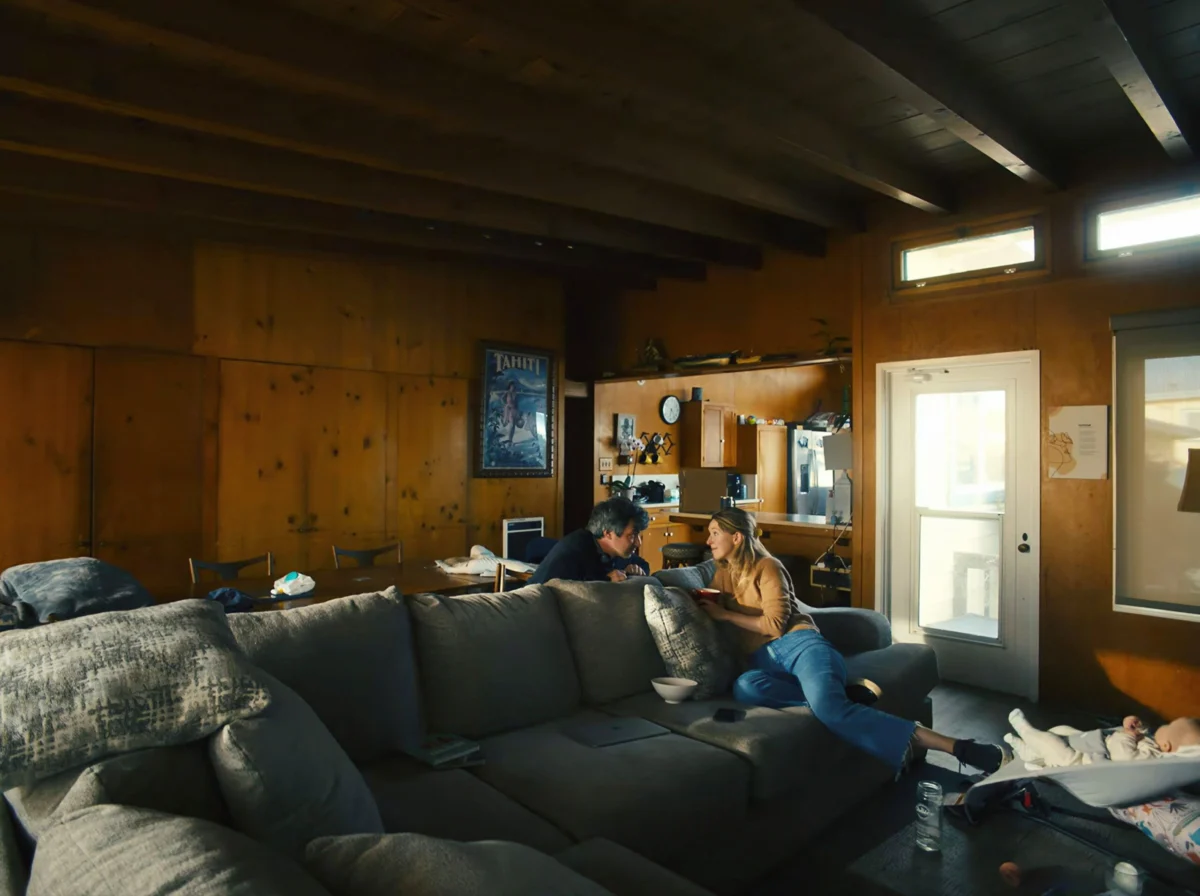
The three-hour documentary titled You Can See Everything, directed by Lance Oppenheim and Nathan Fielder, presents a profound, albeit enigmatic, portrait of Elizabeth Holmes during her final month of liberty before beginning an eleven-year prison sentence. The film, which has garnered significant attention, documents Holmes in a rented beach house near San Diego, living alongside her partner, Billy Evans. Throughout the project, the former Theranos CEO maintains a posture of total innocence, a narrative that stands in stark contrast to the federal fraud convictions that defined her fall from the heights of Silicon Valley. For observers, the documentary serves as both a post-mortem of a corporate catastrophe and a masterclass in the deliberate cultivation of public image, raising fundamental questions about the nature of truth, perception, and the performative aspects of accountability.
A Chronology of Deception and Transition
To understand the weight of the documentary, one must look at the timeline that preceded its production. In 2014, at the peak of Theranos’s valuation, Elizabeth Holmes was celebrated as the world’s youngest self-made female billionaire, boasting a valuation of $9 billion for her blood-testing startup. By 2015, investigative reporting by The Wall Street Journal began to dismantle the company’s claims regarding its proprietary technology, the Edison device. The ensuing fallout led to civil charges by the Securities and Exchange Commission in 2018, followed by criminal indictments in 2019.

The transition from disgraced executive to suburban mother and convicted felon was marked by several strategic relocations. During her trial, Holmes resided in one of the six residences located on the 74-acre Green Gables estate in Woodside, California. This historic property, originally commissioned by Mortimer Fleishhacker in 1911 and designed by architect Charles Sumner Greene, served as a secluded backdrop for the couple during the legal proceedings. While the estate’s main residence featured a 10,000-square-foot English country-style mansion, private tennis courts, and multiple swimming pools, Holmes lived in a more contained, albeit still opulent, dwelling on the grounds.
Following the conclusion of her trial and her subsequent sentencing in November 2022, the narrative shifted toward her domestic life in Del Mar, California. By April 2023, cameras began rolling for You Can See Everything. This period, characterized by a move away from the high-stakes environment of Silicon Valley, provided the setting for the documentary’s intimate, often jarring, portrayal of the former CEO.
The Architecture of Image Management
The choice of setting in the documentary is not incidental. The rented beach house in Del Mar—a property estimated to be worth approximately $9 million—is, by the standards of the ultra-wealthy, somewhat rustic and unassuming. It stands in stark contrast to the glass-and-steel aesthetic of Silicon Valley boardrooms or the grand architecture of Green Gables. By appearing in a space that feels domestic and "relatable," Holmes appears to be engaging in a well-documented behavioral pattern: the use of environment to curate a specific public persona.

Critics and whistleblowers have noted that this is not the first time such a tactic has been employed. In a 2014 feature for The New Yorker, journalist Ken Auletta described Holmes as living an "austere" life in a two-bedroom condo in Palo Alto, specifically noting that she did not own a television and did not date. At the time of that publication, Holmes was, in reality, living in a sprawling $9 million mansion in Atherton, California, with her then-partner and Theranos executive, Ramesh "Sunny" Balwani. This discrepancy underscores a persistent tension in the Holmes saga: the intentional gap between her projected reality and her actual circumstances.
The Dynamics of the Documentary
In the film, Fielder and Oppenheim capture a series of interactions that oscillate between the mundane and the deeply unsettling. Holmes is frequently seen performing domestic tasks—whisking eggs, caring for her children—while eschewing the iconic black turtleneck and red lipstick that became the uniform of her corporate persona. The documentary provides an unvarnished look at the dynamics between Holmes and Billy Evans, who often intervenes when he perceives the documentary’s line of questioning to be detrimental.
These interactions are notable for their lack of transparency. When confronted with questions about the fraud, the missing blood data, or the patients who received inaccurate medical results, Holmes remains evasive. Her insistence that she has never told a lie, delivered with a calm and sometimes disarming demeanor, creates a dissonance that has sparked extensive debate among psychologists, legal experts, and film critics alike. The documentary does not provide a verdict; instead, it forces the viewer to reconcile the person they see—a mother, a partner, a human being—with the person convicted of orchestrating one of the most significant corporate frauds in recent history.

Statistical Context and Legal Fallout
The legal consequences for Holmes were severe, reflecting the scale of the financial damage caused by Theranos. Her conviction on four counts of wire fraud and conspiracy to commit wire fraud involved over $120 million in losses to investors, including prominent figures such as Rupert Murdoch and the Walton family. The sentencing of 135 months—11 years and three months—reflected the court’s assessment of the gravity of the deception, which compromised the integrity of health diagnostics for thousands of unsuspecting patients.
The financial implications of her lifestyle choices also remain a point of interest. The sale of the Green Gables estate, which finally occurred in 2025 for $85 million—a significant reduction from its initial listing price—symbolizes the conclusion of an era of extreme wealth associated with her peak. As Holmes serves her time, the documentary serves as a final, curated statement from a woman who spent years carefully managing the world’s perception of her reality.
The Implications of Performative Vulnerability
The most striking aspect of You Can See Everything is the sympathy it inadvertently invites. By presenting Holmes in a vulnerable, domestic light, the filmmakers have inadvertently highlighted the dangers of narrative framing. Whether this was the goal of the subjects or the byproduct of the filmmakers’ observational approach is a matter of ongoing discussion.

Sociologists have pointed out that public figures often use "humanization" as a defensive mechanism against legal or social repercussions. By focusing on her role as a mother and her life as a partner, the documentary creates a "soft" version of a "hard" reality. It suggests that while the law may view Holmes through the lens of her crimes, the media—and by extension, the public—may be susceptible to the performance of remorse or normalcy.
Conclusion
The documentary directed by Lance Oppenheim and Nathan Fielder does not aim to solve the mystery of Elizabeth Holmes, but rather to document the final act of her public life before incarceration. Through the lens of a $9 million beach house and the intimate, often tense interactions between the subjects and the crew, it captures a portrait of a woman who remains committed to her own narrative, regardless of the judicial findings against her. As the industry continues to analyze the rise and fall of Theranos, You Can See Everything will likely remain a key text in the study of corporate fraud, the psychology of the con, and the persistent power of the curated image in an era of constant surveillance. Whether or not one finds the portrayal sympathetic, the film succeeds in its primary function: it presents the viewer with the uncomfortable reality that even when you can see everything, the truth may remain entirely out of reach.