Jono Maryono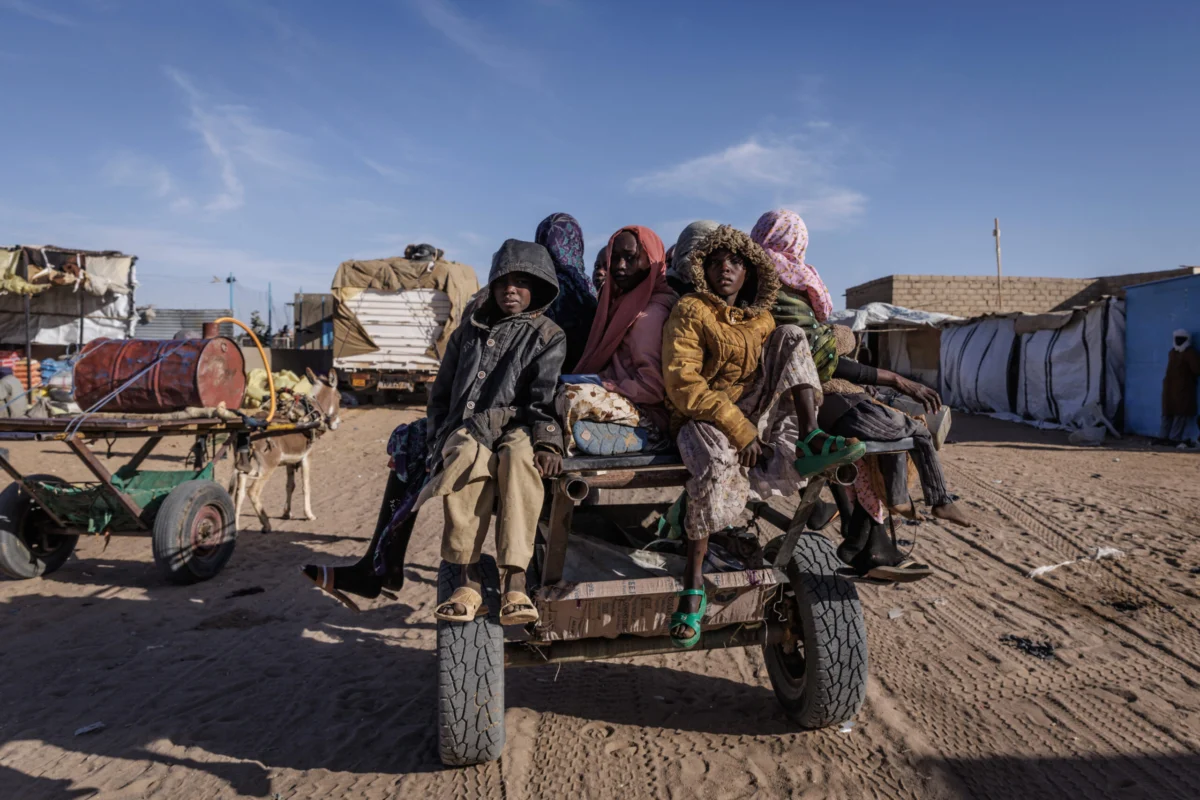
Berlin, Germany – On the grim third anniversary of Sudan’s devastating civil war, international donors convened in Berlin, pledging a critical €1.3 billion (approximately $1.5 billion USD) in humanitarian aid. The urgent appeal for an end to the conflict came from United Nations Secretary-General Antonio Guterres, who described the anniversary as "a tragic milestone in a conflict that has shattered a country of immense promise." The stark reality of the humanitarian crisis was underscored by Guterres’ assertion that "this nightmare must end," emphasizing that the conflict’s destabilizing consequences extend far beyond Sudan’s borders, impacting the wider region.
The war, which erupted in April 2023, pits the Sudanese Armed Forces (SAF) against the paramilitary Rapid Support Forces (RSF), a bitter struggle stemming from a prolonged power dispute. The human toll is staggering. Guterres highlighted that nearly 34 million people within Sudan are in dire need of humanitarian assistance, with over 4.5 million forcibly displaced from their homes. The UN chief did not shy away from the brutal realities faced by civilians, noting that women and girls have been subjected to terror and that systematic sexual violence has become a pervasive feature of the conflict.
The Berlin conference, attended by approximately a dozen foreign ministers and over 60 delegations, aimed not only to secure vital humanitarian funding but also to reinvigorate stalled peace negotiations. However, a significant point of contention emerged as the warring factions, the SAF and the RSF, were notably excluded from the proceedings. This exclusion, intended perhaps to foster an environment for external mediation, was met with strong condemnation from the Sudanese government.
Khartoum’s Vehement Rejection of "Colonial Tutelage"
Sudan’s Ministry of Foreign Affairs issued a sharp rebuke of the Berlin conference, characterizing it as a "colonial tutelage approach." The ministry voiced its displeasure at what it perceived as a lack of consultation and coordination with Khartoum by Western leaders, accusing them of attempting to impose their agenda and vision on the nation. In a strongly worded statement, the ministry declared its refusal to "accept that countries and regional and international organisations convene to decide on its affairs and bypass the Sudanese government under the pretext of neutrality."
The Sudanese government further warned that "equating the government and its national army with a criminal, multinational terrorist militia" would fundamentally undermine "the foundations of regional and international security." This statement clearly positions the government’s perspective, framing the RSF as an illegitimate and dangerous entity, and views external attempts to mediate without its full consent as an affront to its sovereignty and an endorsement of what it considers a terrorist organization.
While the RSF has remained silent on the Berlin conference itself, the group did acknowledge the third anniversary of the civil war through a post on social media platforms, underscoring their continued engagement in the conflict.
African Union’s Call for Ceasefire and Convergent Efforts
Mahmoud Ali Youssou, the Chairperson of the African Union, who was present at the conference, articulated the continental body’s deep concern. Speaking to the Andalou news agency, he stated, "We know the magnitude of the crimes committed. We know the level of destruction in this country." The AU’s primary objective, he stressed, is to see "all efforts to converge towards the cessation of hostilities. A ceasefire is essential."
Youssou also highlighted another critical challenge: the fragmentation within Sudan’s civilian political landscape. He expressed concern about divisions among civil society groups and political parties, indicating that the African Union intends to intensify its engagement to foster greater unity and a more cohesive civilian voice in peace efforts. This acknowledgment of internal divisions is crucial, as a unified civilian front is often seen as vital for sustainable peace.
Germany’s Commitment and the Humanitarian Imperative
Germany, as the host nation, underscored its commitment to alleviating the suffering of the Sudanese people. German Foreign Minister Annalena Baerbock announced that Germany had pledged €212 million (approximately $250 million USD) in humanitarian aid. She expressed gratitude to all donors for their pledges, stating, "They help to alleviate the suffering of the people in Sudan, they help to save lives, and they show that this conflict has not been forgotten." This significant contribution from Germany reflects its prominent role in international humanitarian efforts and its dedication to addressing the crisis in Sudan.
Background and Chronology of the Conflict
The current civil war in Sudan is the culmination of decades of political instability, ethnic tensions, and economic grievances that have plagued the nation since its independence in 1956. The conflict that erupted in April 2023 between the SAF, led by General Abdel Fattah al-Burhan, and the RSF, commanded by General Mohamed Hamdan Dagalo (known as Hemedti), can be traced back to the power struggle that followed the 2019 overthrow of long-time autocrat Omar al-Bashir.
Key Milestones:
- April 2019: Protests lead to the ousting of Omar al-Bashir after 30 years in power. A transitional military council is formed, sparking hopes for democratic reform.
- June 2019: The violent dispersal of a protest camp in Khartoum, known as the Khartoum massacre, results in hundreds of deaths and further erodes public trust.
- August 2019: A power-sharing agreement is reached between the military and civilian groups, establishing a transitional government and a joint military-civilian Sovereign Council.
- October 2021: General Abdel Fattah al-Burhan dissolves the transitional government in a military coup, consolidating power and leading to widespread condemnation and protests.
- Late 2022 – Early 2023: Tensions escalate between the SAF and the RSF over the integration of the RSF into the national army and the timeline for a return to civilian rule.
- April 15, 2023: Fierce fighting erupts in Khartoum and other parts of the country between the SAF and the RSF, marking the beginning of the current civil war.
- May 2023 onwards: The conflict intensifies, leading to a massive humanitarian crisis, widespread displacement, and severe human rights abuses. Numerous attempts at mediation and ceasefire agreements by regional and international bodies largely fail to achieve lasting peace.
- April 2024: The third anniversary of the war is marked by the Berlin conference, highlighting the ongoing humanitarian catastrophe and the persistent challenges in finding a political solution.
Supporting Data and Humanitarian Needs
The scale of the humanitarian catastrophe in Sudan is immense and continues to grow. The figures presented by the UN and other humanitarian organizations paint a grim picture:
- Displacement: Over 4.5 million people have been forced to flee their homes, making Sudan one of the largest displacement crises globally. This includes both internal displacement and refugees fleeing to neighboring countries like Chad, South Sudan, Egypt, and Ethiopia.
- Food Insecurity: The United Nations World Food Programme (WFP) estimates that over 18 million people are facing acute food insecurity, with nearly 5 million on the brink of famine. The disruption of agricultural activities, blockades of food supplies, and the destruction of infrastructure have crippled food production and distribution.
- Healthcare Crisis: The healthcare system has largely collapsed in many affected areas. Hospitals have been damaged or destroyed, medical supplies are scarce, and healthcare workers are either displaced or unable to access their workplaces. The spread of diseases like cholera and measles is a significant concern.
- Water and Sanitation: Access to clean water and sanitation facilities is severely limited for millions, increasing the risk of waterborne diseases.
- Protection Concerns: Reports of widespread human rights abuses, including killings, arbitrary detentions, torture, and sexual violence, are a constant feature of the conflict. Women and children are disproportionately affected.
The €1.3 billion pledged at the Berlin conference, while substantial, represents a fraction of the estimated $2.7 billion required for humanitarian assistance in Sudan for 2024. This funding gap highlights the immense challenge of meeting the needs of a population facing such profound suffering.
Broader Regional Impact and Implications
The conflict in Sudan is not an isolated event; it has significant and far-reaching implications for regional stability. The porous borders and the flow of refugees and weapons create a volatile environment for Sudan’s neighbors, many of whom are already grappling with their own internal challenges.
- Refugee Influx: Neighboring countries, particularly Chad and South Sudan, have seen an unprecedented influx of Sudanese refugees, straining their resources and potentially exacerbating existing social and economic pressures.
- Transnational Crime and Terrorism: The destabilization of Sudan provides fertile ground for illicit activities, including human trafficking, arms smuggling, and the potential resurgence of extremist groups. The vast and ungoverned territories within Sudan can become safe havens.
- Economic Disruption: The conflict disrupts regional trade routes and economic cooperation. Sudan’s strategic location and its potential as a transit point for goods and energy make its instability a concern for regional economic development.
- Geopolitical Competition: The crisis has also drawn the attention of various international and regional powers, leading to complex geopolitical dynamics and potential proxy involvement, further complicating efforts to find a unified path towards peace.
The international community’s challenge remains twofold: to provide immediate life-saving assistance to the Sudanese people while simultaneously working towards a sustainable political solution that addresses the root causes of the conflict and ensures accountability for the atrocities committed. The rejection of the "colonial tutelage approach" by Khartoum underscores the delicate balance required to engage with sovereign nations while advocating for human rights and international law. The path forward for Sudan is fraught with peril, and the coming months will be critical in determining whether the "nightmare" can indeed be brought to an end.