Layla Zulfa
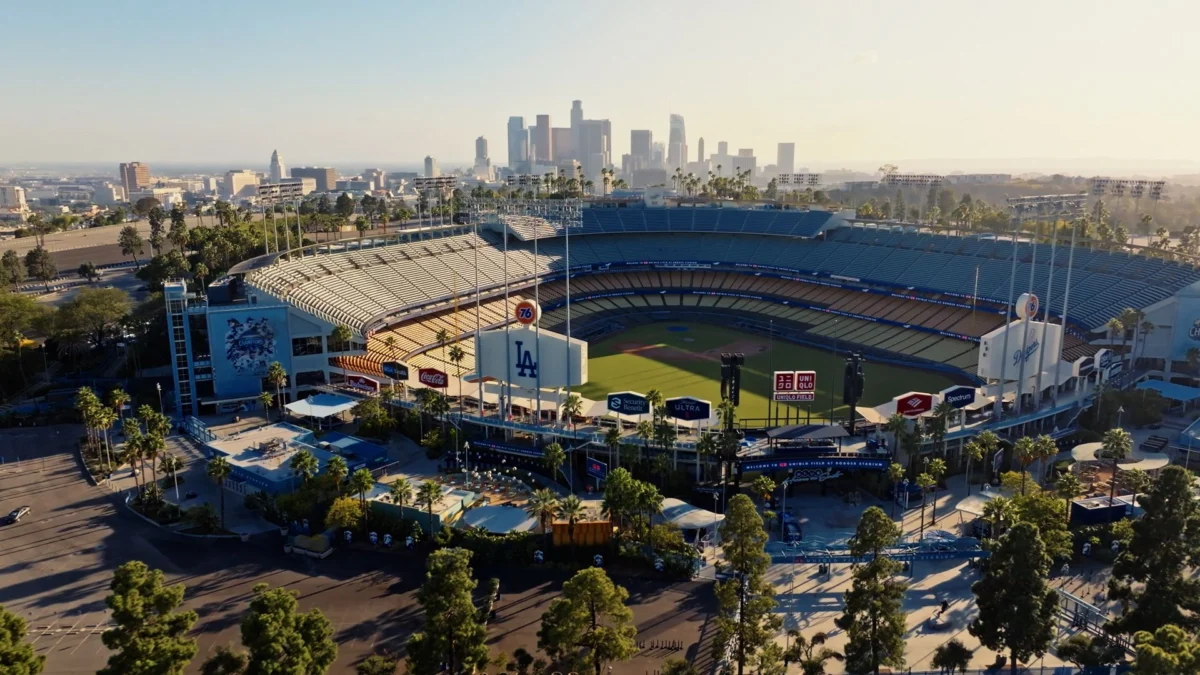
The transition of the Brooklyn Dodgers from the compact, historic confines of Ebbets Field in Flatbush to the sprawling, midcentury modern landscape of Chavez Ravine in Los Angeles remains one of the most transformative sagas in American professional sports. Opened in 1962, Dodger Stadium stands not merely as a venue for baseball, but as a masterpiece of civil engineering and civic planning that permanently altered the cultural fabric of Southern California. With a capacity of 56,000, it remains the third-oldest ballpark in Major League Baseball, trailing only the historic Fenway Park in Boston and Wrigley Field in Chicago. Its design, characterized by sweeping views and an innovative aesthetic, serves as a testament to the vision of team president Walter O’Malley and architect Emil Praeger.
From Brooklyn to the West Coast: A Strategic Relocation
The relocation of the Dodgers was driven by a complex interplay of urban development, political tension, and the desire for a modern, accessible arena. As team historian Mark Langill notes, the city of Los Angeles was initially an alternative to the constraints faced by the team in New York. However, upon scouting the topography of Chavez Ravine, located just north of downtown Los Angeles, Walter O’Malley recognized an unparalleled opportunity. The site offered strategic freeway access and the potential for a purpose-built stadium that could accommodate the burgeoning population of the post-war West Coast.

The move was finalized in the late 1950s, sparking a period of significant controversy and construction. The development of the ravine required the relocation of existing residents, a historical chapter that continues to be a subject of academic study and municipal discussion. Despite the turbulence surrounding the land acquisition, the resulting structure, completed for the 1962 season, set a new standard for stadium design. It was the first stadium to be privately financed, reflecting O’Malley’s commitment to autonomy and long-term asset management.
Architectural Nuance and Design Intent
The architecture of Dodger Stadium is defined by its intentionality. Emil Praeger, a structural engineer by trade, prioritized functionality and visibility, creating a "bowl" design that maximizes the fan experience. The seating arrangement is perhaps the most iconic feature of the interior. Rather than a uniform color scheme, the seats are segmented into tiers of yellow, orange, turquoise, and sky blue. As Janet Marie Smith, the executive vice president of planning and development for the Los Angeles Dodgers, explains, this chromatic gradient was designed to mirror the hues of a California sunset, seamlessly integrating the stadium with its natural environment.
Beyond the seating, the stadium’s design cues borrow from the era’s fascination with transit and mobility. The entrance to the player clubhouse features tile mosaics inspired by those found at Los Angeles International Airport (LAX). This nod to the city’s midcentury aviation aesthetic—designed by Janet Bennett—serves to ground the stadium within the broader architectural language of Los Angeles. Furthermore, the use of hexagonal signage throughout the concourses was a deliberate choice to provide uniformity and brand identity, a detail that draws upon design sketches dating back to 1959.

The Stewardship of a Living Landmark
Maintaining a stadium that is over six decades old requires a unique approach to historic preservation. The Los Angeles Dodgers are currently the only Major League Baseball organization to maintain a full-time botanist on staff. This commitment is visible in the meticulously maintained gardens surrounding the perimeter of the venue. The landscaping, which includes over 100 concrete planters molded into the shape of oversized champagne bowls, reflects the organization’s dedication to blending industrial construction with high-end horticulture. These planters, which have been painstakingly restored by the grounds crew, serve as a bridge between the stadium’s 1963 opening and its modern-day iteration.
The organization has also focused on legacy, particularly regarding the recognition of Jackie Robinson. A bronze statue of the Hall of Famer stands as the centerpiece of the entrance, accompanied by quotations selected by his family. This installation is intended to remind visitors that Robinson’s influence extended far beyond the white lines of the diamond, highlighting his role as a catalyst for civil rights in the United States.
Chronology of Success and Competitive Evolution
Since its inauguration in 1962, the stadium has been the site of 12 World Series championships. The team’s trajectory has been marked by periods of dominance, including recent victories in the 2024 and 2025 World Series. These titles solidified the venue’s status as a fortress of championship baseball. However, the pursuit of a "three-peat"—a feat not accomplished by any team since the New York Yankees in 2000—was thwarted in the most recent postseason, where the Dodgers were eliminated by the Milwaukee Brewers.

This competitive fluctuation provides context to the stadium’s role in the city’s identity. The venue is more than a stage for victory; it is a repository of shared memories for generations of Angelenos. The stadium’s capacity to host 56,000 fans simultaneously necessitates complex logistics, which the organization manages through distinct visual landmarks, such as oversized bobbleheads, to assist attendees in navigation.
The Broader Impact: Implications of Midcentury Design
The longevity of Dodger Stadium offers a compelling case study for urban planners and sports executives regarding the viability of older infrastructure. While many professional teams have opted for the frequent demolition and replacement of stadiums, the Dodgers have opted for a "renovation-first" strategy. By integrating original 1959 design concepts—many of which were never realized during the initial construction—the current management has successfully updated the facility without sacrificing its midcentury integrity.
This approach has significant economic and environmental implications. By retaining the core structure of the stadium, the organization has avoided the massive carbon footprint associated with large-scale demolition and new construction. Simultaneously, the stadium remains a primary economic driver for the city, attracting millions of visitors annually and anchoring the real estate development of the surrounding downtown districts.

Looking Toward the Future
As Dodger Stadium moves deeper into its seventh decade, the focus remains on balancing modernization with institutional heritage. The integration of technology, such as updated high-definition scoreboards and modernized seating, must coexist with the original design intent of Praeger and O’Malley. The ongoing restoration projects, such as the rehabilitation of the original planters and the continued use of the hexagonal branding, signify a commitment to a "living history" model.
The stadium’s resilience is rooted in its adaptability. It has survived the transition from the analog era of the 1960s to the hyper-connected, data-driven environment of modern professional sports. By preserving the aesthetic markers of its inception while iteratively improving the fan experience, the Los Angeles Dodgers have ensured that the stadium remains not just a relic of the past, but a functional, relevant, and iconic component of the modern urban landscape.
Ultimately, the story of Dodger Stadium is one of institutional continuity. Whether it is the color of the seats, the botanical precision of the exterior grounds, or the architectural nods to the city’s transit hubs, every element of the stadium serves a narrative purpose. It reflects the ambitions of a team that arrived in Los Angeles with the intent to innovate, and it stands as a permanent, physical manifestation of that original, ambitious vision for a stadium in a league of its own. As the team continues to compete at the highest level, the stadium remains the backdrop against which the history of Los Angeles baseball is written, ensuring that the legacy of Chavez Ravine will endure for generations to come.