Prabowo Widodo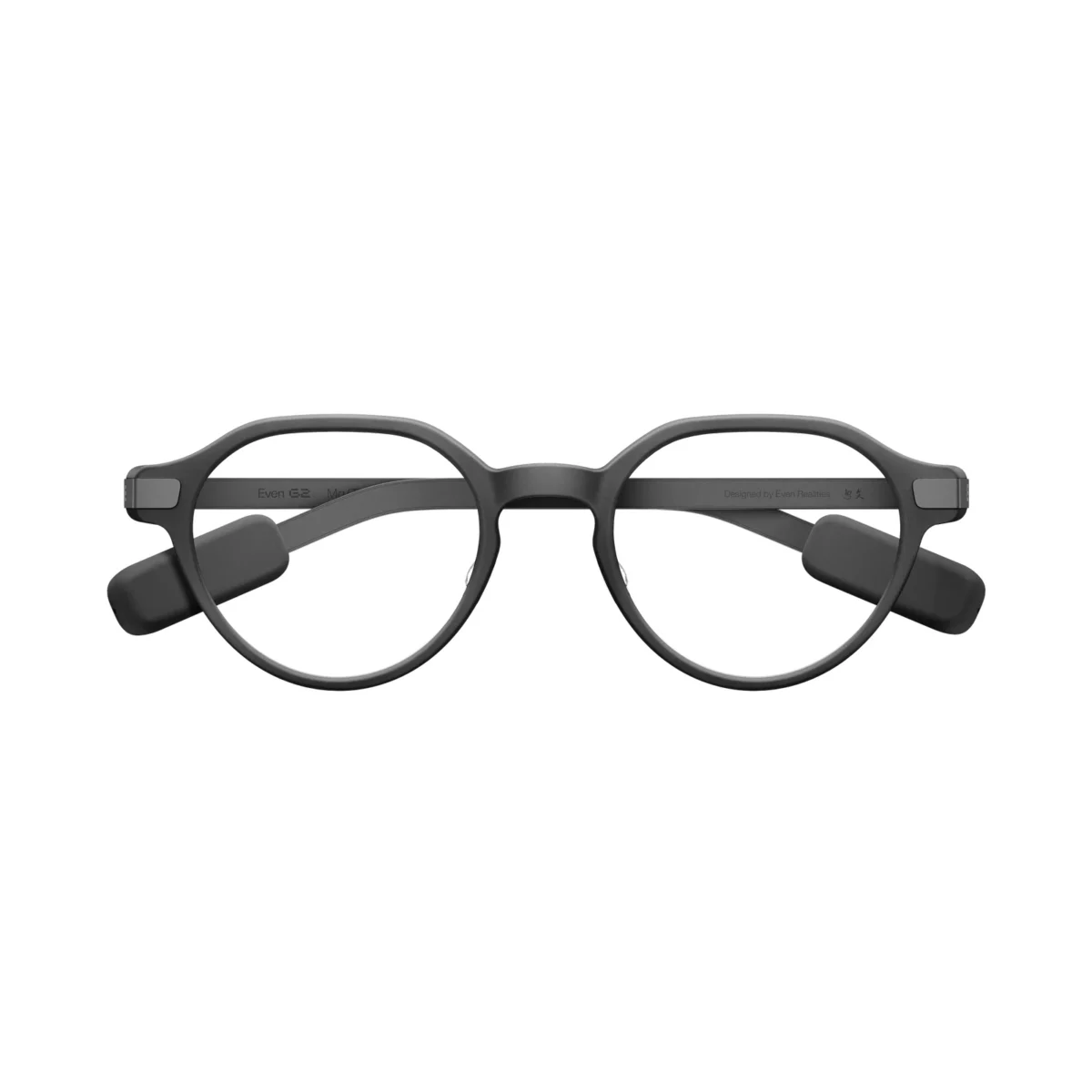
The vision of smart glasses as the next pervasive consumer hardware interface has been a recurring theme from prominent tech executives over recent years, yet the practical reality for many of today’s offerings, including the Even Realities G2 smart glasses, largely involves a significant reliance on smartphones. Despite boasting impressive hardware, this dependency often introduces connectivity challenges that can prove both unreliable and frustrating for users. Even Realities distinguishes itself in a burgeoning market by adopting a distinct approach, prioritizing productivity and privacy over features like cameras and integrated speakers, a deliberate design choice that sets it apart from competitors such as Meta.
The Evolving Landscape of Smart Glasses: A Market Overview
The journey of smart glasses from concept to consumer product has been marked by both innovation and significant hurdles. Early pioneers like Google Glass, launched in 2013, sparked intense debate around privacy due to its integrated camera, ultimately leading to its repositioning as an enterprise tool. More recently, companies like Meta, with their Ray-Ban Stories, have re-entered the space, focusing on social sharing and media capture. However, the overarching ambition remains to transition smart glasses from novelty gadgets into indispensable tools, akin to the smartphone’s evolution. This requires overcoming challenges in user interface, battery life, processing power, and, critically, achieving true independence from companion devices.
Even Realities, by contrast, has carved out a niche centered on professional utility. Their G2 smart glasses feature a monochrome heads-up display (HUD) that projects text and information in a distinctive neon-style green, designed for optimal visibility across diverse lighting conditions. This choice of monochrome display, while perhaps less visually striking than full-color alternatives being developed by rivals like Snap and Meta, is a strategic one, aiming to reduce power consumption and minimize visual distraction, aligning with their productivity mandate. The absence of cameras and speakers is a direct response to privacy concerns that have plagued earlier iterations of smart eyewear, fostering an environment where users and those around them need not worry about being inadvertently recorded or overheard. This privacy-by-design philosophy is a key differentiator in a world increasingly conscious of digital intrusion.
Hardware Refinements: The G2’s Leap from its Predecessor
The G2 represents Even Realities’ second generation of smart glasses, building upon the foundation laid by the G1 released a few years prior. This iteration showcases notable advancements in core hardware components, directly impacting the user experience. The G2’s display boasts a brighter 1,200-nit output, a significant improvement over the G1’s 1,000 nits. This increased brightness is crucial for maintaining legibility in varied environments, particularly outdoors under direct sunlight, where lower-nit displays often struggle. Furthermore, the display area has been expanded by 75%, providing more screen real estate for information display, which enhances readability and allows for richer content presentation. The refresh rate has also seen a substantial upgrade, moving from 20Hz on the G1 to a smoother 60Hz on the G2. This higher refresh rate translates to a more fluid visual experience, reducing motion blur and making on-screen text and graphics appear sharper and more responsive, especially during scrolling or animated transitions.
Audio input capabilities have also been enhanced, with the G2 incorporating four microphones compared to the G1’s two. This quad-mic array is designed to improve noise cancellation and voice pickup accuracy, critical for features relying on voice commands, dictation, and real-time translation, particularly in noisy environments. These hardware improvements collectively underscore Even Realities’ commitment to refining the core user experience and addressing feedback from the initial G1 launch.
Design and Ergonomics: A Premium and Practical Wearable

In terms of physical design, the Even Realities G2 smart glasses are crafted with both aesthetics and comfort in mind. Available in two distinct frame designs, the glasses are remarkably lightweight, tipping the scales at just 35 grams. This featherlight construction is largely attributable to the choice of premium materials: the frame is meticulously crafted from a magnesium alloy, known for its excellent strength-to-weight ratio, while the temples—the arms extending over the ears—are fashioned from a durable titanium alloy. These materials not only contribute to the glasses’ minimal weight but also lend them a premium look and feel, enhancing their appeal as a daily wearable. The review highlights that the glasses offer a comfortable fit, a crucial factor for any device intended for extended wear.
Beyond their smart features, the G2 also incorporates practical elements found in conventional eyewear. The lenses are equipped with built-in UV protection, making them a functional accessory for outdoor use even when their smart capabilities are not actively engaged. This dual functionality adds a layer of everyday utility, suggesting that users might find reasons to wear them throughout the day, irrespective of their professional smart-glass needs. The battery life is another commendable aspect; Even Realities claims up to two days of typical usage on a single charge. While the reviewer did not conduct a full two-day test, the battery consistently lasted long enough for practical daily use. The glasses come with a robust protective case that doubles as a portable charging station, capable of recharging the G2 up to seven times before the case itself requires a power source. While the case is noted for its substantial size—precluding pocket storage—its solidity and the secure fit of the glasses inside provide reassurance for travel and daily commutes.
Navigating the Software Experience: Features and Their Implementation
The G2’s functionality is designed to augment daily productivity, acting as a discreet companion for managing schedules, accessing reminders, and reviewing notes. User interaction primarily occurs through stem-based controls. A simple tap wakes the device, while a double-tap on the control pad reveals a customizable dashboard. This dashboard can display an array of information, including upcoming meetings, real-time stock updates, and top news headlines, offering at-a-glance access to critical data without the need to pull out a smartphone.
However, the integration of real-time phone notifications, while a potentially useful feature, proved inconsistent in practice. The pop-ups were not always reliable, and for a device that often relies on phone connectivity, the redundancy of having a phone usually within reach diminished the perceived value of this particular feature.
Long-pressing the temple control opens a comprehensive menu, granting access to several key functions: a notifications tray, Translate, Conversate, Teleprompt, a to-do list, and Navigate.
- Translate: This feature allows users to set a target language and engage in conversations, with translations appearing on the HUD. The reviewer’s experience at the Global Connect Show (GCS) in China, where they conversed with company representatives speaking Chinese, confirmed its utility, as did tests with other journalists speaking French and Spanish. This capability holds significant implications for international business, travel, and cross-cultural communication, effectively breaking down language barriers in real time. A notable limitation, however, is that the other party remains unaware of what the G2 user is saying in their language unless they are also using a compatible app or device.
- Navigate: A promising feature, Navigate projects turn-by-turn directions directly onto the HUD. The primary drawback is its proprietary nature; it does not integrate with established mapping services like Google Maps or Apple Maps, requiring users to set routes exclusively through the Even Realities app. While the directions were clearly displayed, the app’s consistent inaccuracy in address recognition rendered it unreliable for unfamiliar destinations. Despite this, the potential for cyclists or motorbike riders to benefit from hands-free, glanceable directions, once accuracy issues are resolved, is evident.
- Conversate: Initially offering a live transcript of conversations, a feature deemed somewhat redundant given existing recording apps, Conversate evolved significantly with the addition of a "prep notes" feature. This allows users to pre-load notes or documents relevant to an upcoming meeting, which the AI can then reference during the conversation. Alternatively, the AI can listen in real-time and generate "explainer bubbles" for complex concepts as they arise. For instance, during a briefing on energy, the AI provided a definition for "Green Hydrogen," accessible with a tap. This contextual intelligence represents a genuinely useful application for enhancing understanding and recall during discussions, though the reviewer noted a potential for information overload if every conversation generated such bubbles.
The Even AI Assistant: Ambition Meets Implementation Challenges
Central to many of the G2’s smart functions is Even AI, the built-in voice assistant. Activated by a wake word, users can pose questions or add items to their to-do lists. However, the AI assistant’s performance presented several challenges. It frequently misunderstood requests for the to-do list, and general inquiries often resulted in lengthy paragraphs streaming across the screen without an option to interrupt or skip ahead, hindering efficient information retrieval.
Despite the inclusion of a four-microphone array designed for improved voice capture, Even AI struggled in outdoor environments. The reviewer noted frequent failures to activate or misinterpretations of commands, particularly amidst the ambient noise levels prevalent in India. This highlights a critical area for improvement in noise handling and voice processing for a device intended for diverse real-world usage. Another user experience friction point identified was the lack of on-device brightness control. While the 1,200-nit display is bright, manual adjustment through the phone app was required in varying light conditions, indicating a missed opportunity for a more seamless and independent user interaction.

The R1 Companion Ring: An Unnecessary Addition?
Alongside the G2 smart glasses, Even Realities launched the R1 companion ring, designed to provide an alternative control method via its touch surface, ostensibly replacing the stem-based controls on the glasses. While the ring performed its control functions adequately, its overall value proposition, particularly at a price point of $249, was questioned. The existing touch-sensitive temples on the G2 already provide the same control functionality, making the R1 largely redundant for its primary purpose.
Adding to its feature set, the R1 incorporates health tracking capabilities, monitoring heart rate, calories burned, steps taken, sleep patterns, and SpO2 (blood oxygen levels). However, this inclusion further complicates its identity. For users seeking dedicated health tracking, specialized devices like the Oura Ring or Ultrahuman Ring are often preferred, offering more comprehensive and accurate data. For those already using a fitness tracker, the R1’s auxiliary health functions might be superfluous. The reviewer expressed a preference for a more focused, lower-priced controller ring, perhaps with an integrated microphone for AI commands, if such an accessory were truly necessary. As it stands, the R1’s feature bloat and cost make it an unconvincing purchase for most potential G2 users.
Even Realities in the Competitive Landscape: Unicorn Status and Future Trajectory
The smart glasses market is rapidly evolving, with a diverse range of philosophies and technologies vying for consumer attention. Competitors like Meta, with their camera-equipped, screen-free Ray-Bans, are popular for social media integration and casual photography. Simultaneously, major players including Meta and Snap are aggressively developing glasses with full-color screens, promising richer augmented reality experiences. Even Realities occupies a distinct segment alongside a handful of Chinese companies like Rokid and Inmo, which also utilize similar neon-display styles.
The Even Realities G2 is positioned at a price point of $599, offering robust hardware within a lightweight and aesthetically pleasing frame. The company’s future plans include enhancing customization by supporting third-party applications, though currently, the ecosystem lacks a "killer app" compelling enough to significantly increase daily usage. The fundamental challenge, as identified in the review, is the difficulty in establishing a clear, everyday use case for such smart glasses beyond highly specific professional scenarios like constant translation or teleprompting.
A significant development for Even Realities is its recent achievement of unicorn status, securing a $1 billion valuation after a substantial $150 million funding round led by Meituan and Tencent. This significant investment underscores investor confidence in the company’s vision, particularly its focus on productivity and privacy. This capital infusion provides Even Realities with crucial resources for further research and development, software refinement, and market expansion. The company’s strategic decision to omit cameras and speakers, focusing instead on productivity tools, is a bold move in a market often swayed by multimedia capabilities. This approach aligns with a growing consumer demand for privacy-respecting technology.
However, to fully capitalize on its unicorn status and transition the G2 from a "nice-to-have" gadget to an indispensable daily tool, Even Realities must prioritize the development of more compelling first-party software. Refining the AI assistant, improving navigation accuracy, enhancing connectivity reliability, and expanding the utility of features like Conversate are critical steps. The ultimate success of the G2, and indeed the broader smart glasses category, hinges on its ability to seamlessly integrate into users’ daily lives, offering tangible benefits that justify its adoption over conventional smartphones or other wearables. The journey to widespread smart glass adoption is still in its early stages, and companies like Even Realities, with their focused approach and recent financial backing, are pivotal in shaping its future.