Jono Maryono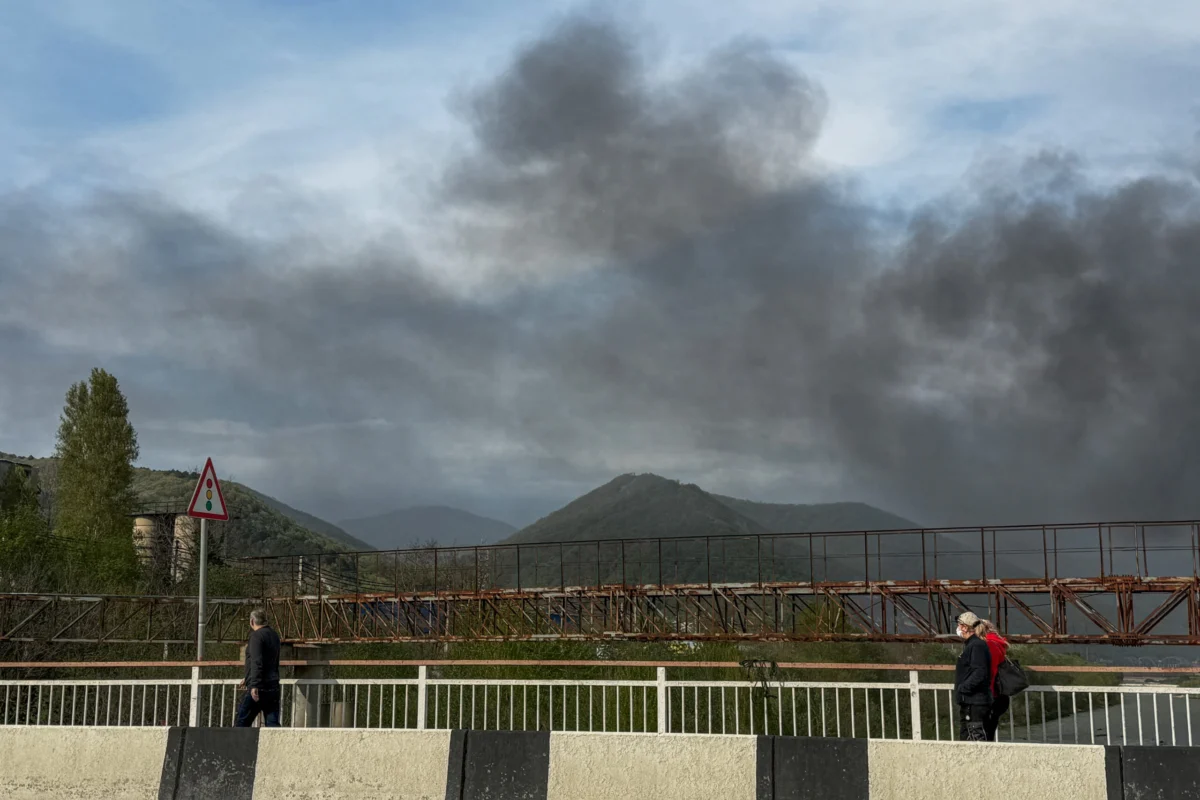
Southern Russia is confronting an environmental crisis of immense proportions, with the ongoing fallout from targeted strikes on oil infrastructure in April creating one of the most significant ecological disasters in the nation’s modern history. The fires and subsequent oil spills, particularly concentrated around Tuapse and extending to coastal areas near Sochi, have left a devastating mark on the Black Sea region. Residents have reported witnessing the unsettling phenomenon of "black rain," a visceral manifestation of airborne petroleum residue that has settled over communities, impacting air quality and local ecosystems. Weeks after the initial incidents, the environmental toll continues to mount, with reports of dying wildlife and persistently polluted beaches, while volunteer efforts to mitigate the damage have reportedly been met with obstruction and even harassment from authorities.
The Immediate Aftermath: A Region Under Siege
The initial strikes, which Ukrainian officials have described as targeting military-industrial targets, ignited massive infernos at oil refineries in Tuapse. The volatile nature of crude oil and its derivatives meant that these fires were not only destructive to the infrastructure itself but also released vast plumes of toxic smoke and a slick of spilled oil into the surrounding environment. Satellite imagery from the period showed significant thermal anomalies and smoke plumes emanating from the refinery complex. The Black Sea, a vital ecosystem and a major tourist destination, became the unfortunate recipient of this environmental assault. Oil slicks were observed spreading across the water, threatening marine life and coastal habitats.
The visible evidence of pollution has been stark. Photographs and videos shared by locals and environmental observers depicted beaches coated in thick, black sludge, and seabirds struggling with oil-soaked feathers. The "black rain" phenomenon, described by residents as a fine, greasy particulate falling from the sky, underscored the pervasive nature of the contamination, affecting areas far beyond the immediate vicinity of the spills. This suggests that volatile organic compounds and fine particulate matter from the burning oil were carried considerable distances by wind currents.
A Troubled Response: Silencing Dissent Amidst Catastrophe
In the face of this escalating environmental emergency, the response from Russian authorities has been a source of considerable concern. Instead of prioritizing transparency and a robust, coordinated cleanup effort, the focus appears to have been largely directed towards controlling the narrative and suppressing public discussion. Reports indicate that individuals attempting to document the disaster, including journalists and local activists, have faced detention and obstruction. This approach echoes historical patterns of official secrecy surrounding environmental catastrophes, most notably the initial response to the Chornobyl disaster, where a lack of timely and accurate information significantly exacerbated the human and environmental consequences.
Despite the ongoing ecological damage, officials have reportedly begun discussing the reopening of beaches and the commencement of the tourist season. This suggests a prioritization of economic considerations over environmental remediation and public health, raising further alarm among concerned citizens and environmentalists. The potential long-term health impacts of exposure to petroleum residues and air pollutants, as well as the decimation of local ecosystems, appear to be secondary to the immediate imperative of resuming tourism revenue.
The Ethical Tightrope of Wartime Environmental Warfare
The events in southern Russia have thrust the complex and ethically fraught issue of environmental warfare into the spotlight. Ukraine, which has itself borne the brunt of extensive environmental damage resulting from Russia’s full-scale invasion, has been a vocal advocate for the international recognition of ecocide as a war crime. The concept, though still lacking formal codification in international law, seeks to hold accountable those who cause widespread, long-term, and severe damage to the natural environment.
However, the April strikes on Russian oil infrastructure have also ignited a debate about accountability and potential hypocrisy. Some environmental activists, both within Russia and internationally, have raised concerns about Ukraine’s actions, arguing that targeting oil facilities, even in an aggressor nation, can lead to significant and long-lasting environmental harm. This raises a critical question: can such actions be justified, even when aimed at weakening an adversary, if their environmental consequences could persist for decades, impacting ecosystems and human populations indiscriminately? The long-term persistence of certain petrochemical compounds in the environment means that spills and pollution can continue to pose risks long after the initial event.
Underlying Structures: Deregulation and the War Economy
While the immediate cause of the disaster points to the Ukrainian strikes, a deeper analysis reveals underlying structural issues that have made Russia’s oil infrastructure particularly vulnerable and its environmental response so inadequate. The nation’s oil and gas sector is intrinsically linked to its war economy, and environmental degradation of this magnitude does not occur in a vacuum. Years of deregulation, a lack of stringent oversight, and the systematic dismantling of environmental protections have created a fragile system.
These trends have been amplified since the full-scale invasion of Ukraine, with environmental safeguards increasingly being sidelined to sustain the war effort. This includes recent legislative changes impacting the protection of Lake Baikal, a UNESCO World Heritage site and a critical reservoir of the world’s unfrozen freshwater, holding approximately 23 percent of the global total. Experts have expressed grave concerns that these changes could jeopardize this unique ecosystem’s long-term health.
A History of Silencing: The Erosion of Environmental Activism
The current crisis unfolds within a broader context of repression against independent environmental movements and activism in Russia. For years, environmental organizations have been systematically targeted, often labelled as "foreign agents" or declared "undesirable organizations," leading to their dismantling and forcing many activists into exile. This creates an environment where ecological disasters are more likely to be silenced or downplayed rather than openly addressed and resolved. The lack of a free and independent media, coupled with state control over information, further exacerbates the challenge of bringing environmental issues to light.
The Chornobyl Echo: Secrecy and Accountability
The official response to the current oil disaster bears striking resemblances to the initial handling of the Chornobyl catastrophe. In both instances, a pattern of secrecy, delayed disclosure, and a reluctance to confront the full scale of the environmental damage has been evident. This approach not only hinders effective response and recovery but also erodes public trust and can lead to prolonged and more severe consequences. The absence of preparedness, robust regulation, and genuine accountability are systemic issues that contribute to the severity of such crises.
The Digital Undercurrent: Online Dissent and Limited Platforms
Despite the pervasive censorship and the official attempts to control the narrative, the current catastrophe has spurred an unusual wave of public discussion within Russia, largely unfolding online. Social media platforms, even those officially banned, have become crucial channels for information dissemination and dissent, with many Russians utilizing VPNs to access uncensored news and express their views.
The public reaction, observed on platforms like Instagram, has been significant. Rather than solely focusing accusations on Ukraine, much of the online discourse has been directed at the Russian authorities, implicitly and explicitly questioning their lack of coordination, transparency, and the broader political system that permits such crises to occur. This is particularly noteworthy in a country where even acknowledging the war as a "war" carries significant risks. In this context, the environmental catastrophe has inadvertently become one of the few avenues through which critical public sentiment can surface.
The International Legal Void: Addressing Ecocide in Wartime
The situation in southern Russia, alongside other environmental consequences of the conflict such as the destruction of the Kakhovka Dam, starkly exposes a critical gap in international law: the absence of effective mechanisms to address large-scale environmental destruction in the context of war. The Kakhovka Dam incident, which caused widespread ecological damage, failed to generate sustained legal or political accountability at the international level, illustrating the ongoing challenges in holding perpetrators accountable for wartime environmental harm.
The Politicization of Environmental Concerns
The war in Ukraine has become so heavily politicized globally that discussions about its environmental consequences are often marginalized, avoided, or absorbed into broader geopolitical narratives. From the perspective of environmental activists within Russia, this creates a profound sense of helplessness. Their efforts to raise awareness about crucial environmental issues are often overshadowed by the overwhelming urgency of other global crises and the complex political dynamics of the conflict.
This frustration is also palpable within segments of the Russian anti-war movement. There is a growing perception that international actors are more preoccupied with the economic ramifications of the conflict than with addressing its deeper environmental causes and risks that extend beyond immediate military threats.
A Neglected Giant: Russia’s Internal Environmental Crisis
Beyond the immediate context of the war, environmental destruction continues across Russia, a nation spanning one-tenth of the Earth’s land surface, with alarmingly little international attention. This encompasses not only wartime damage but also long-standing patterns rooted in extractivism, colonial governance in its diverse national republics, and the systematic marginalization of Indigenous communities. These issues are not isolated; they are interconnected facets of a larger, largely unaddressed problem.
Echoes of History: Colonialism and Environmental Exploitation
The historical patterns of environmental exploitation in Russia’s regions are deeply intertwined with older imperial models of control and dispossession. The southern regions affected by the recent oil spills, for instance, are also areas where the Russian Empire committed genocide against the Indigenous Circassian people in the late 19th century, resulting in the extermination and expulsion of over 95 percent of the local population. The contemporary focus on reopening beaches for economic gain, rather than addressing the root environmental devastation, serves as a grim reminder of these historical legacies.
The Chasm in Global Priorities: Military Threats vs. Environmental Sustainability
As Europe commits hundreds of billions of euros to counter what it perceives as a growing Russian military threat, significantly less attention is being paid to the political and economic structures that sustain environmental destruction within Russia itself. From the viewpoint of an environmental activist and an international affairs student, this represents a striking disconnect in how the fundamental causes of this crisis are being addressed.
Underexplored Root Causes: Colonial Governance and Extractivism
Insufficient attention is paid to the deeper structures that perpetuate environmental degradation: Russia’s colonial governance models and its extractivist economic framework in its diverse regions. These issues remain underexplored not only in policy-making circles but also within academia and mainstream media coverage. This oversight is particularly evident in the missed opportunities to engage with burgeoning Russian decolonial movements and Indigenous activists from national republics. These groups have long been vocal about these concerns, yet their perspectives remain largely marginalized, despite their essential role in understanding both environmental destruction and political instability in the region.
The Fading of Expertise: A Retreat from Critical Engagement
A concerning trend has emerged with many international organizations and non-governmental organizations scaling down or abandoning their work related to Russia’s internal environmental and human rights issues, as well as broader regional dynamics in Eastern Europe and Central Asia. This withdrawal of engagement has led to the erosion of crucial areas of expertise precisely at a time when they are most needed. Voices that could contribute to a deeper understanding and potentially to long-term solutions are increasingly being sidelined or ignored.
And in the face of such cascading crises, the lingering question remains: how did it become possible for oil to fall from the sky, a stark testament to a world grappling with the devastating consequences of unchecked environmental damage, particularly in the crucible of conflict.