Jono Maryono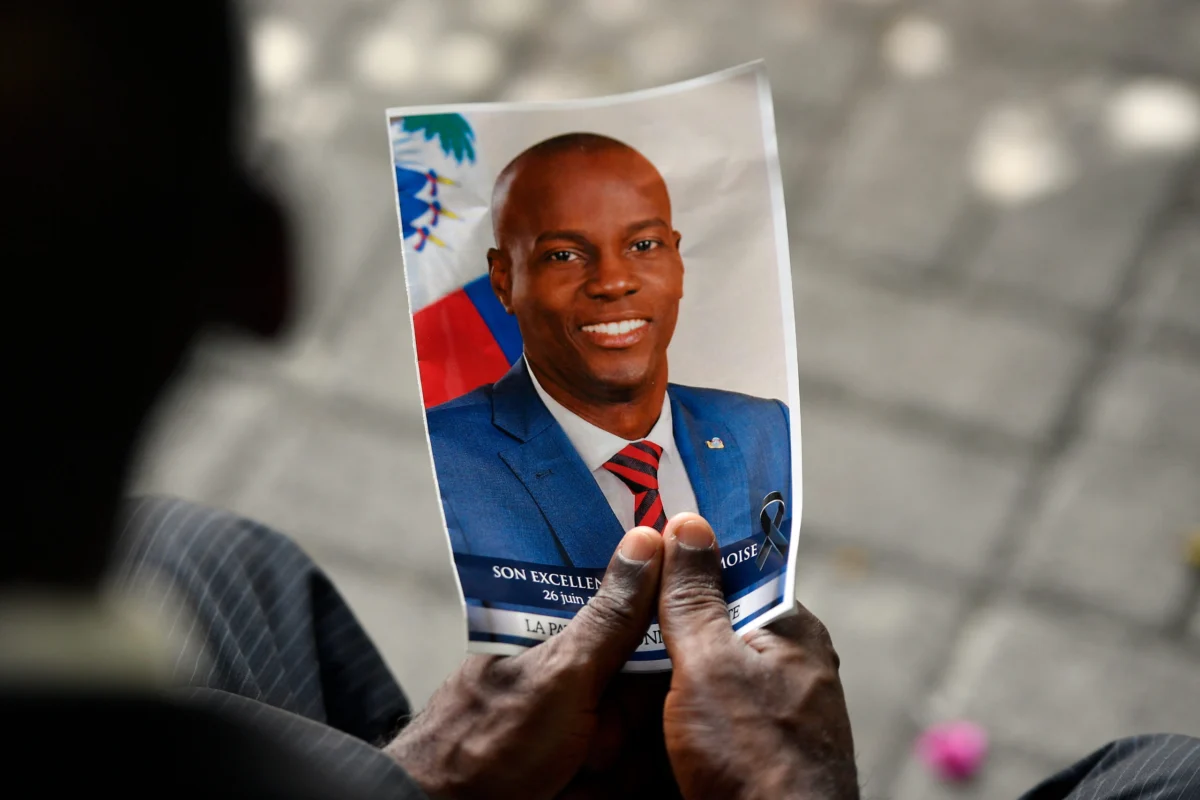
Four individuals have been convicted in the United States for their involvement in the audacious 2021 assassination of Haitian President Jovenel Moïse, a crime that has plunged the Caribbean nation into a deepening political and humanitarian quagmire. Arcangel Pretel Ortiz, Antonio Intriago, Walter Veintemilla, and James Solages were found guilty on Friday of multiple charges, including conspiracy to kill or kidnap Moïse, and providing material support for the plot, in violation of U.S. federal law. The convictions carry a potential maximum sentence of life imprisonment for each of the men.
Prosecutors asserted that the southern district of Florida, geographically proximate to Haiti, served as a critical nexus for the intricate planning and financial orchestration of the assassination. This verdict marks a significant development in the ongoing quest for justice and accountability for the assassination that shattered Haiti’s fragile political landscape, leaving behind a power vacuum that has exacerbated pre-existing security and humanitarian crises.
The trial, which spanned nearly two months, saw the defense present a counter-narrative, arguing that the convicted men were merely scapegoats, ensnared in a conspiracy far larger and more complex than the prosecution presented. Defense attorneys contended that their clients were part of a plan to serve Moïse an arrest warrant, stemming from a contentious dispute over the legitimacy of his continued tenure in office. This legal strategy posited that the involvement of Colombian mercenaries, allegedly hired to accompany Haitian police in executing this warrant, took a tragic and unintended turn. The defense’s argument, as reported by the Miami Herald, suggested that Moïse was killed by his own security forces prior to the mercenaries’ arrival, framing the event as a "Haitian plot, and it is a Haitian conspiracy."
However, U.S. prosecutors countered this assertion by detailing a progression in the plot. They argued that the initial objective of the defendants was to remove and replace President Moïse, but the plan ultimately evolved and escalated to encompass assassination. This narrative suggests a calculated shift in intent, moving from political maneuvering to lethal action.
A fifth defendant, Christian Emmanuel Sanon, a Haitian-born doctor who allegedly harbored ambitions of assuming the presidency in the aftermath of Moïse’s death, is slated for a separate trial at a later date due to reported health complications. Furthermore, eight other individuals have already entered into plea agreements with the U.S. government as part of the broader investigation into the assassination.
The assassination of President Moïse on July 7, 2021, at his private residence in Pétion-Ville, a suburb of Port-au-Prince, sent shockwaves across Haiti and the international community. The 53-year-old president was reportedly shot multiple times, and his wife, Martine Moïse, was also injured in the attack. The perpetrators were described as a commando unit of heavily armed individuals, some of whom were allegedly former Colombian soldiers.
A Chronology of Crisis and Investigation
The assassination triggered an immediate and profound political vacuum in Haiti. The country, already grappling with deep-seated poverty, political instability, and rampant gang violence, found itself further destabilized. No national elections have been held in Haiti since Moïse’s death. In September 2024, a provisional council was appointed with the mandate to organize new elections, a step seen as crucial for restoring democratic order. However, this council has since been superseded by a new political arrangement, with U.S.-backed Prime Minister Alix Didier Fils-Aime now at the helm. Fils-Aime has publicly committed to holding elections by the end of the current year, though the feasibility and timeline remain subjects of intense scrutiny given the prevailing security conditions.
The U.S. Department of Justice has played a pivotal role in the investigation, leveraging its jurisdiction over financial crimes and conspiracies that extend across international borders. The indictments and subsequent convictions highlight the extraterritorial reach of U.S. law and its commitment to pursuing justice in cases involving international implications.
The Lingering Shadow of Instability
The political crisis ignited by Moïse’s assassination has compounded Haiti’s existing humanitarian and security challenges. The United Nations has repeatedly emphasized the critical need for a stable and legitimate government to address the escalating violence and restore order. The nation has been particularly ravaged by natural disasters in recent years, further straining its already limited resources and capacity.
The pervasive insecurity, largely attributed to powerful and increasingly brazen criminal gangs, has led to widespread displacement and suffering. According to recent United Nations reports, at least 8,100 gang-related killings were documented in 2025 alone. This rampant violence has forced approximately 1.5 million people to flee their homes, seeking refuge from the pervasive threat of extortion, kidnapping, and murder. The control exerted by these gangs over significant portions of the territory has crippled essential services and hampered any meaningful efforts towards recovery and development.
International Ramifications and Ongoing Investigations
The assassination of President Moïse has drawn significant international attention, with numerous countries and international organizations calling for a thorough and transparent investigation. While the U.S. convictions represent a significant step, the full scope of the conspiracy and the identities of all those involved remain subjects of ongoing inquiry. Haitian authorities have also been conducting their own investigations, with several individuals arrested and charged within Haiti. However, progress in the Haitian judicial system has been slow, further underscoring the challenges faced by the nation’s institutions.
The complexities of the case involve multiple jurisdictions and a network of actors, making a comprehensive resolution a formidable task. The convictions in the U.S. are likely to exert pressure on Haitian authorities to accelerate their own investigations and bring all perpetrators to justice. The international community’s continued engagement and support will be crucial in ensuring that the quest for accountability does not falter and that Haiti can begin to chart a path towards stability and recovery.
The Broader Context: A Nation in Peril
Jovenel Moïse’s presidency was marked by controversy and widespread protests. He faced accusations of corruption and authoritarianism, with many Haitians questioning the legitimacy of his continued rule. His term was set to expire in February 2022, but he insisted it would end in February 2023, creating a constitutional crisis. This political uncertainty, coupled with the nation’s endemic challenges, created a volatile environment that ultimately proved fatal.
The assassination has not only deprived Haiti of its democratically elected leader but has also intensified the existing turmoil, making the path to political stability and national reconstruction an arduous and uncertain journey. The convictions in the United States offer a measure of justice for the slain president and a glimpse into the intricate web of conspiracy that led to his death, but the ultimate resolution of Haiti’s profound crisis remains a distant and challenging aspiration. The international community, while offering support, faces the delicate task of navigating Haiti’s complex political landscape without imposing external solutions that could further undermine its sovereignty. The focus now shifts to the implementation of credible elections and the establishment of a functional government capable of addressing the urgent needs of its people and reasserting state authority over the territories currently dominated by criminal elements. The legacy of Jovenel Moïse’s assassination continues to cast a long shadow over Haiti, a stark reminder of the deep-seated challenges that continue to plague this vulnerable Caribbean nation.