Ana Megawati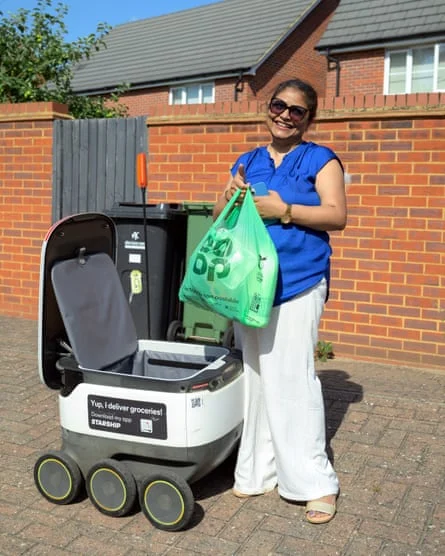
In the planned cityscapes of Milton Keynes, a future once confined to speculative fiction is now an everyday reality. Picture a sweltering summer’s day, the sun beating down on an endless grid of roundabouts, and the only visible bustle comes from a fleet of six-wheeled autonomous robots, diligently navigating grassy pavements, deftly avoiding obstacles, and hurrying towards their next delivery destination. This isn’t a dystopian vision but a typical Thursday in Buckinghamshire’s most distinctive city, a place that has quietly become a global testbed for autonomous last-mile delivery.
These compact, white robots, designed and operated by Starship Technologies, have been an integral part of Milton Keynes’ urban fabric since 2018. The city, renowned as the UK’s largest new town and a perennial fascination for urban planning enthusiasts due to its American-influenced layout and post-war genesis, offered an ideal environment for their introduction. Its wide, segregated pedestrian pathways and relatively low traffic density provided a conducive setting for the nascent technology to prove its viability. Initially perceived as a novelty, these automated couriers have steadily integrated into daily life, transforming how residents access essentials and signaling a potentially seismic shift in urban logistics across the United Kingdom and beyond.
The Genesis of Robotic Deliveries in the UK
Starship Technologies, an Estonian-American company, chose Milton Keynes as one of its pioneering locations due to its unique infrastructure. The city, founded in 1967, was designed with a distinctive grid road system and extensive network of "redways" – dedicated paths for cyclists and pedestrians – which inadvertently created an almost perfect sandbox for autonomous ground vehicles. This pre-existing infrastructure minimized potential conflicts with vehicular traffic and provided clear, predictable routes for the robots to learn and operate within.
The robots themselves are relatively small, weighing around 38kg when empty, and are equipped with a sophisticated array of sensors, including cameras, ultrasonic sensors, radar, and GPS, all powered by advanced artificial intelligence. This allows them to perceive their surroundings in 360 degrees, detect obstacles, and navigate safely at pedestrian speeds, typically around 4 miles per hour (6.5 kph). Their integration into the local community was facilitated by partnerships with major retailers, most notably the Co-op, allowing residents to order groceries and household items for rapid, contactless delivery directly to their doorsteps.

Following their successful deployment in Milton Keynes, Starship robots have gradually expanded their footprint to other UK cities. Wakefield and Leeds have seen limited trials, while the food delivery giant Just Eat has also introduced them in Bristol, further demonstrating the growing interest in leveraging autonomous solutions for urban logistics. The momentum is building, with strong murmurs from within government circles suggesting that delivery robots could soon receive national approval for widespread pavement traversal under new legislation concerning micromobility vehicles. This move would represent a significant regulatory leap, potentially paving the way for these robotic couriers to become a familiar sight in towns and cities across the entire country.
A First-Hand Encounter with the Future
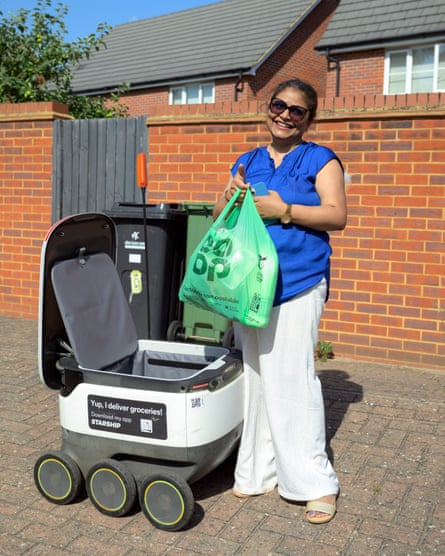
To gauge the practical efficacy and public acceptance of these autonomous couriers, a recent observation tracked a delivery to Amrita Singh, a 46-year-old project manager in Milton Keynes. Singh, a frequent user of the service, described her experience as "wonderful" and "very useful," particularly when her husband is away and she is managing her children alone. The convenience of having groceries delivered directly to her home, bypassing a trip to the supermarket, underscores a key benefit for busy families and individuals with mobility constraints.
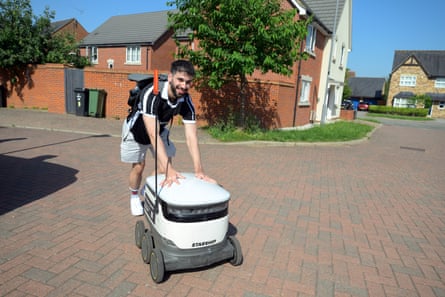
The delivery process commenced with an online order, after which items were swiftly loaded into a Starship robot at a local Co-op. Adorned with a small flagpole for enhanced visibility, the robot set off on its journey. The reporter, attempting to keep pace on foot, found the robot surprisingly agile. Despite a brisk walk in trainers, the robot consistently pulled ahead. The challenging conditions of a scorching 34C day, the hottest of the year so far, added another layer to the observation, highlighting the robot’s resilience to extreme weather that might deter human couriers.
The robot’s navigation system proved its mettle throughout the journey. Its array of sensors and AI allowed it to meticulously stop and readjust for perceived obstacles, demonstrating a cautious and intelligent approach to urban navigation. It ventured carefully through pedestrian crossings, politely dodged oncoming pedestrians – including a mother with a pram and two children – patiently waiting for them to pass before resuming its path. The journey, which Google Maps estimated would take seven minutes on foot, was completed by the robot in a swift five minutes, slightly faster than walking but a little longer than a three-minute bicycle ride. This efficiency, combined with the hands-free convenience, illustrates the appeal of the service. Upon arrival, Singh collected her shopping, reiterating, "It’s a very good gadget for people who are not able to go out of the house due to illness or because of the kids."
However, the experience was not entirely without its minor hitches. After the delivery, the robot remained stationary outside Singh’s home, the app failing to register the completion of the order. The reporter’s attempt to manually move the 38kg robot to trigger its return proved futile, highlighting a potential area for system refinement. A customer service agent was alerted to the error, indicating the ongoing need for human oversight and intervention in certain scenarios. Despite these "teething issues," Singh’s initial "amazement" when the robots first arrived in Milton Keynes, prompting her to send photos to her family in India, speaks volumes about their novelty and positive impact.
Public Perception and Emerging Concerns
The widespread adoption of autonomous delivery robots, while lauded for its convenience, has also sparked important conversations regarding public safety and the equitable use of public spaces. While residents like Amrita Singh and George Donmar embrace the technology, disability and pedestrian safety charities have voiced significant concerns.
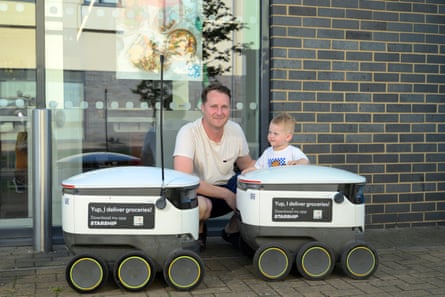
George Donmar, 38, a housebuilder who moved to Milton Keynes in 2018, vividly remembers his initial impression of the robots, posting on Facebook, "Welcome to the city of the future: Milton Keynes." He extensively used the service during the Covid-19 lockdowns, finding it invaluable. His two sons, aged seven and one, share his enthusiasm, often getting excited when they spot a robot, with his toddler, Liam, even chasing after one. However, Donmar remains skeptical about the robots’ suitability for denser urban environments like London, citing "too crowded" streets and the potential for vandalism. "The streets here are wide like they are in America," he observes, expressing worry that in less "genteel" settings, the robots "will be damaged all the time. People will do it for fun because, sadly, it’s human nature."
These concerns are echoed and amplified by advocacy groups. In 2019, the University of Pittsburgh temporarily halted testing of Starship robots after a doctoral student using a wheelchair reported being "trapped" by one that obstructed her access to an accessible ramp. Catherine Woodhead, the chief executive of Living Streets, a UK charity advocating for everyday walking, has been particularly vocal. She asserts that these robots are "causing chaos for pedestrians despite having no clear laws for their use" and labels them "dangerous" for vulnerable groups, including older individuals, disabled people, those who are blind or partially sighted, and parents navigating with buggies. Her firm stance, "Pavements are for people," encapsulates the sentiment that pedestrian spaces should prioritize human movement and safety above all else.
Starship Technologies has responded to these criticisms, with Lisa Johnson, head of public affairs, previously stating to the BBC that the robots are programmed to "recognise" mobility devices like wheelchairs or scooters and would "get out of the way." In instances where autonomous avoidance isn’t possible, a "human backup" system is in place, allowing remote operators to intervene and manually guide the robot. This blend of AI and human oversight is crucial for addressing complex, unforeseen scenarios and mitigating risks.
Beyond safety, the issue of vandalism, as raised by Donmar, is a tangible problem. Stacey Cordes, a 38-year-old department store worker in Milton Keynes, acknowledges the practical utility of the robots, particularly for those who "can’t drive around or walk two minutes to the shop." She uses them for urgent needs, especially when "Mother Nature turns up" and she’s short of "female products." While generally reliable, she also notes occasional operational glitches, such as a robot parking on the grass opposite her house. Crucially, Cordes highlights the vulnerability of the robots: "They’re really good when the kids aren’t beating them up and chucking them in rivers." Her plea for respectful treatment – "The more people look after them, the more people can use them" – underscores the societal responsibility that comes with integrating new technologies into public spaces.
Broader Implications and the Path Forward
The experience of Milton Keynes with autonomous delivery robots offers a microcosm of the opportunities and challenges inherent in the wider adoption of this technology. The implications span economic, environmental, and societal domains, demanding careful consideration as the UK government contemplates national legislation.
From an economic perspective, autonomous deliveries promise increased efficiency and reduced operational costs for businesses. For consumers, they offer unparalleled convenience, particularly benefiting those with limited mobility or time constraints. However, the potential for job displacement among traditional delivery drivers is a significant concern, requiring strategies for workforce retraining and the creation of new roles in robot maintenance, remote operation, and technical support. The "gig economy" might evolve to include "robot wranglers" or remote supervisors, suggesting a shift in the nature of logistics employment rather than outright elimination.
Environmentally, these electric-powered robots offer a cleaner alternative to fossil fuel-dependent delivery vans, contributing to reduced carbon emissions and improved urban air quality. This aligns with broader sustainability goals and efforts to decarbonize urban transportation networks. The reduction in traffic congestion from fewer delivery vehicles on the roads is another potential benefit, particularly in densely populated areas.
Urban planning faces the challenge of integrating these new forms of micromobility seamlessly into existing infrastructure. While Milton Keynes’ wide pavements are an advantage, other cities may need to adapt their public spaces to safely accommodate both pedestrians and robots. This could involve designated robot lanes, intelligent traffic management systems, and clear guidelines for interaction at shared spaces. The current debate around the government’s proposed micromobility laws is critical here, as it will define safety standards, operational protocols, liability frameworks, and enforcement mechanisms, all of which are essential for harmonious coexistence.
Societal acceptance remains a crucial variable. While Milton Keynes residents have largely embraced the robots, the novelty factor may wear off, and challenges like vandalism or perceived encroachment on pedestrian space could become more pronounced in diverse urban contexts. Education campaigns and community engagement will be vital to fostering a culture of respect and understanding towards these autonomous helpers.
Technologically, the continuous advancement of AI, sensor capabilities, battery life, and fleet management systems will further enhance the robots’ performance, reliability, and range. As the technology matures, the "teething issues" observed will likely diminish, making the service even more robust and user-friendly.
Milton Keynes, with its pioneering spirit and unique urban design, serves as an invaluable "living laboratory" for the future of smart cities. The insights gained from its years of operation with Starship robots are instrumental in shaping policy, technology development, and public discourse around autonomous urban logistics. As the UK stands on the cusp of potentially approving nationwide deployment, the lessons from this Buckinghamshire city underscore a pivotal moment: balancing the transformative potential of innovation with the imperative of ensuring safety, equity, and public good in our evolving urban landscapes. The humble delivery robot, once a sci-fi fantasy, is now a tangible harbinger of how our cities might function in the decades to come.