Jono Maryono
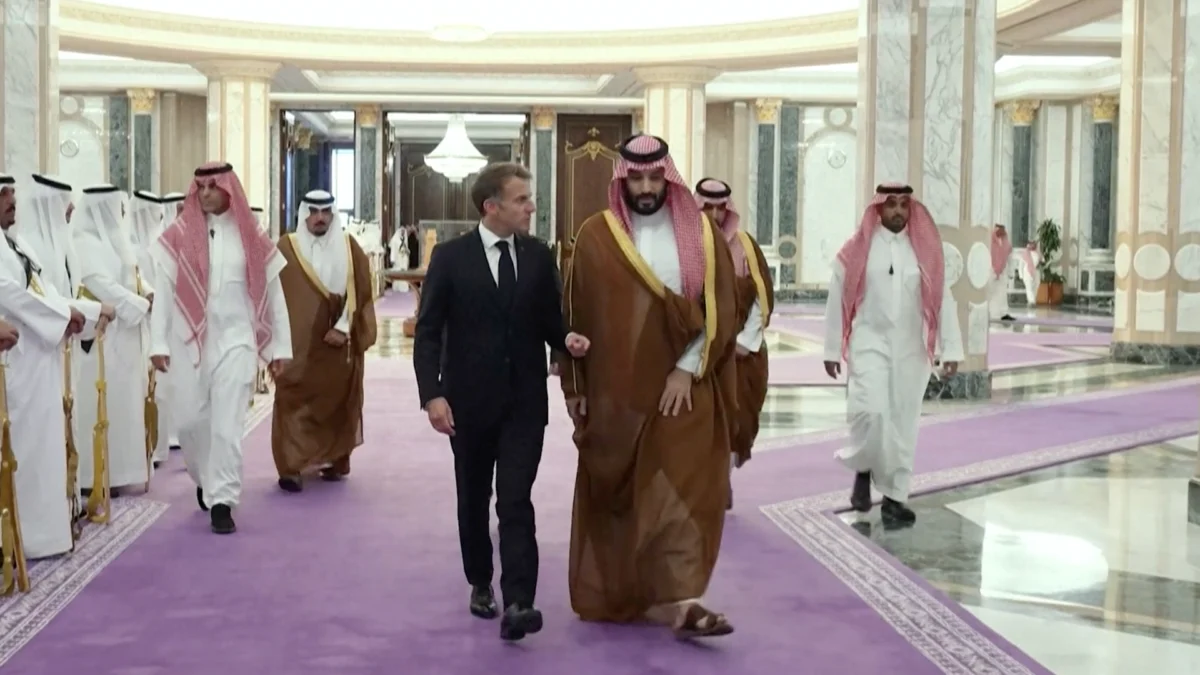
French President Emmanuel Macron arrived in Riyadh on Tuesday for an unannounced, high-stakes meeting with Saudi Crown Prince Mohammed bin Salman, underscoring Paris’s commitment to Gulf security as the Kingdom faces a persistent wave of cross-border attacks from Yemen’s Iran-backed Houthi movement. The surprise visit, which was inserted into the final leg of Macron’s broader regional diplomatic tour, highlights the growing urgency among Western powers to bolster alliances in the Middle East in the face of escalating maritime and aerial threats.
The encounter between the French leader and the Saudi de facto ruler took place behind closed doors at a royal palace in the Saudi capital. According to diplomatic sources familiar with the itinerary, the talks focused heavily on regional stability, defense cooperation, and the protection of critical infrastructure in the Arabian Peninsula. The visit serves as a tangible demonstration of French solidarity with Riyadh, coming at a time when commercial shipping, energy facilities, and population centers in Saudi Arabia have increasingly found themselves in the crosshairs of precision drone and missile strikes launched from neighboring Yemen.
Geopolitical Background and the Houthi Threat
To fully understand the weight of President Macron’s impromptu diplomatic maneuver, one must examine the deteriorating security landscape of the southern Arabian Peninsula and the broader Gulf region. For over a decade, Yemen has been locked in a devastating civil conflict that has drawn in regional and international powers. The Houthis, officially known as Ansar Allah, seized control of the Yemeni capital, Sanaa, in late 2014, prompting a Saudi-led military coalition to intervene the following year to restore the internationally recognized government.
Although formal frontline combat inside Yemen has subsided significantly in recent years due to fragile truces and ongoing behind-the-scenes peace negotiations mediated by Oman and the United Nations, the threat vector posed by the Houthis has evolved. Taking advantage of the broader geopolitical instability triggered by the Israel-Hamas war and regional friction involving Iran, the Houthi movement has expanded its operational horizons. Beyond launching intermittent ballistic missiles and loitering munitions toward southern Saudi cities and critical oil installations, the group has engaged in a sustained campaign targeting international shipping lanes in the Red Sea and the Bab el-Mandeb strait.
These actions have not only disrupted global supply chains and forced major container shipping companies to reroute vessels around the Cape of Good Hope, but they have also directly threatened the national security of Gulf Cooperation Council (GCC) member states. Saudi Arabia, sharing a long and porous southern border with Yemen, remains a primary target for retaliatory strikes. The intensification of these attacks has created an anxious environment in Riyadh, Abu Dhabi, and other regional capitals, prompting renewed calls for robust, reliable deterrence and advanced air defense coordination with international partners like France, the United States, and the United Kingdom.
Chronology of Diplomatic Engagements and Regional Tour
President Macron’s visit to Saudi Arabia did not occur in a vacuum; it was the culmination of an intensive multi-nation diplomatic tour designed to project French influence and safeguard European economic and security interests in the Middle East.
- Early October 2026: Preparations begin for President Macron’s autumn diplomatic itinerary, originally slated to focus on bilateral trade, green energy partnerships, and cultural exchanges with several key Gulf nations.
- Mid-October 2026: Security briefings in Paris highlight a sharp uptick in Houthi kinetic activity targeting critical infrastructure and maritime traffic near the southern approaches to the Red Sea, prompting French national security advisors to recommend a recalibration of the president’s schedule.
- October 18, 2026: President Macron departs Paris for the Gulf, holding initial bilateral meetings in the United Arab Emirates regarding regional security architecture and technological collaboration.
- October 20, 2026: Intelligence reports confirm a series of intercepted aerial threats over Saudi territory, heightening the urgency for direct high-level consultations between Paris and Riyadh.
- October 21, 2026: President Macron’s aircraft makes an unannounced diversion to Riyadh. He is officially received by Crown Prince Mohammed bin Salman, where the two leaders hold extensive talks regarding defense commitments, intelligence sharing, and regional de-escalation strategies.
Supporting Data and Defense Cooperation
France and Saudi Arabia share a long-standing strategic partnership rooted heavily in defense procurement, industrial collaboration, and intelligence sharing. Over the past decade, bilateral trade between the two nations has flourished, with military equipment remaining a cornerstone of the relationship.
Statistical indicators underscore the depth of this defense matrix:
- Arms Sales: France remains one of the top defense exporters to Saudi Arabia, supplying sophisticated naval vessels, land combat systems, and advanced radar technology designed to detect and neutralize low-flying asymmetric threats.
- Air Defense Integration: In the wake of previous high-profile drone and missile attacks on Saudi oil facilities—most notably the September 2019 strikes on Abqaiq and Khurais—Paris has provided technical advisory support and specialized electronic warfare expertise to help harden Saudi critical infrastructure against aerial incursions.
- Naval Presence: The French Navy maintains a permanent presence in the region through its participation in European-led maritime security initiatives, such as Operation AGENOR in the Strait of Hormuz, and frequently conducts joint bilateral naval exercises with the Royal Saudi Naval Forces to ensure freedom of navigation.
During the October 21 meeting, discussions reportedly centered on enhancing the speed and efficacy of intelligence sharing concerning Houthi supply chains, particularly regarding the clandestine transfer of missile components and drone technology from external sponsors to Yemeni ports.
Official Reactions and Diplomatic Posture
Official readouts from both the Élysée Palace and the Saudi Press Agency following the meeting emphasized the mutual commitment of France and Saudi Arabia to upholding regional stability, international law, and the security of maritime routes.
A senior French diplomat, speaking on the condition of anonymity due to the sensitive nature of the discussions, noted that President Macron’s decision to visit Riyadh unannounced was intended to send an unambiguous signal to both allies and adversaries alike. "France stands shoulder-to-shoulder with Saudi Arabia in the face of indiscriminate attacks that threaten civilian lives, regional economic prosperity, and global commerce," the official stated. "Our commitment to the security of our partners in the Gulf is absolute and unwavering."
From the Saudi perspective, Crown Prince Mohammed bin Salman welcomed the French president’s gesture of solidarity. Riyadh has consistently maintained that international actors must take a more proactive and unified stance against state-sponsored non-state actors who destabilize the Middle East. Saudi state media highlighted that the talks also touched upon broader diplomatic efforts to reach a sustainable, permanent political solution to the conflict in Yemen, ensuring that the country cannot once again become a staging ground for transnational terrorism or regional aggression.
Broader Impact and Strategic Implications
The unannounced summit in Riyadh carries significant implications for European foreign policy, Gulf security dynamics, and the broader geopolitical balance in the Middle East.
First, the visit demonstrates Europe’s ongoing strategic relevance in a region where the United States has increasingly sought to balance its commitments between the Middle East, the Indo-Pacific, and European defense architecture. While Washington remains the primary security guarantor for the Gulf, European powers like France are carving out distinct, complementary roles through tailored defense partnerships, industrial cooperation, and robust diplomatic engagement. By projecting military reliability and political support, Paris helps reassure its partners that European nations are dependable stakeholders in Middle Eastern security.
Second, the timing of the visit underscores the indivisibility of European and Middle Eastern security. The disruption of Red Sea shipping routes directly impacts European economies through increased freight costs, delayed supply chains, and inflationary pressures on energy and consumer goods. By coordinating closely with Riyadh to counter Houthi aggression, France is proactively defending its own economic interests while simultaneously strengthening the defensive posture of a key regional ally.
Finally, the meeting serves as a reminder of the complex diplomatic balancing act required in contemporary international relations. As Saudi Arabia pursues a more independent, multi-aligned foreign policy—fostering diplomatic ties with traditional Western allies while concurrently normalizing relations with regional powers like Iran and engaging with emerging economies—Western nations must adapt their diplomatic strategies. Macron’s pragmatic, face-to-face diplomacy illustrates an evolving recognition in Western capitals that long-term stability in the Middle East cannot be achieved through distance or neglect, but rather through continuous, high-level engagement and mutual respect for security concerns.
As the security situation in Yemen and the Red Sea basin continues to evolve, the understandings reached between President Macron and Crown Prince Mohammed bin Salman during their brief yet consequential summit in Riyadh are expected to shape Franco-Saudi defense coordination and broader Western-Gulf diplomatic strategies for the foreseeable future.