Jono Maryono
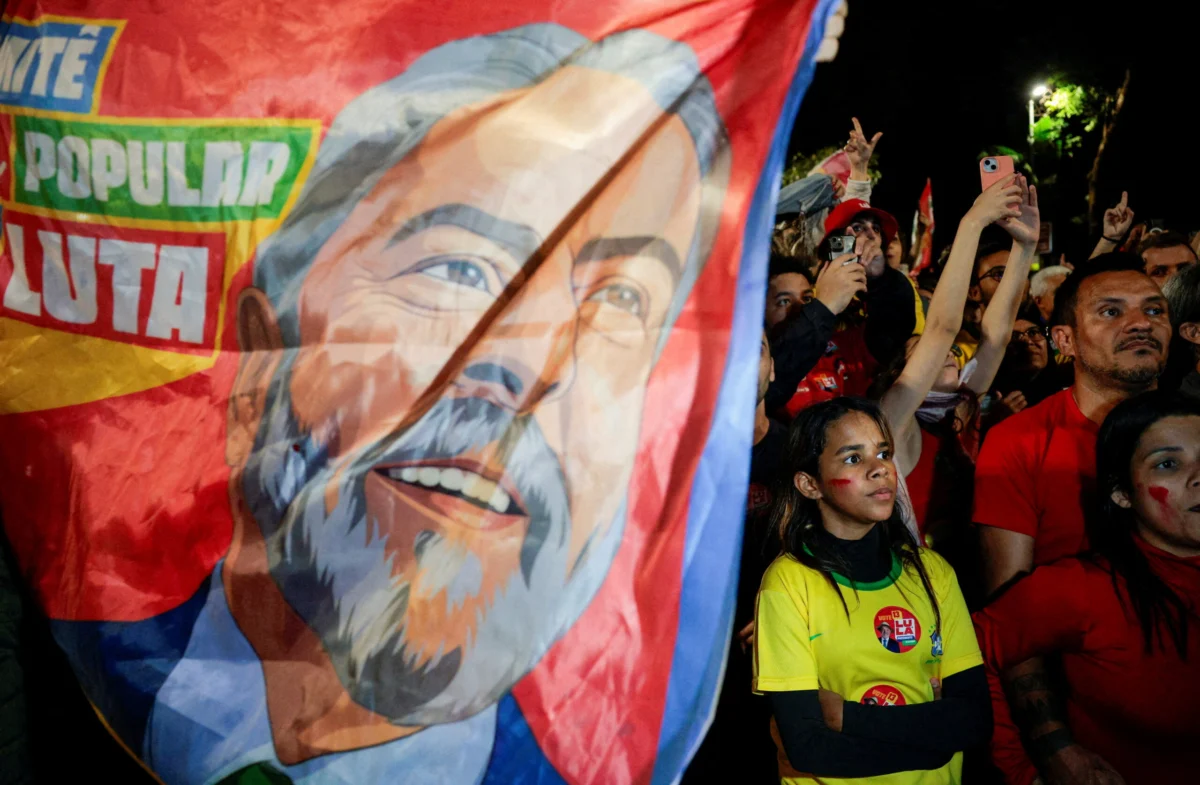
The unexpected and historic election victory of Luiz Inácio Lula da Silva in Brazil has sent shockwaves of optimism across the Global South, securing an unprecedented fourth term for the veteran leader. Erupting in nationwide celebrations among his supporters, the electoral outcome has far-reaching geopolitical implications, particularly for the BRICS economic alliance. Comprising Brazil, Russia, India, China, South Africa, Iran, and the United Arab Emirates, the bloc has long championed the restructuring of a world order heavily dominated by Western institutions. Lula’s return to power averts what could have been a critical fracture within the organization at a time when the United States, under the leadership of President Donald Trump, is aggressively moving to consolidate American financial and political dominance.
Background and Context of the 2026 Brazilian Presidential Election
The stakes of the 2026 presidential race in Brazil extended far beyond domestic economic and social policy, drawing intense scrutiny from international capitals in Washington, Beijing, and Moscow. Lula’s primary challenger, Flavio Bolsonaro—representing the conservative political machine of his father, former President Jair Bolsonaro—campaigned on a platform heavily aligned with Washington’s foreign policy objectives. A victory for the younger Bolsonaro would have signaled a sharp pivot in Brazilian foreign policy away from multilateral institutions like BRICS and toward a transactional, bilateral alignment with the United States.
Political analysts noted that Jair Bolsonaro’s historical administration closely mirrored the protectionist and nationalist tenets of the Trump administration. Had Flavio Bolsonaro succeeded in securing the presidency, he had signaled an intent to reassess Brazil’s foundational memberships, potentially paralyzing internal BRICS consensus-building mechanisms. By preserving Brazil’s role as a founding and stabilizing member of the bloc, Lula’s victory ensures policy continuity, enabling the grouping to proceed uninterrupted with its long-term agenda of advancing economic multipolarity and reforming global financial governance.
Chronology of Key Events Leading to the Re-Election
The trajectory toward Lula’s landmark victory and its intersection with global diplomacy unfolded across several key milestones:
- October 2023: Brazil and China establish landmark bilateral trade agreements, committing to settle significant portions of commercial exchange directly in local currencies—the Brazilian real and the Chinese yuan—bypassing the US dollar.
- September 2026: The annual BRICS summit convenes in New Delhi, India. During the high-level meetings, member states formally set aside proposals for a unified single BRICS currency, choosing instead to prioritize the expansion of local currency trade and the strengthening of internal payment infrastructures.
- October 1, 2026: Amid escalating global trade tensions, India under Prime Minister Narendra Modi openly challenges United States tariff policies, signaling a broader international trend toward strategic autonomy.
- October 26, 2026: Brazilian voters head to the polls, delivering a surprise electoral triumph to Luiz Inácio Lula da Silva, who secures an unprecedented fourth term and successfully fends off the far-right challenge mounted by Flavio Bolsonaro.
Geopolitical Analysis: Navigating a Multipolar World
The jubilant response across emerging economies to Lula’s re-election underscores a growing anxiety regarding the vulnerability of developing nations to unilateral economic policies originating in Washington. Esmat Zaidan, a professor of public policy at Hamad Bin Khalifa University in Qatar, emphasizes that emerging nations are not necessarily driven by adversarial hostility toward the United States. Instead, they seek strategic breathing room and immunity from excessive economic dependence on a single superpower.
"The victory of Lula is important to BRICS’ political continuation in the current climate as it seeks to increase the bloc’s role and make it stronger in global governance," Zaidan told international media. He noted that the fundamental appeal of coalitions like BRICS lies in their capacity to expand diplomatic and economic options for member states rather than serving merely as an anti-Western friction point.
This sentiment is echoed by Imran Khalid, a geostrategic analyst and senior fellow at Foreign Policy in Focus. Khalid points out that the operational framework of BRICS relies entirely on consensus, meaning that a single unwilling founding member can severely decelerate cooperative initiatives from within.
"BRICS makes decisions by consensus, so one unwilling founding member can slow everything down from the inside. That was the real risk, more than Brazil walking out," Khalid explained. Furthermore, reports indicated that a Bolsonaro administration had extended assurances to the US Trade Representative that Brazil’s domestic instant payment ecosystem, Pix, would remain strictly separated from non-Western financial rails, thereby protecting the global supremacy of the US dollar. Lula’s return neutralizes this potential internal roadblock.
Internal Heterogeneity and Divergent Interests
Despite the political reassurance provided by Lula’s continued leadership, geopolitical experts caution against overestimating the internal cohesion of the BRICS alliance. Guy Burton, a prominent geopolitical and policy analyst, observes that the coalition remains an association of convenience characterized by vast ideological, economic, and strategic divergences among its members.
"BRICS matters because it represents a large share of the world’s population, economy, and trade. But it has never really acted as a political unit. Its members are too different," Burton stated. He pointed to the inclusion of Iran and the United Arab Emirates—countries situated on opposing sides of regional military engagements—as clear evidence of the bloc’s limited political integration.
Furthermore, member states maintain deep-seated economic and defense relationships with Western powers. India, under Prime Minister Narendra Modi, has historically maintained a robust partnership with Washington despite recent friction over tariffs. Similarly, Brazil under the prior Bolsonaro administration operated in close diplomatic harmony with the White House. Consequently, experts view BRICS not as a monolithic anti-Western military or political counterweight, but rather as an evolving platform for strategic autonomy.
Challenging Dollar Dependence Through Practical Financial Integration
One of the most ambitious long-term objectives pursued by the BRICS alliance is the reduction of reliance on the US dollar in international trade. While the bloc abandoned plans for a shared supranational currency during its September summit in New Delhi, member nations have aggressively advanced practical mechanisms to facilitate bilateral transactions in local currencies.
Lula’s electoral victory provides the necessary political momentum to accelerate these initiatives, given Brazil’s status as one of the preeminent trading economies within the Southern Hemisphere. Imran Khalid highlights that incremental measures—such as the BRICS New Development Bank scaling its lending targets in local currencies and the deepening bilateral trade agreements between Brazil and China—effectively erode dollar dominance without provoking a direct diplomatic confrontation with Washington.
However, financial experts temper these ambitions with practical realities. Esmat Zaidan notes that political will alone cannot displace the entrenched architecture of global finance. Reliable payment infrastructure, sufficient currency liquidity, robust financial regulations, and widespread commercial adoption by private enterprises are prerequisites that require years, if not decades, to mature. Guy Burton estimates that while structural shifts are underway, the US dollar will likely retain its preeminent status in foreign exchange transactions for the foreseeable future.
Broader Global Implications and Future Outlook
The convergence of Lula da Silva’s re-election, shifting alliances across the Global South, and the protectionist trade policies of the Trump administration signals a permanent transition toward a genuinely multipolar international order. Even traditional Western allies, such as European nations forced to navigate complex security architecture regarding Ukraine and Russia, have increasingly accepted the necessity of pursuing independent national interests.
As Washington weighs its strategy to maintain global hegemony against domestic pressures for an isolationist, "America First" foreign policy, the reinforced presence of Brazil within the BRICS framework introduces new variables into international relations. The enduring appeal of strategic autonomy among emerging economies ensures that multilateral institutions will continue to evolve, reshaping global trade, financial governance, and diplomatic norms for years to come.