Jono Maryono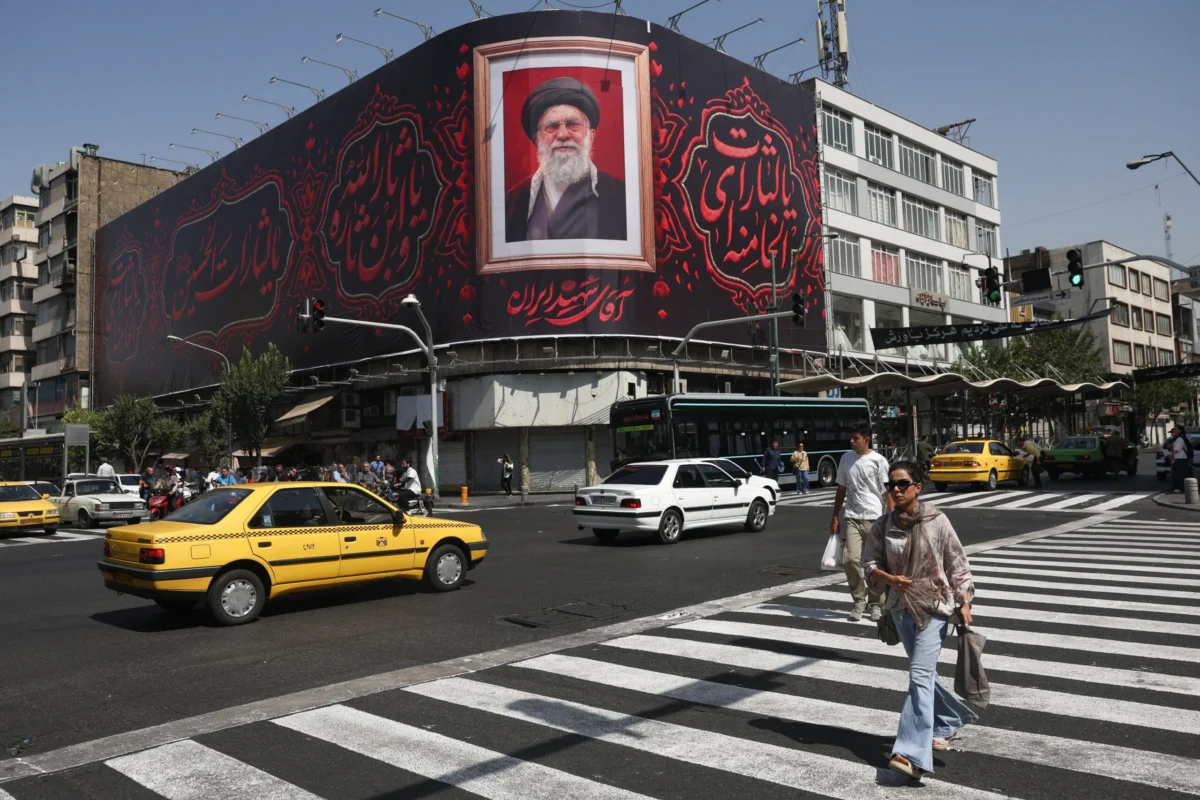
Air raid sirens have blared across Gulf nations as the United States and Iran have once again launched expansive attacks against each other, marking a significant escalation of tensions as their fragile ceasefire, brokered just months prior, has dramatically unraveled over the past week. The renewed hostilities have sent shockwaves through global markets, with oil prices spiking and financial exchanges plunging after Tehran strategically shut down the Strait of Hormuz, a critical global energy chokepoint and a flashpoint in the ongoing, increasingly volatile conflict.
The dramatic turn of events was precipitated by stark pronouncements from both sides. Following U.S. President Donald Trump’s declaration that the April ceasefire agreement was effectively "over," Iranian Supreme Leader Mojtaba Khamenei responded with a defiant statement: "Revenge is the will of the nation." These words signal a clear intent to retaliate, raising grave concerns about whether the United States and Iran are indeed back on the precipice of full-fledged war, or if the current exchange represents a calculated escalation within a confined theater.
The current conflagration stems from a rapid deterioration of the ceasefire that had been painstakingly negotiated in April. The initial breach occurred on July 6, when Iran’s Islamic Revolutionary Guard Corps (IRGC) conducted attacks on three commercial vessels, notably including a Qatari liquefied natural gas tanker, in waters off the coast of Oman. This act of aggression was swiftly met by the U.S., which, on July 7, announced retaliatory strikes targeting Iranian military installations. Tehran’s response was immediate and forceful, unleashing a barrage of missile and drone attacks on military bases across the Gulf region where U.S. forces are stationed.
The situation intensified dramatically on Wednesday, July 10, when President Trump officially declared the ceasefire defunct. In a strategic move that immediately impacted global commerce and security, the IRGC announced the closure of the Strait of Hormuz. Their stated justification was that the U.S. was actively interfering with the waterway’s management by facilitating alternative transit routes, a claim vehemently denied by Washington. This closure triggered a renewed cycle of tit-for-tat attacks, with the U.S. reportedly carrying out deadly strikes on multiple Iranian cities, many situated along the strategically vital Strait of Hormuz in southern Iran. Iran, in turn, has retaliated with attacks targeting Bahrain, Kuwait, Oman, Jordan, and Qatar, and has intensified its assaults on shipping within the Strait of Hormuz itself.

The Unraveling Ceasefire: A Chronology of Escalation
The breakdown of the April ceasefire was not a sudden event but a culmination of escalating provocations and a series of miscalculations. Understanding the sequence of events is crucial to grasping the current perilous state of affairs:
- April 7, 2026: A ceasefire agreement is reached between the United States and Iran, mediated by Pakistan and Qatar, aiming to de-escalate tensions following months of escalating hostilities.
- February 28, 2026: The initial phase of the U.S.-Iran war begins. The U.S. and Israel launch a broad, sustained air campaign across Iranian cities. Supreme Leader Ali Khamenei is reportedly killed in Tehran on the first day of this offensive.
- March 2026: The war intensifies. A U.S. strike on a school in Minab, Iran, kills 168 children. Iranian missiles and drones target Dubai’s skyline, striking the Fairmont The Palm luxury hotel and causing debris to fall near the Burj Khalifa and Dubai Marina. U.S. and Israeli forces strike Iran’s energy facilities, prompting Iranian retaliation against oil and gas installations across the Gulf. Several regional airports suspend operations.
- June 2026: A Memorandum of Understanding (MoU) is signed between the U.S. and Iran, brokered by Islamabad, mandating the cessation of hostilities on all fronts. Beirut also enters into a separate ceasefire with Israel, requiring Israeli withdrawal from occupied southern Lebanese territories.
- July 6, 2026: The IRGC attacks three commercial vessels, including a Qatari LNG tanker, off the coast of Oman, violating the spirit and letter of the MoU.
- July 7, 2026: The U.S. conducts retaliatory strikes on Iranian military targets. Iran responds with missile and drone attacks on U.S. military bases in the Gulf.
- July 10, 2026 (Wednesday): U.S. President Donald Trump publicly declares the April ceasefire "over."
- July 10, 2026 (Later): The IRGC announces the closure of the Strait of Hormuz.
- July 11, 2026: The U.S. military’s Central Command reports carrying out strikes on Iranian military targets.
- July 12-13, 2026 (Current reporting period): Air raid sirens sound across Gulf nations. U.S. and Iran engage in expansive attacks against each other. Oil prices surge, and markets plunge.
Shifting Battlefield: Are the US and Iran Back to All-Out War?
Analysts suggest that the current conflict is evolving from a series of tit-for-tat exchanges to a more sustained, albeit geographically limited, combat engagement. While the initial U.S. offensive in late February and March of 2026 was characterized by a broad and sustained air campaign across numerous Iranian cities, the current round of strikes appears to be largely concentrated around the critical Strait of Hormuz. Similarly, Iranian counterattacks have primarily focused on military installations utilized by U.S. forces in the Gulf, although collateral damage from intercepted projectiles has resulted in injuries elsewhere.
A significant departure from the earlier conflict is the apparent restraint shown by both sides in targeting civilian infrastructure or critical energy facilities. This is a stark contrast to the March offensives, which saw devastating impacts on civilian populations, such as the tragic strike on a school in Minab, and significant damage to energy infrastructure. The current fighting appears to be more strategically focused on coercing the opposing side to de-escalate or concede on the issue of the Strait of Hormuz.
Furthermore, unlike the intense early months of the war, both the U.S. and Iran are reportedly still maintaining channels of communication and have not entirely ruled out diplomatic engagement. President Trump, even in announcing the ceasefire’s end, noted that talks would continue. Behind the scenes, Qatar and Pakistan are actively working to contain the burgeoning conflict, leveraging their diplomatic ties with both nations.
The domestic political landscape in the U.S. also presents a complex backdrop. President Trump faces increased scrutiny regarding his administration’s conduct of the war, particularly concerning the potential need for renewed congressional authorization. The War Powers Act mandates such authorization within 60 days of hostilities commencing. Trump’s administration previously circumvented this by asserting the war had been "terminated" when the April ceasefire began, falling within the 60-day window of the initial phase. The ongoing unpopularity of the war with the American public, coupled with dissatisfaction over his administration’s handling of inflation and soaring oil prices, poses significant political challenges for President Trump as he navigates this renewed military confrontation.

Key Differences from the March Conflict
The current phase of the U.S.-Iran conflict exhibits several critical differences from the intense fighting witnessed in February and March of 2026:
Targets: A Difference in Scale and Type
During the early stages of the war, the conflict shattered the perception of regional commercial hubs being insulated from major conflict. A U.S. strike on a school in Minab, Iran, resulted in the tragic deaths of 168 children. Iran responded with missiles and drones that targeted Dubai’s iconic skyline, causing a fire at the Fairmont The Palm luxury hotel and scattering debris near the Burj Khalifa and Dubai Marina. The U.S. and Israel had claimed strategic objectives that included degrading Iran’s military and command structure and denuclearization.
In stark contrast, the current round of fighting has seen a notable degree of restraint. The U.S. and Iran have largely avoided targeting civilian populations or critical energy infrastructure. The focus appears to have narrowed, with both sides aiming to pressure the other regarding control and access to the Strait of Hormuz, rather than pursuing broad strategic objectives like regime change or denuclearization, which were more prominent earlier in the conflict.
Israel’s Role: A Diminished Open Involvement
A significant divergence in the current phase is the absence of overt, open participation by Israel alongside the United States in attacks against Iran. During the initial war, Israel was a principal party to the conflict. At one point, U.S. Secretary of State Marco Rubio indicated that the Israeli government under Prime Minister Benjamin Netanyahu had compelled Washington to initiate the war, a claim President Trump denied.
The Memorandum of Understanding (MoU) reached in June between the U.S. and Iran mandated an end to hostilities on all fronts, including Lebanon. Beirut also entered into a separate ceasefire with Israel, stipulating Israeli withdrawal from occupied territories in southern Lebanon. However, Israel has been accused of not fully adhering to these agreements, continuing sporadic, though less frequent, attacks in southern Lebanon. This subdued role for Israel in the current escalations suggests a potential recalibration of regional alliances or a strategic decision to limit the scope of direct involvement.

The Islamabad MoU: A Framework Under Strain
Despite its acknowledged "glaring gaps," the Memorandum of Understanding mediated by Islamabad provided a crucial framework for diplomatic engagement aimed at ending the war. However, the current friction points are exacerbated by differing interpretations of the MoU’s contents by Washington and Tehran, with each side accusing the other of violations.
Despite the ongoing military exchanges, diplomatic channels remain active. Paul Musgrave, an associate professor of government at Georgetown University in Qatar, told Al Jazeera that diplomacy is likely continuing, with both nations attempting to delineate each other’s "red lines." Musgrave observes a dynamic shift in objectives: Iran’s aspirations appear to have expanded throughout the conflict, while the U.S.’s objectives have "amazingly" shrunk, moving away from regime change towards a more limited scope. Conversely, Tehran is reportedly beginning to discuss concepts that resemble hegemony over the Gulf. This divergence in objectives, Musgrave warns, could make a return to stable diplomacy exceptionally difficult.
The implications of this renewed conflict are far-reaching. The disruption of the Strait of Hormuz, responsible for approximately 30% of global seaborne oil trade, poses a significant threat to global energy security and economic stability. The spike in oil prices is already impacting economies worldwide, potentially exacerbating inflationary pressures and slowing global growth. The continued military engagement also carries the risk of further civilian casualties and regional destabilization, with the potential for the conflict to spill over into neighboring countries, further complicating the already precarious geopolitical landscape of the Middle East. The coming days and weeks will be critical in determining whether this latest escalation leads to a wider, more devastating war or if diplomatic efforts can once again prevail to de-escalate tensions and restore a semblance of stability to the region.