
 Ronny Sianturi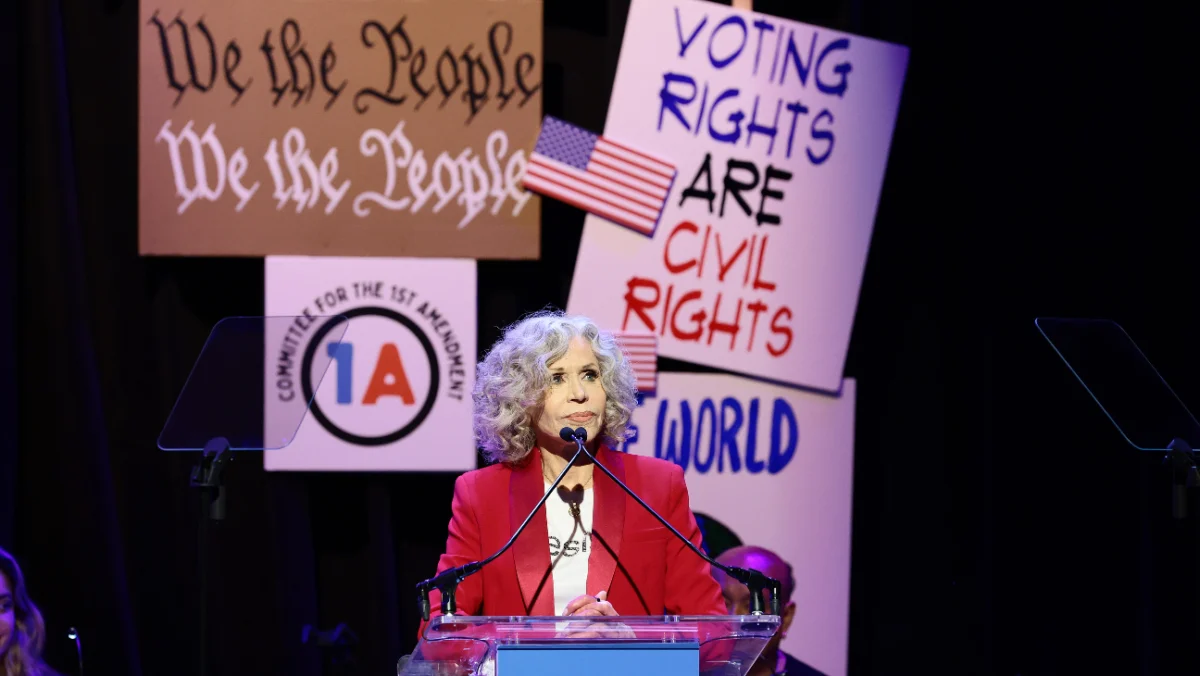
New York, NY – In a powerful address that resonated through the historic walls of The Town Hall on Sunday night, veteran actress and activist Jane Fonda vociferously defended the First Amendment, urging a united front against what she described as escalating government repression and corporate complicity in silencing artists and dissenters. Her impassioned plea was delivered at the star-studded "Rise Up, Sing Out: A Concert for the First Amendment," an event she helped spearhead.
The concert, a significant gathering of cultural and political figures, was organized by the recently revived Committee for the First Amendment. This organization, with roots tracing back to the McCarthy era of the 1940s and 50s, a period marked by intense political persecution and blacklisting, has been re-energized by Fonda’s commitment to safeguarding fundamental freedoms.
"Right now, the government and its cronies are routinely violating the First Amendment to silence artists," Fonda declared from the stage, her voice carrying the weight of decades of activism. She pointed to a range of actions she deemed detrimental to free expression, including the proposed defunding of institutions like the Kennedy Center, cuts to arts endowments such as the National Endowment for the Arts, and the widespread practice of book banning and the deplatforming of individuals who voice dissenting opinions. "It’s really bad," she stated unequivocally. "And it’s being allowed by cowardly corporations. I’m not gonna name names right now. But I am honored now to pass the mic to artists and activists who continue to speak up and sing out so that we might be inspired to rise up."
Fonda’s remarks underscored the contemporary relevance of the Committee for the First Amendment’s mission, which, as stated on its website, is to "defend free expression against government repression, industry complicity and intimidation." She expressed gratitude to the assembled audience for their presence and support, framing their attendance as an "act of hope."
"Showing up is an act of hope, and you all give me hope," Fonda affirmed. She emphasized the universality of these rights, stating, "Those rights are for everyone, everyone. And we must defend them for everyone. Even if we don’t agree with them." She stressed that the fight for the First Amendment transcends partisan divides, asserting, "It’s not about Democrat or Republican, or left or right. It’s about right or wrong. And it is wrong. It is wrong for people to be attacked and called terrorists for exercising their rights and freedoms." Fonda issued a stark call to action: "It’s time for Americans all across the country, all across the political spectrum, who care about these freedoms, to stand up, creatively, nonviolently, to defend these rights, while we can. And we must do this now. Because if we don’t, we’re not gonna have any rights to defend."
The Revival of a Historic Committee
The relaunch of the Committee for the First Amendment by Jane Fonda carries significant historical weight. The original committee, formed in 1947, was a crucial bulwark against the burgeoning anti-communist fervor and the associated witch hunts. Its membership roster boasted some of Hollywood’s most influential figures, including Fonda’s father, the legendary Henry Fonda, alongside screen icons Humphrey Bogart, Lauren Bacall, and comedian Danny Kaye. This lineage highlights a tradition of artistic and intellectual engagement in defending civil liberties.
Fonda explained the impetus behind reactivating the committee last October: "The committee was relaunched last October to bring together the entertainment industry. At this moment, when our democracy is in peril. In the face of what’s happening, we need our industry to be unified, activated and unwilling to engage in anticipatory obedience." Her message was one of solidarity and defiance: "We stand together in defense of our right to free expression. They come for one of us, by God, they come for all of us."
A Star-Studded Call for Freedom
The "Rise Up, Sing Out" concert itself was a testament to the broad appeal and concern surrounding the issue of free expression. The event featured a remarkable lineup of artists and public figures, underscoring the widespread impact of these concerns across various sectors of the cultural landscape. Attendees and performers included Academy Award winners Julia Roberts and Robert De Niro, acclaimed actresses Tessa Thompson and Lily Gladstone, rising star Ayo Edebiri, legendary singer and activist Bette Midler, internet personality Ms. Rachel, journalist Joy Reid, and iconic musician Patti Smith, among others. This convergence of talent and influence served to amplify the message and draw national attention to the perceived threats against the First Amendment.
Contextualizing the Concerns: A History of Suppression and the Modern Landscape
The revival of the Committee for the First Amendment and Fonda’s impassioned speech are situated within a broader context of recurring challenges to free speech and artistic autonomy. The McCarthy era, to which the original committee responded, saw numerous artists, writers, and performers blacklisted and professionally ruined due to their perceived political affiliations or ideologies. The Hollywood blacklist, initiated in 1947, resulted in hundreds of individuals being denied employment in the film industry for years.
Today, the concerns articulated by Fonda resonate with contemporary debates about censorship, cancel culture, and the role of corporations in mediating public discourse. While the overt government-sponsored repression of the McCarthy era may not be directly replicated, critics argue that indirect forms of suppression are emerging. These include:
- Book Bans in Educational Institutions: Data from organizations like the American Library Association indicate a significant rise in challenges to books in schools and public libraries across the United States. These challenges often target books dealing with themes of race, gender identity, and LGBTQ+ issues, leading to their removal from shelves. For instance, the ALA reported a record number of book challenges in 2022, with many targeting titles by and about people of color and members of the LGBTQ+ community.
- Content Moderation and Deplatforming: Social media platforms and other digital intermediaries play an increasingly significant role in shaping public discourse. Decisions by these platforms to remove content or ban users, while often framed as necessary to combat misinformation or hate speech, are also scrutinized for their potential to stifle legitimate expression. The line between moderating harmful content and censoring dissenting viewpoints remains a subject of intense debate.
- Funding Cuts to Arts and Humanities: Proposals to reduce or eliminate public funding for arts organizations, such as the National Endowment for the Arts (NEA) and the National Endowment for the Humanities (NEH), are viewed by many as an attempt to diminish the reach and influence of artistic and cultural institutions that often challenge societal norms or provide critical perspectives. Historically, these endowments have supported a wide array of projects, fostering creativity and cultural understanding. Reductions in their budgets can have a chilling effect on artistic production and accessibility.
- Corporate Influence and "Anticipatory Obedience": Fonda’s reference to "cowardly corporations" and "anticipatory obedience" points to concerns that large companies, reliant on public goodwill and market access, may self-censor or bow to perceived political pressures to avoid controversy. This can lead to a less diverse and more homogenized cultural landscape, where creators feel compelled to avoid controversial topics to maintain their professional standing.
Analyzing the Implications: A Broadening Spectrum of Concern
The implications of the issues raised by Jane Fonda and the "Rise Up, Sing Out" concert extend beyond the entertainment industry. The First Amendment protects not only the freedom of speech and the press but also the rights to assembly and petition the government. When these freedoms are perceived to be under threat, it can have a chilling effect on civic engagement and the broader democratic process.
The revival of the Committee for the First Amendment signals a recognition that the defense of these rights requires sustained effort and broad coalition-building. By invoking the legacy of its original members, Fonda and her allies are drawing a parallel between past struggles for freedom and contemporary challenges. This historical framing aims to underscore the enduring importance of these principles and the need for vigilance.
The diverse lineup of participants at the concert suggests that concerns about artistic freedom and free expression are not confined to a single political ideology. Artists, activists, and public figures from across the political spectrum are increasingly voicing apprehension about the shrinking space for open dialogue and the potential for suppression.
The success of such initiatives in galvanizing public opinion and influencing policy remains to be seen. However, the sheer visibility generated by a prominent figure like Jane Fonda, combined with the participation of numerous well-known personalities, ensures that the conversation about the First Amendment and its future will continue to be a significant part of the national discourse. The event serves as a potent reminder that the defense of fundamental freedoms is an ongoing endeavor, requiring active participation and a commitment to upholding these principles for all.








