Layla Zulfa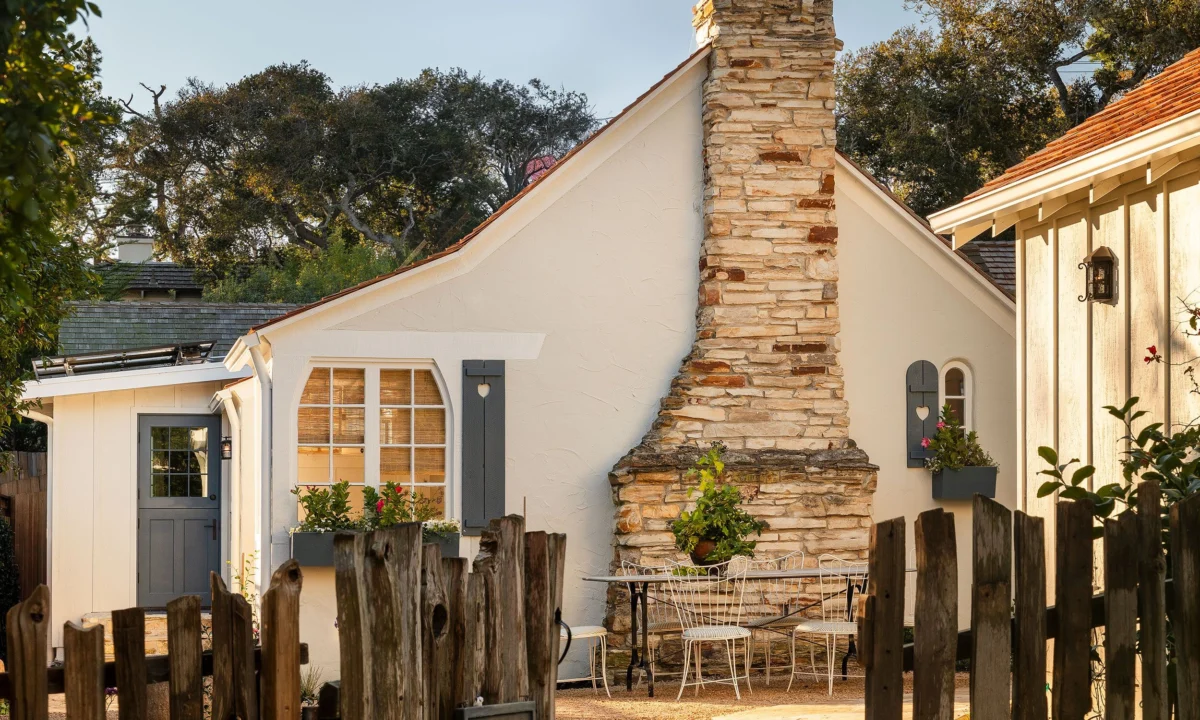
The Architectural Genesis of the Comstock Cottages
To understand the significance of "Our House," one must look back to 1924, when Hugh Comstock first arrived in Carmel-by-the-Sea. Comstock, who was not a trained architect at the time, traveled to the idyllic town to visit his sister and her husband. During his stay, he met and fell in love with Mayotta Browne, a successful artisan known for her "Otsy-Totsy" dolls—handmade felt rag dolls that had gained a national following.
.jpg)
As Browne’s doll collection and business expanded, she required a dedicated space to house her creations. In 1924, Comstock built "Hansel," a 240-square-foot cottage inspired by the fairy-tale illustrations of the era. The structure featured flared eaves, hand-hewn trim, a steeply pitched roofline, and an asymmetrical stone chimney. The design was so captivating to the local community that Comstock was inundated with requests for similar homes. Over the next several years, he designed and built 18 such cottages, which collectively established the "Storybook Style" in Northern California.
"Our House," completed in 1928, was the fifth of these 18 cottages. Characterized by its pink-and-green exterior, grape stake fencing, and hand-carved heart-shaped shutters, the home became a landmark within a town that famously eschews traditional street addresses in favor of unique house names.

The Lutz Acquisition and the Vision for Restoration
For Carole and Breck Lutz, the acquisition of "Our House" was driven by an emotional connection to the property’s whimsical architecture. Despite its historic pedigree, the home had fallen into a state of relative stagnation, filled with dated furnishings and a layout that did not serve the needs of a modern family. When Carole Lutz first encountered the property, she felt an immediate sense of belonging, despite her husband’s initial skepticism regarding the home’s "grandmotherly" aesthetic.
The family sought out Heidi Caillier, a San Francisco-based designer known for her ability to layer patterns and textures in a way that feels both nostalgic and fresh. Caillier’s portfolio, which includes high-profile projects such as Kendall Jenner’s Wyoming retreat, often explores the intersection of traditional craftsmanship and bold, saturated palettes. Upon entering the cottage, Caillier recognized that the project required a delicate balance: the interior needed to be entirely modernized to accommodate three bedrooms and three bathrooms, yet the "soul" of Comstock’s vision—the irregular lines and hand-carved details—had to be preserved.

Navigating Regulatory Frameworks and Spatial Constraints
One of the primary challenges of the renovation was the strict regulatory environment of Carmel-by-the-Sea. The town’s planning department is renowned for its commitment to preserving the "village in a forest" atmosphere. Strict building codes prevent homeowners from significantly increasing the footprint of historic structures. Consequently, the Lutz family and Caillier were restricted to a footprint of approximately 1,800 square feet.
The renovation necessitated a "back-to-the-studs" approach. While the exterior remained largely untouched to satisfy historic preservation standards, the interior was demolished to allow for a more efficient floor plan. Caillier and her team worked to replicate original details that were lost during the demolition, such as specific trim profiles, window casings, and hardware. This ensured that the new interior felt like a seamless continuation of Comstock’s 1928 design rather than a modern insertion.

A Masterclass in Pattern and Texture
The hallmark of the "Our House" renovation is Caillier’s fearless application of color and pattern. The designer’s philosophy avoids the "matchy-matchy" nature of traditional interior design, opting instead for a curated look that suggests the home’s contents were collected over decades.
The Living Room and Dining Nook
In the living room, Caillier restored the original wood paneling, ceiling beams, and fireplace. To prevent the white walls from feeling stark, she introduced a complex array of textiles. John Derian chairs were upholstered in a leaf-printed "Dans la Foret" fabric by Decors Barbares, paired with a custom ottoman covered in Jennifer Shorto stripes. The window treatments feature a custom Soane gingham, which adds a structured, graphic element to the softer floral patterns in the room.

The dining area features one of the project’s most discussed elements: a "mismatched" plate wall. Caillier sourced a diverse collection of vintage Majolica pottery, ranging from high-end antique pieces to accessible finds. These were arranged against a textured wallpaper that provides a neutral yet interesting backdrop for the green and yellow hues of the ceramics.
The Color-Drenched Office and Kitchen
A significant departure from the neutral living areas is the home office. Caillier utilized "color drenching"—a technique where the walls, trim, and ceiling are painted in the same hue—using Farrow & Ball’s Minster Green. This deep, saturated forest green creates a cocoon-like environment, which is punctuated by a Julian Chichester desk chair featuring a splatter-patterned Svenskt Tenn fabric.

The kitchen, previously a cramped galley-style space, was expanded to become the heart of the home. Custom-designed cabinetry by Heidi Caillier Design is complemented by an island flanked by DeVol stools. Woven pendants from Atelier Vime provide an organic, textural contrast to the clean lines of the kitchen, bridging the gap between the cottage’s rustic origins and its modern functionality.
Private Sanctuaries: Bedrooms and Baths
The guest and primary bedrooms continue the theme of pattern-on-pattern complexity. In the primary bedroom, a Nickey Kehoe quilt in a navy and creme hash stripe sits atop a vintage rug, demonstrating how different scales of patterns can coexist when they share a similar color family. In the guest bathrooms, Caillier played with scale, pairing large-format floral wallpapers from Schuyler Samperton with smaller-scale prints on shower curtains and sink skirts.

Chronology of the Renovation and Preservation
The timeline of the "Our House" project reflects the meticulous nature of historic coastal renovations:
- 1928: Original construction by Hugh Comstock.
- 2020-2021: The Lutz family acquires the property and begins the search for a design partner.
- 2022: Design phase commences, involving detailed negotiations with Carmel’s planning department to approve the interior reconfiguration.
- 2023: Construction begins, involving a full interior gut and the addition of a garage designed to match the original Tudor-style eaves.
- 2024: Project completion and reveal.
Broader Impact and Design Analysis
The successful restoration of "Our House" has implications beyond the borders of Carmel. It serves as a case study for the "Grandmillennial" design movement—a trend that embraces traditional design elements like wallpaper, chintz, and antiques but applies them with a modern editorial eye.

Furthermore, the project highlights the increasing value of small-scale luxury. In an era where "McMansions" are often criticized for a lack of character, the Lutz family’s decision to invest heavily in an 1,800-square-foot cottage suggests a market shift toward architectural pedigree and craftsmanship over sheer square footage.
The emotional impact of the project was noted by the homeowners and local officials alike. Carole Lutz recounted that the city planner was visibly moved during the final walkthrough, a rare occurrence in the often-adversarial world of municipal building inspections. This reaction underscores the project’s success in fulfilling its dual mission: creating a functional home for a modern family while acting as a faithful steward of Hugh Comstock’s fairy-tale legacy.

By embracing the eccentricities of the original structure—the heart-shaped cutouts and irregular stone work—and layering them with a sophisticated interior palette, Heidi Caillier has ensured that "Our House" will remain a cornerstone of Carmel’s architectural narrative for another century. The project stands as a testament to the idea that true preservation is not about keeping a building frozen in time, but about allowing it to evolve without losing its essential character.