Layla Zulfa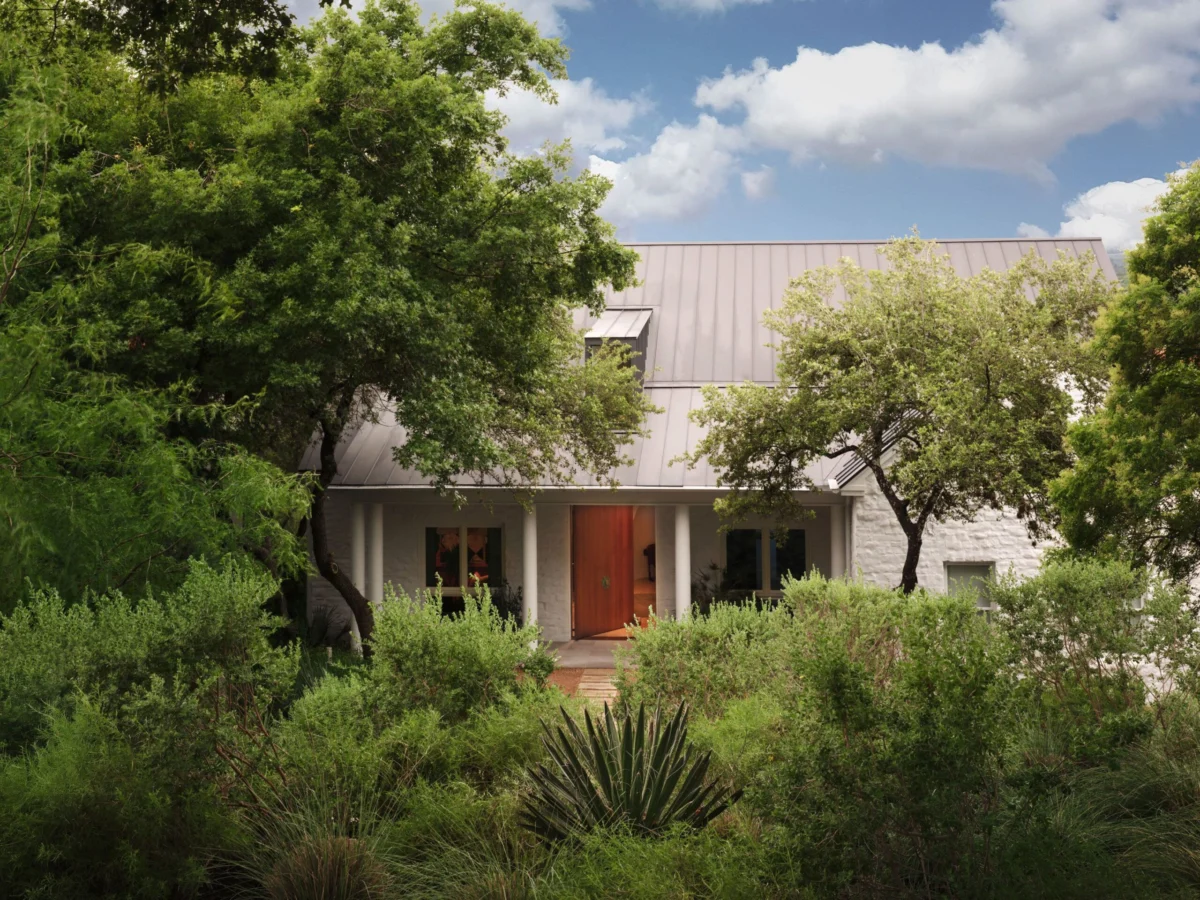
The evolution of a life is rarely a linear progression, but for Suzanne McFayden, it is a story told through the layers of her environment. The Jamaican-born writer, philanthropist, and prolific collector of contemporary art has recently unveiled her latest residential project in Austin, Texas—a home she describes as her "third act." This transition follows the sale of her previous residence, a 7,000-square-foot Brutalist concrete structure that gained international acclaim for its industrial scale and architectural severity. Her new home, nestled within a verdant canopy of Red Oak and Live Oak trees in Austin’s Hill Country, represents a pivot toward a more intimate, "nourishing" philosophy of living. As an empty-nester whose youngest child graduated from college this past spring, McFayden’s move is not merely a change of address but a curated reflection of a multi-layered identity encompassing the roles of daughter, student, wife, mother, immigrant, and survivor.

A Collaborative Vision: The Architecture of Intimacy
To execute this vision, McFayden reunited with the creative team responsible for her previous industrial-scale home: local architect Paul Lamb and New York City–based interior designer Jennifer Vaughn Miller. While their previous collaboration focused on the raw power of concrete and steel, this project sought a "sleeping beauty" aesthetic—a home that felt cozy yet provided ample wall space for a world-class art collection.
The architectural philosophy governing the project was inspired by the legendary 20th-century American architect Louis Kahn, who famously stated, "The room is the beginning of architecture." Lamb interpreted this by designing the home not as a singular, imposing shell, but as a "society of rooms," each conceived from the inside out. This approach allowed for a harmonious dialogue between the structural elements and the deeply personal artifacts they house. The design process involved a meticulous review of McFayden’s extensive collection, ensuring that the architecture served as a canvas for her identity as a Black woman and a patron of the arts.

The Hall of Ancestors: A Threshold of Heritage
The transition into McFayden’s private world begins at a front door of significant proportions—five feet wide by ten feet tall. It is adorned with a custom pineapple doorknob by local artisan Hawkeye Glenn, a deliberate nod to the Jamaican symbol of hospitality. Upon entering, guests are greeted by a light-filled foyer, which Lamb has dubbed the "Hall of Ancestors." The space is finished in Domingue limewash paint, providing a soft, matte texture that absorbs light and creates a tranquil atmosphere.
The foyer serves as a primer for the home’s intersection of high design and contemporary art. A vintage Isamu Noguchi Akari light sculpture hangs above a custom wool rug by Pierre Augustin Rose. The furniture selection includes a 2014 Senegalese tribal chair by Babacar Niang and a Haas Brothers Monkey bench, bridging the gap between traditional craftsmanship and whimsical modernism.

The artwork in this entryway is particularly evocative. Sanford Biggers’s Quilt 8 (The Cartographer’s Conundrum), layered over an 1850s antique textile, hangs alongside Frida Orupabo’s pinned paper collage Woman Flying II / Birdy. These pieces, along with Ayana V. Jackson’s pigment print Stella and beaded sculptural works by Nádia Taquary, establish a narrative of flight, resilience, and ancestral memory that resonates throughout the residence.
Materiality and the "Dionysian" Library
One of the home’s most dramatic departures from the minimalist aesthetic is the library. Painted in Farrow & Ball’s Radicchio—a deep, saturated crimson—the room is described by the design team as a "Dionysian lair." It features a low-slung Mario Bellini sofa for B&B Italia in a matching shade, creating a monochromatic environment that feels both moody and seductive.

The library is anchored by a towering ebony bookcase, which serves as a backdrop for artwork by Didier William. Lighting plays a crucial role in this space, with a floating pendant by Hervé Van der Straeten from Ralph Pucci and a sculptural Crepuscule floor lamp by Material Lust. The inclusion of a vintage Jorge Zalszupin JZ tea trolley and window treatments in Pierre Frey cheyenne fabric demonstrates the project’s commitment to global sourcing and tactile richness.
The Curatorial Shift: From External Survey to Internal Truth
For McFayden, the collection of art is a deeply personal endeavor that serves as a corrective to her early academic experiences. During her time as a student at Cornell University, she noted that the art survey courses featured works that felt "external" to her identity. This changed in 2010 during a visit to Art Basel in Switzerland, where she began to see herself represented in contemporary works.

This sense of representation is evident in the home’s powder room, which evokes the atmosphere of a sultry underground disco. Here, Simon Haas’s Padam Padam from his "Grottos" series and Carrie Mae Weems’s Portrait of a Woman Fallen from Grace (1987) are displayed. McFayden views the Weems portrait as a self-portrait of sorts, reflecting her religious upbringing and a subsequent "reveling in sin." The room’s bold narrative is balanced by tactile materials, including a sink by Kast, fittings by Waterworks, and a vintage Oscar Torlasco brass-and-nickel pendant.
Living Spaces: A "Cosmic Pairing" of Form and Function
The living room continues the theme of "Maximalist-Minimalism," where a clean, limewashed shell is layered with furniture and art of significant historical and cultural weight. A 1957 Sergio Rodrigues "Mole" sofa—which McFayden uses as a "cat perch" for morning tea—is paired with a 1960 Hans Wegner "Ox" chair and a 1960s Charlotte Perriand stool.

The ceiling is illuminated by a Sagitta Constellation fixture by Hallworth, which Lamb describes as a "perfect cosmic pairing" with the room’s central painting. The coffee table features a base by local Austin woodworker Mark Maček, supporting an antique Moroccan door that McFayden acquired during her travels. This blend of local craftsmanship and international antiquities is a hallmark of the residence.
In the dining room, the traditional centered layout was abandoned in favor of positioning a custom ceramic dining table by Hun Chung Lee closer to the wall. This maximizes floor space for social gatherings, reflecting McFayden’s role as a philanthropist and host. The room features a "muse" in the form of a painting by Mathenge, titled Nick at a Mirror (After Rubens’s Venus at a Mirror), alongside sculptural works by Simone Leigh and Lynda Benglis.

Private Quarters and the Next Generation
As a mother of three, McFayden prioritized spaces that could accommodate her children during their frequent visits from New York. Her son Max’s room was designed to look like a "store," featuring midcentury design elements like a George Nakashima for Widdicomb headboard and a Gaetano Pesce "Serie Up 2000" armchair.
The guest room for her daughters features a custom Paul Mathieu "Bianca" daybed and works by Lorraine O’Grady and Kwesi Botchway. O’Grady’s The Fir-Palm—a surreal photomontage of a Caribbean palm and a New England fir growing from a woman’s torso—is a piece McFayden identifies with strongly, citing its representation of a fluid, inclusive identity that defies binary labels.

The primary suite is a sanctuary of strength and femininity. It features two Roche Bobois "Bubble" sofas in ivory bouclé and an orange onyx sculpture by Elizabeth Catlett titled Nude Torso. McFayden finds daily inspiration in the sculpture’s posture, describing it as "sexy, sassy, and strong." The suite also houses Tavares Strachan’s neon glasswork You Belong Here (blue) and a Kehinde Wiley portrait, further solidifying the home’s status as a living museum.
Broader Implications: Art as an Extension of the Self
McFayden’s home stands as a significant example of the growing trend in residential design where the interior is not merely a backdrop for a collection, but an integrated component of the collection itself. Her roles as the former board chair of the Blanton Museum of Art and a trustee of the Studio Museum in Harlem inform the professional rigor of the home’s curation.

From a broader cultural perspective, the residence highlights the increasing visibility and market strength of Black contemporary artists. By integrating works by Simone Leigh—the first Black woman to represent the United States at the Venice Biennale—alongside masters like Basquiat and innovators like Ebony G. Patterson, McFayden is participating in a larger movement of cultural reclamation.
As McFayden enters her "third act," her Austin home serves as both a refuge and a provocation. It is a space that rejects the rigidity of architectural rules in favor of "feeling," as Paul Lamb suggests. In doing so, it creates a nourishing environment that reflects the resilience and beauty of a life still very much in the process of evolution. The home is a testament to the idea that a residence, when thoughtfully designed and curated, can be a profound "extension of how I’m feeling and who I am."