Layla Zulfa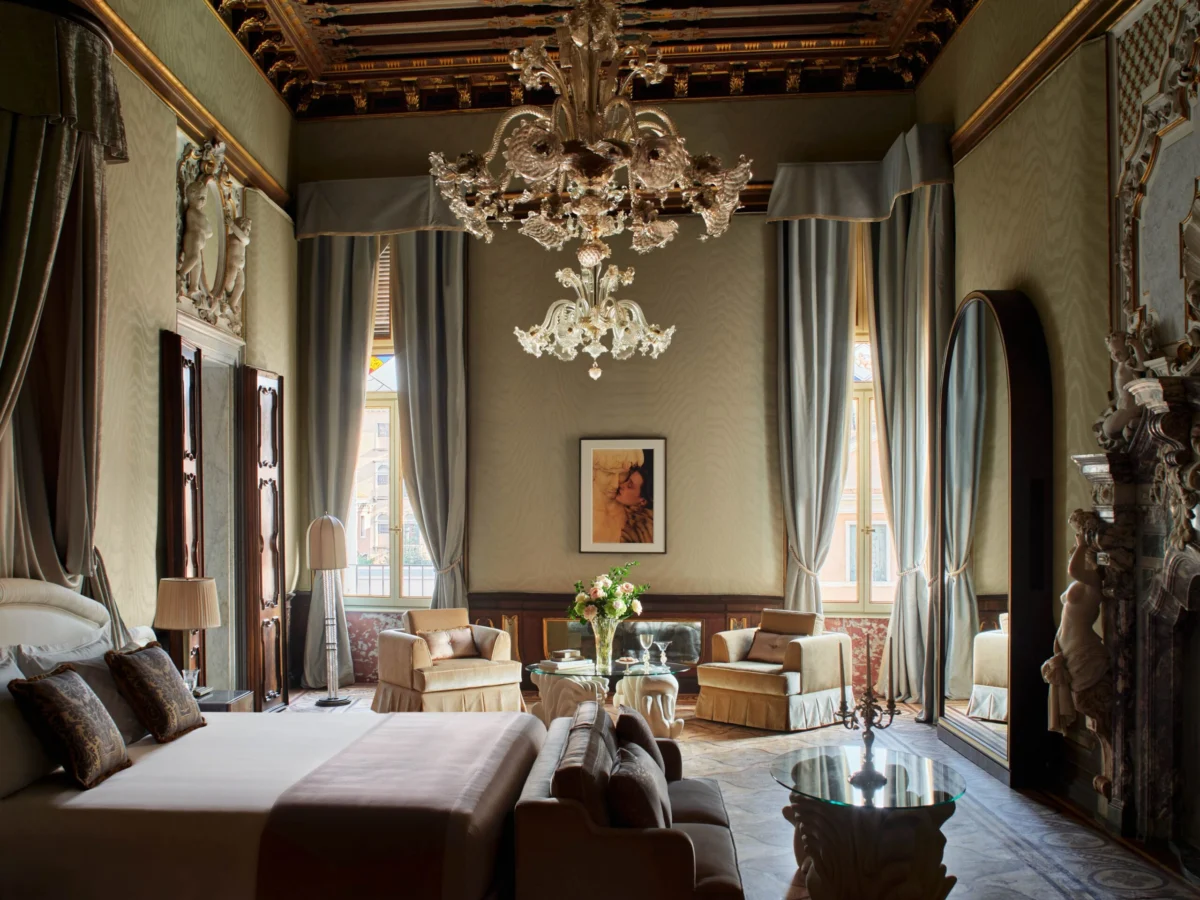
The city of Venice, long defined by the fluid boundaries between land and water, has added a significant new chapter to its architectural history with the transformation of Palazzo Donà Giovannelli into the Orient Express Venezia. This project, led by Lebanese architect and designer Aline Asmar d’Amman, represents a meticulous intersection of historical preservation and the revival of one of the world’s most storied travel brands. Located at the confluence of two canals in the Cannaregio district, the 15th-century edifice serves as a physical manifestation of Marcel Proust’s observation that in Venice, a dream can simply become an address. The conversion of this landmark into a luxury hospitality destination marks a strategic expansion for the Orient Express brand, integrating the opulence of the golden age of rail travel into the static grandeur of Venetian palatial architecture.
Historical Chronology of Palazzo Donà Giovannelli
The history of Palazzo Donà Giovannelli is a timeline of shifting architectural tastes and noble lineages. Constructed in 1432, the original structure was built during a period when Venice was at the height of its maritime power, serving as a critical node in global trade. The building’s location in Cannaregio, a neighborhood known for its authentic Venetian character and historic Jewish Ghetto, placed it slightly away from the frenetic center of St. Mark’s Square, allowing for a more secluded and expansive residential design.

In 1548, the palazzo gained historical notoriety as the site of the wedding of Vittoria Farnese, the daughter of Pier Luigi Farnese, Duke of Parma, to Guidobaldo II della Rovere, the Duke of Urbino. This event cemented the building’s status as a premier venue for the Italian aristocracy. However, the building’s current aesthetic is heavily influenced by a significant 19th-century intervention. Architect Giovanni Battista Meduna, a figure synonymous with the restoration of the Ca’ d’Oro and the rebuilding of the Teatro La Fenice after the fire of 1836, was commissioned to lead a neo-Gothic update. Meduna introduced dramatic elements, most notably an octagonal staircase and intricate decorative flourishes that bridged the gap between the building’s Renaissance bones and the romanticism of the 1800s.
Throughout the 20th century, the palazzo remained a private residence and a silent witness to the city’s evolution. Its acquisition and subsequent transformation by the Orient Express brand—part of the Accor Group’s luxury portfolio—marks the first time the building has been made accessible to the public as a hotel, requiring a restoration process that respected five centuries of accumulated history.
The Design Philosophy of Aline Asmar d’Amman
Aline Asmar d’Amman, the founder of Culture in Architecture, was selected to lead the design due to her proven track record with high-profile heritage projects, including the Hôtel de Crillon and the Le Jules Verne restaurant in Paris. Her approach to Palazzo Donà Giovannelli was characterized by a philosophy of "rediscovery" rather than "imposition." Before beginning the design phase, d’Amman spent extensive time observing the building at various hours to understand how the natural light reflecting off the canals interacted with the interior volumes.

The restoration focused on the preservation of the "patina of time." Rather than stripping away the imperfections that had developed over centuries, d’Amman and her team worked to stabilize and highlight them. Original frescoes, many of which had been obscured by dust or previous minor interventions, were cleaned using traditional techniques. The flooring, a mix of classic Venetian terrazzo and intricate mosaics, was restored to its former vibrancy. Wood paneling and gilding were revived to ensure that the historical soul of the palazzo remained the focal point of the guest experience.
In her public reflections on the project, d’Amman noted that the goal was to reveal a "hidden beauty" that only reveals itself through time. This sentiment aligns with the broader ethos of the Orient Express brand, which emphasizes the journey and the narrative of travel rather than just the destination.
Architectural Features and Accommodations
The Orient Express Venezia comprises 47 guest rooms, six suites, and two expansive apartment-style units. Each space is designed to tell a unique story, drawing on a palette of materials that evokes both Venetian craftsmanship and the luxury of the historic Orient Express trains.

- The Entrance and Lobby: Guests arriving by water enter through a Gothic-arched portal directly from the canal. The grand lobby, known as La Corte del Conte (The Count’s Court), features soaring columns and exuberant Murano glass chandeliers. The use of billowing curtains and reflective surfaces creates a sense of transition, mirroring the movement of the water outside.
- The Piano Nobile: The historic reception rooms on the first floor (the piano nobile) remain the heart of the palazzo. The "Hall of Culture" features lapis lazuli accents, while the "Salone Vittoria" retains the extravagant molding and spatial proportions that hosted the 1548 Farnese wedding.
- Materiality: D’Amman introduced richly figured marbles, plush velvets, and bright silks to complement the historical shell. Burnished brass elements serve as a nod to the hardware found on luxury rail carriages, while antiqued mirrors are strategically placed to catch the sunlight bouncing off the surrounding canals.
- The Suites: The Orient Express Suite, the largest on the property, features original doors that open onto a sitting room where the scale of the 19th-century renovations is most apparent. Bathrooms are anchored by pedestal sinks carved from stone, blending modern plumbing with an antique aesthetic.
Strategic Context: The Global Rebirth of Orient Express
The opening of the Orient Express Venezia is a key component of a larger strategic revival of the brand. For decades, the name "Orient Express" was primarily associated with the Venice Simplon-Orient-Express train operated by Belmond. However, the Accor Group, which owns the rights to the Orient Express brand name, has launched an ambitious plan to expand into the hospitality sector and introduce new rail experiences.
This hotel project is designed to synergize with the "Orient Express La Dolce Vita" train, a luxury rail service that travels through Italy. By establishing a permanent physical presence in Venice—a city that was the historical terminus for the original train line from Paris—the brand creates a cohesive ecosystem for high-end travelers. Industry analysts suggest that this move into "stationary luxury" allows heritage brands to capture a larger share of the traveler’s itinerary, providing a consistent brand experience from the rail carriage to the hotel suite.
The project also reflects a broader trend in the luxury hospitality market: the conversion of "trophy assets." Institutional investors and hotel groups are increasingly looking to historical landmarks that offer a sense of "place" and "authenticity," qualities that are difficult to replicate in new constructions.

Economic and Cultural Impact on Venice
The transformation of Palazzo Donà Giovannelli comes at a time when Venice is navigating the complexities of "over-tourism" and the need for sustainable economic models. The city’s decision to implement an entry fee for day-trippers and restrictions on large cruise ships highlights a shift toward prioritizing high-value, low-impact tourism.
The Orient Express Venezia contributes to this shift by:
- Preserving Architectural Heritage: The private investment required to restore a 15th-century palazzo is substantial. By converting the building into a hotel, the costs of maintaining the structure and its historical artworks are covered by a viable commercial model.
- Supporting Local Craftsmanship: The project utilized local artisans for the restoration of Murano glass, terrazzo floors, and decorative gilding. This helps sustain traditional Venetian crafts that are often threatened by the mass production of tourist souvenirs.
- Revitalizing Cannaregio: While San Marco remains the tourist epicenter, the presence of a high-end brand in Cannaregio helps distribute economic benefits more broadly across the city’s districts, encouraging visitors to explore neighborhoods that retain a higher proportion of local residents.
Broader Implications and Analysis
The Orient Express Venezia is more than a hotel; it is a case study in the contemporary relevance of historical preservation. Aline Asmar d’Amman’s work suggests that the future of luxury lies not in the creation of new spectacles, but in the sensitive curation of the past. By allowing the "imperfections" of the palazzo to remain, the design acknowledges that history is a living process rather than a static museum exhibit.

Furthermore, the project highlights the enduring power of the "Orient Express" mythos. In an era of high-speed rail and instant digital connectivity, the appeal of slow, deliberate, and opulent travel remains strong. The palazzo serves as a "place of passage," as d’Amman described it—a location where the individual journey of the traveler meets the collective history of the city.
As Venice continues to balance its role as a living city and a global heritage site, projects like the Orient Express Venezia provide a blueprint for how commercial interests can align with cultural stewardship. The success of the hotel will likely be measured not just by its occupancy rates, but by its ability to maintain the delicate "energy" of the Palazzo Donà Giovannelli for future generations of travelers and Venetians alike. In the intersection of Meduna’s neo-Gothic vision and d’Amman’s contemporary restraint, the palazzo has found a new purpose that honors its 1432 origins while looking toward the future of global travel.