Kang Muslim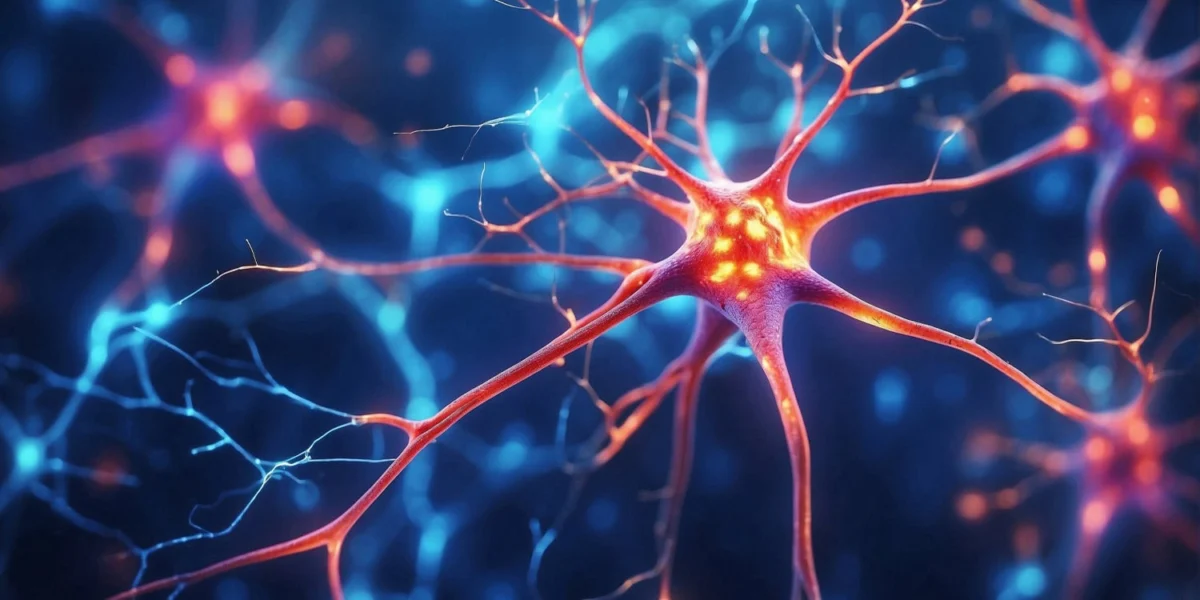
The long-standing scientific pursuit to understand what distinguishes the human brain from those of other animals has historically focused on size and the sheer number of neurons. However, a groundbreaking study published in the Proceedings of the National Academy of Sciences (PNAS) suggests that the secret to human intelligence may reside within the sophisticated computational architecture of individual cells. Researchers from the Hebrew University of Jerusalem and the Vrije Universiteit Amsterdam have demonstrated that human neurons possess a significantly higher capacity for information processing than those of rodents, driven by their unique physical structures and specialized chemical receptors.
The research indicates that the individual human neuron is not merely a simple relay switch in a vast network, but a highly complex, independent processing unit. By utilizing advanced artificial intelligence to model these cells, the team discovered that human pyramidal neurons—the primary excitatory cells of the cerebral cortex—exhibit a level of functional complexity that far surpasses their counterparts in other mammals. This finding shifts the paradigm of neuroscience, suggesting that human cognitive superiority is rooted in cellular quality as much as network quantity.
The Evolution of Cortical Complexity
The human cerebral cortex is the seat of higher-order functions, including abstract thought, complex language, and sophisticated problem-solving. This wrinkled outer layer of the brain has expanded dramatically throughout human evolution. Within this region, pyramidal neurons act as the primary engines of communication. Named for their characteristic cone-shaped bodies, these cells are tasked with integrating thousands of incoming signals to determine whether to transmit an electrical pulse, known as an action potential or "spike," to other neurons.
Historically, anatomical studies have noted that human pyramidal neurons are physically distinct. They are larger than those found in mice or rats and possess vastly more intricate dendritic trees—the branch-like structures that receive incoming signals. Despite these known physical differences, the scientific community lacked a standardized, quantitative method to measure how these structural variances translated into computational power. The recent study addresses this gap by introducing a mathematical framework to evaluate the "functional complexity" of individual cells.
Methodology: The Functional Complexity Index
To quantify the processing power of a single neuron, the research team developed the Functional Complexity Index (FCI). This metric leverages the principles of machine learning to act as a biological "ruler." The researchers utilized detailed three-dimensional reconstructions of 24 specific neurons: 12 from the human cortex and 12 from the rat cortex. These samples represented various depths of the cortex, ranging from layer two to layer six, allowing for a comprehensive comparison across different functional zones of the brain.
The team created high-fidelity digital simulations of each neuron. They subjected these models to a rigorous testing protocol, simulating 12,000 separate scenarios for each cell. In each ten-second simulation, the digital neuron was bombarded with random incoming electrical signals across its dendritic branches. This process generated a massive dataset—roughly 240,000 seconds of neural activity—providing a robust foundation for analysis.
The core of the experiment involved training a standard artificial neural network (ANN) to mimic the behavior of the biological models. The researchers reasoned that if a biological neuron performed simple computations, a relatively shallow artificial network would easily learn to predict its output. Conversely, if the biological neuron performed highly complex transformations of its input, the artificial network would struggle to replicate the timing of its spikes. The degree to which the artificial network failed to match the biological cell’s performance determined the cell’s Functional Complexity Index score.
Key Findings: Human Neurons as Advanced Processors
The results were definitive: human cortical neurons scored significantly higher on the complexity index than rat neurons. The artificial intelligence models had a much more difficult time predicting the exact millisecond timing of spikes in human cells compared to those of rats. This suggests that the transformation of input to output in a human neuron involves a much more sophisticated set of internal "rules" or computations.
When the researchers analyzed the physical drivers of this complexity, they identified two primary factors: dendritic morphology and synaptic nonlinearities.
The Role of Dendritic Morphology
The study found that the total surface area of the dendrites was the single strongest predictor of a cell’s complexity. Human neurons have much longer and more elaborately branched dendrites. This sprawling structure allows different segments of the dendrite to act as semi-independent processing subunits. Instead of the entire cell acting as one simple calculator, the human neuron functions more like a cluster of interconnected mini-computers, all feeding into a central processor.
Synaptic Nonlinearities and NMDA Receptors
The second major factor was the behavior of synapses, specifically the role of N-methyl-D-aspartate (NMDA) receptors. These are specialized proteins that respond to neurotransmitters in a non-linear fashion. In many neurons, if two signals arrive at once, the cell simply adds them together (linear summation). However, NMDA receptors can act as "amplifiers." If a certain threshold of activity is reached, these receptors trigger a massive surge in electrical current that is far greater than the sum of the individual parts.
The researchers found that human synapses are more "nonlinear" than those in rats. When they adjusted their digital models to include human-like synaptic properties—characterized by a higher density of NMDA receptors and a sharper response to voltage changes—the functional complexity of the models increased significantly. This combination of a massive physical "antenna" (the dendrites) and high-powered "amplifiers" (the NMDA receptors) elevates the human neuron into a unique class of biological processors.
Layer-Specific Differences and Evolutionary Adaptation
One of the most striking revelations of the study was the distribution of complexity across the different layers of the cerebral cortex. In rats, the most complex neurons were found in layer five, which is typically associated with sending signals out of the cortex to other parts of the brain and the spinal cord.
In contrast, human complexity peaked in layers two and three. These layers are known to have expanded significantly during human evolution and are primarily responsible for communication between different areas of the cortex itself. This suggests that human evolution specifically prioritized the complexity of neurons involved in internal cortical processing—the very circuits responsible for the integration of sensory data, memory, and executive function.
Timeline of Discovery and Scientific Context
The journey to this discovery began over a century ago with the work of Santiago Ramón y Cajal, the father of modern neuroscience, who first sketched the elaborate shapes of human pyramidal neurons and speculated on their importance.
- Early 1900s: Cajal identifies the unique size and branching of human cortical cells.
- 1980s-1990s: The discovery of NMDA receptors and their role in synaptic plasticity and non-linear signaling.
- 2000s-2010s: Advances in digital imaging allow for the three-dimensional reconstruction of individual neurons.
- 2020-2023: Machine learning becomes a viable tool for modeling biological systems, leading to the development of the Functional Complexity Index.
- 2024: The publication of "Dendritic morphology and synaptic nonlinearities enhance functional complexity in human cortical neurons" provides a quantitative link between structure and cognitive potential.
Implications for Artificial Intelligence and Medicine
The implications of this research extend far beyond basic biology. In the field of artificial intelligence, current models are often based on the "integrate-and-fire" principle, which assumes neurons are simple switches. If individual human neurons are actually as complex as three-layer artificial networks, then current AI may need to move toward "deep" individual units to truly mimic human cognition.
In the medical field, understanding the specific computational properties of human neurons could lead to better treatments for neurological disorders. Diseases such as Alzheimer’s and schizophrenia often involve the degradation of dendritic branches or the dysfunction of NMDA receptors. By quantifying what "normal" human neuronal complexity looks like, researchers can better understand how these diseases erode the brain’s processing power at a cellular level.
Limitations and Future Directions
While the study represents a significant leap forward, the authors acknowledge certain limitations. The research was conducted using digital simulations rather than live, active brain tissue. While the models were based on real anatomical data, they could not account for every single ion channel or chemical interaction present in a living human brain.
Furthermore, the Functional Complexity Index is tied to the architecture of the artificial neural network used for testing. While the three-layer network was a carefully chosen benchmark, different AI architectures might produce different absolute scores, though the relative difference between humans and rats is expected to remain consistent.
Future research will likely focus on even smaller structures, such as dendritic spines—tiny protrusions where most synapses are located. Scientists also hope to apply the FCI to non-human primates, such as chimpanzees and macaques, to trace the evolutionary timeline of when these complexity increases first appeared. Eventually, the goal is to validate these digital findings with electrophysiological recordings from living human tissue, often obtained during neurosurgical procedures.
Conclusion
The study by Aizenbud and colleagues provides a compelling answer to the question of what makes the human brain unique. It suggests that our intelligence is not just a matter of having more "parts" than a rat or a monkey, but that our individual parts are fundamentally more powerful. By uncovering the relationship between the sprawling architecture of dendrites and the non-linear power of synapses, the research opens a new chapter in our understanding of the biological basis of thought. As neuroscience continues to merge with computational modeling, the individual human neuron is finally being recognized for what it truly is: one of the most complex and efficient computers in the known universe.