Ronny Sianturi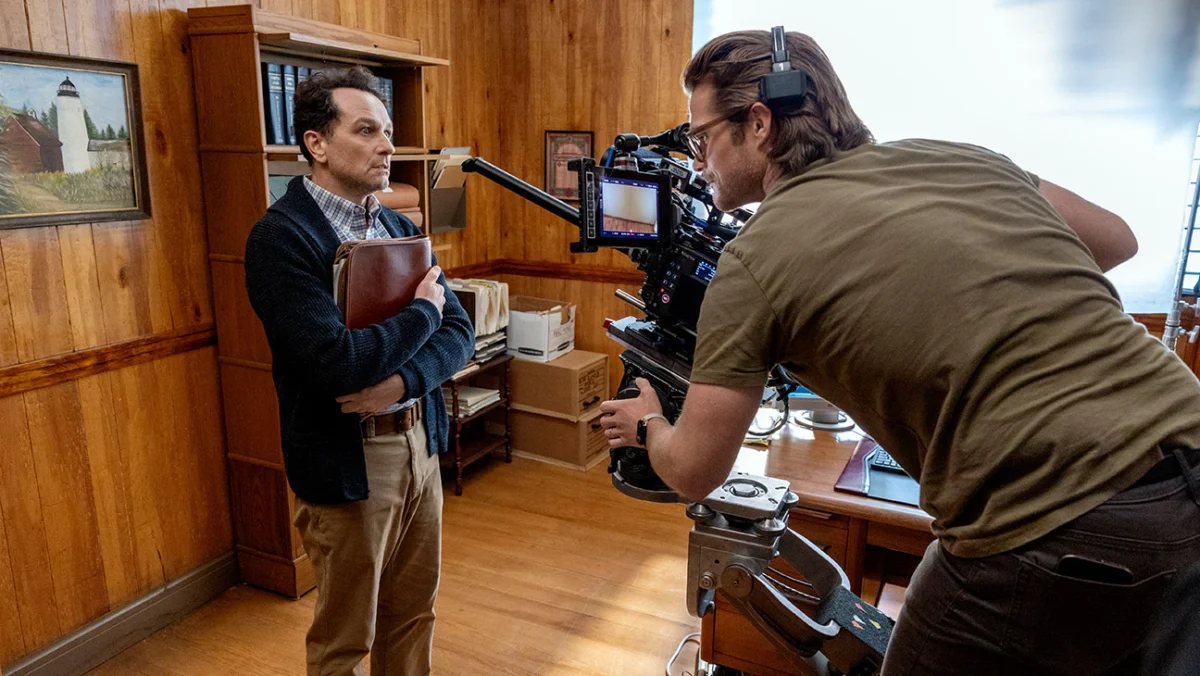
In the climactic moments of the "What to Expect on Your Trip" episode of the critically acclaimed series Widow’s Bay, viewers were plunged into a visceral and auditory descent alongside Mayor Tom Loftis, portrayed by Matthew Rhys. Elevated by a potent mushroom concoction colloquially known as "true sight," Loftis finds himself in a state of profound spiritual and psychological turmoil. The scene culminates with him teetering precariously over a toilet, hands clasped in an earnest plea, as an unidentifiable, deep, and haunting sound reverberates, triggering fragmented visions of his wife in her pregnant state. This powerful juxtaposition of personal vulnerability and an external, otherworldly presence marks a pivotal turning point in the narrative, underscoring the series’ innovative approach to depicting altered states of consciousness and supernatural encounters.
The profound auditory experience that engulfs Mayor Loftis is not merely a background element but a meticulously crafted narrative device, according to supervising sound editor Matt Yocum. He elaborates on the sonic entity that orchestrates this descent: "He’s doing this earnest plea to God [to protect his son] and then we get met with this subterranean, demonic spiritual voice that is representative of the voice of the island itself." This voice, identified by Yocum and his team as the "big bad of the whole show," became the focal point of their sound design efforts throughout the series. The sheer dedication and artistic intent behind its creation highlight a conscious decision by the show’s creators to prioritize auditory storytelling, particularly in moments of intense psychological and supernatural revelation.
The deliberate ambiguity surrounding the voice’s linguistic content is a key element of its unsettling power. "We don’t know exactly what it’s saying, but it speaks to him and you haven’t heard anything like that in the show up to this point," Yocum notes. This lack of clear articulation amplifies the sense of primal fear and unknowability, allowing the audience to project their own interpretations of dread and menace onto the sonic manifestation. It suggests a communication beyond human language, a force that operates on a more fundamental, perhaps even ancient, level.
This emphasis on sound over conventional visual tropes for depicting psychedelic experiences was a deliberate choice made by the creative team. Showrunner Katie Dippold, director Andrew DeYoung, and cinematographer Christian Sprenger consciously opted to eschew the typical visual kaleidoscope often associated with drug-induced hallucinations. Instead, they chose to amplify and distort everyday sounds, transforming the mundane into the extraordinary. The creak of a chair, for instance, is exaggerated to become a jarring, attention-grabbing element, while the prolonged drag of a cigarette takes on a new, almost sinister, resonance. Rerecording mixer Larry Benjamin humorously observes that these intensified sounds "added a comedic effect," a testament to the fine line the series walks between genuine horror and dark, absurdist humor, often facilitated by its unconventional sound design.
The sonic landscape of Widow’s Bay serves as a crucial tool for character development and world-building. Yocum further explains the integral role of audio in shaping Mayor Loftis’s internal journey: "Audio was the focus of our character’s world-building to put us in the head of what he was experiencing, and it ends up going from a place of being sort of psychological distortion and eventually unraveling to a specific place that relates to his character arc and story-building." This approach allows the audience to experience the unraveling of Loftis’s psyche not just visually, but through an immersive auditory lens. The transition from psychological distortion to a more defined, narrative-driven sonic experience signifies the growing influence of the island’s supernatural forces on the characters and the unfolding mystery.
The Island’s Sonic Identity: A Deep Dive into Widow’s Bay‘s Sound Design
The fictional New England island town of Widow’s Bay is more than just a picturesque setting; it is a character in itself, imbued with a palpable sense of ancient power and mystery. This presence is primarily communicated through its unique and often unsettling soundscape, a deliberate artistic choice that sets the series apart. The creative team’s decision to foreground audio in depicting the supernatural and the psychological consequences of encountering it reflects a growing trend in contemporary storytelling to explore the full spectrum of sensory engagement.
The Genesis of "True Sight" and the Island’s Voice
The narrative catalyst for Mayor Loftis’s profound auditory experience is the ingestion of "true sight," a potent concoction derived from local mushrooms. This ritualistic act, undertaken in the hope of uncovering the island’s supernatural secrets, plunges him into a hallucinatory state where the island’s inherent voice manifests. This voice, described by Yocum as "subterranean, demonic," is not a mere figment of Loftis’s imagination but an external entity, a spiritual manifestation of the island itself. The team’s extensive efforts to craft this specific sound—spending the most time on it throughout the series—underscore its significance as the central antagonist, the "big bad."
The sonic characteristics of this voice are intentionally designed to be alien and disquieting. Its "deep, haunting" quality suggests an ancient, primordial power, while its "demonic" undertones tap into universal fears of the infernal and the malevolent. The fact that its language is indecipherable adds another layer of terror. This linguistic void forces the audience, much like Loftis, to confront the unknown and to interpret the voice’s intentions through its sheer sonic presence and the emotional response it elicits.
A Symphony of Distortion: Reimagining Psychedelic Experiences
In contrast to visual depictions of psychedelic trips, which often rely on surreal imagery and rapid-fire editing, Widow’s Bay opts for a more immersive and psychologically grounded approach through sound. Director Andrew DeYoung, cinematographer Christian Sprenger, and showrunner Katie Dippold consciously decided to "center sound rather than lean into the usual visual tropes." This strategic decision allowed them to explore the internal experience of drug-induced altered states and supernatural encounters in a way that felt both innovative and deeply unsettling.
The exaggeration of everyday sounds—the "creak of a chair" becoming a thunderous announcement, the "long drag on a cigarette" evolving into a guttural, drawn-out rasp—serves multiple purposes. Firstly, it heightens the sense of paranoia and hyper-awareness that often accompanies such experiences. Every mundane noise becomes amplified, potentially signaling danger or the presence of something unseen. Secondly, as Benjamin points out, these distortions can create moments of dark humor, preventing the series from becoming overwhelmingly bleak and adding a layer of unpredictable absurdity to the unfolding horror.
World-Building Through Auditory Immersion
The intricate sound design of Widow’s Bay is not merely decorative; it is fundamental to the show’s world-building and character development. Yocum’s statement that "Audio was the focus of our character’s world-building to put us in the head of what he was experiencing" is particularly revealing. By immersing the audience in the auditory landscape of Mayor Loftis’s mind, the series offers a unique perspective on his psychological state. The journey from "psychological distortion" to a more "specific place that relates to his character arc and story-building" indicates a progression where the external sonic manifestations begin to coalesce with the internal narrative of the characters.
This approach has significant implications for how audiences perceive and engage with supernatural phenomena. Instead of relying on visual cues, which can sometimes be easily dismissed as special effects, the auditory experience creates a more visceral and deeply personal connection to the unfolding events. The fear and unease generated by the soundscape can linger long after the episode concludes, prompting viewers to consider the unseen forces that might be at play, both within the fictional world and perhaps even in their own perceptions.
The Broader Implications of Widow’s Bay‘s Sonic Innovation
The success of Widow’s Bay‘s innovative sound design extends beyond its immediate narrative impact. It represents a significant contribution to the evolution of storytelling in the supernatural and psychological thriller genres. By demonstrating the power of auditory elements to convey complex emotional states and supernatural presences, the series opens new avenues for creative expression and audience engagement.
A Paradigm Shift in Genre Storytelling
The traditional approach to supernatural horror often relies heavily on visual jump scares and monstrous apparitions. While effective, these methods can sometimes become formulaic. Widow’s Bay‘s reliance on a meticulously crafted soundscape offers a refreshing alternative. It suggests that true terror and profound psychological disturbance can be evoked through less tangible means, tapping into primal fears and anxieties that resonate on a deeper, more instinctive level. This sonic innovation has the potential to inspire other filmmakers and storytellers to explore similar approaches, leading to a richer and more diverse landscape of genre content.
The Economic and Cultural Impact of Sound Design
The significant investment in sound design, as evidenced by the extensive work on the island’s voice, highlights the growing recognition of audio’s importance in modern media production. In an era where visual effects often dominate headlines, the attention paid to sound in Widow’s Bay underscores the fact that audio is not merely an accompaniment but a primary narrative tool. This can translate into economic benefits for specialized sound studios and professionals, fostering growth in a crucial, often overlooked, sector of the entertainment industry.
Furthermore, the series’ exploration of the "voice of the island" taps into a broader cultural fascination with the power of place and the unseen forces that might inhabit it. This resonates with folklore, mythology, and even modern-day discussions about environmental consciousness and the spiritual connection to nature. By giving a voice, albeit a terrifying one, to the island itself, Widow’s Bay taps into these deeper cultural currents, making its narrative more resonant and thought-provoking.
Audience Reception and Critical Acclaim
The critical and audience reception of Widow’s Bay, particularly its unique approach to sound, suggests a growing appetite for innovative storytelling. While specific viewership numbers for individual episodes are not publicly available in the provided text, the mention of its appearance in The Hollywood Reporter magazine indicates a level of industry recognition and critical interest. The detailed discussion of its sound design by industry professionals further suggests that the series is being recognized for its artistic merit and technical achievements. This critical acclaim can influence future programming decisions and encourage a more experimental approach to narrative construction across the industry. The series’ success in this regard demonstrates that audiences are receptive to sophisticated storytelling that challenges conventional norms and prioritizes a holistic sensory experience.
The careful and deliberate crafting of the soundscape in Widow’s Bay serves as a compelling case study for the power of auditory storytelling. It proves that by focusing on the unseen and the unheard, creators can build worlds, develop characters, and evoke emotions with a depth and resonance that rivals, and in some cases surpasses, purely visual narratives. As the series continues to unfold, its sonic innovations will undoubtedly remain a key element in its ability to captivate and disturb audiences, solidifying its place as a landmark achievement in contemporary television production.