
 Reynand Wu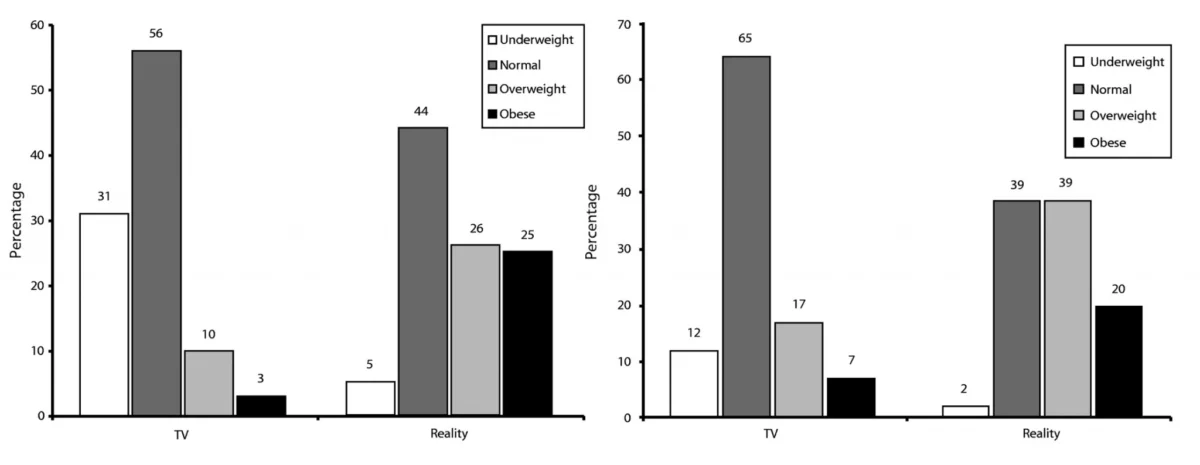
The pervasive influence of television in modern society extends beyond mere entertainment, actively shaping perceptions of beauty, identity, and social norms. For individuals with larger bodies, this influence has historically been overwhelmingly negative, contributing to a culture where body diversity is not only underrepresented but often actively demonized. A seminal study by Tzoutzou et al., for instance, starkly illuminated this bias, revealing that across numerous televised interactions, all 36 compliments related to appearance directed at women were exclusively for those with thin physiques. Not a single positive affirmation was extended to women categorized as average or overweight. A similar pattern emerged for male characters, with only one overweight individual receiving a positive message regarding their appearance. This data underscores a critical flaw in media representation: external beauty is consistently equated with thinness, effectively excluding a vast majority of the population who do not conform to this narrow ideal. The internalization of this "thin ideal" by viewers can have profound psychological repercussions, fostering dissatisfaction with one’s own body, particularly for those whose physical appearance deviates from the relentlessly broadcasted standard. The persistent portrayal of fat individuals as subjects of derision or as secondary, underdeveloped characters directly impacts how audiences perceive themselves and others, cementing biases that extend far beyond the screen.
The Landscape of Underrepresentation and Stereotyping
Beyond the overwhelmingly negative framing, the sheer underrepresentation of diverse body types on television further exacerbates the problem. While a significant portion of the global population comprises individuals of average or larger body sizes, television casts disproportionately favor thinner actors. Research by Brownell et al. in the early 2000s, for example, highlighted a substantial disparity between the body types seen on television and those in reality. Their comparative analysis of female and male body types on television versus the general population between 1999 and 2000 illustrated a severe skew towards thinness on screen, creating an artificially uniform visual landscape that fails to reflect genuine human diversity. This pattern of dehumanization continues as these characters, when they do appear, are rarely afforded the opportunity for meaningful character development. Instead, they are frequently relegated to stereotypical roles: the comedic sidekick, the bumbling villain, or the object of pity.
In the realm of comedy, the laughter often comes at, rather than with, fat women. Studies have shown that overweight women are approximately twice as likely to be the punchline of a joke compared to their thinner counterparts. Their roles are typically smaller, their romantic lives are often nonexistent or played for laughs, and their interactions are generally less positive than those of thin characters. This comedic framing strips them of agency and emotional complexity, reinforcing the notion that their primary purpose is to amuse through their physical form.
Equally disturbing is the frequent portrayal of fat characters as villains. A study by Himes and Thompson, examining popular children’s videos, found a troubling correlation: obesity was equated with negative traits such as evil, unattractiveness, unfriendliness, and cruelty in a staggering 64% of cases. Iconic examples from children’s literature and film, such as Ursula from The Little Mermaid or the Queen of Hearts from Alice In Wonderland, vividly illustrate this trope. These characters, often visually coded with larger bodies, embody malevolence, thereby subtly forging a psychological link between fatness and moral corruption in the minds of young, impressionable viewers. This insidious connection diminishes the humanity of fat characters, denying them the rich, complex narratives afforded to others and actively demonizing their physical form rather than merely ignoring it.
Historical Context and the Evolution of Body Ideals in Media
The media’s obsession with thinness is not a new phenomenon but rather a deeply ingrained aspect of its historical narrative, evolving alongside societal beauty standards. In the early to mid-20th century, a more curvaceous figure was often celebrated, reflecting different cultural and economic contexts. However, post-World War II and particularly with the rise of mass media, the ideal began a slow but steady shift towards a slender, almost ethereal aesthetic. The 1960s, with the emergence of supermodels like Twiggy, solidified thinness as the paramount beauty standard, a trend that Hollywood and television eagerly adopted and amplified.
Throughout the 1980s and 90s, as fitness culture gained traction, the "fit and thin" ideal became even more entrenched. Sitcoms and dramas predominantly featured actors who conformed to these body types, creating a visual echo chamber that reinforced a narrow definition of attractiveness. Characters who deviated were often typecast, serving as comic relief or cautionary tales, rarely as protagonists with fully realized lives and aspirations. This historical trajectory illustrates how television, rather than merely reflecting society, actively participates in constructing and perpetuating these restrictive beauty norms, making it challenging for subsequent generations to envision diverse body types as inherently beautiful or worthy of complex representation.
Profound Effects on the Audience: Psychological and Social Ramifications
The relentless barrage of negative and stereotypical portrayals of fat people on television carries significant psychological and social ramifications for viewers, particularly women and young individuals. The internalization of these distorted narratives can happen remarkably quickly; a study by Fouts and Burggraf revealed that as little as 30 minutes of television viewing can negatively impact a young woman’s perception of her own body, leading to a host of external struggles.
The Tzoutzou et al. study further highlighted this vulnerability, noting that young girls explicitly acknowledged the media’s influence on their desire for thinness and conformity to established beauty standards. This desire often translates into frequent dieting, a precursor to many eating disorders, which are frequently rooted in the pursuit of unrealistic body ideals aggressively promoted by mass media. The psychological toll extends beyond body dissatisfaction, contributing to low self-esteem, anxiety, and even depression. When viewers consistently see characters resembling them being mocked, marginalized, or villainized, it sends a powerful, damaging message about their own worth and potential.
Moreover, these misrepresentations can instill a fear of social judgment. Viewers may come to believe that if they do not conform to the "body norm" depicted on screen, they will face similar sexist or discriminatory treatment in real life. This fear can lead to unhealthy coping mechanisms, including extreme dieting, social withdrawal, or constant self-criticism, all in an attempt to avoid the perceived negative reactions rooted in fictional and distorted television depictions. The cumulative effect is a pervasive sense of inadequacy and a skewed perception of how diverse bodies are (or should be) treated in society.
The Industry’s Imperative: Calls for Authentic Representation
The responsibility for these pervasive issues lies squarely with the television industry—its writers, producers, directors, and network executives. While progress has been slow, there is a growing chorus of voices, from academic researchers to advocacy groups and increasingly, viewers themselves, calling for a fundamental shift in how body diversity is portrayed. Organizations like the National Association to Advance Fat Acceptance (NAAFA) and the Body Positive movement have long campaigned for media representation that is both accurate and respectful, emphasizing that diversity in body size is a natural human variation, not a moral failing or a comedic device.
Industry professionals, while historically resistant to change, are beginning to face increased pressure. The rise of streaming platforms and social media has given audiences more power to voice their demands and has also created new avenues for diverse storytelling outside traditional network constraints. Some creators are consciously working to break these molds, featuring fat characters in complex, heroic, or romantically desirable roles, challenging long-held stereotypes. However, these examples remain the exception rather than the norm, indicating that systemic change is still needed. The economic implications are also becoming clearer: an audience that feels seen and respected is more likely to engage with and support media content.
Beyond Appearance: The Quest for Authentic Storytelling
The call for better representation extends beyond simply showing more diverse body types; it demands authentic, multifaceted storytelling. It means creating characters whose identities are not defined by their weight but by their personalities, relationships, careers, and inner lives, just like any other character. It means depicting fat characters as successful professionals, loving partners, complex antagonists (without their size being the source of their villainy), and relatable individuals navigating the complexities of life.
The potential for television to be a powerful force for positive social change is immense. By consciously choosing to feature diverse body types in meaningful roles, the industry can help dismantle harmful stereotypes, foster greater empathy and understanding, and contribute to a more inclusive society. When all bodies are seen and valued on screen, television transcends its role as mere entertainment and becomes a mirror reflecting the true richness and diversity of the human experience. It creates a space where viewers, regardless of their body size, can relax, feel understood, and see themselves as worthy of belonging and respect. This shift is not just about fairness; it is about recognizing the inherent dignity of every individual and ensuring that television truly is a medium for everyone to enjoy and connect with.







